Top

EU bans Ruble-backed stablecoin A7A5 in latest round of Russia sanctions

Policy & Regulation·October 29, 2025, 6:31 AM

The European Council has banned all transactions within the European Union (EU) involving the Russian Ruble-backed stablecoin A7A5, according to a press release published Oct. 23.


The prohibition targets the stablecoin itself, its developer, its Kyrgyzstan-based issuer, and the operator of a platform that facilitates major A7A5 trades. The package also takes aim at Russian crypto exchanges.
https://asset.coinness.com/en/news/8d2f3591b98e3daf67502602aacc4069.webp
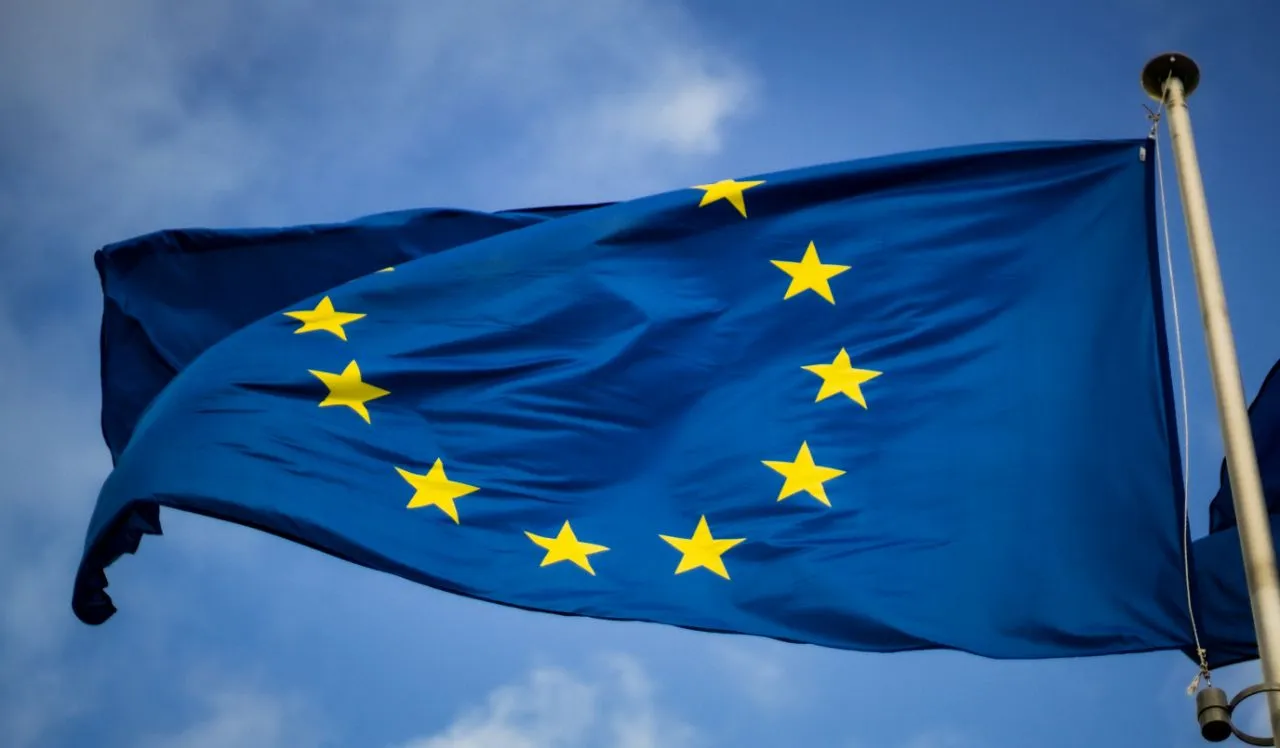
Photo by Christian Lue on Unsplash

Additional banking restrictions

This measure is part of a broader set of economic sanctions against sectors the EU stated assist the Russian invasion of Ukraine, including energy, finance, and defense industries. As part of this financial clampdown, the EU will also impose a ban on five additional Russian lenders starting Nov. 12. One of those lenders, Alfa-Bank, recently began offering Bitcoin buying and selling services, according to an X post by journalist Pete Rizzo.


The European body said the new crypto measures address Russia’s increasing use of digital assets to circumvent existing sanctions. Russian banks were cut off from the SWIFT international payment system in early 2022, following the onset of the Russo-Ukrainian war.


Reports of Russia using cryptocurrency to finance malign activities have surfaced previously. Earlier this month, Sławomir Cenckiewicz, the head of the Polish National Security Bureau (BBN), told the Financial Times that Russia has employed crypto to finance attacks on EU countries. Cenckiewicz said that a network of agents recruited by Russia’s GRU military intelligence agency and uncovered in Poland in 2023 had been substantially funded with cryptocurrency.


Reflecting this concern, lawmakers in Poland’s lower house approved a bill in September to strengthen national crypto oversight, a move also expected to help curb Russian funding channels. Cenckiewicz noted that Polish intelligence agencies are closely monitoring the legislation to prevent loopholes that allow foreign actors to support agents using digital assets.


Russia’s evolving crypto policy

The EU’s action comes as Russia itself is attempting to refine its own cryptocurrency rules.


According to the Moscow Times, Russia's central bank wants to limit cryptocurrency use strictly to cross-border payments within an experimental legal regime (ELR). The institution continues to reject recognition of cryptocurrency as a legal means of payment and has advocated banning its use for domestic payments and retail investment, while permitting trading only for high-net-worth individuals through licensed platforms.


Russia’s finance ministry has expressed a more flexible view, pointing to the scale of crypto adoption among the public. Earlier this year, the central bank estimated that domestic crypto transactions exceeded 1 trillion rubles (about $12.4 billion) per month, and that as of March, wallets linked to Russian users held roughly 827 billion rubles (about $10.2 billion).


The finance ministry and the central bank have agreed to tighten supervision of the crypto market, with officials expecting to finalize the new framework before the end of the year.


 

More to Read
View All
Policy & Regulation·

Oct 12, 2023

Korean Government Explores Methods for Reporting Statistics on Crypto

Korean Government Explores Methods for Reporting Statistics on CryptoLee Hyoung-il, the head of South Korea’s national statistics agency, Statistics Korea (KOSTAT), said that the organization is currently exploring methods for reporting national statistics related to virtual assets. His comments came during an audit hearing held Thursday (local time) by the Strategy and Finance Committee of the National Assembly.Photo by Алекс Арцибашев on UnsplashCryptocurrency surveysKOSTAT initiated its study into cryptocurrencies in 2022 and subsequently conducted a second survey in April this year to better understand the distribution of cryptocurrency holdings among the Korean population.Commissioner Lee emphasized the importance of enhancing the linkage and utilization of statistical data. He mentioned that the agency would combine statistical registration records with private credit information to conduct in-depth analysis of the characteristics of household debt for all households.Supporting national and municipal policiesLee also stated that KOSTAT is dedicated to creating statistical data to support policies at both the national and municipal levels. Specifically, the agency intends to formulate statistics to assess social mobility and to conduct a survey on the costs of educating young children next year.

news
Policy & Regulation·

Aug 25, 2023

Vauld Implements Key Leadership Changes Amid Bankruptcy Proceedings

Vauld Implements Key Leadership Changes Amid Bankruptcy ProceedingsFailed Singaporean cryptocurrency lender Vauld has unveiled a comprehensive overhaul of its board structure.Photo by Yibei Geng on UnsplashOngoing restructuringThe platform, which faced financial turmoil leading to its declaration of bankruptcy last year, is introducing fresh leadership to spearhead its restructuring efforts. The move involves the appointment of a new CEO, a creditor representative, and a scheme manager.The current CEO and Co-Founder of Vauld, Darshan Bathija, announced the proposed changes via a post on X (formerly Twitter) on Thursday. He emphasized that the new appointees would take charge of orchestrating a much-needed bailout.The challenges faced by the company through its ongoing bankruptcy proceedings have prompted Vauld to secure court approval for this new organizational scheme. In his social media post, Bathija stated:“Vauld (Defi Payments Pte Ltd) got its scheme of arrangement passed in Singapore courts. As part of the scheme, the current board will be replaced with a new CEO, a creditor representative, and a scheme manager.” Additionally, Bathija noted that the exchange’s customers are actively updating their Know Your Customer (KYC) details.This announcement comes almost a year after Vauld came under scrutiny due to a money laundering investigation. The cloud of suspicion surrounding the firm at the time led to the freezing of assets worth $46.4 million from its domestic operations by Indian authorities.Nexo acquisition failureIn February of this year, the Singapore High Court granted Vauld an extension until March 24 to formulate a comprehensive strategy for repaying its creditors. The extension became crucial after a potential acquisition deal with Nexo fell through. However, despite this reprieve, the exchange was unable to secure a further extension, fueling discussions within the community about the challenge of meeting creditor obligations within a relatively short time frame.In a step to facilitate the resolution of outstanding amounts, the court established a committee of creditors (CoC). This move was prompted by allegations from a faction of creditors that Vauld was impeding communication and implementing unwarranted corrective measures. Notably, the exchange owes more than $2.2 million to these creditors.Vauld has contracted the services of risk and financial advisory firm Kroll as part of the restructuring efforts. In an isolated instance of good fortune, it appears that Vauld creditors are unaffected by a data breach which occurred recently at Kroll, while creditors of the Genesis, FTX, and BlockFi crypto bankruptcy processes have had their data compromised.Charting a path forwardBathija conveyed that more updates regarding the platform’s path forward would follow soon. Vauld’s financial instability can be attributed to several factors, chief among them being the ripple effect of Terra’s downfall. Further complications arose due to economic issues tied to the Celsius Network and Three Arrows Capital (3AC) defaulting on their loans. These cumulative challenges led to Vauld’s operational suspension.Despite this failure and similar issues relative to crypto lender Hodlnaut and 3AC, which were also based in the city state, Singapore continues as a jurisdiction that effectively balances regulatory control with the drive to foster innovation. Its central bank and financial regulator, the Monetary Authority of Singapore (MAS), recently unveiled a comprehensive framework for stablecoins.

news
Markets·

Mar 17, 2025

North Korea becomes major nation-state holder of Bitcoin following hack

While South Korea’s central bank has opted not to accumulate Bitcoin (BTC) at a nation-state level, North Korea has become a major holder of the leading crypto asset, albeit in a very unconventional way. The Democratic People's Republic of Korea (North Korea) is believed to currently be in possession of 13,518 BTC. That’s according to data compiled by the blockchain analytics firm Arkham Intelligence. Arkham has labeled the holding as belonging to the notorious North Korean hacking organization Lazarus Group. It’s been alleged by many observers over recent years that Lazarus is controlled by the North Korean government. Photo by Vasilis Chatzopoulos on UnsplashOn this basis, it would appear that North Korea now has a larger Bitcoin holding than the Bitcoin-friendly jurisdictions of Bhutan and El Salvador. The Kingdom of Bhutan holds 10,635 BTC through Druk Holdings and Investments (DHI), the commercial arm of the Royal Government of Bhutan.  Meanwhile, El Salvador holds 6,119 BTC. Bhutan has been accumulating Bitcoin as a consequence of Bitcoin mining activity carried out by the government in partnership with Singapore-based Bitcoin mining firm Bitdeer and others within the Asian country over recent years. El Salvador made a commitment to buy Bitcoin on an ongoing basis following its recognition of the digital asset as legal tender back in 2021. Based on Bitcoin pricing at the time of writing, Arkham’s data suggests that North Korea currently holds Bitcoin with an overall value of around $1.14 billion. It’s believed that North Korea’s overall holdings have been bumped up recently following a $1.4 billion hack of global crypto exchange Bybit last month. According to crypto data analysis firm Coin Metrics, the hack stands as one of the largest of all time.  Arkham’s data suggests that North Korea now has the third largest nation-state holding of Bitcoin, with the U.S. in first place, with 198,109 BTC, and the UK next with a holding of 61,245 BTC. Besides Bitcoin, the Lazarus Group is understood to be sitting on ETH, BNB, DAI and BUSD worth in the region of $30 million. In the immediate aftermath of the hack, the hackers moved to swap out some of the stolen Ether (ETH) for Bitcoin via the THORChain decentralized liquidity protocol. South Korea not building Bitcoin reserveWhile North Korea appears to have accumulated Bitcoin at the nation-state level through nefarious means, the Republic of Korea’s (South Korea) central bank has given an indication that it currently has no plans to accumulate Bitcoin.  According to a recent local media report, the Bank of Korea (BOK) responded in writing to a query from a Korean parliamentarian, outlining that there is no plan currently to develop a Bitcoin reserve or to stockpile Bitcoin at a national level.  The BOK is understood to have cited Bitcoin’s price volatility as a major concern. Additionally, the central bank outlined that Bitcoin doesn’t conform to the International Monetary Fund’s (IMF) guidelines relative to foreign exchange reserve management.

news
Loading