Top

Four in 10 wealthy UAE investors hold crypto, survey finds

Markets·October 30, 2025, 6:51 AM

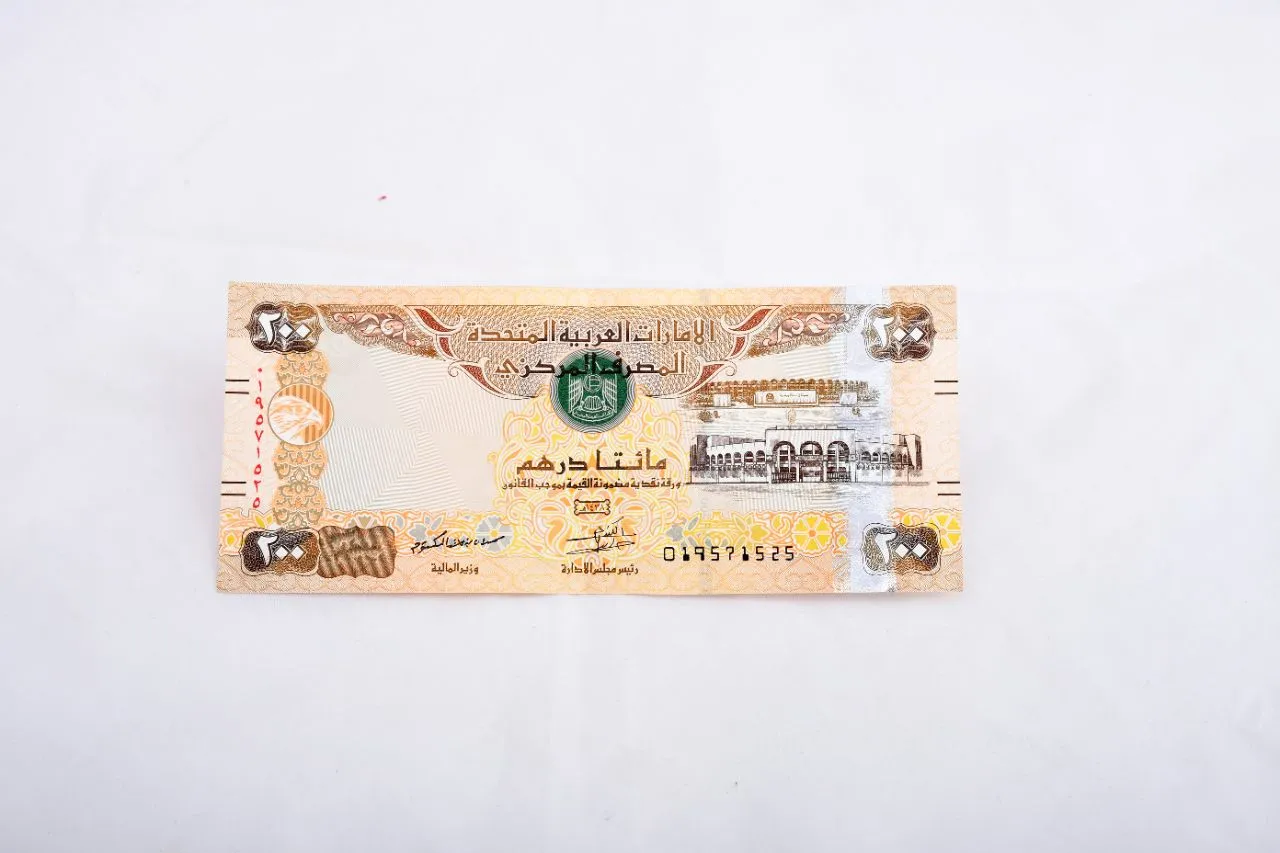
Wealthy investors in the United Arab Emirates (UAE) are warming to cryptocurrencies while largely bypassing traditional private banks, a new survey shows. The poll, conducted by Swiss wealth manager Avaloq and reported by CoinDesk, found that roughly four in 10 high-net-worth individuals in the country hold digital assets, though only about 20% used conventional wealth managers to make such allocations. The survey gathered responses from 3,851 investors and 456 wealth professionals.
https://asset.coinness.com/en/news/08e30cc0f3261d8e763c3c6d99f107ec.webp
Photo by Atikah Akhtar on Unsplash

A rising tide in crypto wealth

The findings land amid a broader run-up in crypto fortunes. Henley & Partners’ 2025 Crypto Wealth Report, published in September, estimates 241,700 crypto millionaires worldwide this year—about 40% more than in 2024. Even so, UAE respondents in Avaloq’s poll voiced caution, citing the market’s sharp swings as a primary deterrent.


Operational hurdles compound that wariness. Managing wallets, safeguarding private keys, and arranging custody remain friction points for would-be buyers. Among those who remain on the sidelines, Avaloq found that volatility topped the list of deterrents (38%), followed by limited understanding (36%) and distrust of trading platforms (32%).


Younger cohorts drive crypto uptake, advisor shifts

Family dynamics are increasingly driving crypto adoption. Younger members of ultra-wealthy households are introducing parents and grandparents to digital assets, Avaloq’s UAE survey found. Meanwhile, 63% of investors have either changed wealth managers or are considering doing so, often because they feel their questions about crypto are not being adequately addressed. Akash Anand, head of Middle East and Africa at Avaloq, described the moment as one of growing client curiosity met by a slow institutional response, prompting private banks to accelerate work on digital asset services.


Dubai’s growing role as a crypto hub will again be on display in December, when it hosts Binance Blockchain Week 2025. The two-day conference, slated for Dec. 3–4, features appearances by Binance co-founder Changpeng Zhao, Strategy Chairman Michael Saylor, Ripple CEO Brad Garlinghouse, and Solana Foundation President Lily Liu. A debate between Zhao and long-time crypto skeptic Peter Schiff on Bitcoin’s merits versus tokenized gold is also expected, after Zhao invited Schiff to participate via X.


Combined, the survey data and recent developments depict a UAE wealth market in the early stages of engagement with digital assets. While enthusiasm is building among younger investors and high-profile initiatives continue to draw attention, concerns about volatility and management complexity remain barriers to entry. The extent to which established wealth firms and new entrants can address those concerns will shape the next phase of the market’s growth.


 

More to Read
View All
Policy & Regulation·

Sep 25, 2023

The Need for Crypto Regulation Improvements in South Korea

The Need for Crypto Regulation Improvements in South KoreaAlthough the cryptocurrency market entered a bearish phase last year, there are prospects for growth as regulatory inclusion and market transparency begin to improve. However, the domestic market is currently hindered by deepening monopolies and inadequate support policies, limiting the development of the industry, said Kim Jin-won, Executive Director of Korean crypto exchange COREDAX, during a conference last Friday in Seoul.The conference, hosted by the Federation of Korean Industries, invited experts to discuss the oncoming era of convergence and the current status and challenges of virtual asset legislation in South Korea, as well as the necessary steps for improving regulations on virtual assets.Photo by Kanchanara on UnsplashGlobal decentralization trendsOverseas, various decentralized projects, such as the integration of blockchain technology into traditional financial markets, have led to the growth of related markets such as Bitcoin futures, decentralized finance (DeFi), over-the-counter (OTC) trading, custodial services, the metaverse, and Web3. However, in Korea, the lack of clear guidance or policy management for crypto businesses and services prevents the market from thriving.Countries like the US and Japan as well as the European Union (EU) are overhauling regulations in order to dominate the global industry and market through blockchain technology and virtual assets. Kim emphasized that Korea also needs to incorporate such flexible regulatory improvements considering the likely possibility that various industries are going to thrive on crypto-related businesses.Challenging existing regulations and calls for clarityHe started off by stating that the implicit regulation known as the “One Exchange, One Bank” principle was created for administrative convenience and is acting as a barrier to entry into the crypto industry. He argued that it is a discriminatory regulation, especially considering the fact that securities firms choose to operate stock trading accounts through multiple banks.Regarding the standards for issuing bank accounts under real names, which will be determined by the Financial Intelligence Unit (FIU), he argued that they are difficult to comply with, even for banks that already have contracts with crypto exchanges. He called for the FIU to express a clear stance on the retroactive application of these standards to avoid potential consequences such as barriers to market entry for late-movers.“The crypto market — including DeFi, non-fungible tokens (NFTs), artificial intelligence (AI), the metaverse, and Web3 — is growing at an annual average rate of 12.8%, and is expected to reach a scale of $4.9 billion by 2030,” he said. “When combined with Web3 innovation, the metaverse will evolve into a 3D platform business that incorporates the use of payment methods, NFTs, and virtual assets.”Promoting innovation in the crypto industryTo foster such industry growth, it is necessary to actively explore new types of services as well as potential challenges. Innovative financial services should also be designated or promoted through regulatory sandboxes. The regulatory sandbox is a system run by the Korean government that exempts or suspends existing regulations for a designated amount of time for companies releasing new products and services and regulates them post-mortem if there is a problem.Kim went on to propose specific measures such as negative regulations — regulations that outline what is prohibited by law while allowing everything else — to promote new industries. He also suggested that banks should be allowed to engage in custodial services for virtual assets.Furthermore, he highlighted the need for cooperation between payment companies and crypto firms. “Payment service providers like Visa and Mastercard are already collaborating with global crypto exchanges to incorporate virtual assets into their businesses,” he said. “With companies like Tesla, eBay, and more adopting or considering adopting cryptocurrency as a payment method, we must consider allowing collaborations between domestic credit card companies, payment gateway companies, and crypto firms.”He also urged for the early approval of initial exchange offerings (IEOs) to stimulate the crypto market and advocated for support policies for virtual asset service providers (VASPs). He cited examples such as brokering transactions for security tokens, allowing OTC trading, requesting security token issuance assessments through system integration with account management agencies, and permitting outsourcing for issuance operations.

news
Policy & Regulation·

Sep 15, 2023

Singapore’s Regulator Imposes 9-Year Ban on 3AC Founders

Singapore’s Regulator Imposes 9-Year Ban on 3AC FoundersSingapore’s central bank and financial regulator, the Monetary Authority of Singapore (MAS), has handed down a nine-year prohibition order to Kyle Davies and Su Zhu, co-founders of the failed crypto hedge fund Three Arrows Capital (3AC).Photo by Swapnil Bapat on UnsplashSevere restrictionsThe penalty relates to alleged violations of the city-state’s securities laws. The prohibition order came into effect on Wednesday, carrying severe restrictions for Davies and Zhu.During this nine-year period, Davies and Zhu are prohibited from engaging in any regulated activities in Singapore. They are also barred from managing, serving as directors, or holding substantial shares in any capital market services business within the territory of Singapore.Loo Siew Yee, the Assistant Managing Director of Policy, Payments, and Financial Crime at MAS, emphasized the seriousness of the violations in a statement released by the central bank on Thursday. Yee stated:“MAS takes a serious view of Mr. Zhu’s and Mr. Davies’ flagrant disregard of MAS’ regulatory requirements and dereliction of their directors’ duties.” She further asserted that MAS would take action against senior managers who engage in such misconduct.Securities law violationsMAS’s decision to impose these sanctions on the 3AC co-founders was based on its findings of further securities law violations during investigations into 3AC and its founders. The regulatory authority accused Davies and Zhu of failing to inform MAS when 3AC hired a new business representative, providing false information to the regulator, and neglecting to establish an appropriate risk management framework.3AC’s troubles stemmed from the crypto market crash that occurred last year, triggered by the Terra ecosystem’s collapse. The hedge fund’s leveraged crypto positions exposed it to billions in loan defaults, resulting in significant financial losses. Its lack of risk management had a cascading effect in crypto. Lenders like Celsius and BlockFi had exposure to 3AC, leading to further collapses later in 2022 as a consequence.3AC’s creditors claim that the firm owes as much as $3.5 billion, and liquidators are now seeking to recover approximately $1.3 billion from Zhu and Davies, who allegedly incurred the debt when the firm was already insolvent.Regulatory reprimandsThis action by MAS follows last June’s reprimand of 3AC, which occurred just before the hedge fund filed for bankruptcy amid widely reported insolvency issues. At that time, MAS had criticized 3AC for providing false information, failing to report directorship changes involving Zhu and Davies, and exceeding the legal assets under management threshold.It’s just the latest reprimand the duo have received from a regulator this year, though. Zhu and Davies have been busy in trying to get another start-up off the ground. Earlier this year, they launched OPNX, a crypto bankruptcy claims trading platform. The venture is based out of Dubai, and the firm reported in April that it had gotten significant VC backing.Many of those that the company claimed were backing the venture disassociated themselves from those claims. The following month, the Dubai regulator, the Virtual Assets Regulatory Authority (VARA), reprimanded the OPNX founders, having issued an investor alert relative to the firm a few weeks prior to that. VARA's complaint was that the business had been operating without having acquired the appropriate licensing.

news
Web3 & Enterprise·

Dec 02, 2023

Antpool overtakes Foundry as largest bitcoin mining pool

Antpool overtakes Foundry as largest bitcoin mining poolAntpool, a Singapore-headquartered open access mining pool that supports ten cryptocurrencies, has recently surpassed Foundry USA to become the foremost bitcoin mining pool in terms of monthly blocks mined.That’s according to a report published by TheMinerMag, a bitcoin mining industry publication run by New York public relations firm BlocksBridge Consulting.This development indicates a shift in bitcoin mining pool dynamics since January 2022. According to Bitcoin network data, Antpool mined 1,219 blocks in November, slightly edging out Foundry USA’s 1,216 blocks. The total rewards for Antpool’s miner clients reached 8,672 BTC, excluding the 83.6 BTC designated for refunds.Photo by Norman Wozny on UnsplashBitmain affiliateAntPool is an affiliate company of leading crypto mining equipment manufacturer, Bitmain. This surge in Antpool’s hashrate aligns with Bitmain’s substantial importation of over 4,800 metric tons of Antminer S19XP and S19XP Hydro to its U.S. subsidiary in Georgia between June and November. These imports have contributed to an estimated total hashrate exceeding 37 EH/s. The exact activation status of Bitmain’s imported hashrate and whether it is utilized for its own purposes, remains unclear.Foundry USA had previously held the leading position in mining pools since early 2022, benefiting from the rise of North American mining operations following China’s crackdown in 2021. While Antpool consistently secured the second position, its hashrate began closing the gap on Foundry USA around June this year.China vs. U.S. competitive dynamicThe two companies dominate bitcoin mining. With one having a parent company headquartered in China and the other being U.S.-centric, their positioning in terms of overall blocks mined is being seen by some as a reflection of competition between entities in China and the United States in terms of bitcoin mining dominance. Addressing that dynamic in response to CoinDesk recently, CryptoQuant Web3 Analyst Bradley Park wrote:“China is aggressively mining ahead of the approval of a Bitcoin ETF. As the Bitcoin halving nears, I anticipate a competitive surge between China and the US in mining machine productivity. This is because the unit cost of mining Bitcoin is likely to escalate due to increasing power expenses and rising mining difficulty.”The bitcoin hashrate has been climbing continuously throughout 2023, reaching new all-time highs along the way.It’s worth noting that despite Antpool’s dominance in blocks mined, data from BTC.com reveals that the company’s self-reported real-time hashrate consistently lags behind Foundry USA’s over the past three months. The cause of this discrepancy remains uncertain, raising questions about variance or reporting errors affecting Antpool’s real-time hashrate.Bitmain established Antpool in 2014, and it was later spun out of Bitmain to become an independent entity in 2021. Meanwhile, Foundry is a wholly owned subsidiary of Digital Currency Group (DCG). Both Bitmain and DCG have been facing financial challenges over the course of the past year.In a separate development, Foundry took to social media platform X on Thursday to confirm that it is discontinuing support for The Graph protocol, Axelar Network, Polkadot and Flow. The firm said that the changes were decided upon in order to better align the business with its strategic business goals.

news
Loading