Top

StanChart CEO predicts blockchain will replace cash in everyday finance

Markets·November 05, 2025, 6:18 AM

Bill Winters, the American banker who heads the British financial group Standard Chartered, appeared at the Hong Kong FinTech Week conference earlier this week, where he predicted a future in which cash will give way to blockchain-based systems for everyday transactions.


According to Cointelegraph, Winters’ view aligns with that of Hong Kong regulators. At the same time, he stressed the importance of continued experimentation, noting that it remains uncertain how this transformation will ultimately take shape. Winters also commended Hong Kong’s leadership in exploring the potential of digital finance.


Tech-driven finance has certainly been one of the key initiatives Hong Kong has been exploring. Recently, the Hong Kong Monetary Authority (HKMA) released its e-HKD Pilot Programme Phase 2 Report, which showed public support for tokenized deposits.

https://asset.coinness.com/en/news/882f1a1655bf1dd9acbc19e6026652dd.webp
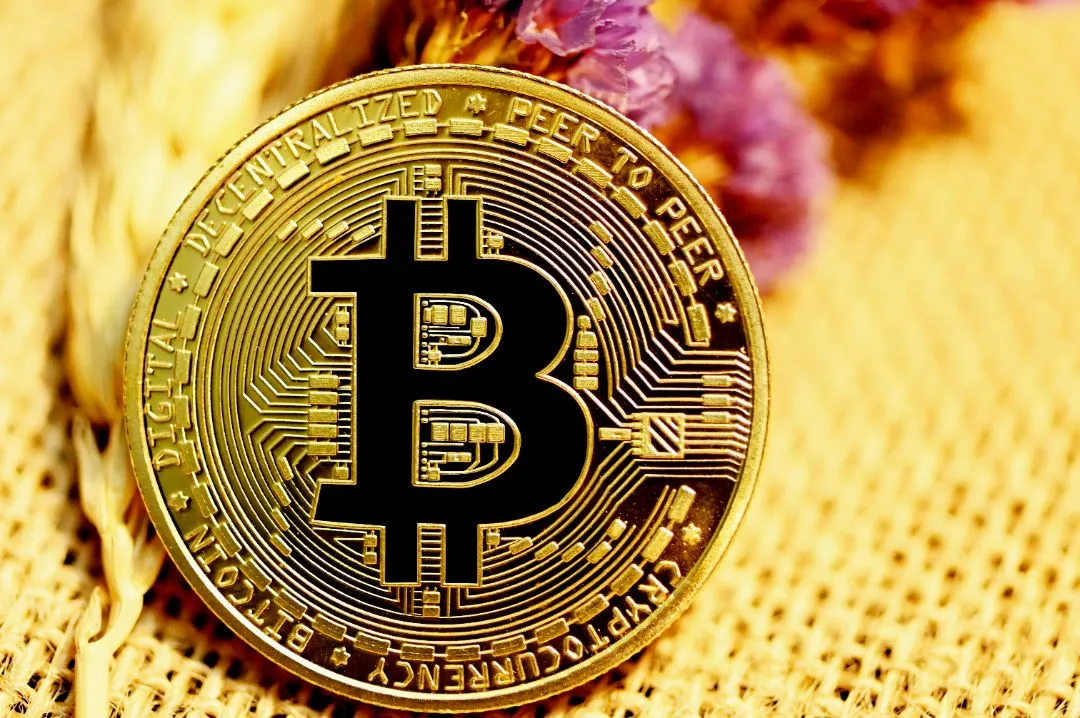
Photo by Shubham Dhage on Unsplash

Real-world assets gain ground on the blockchain

On-chain data also underscores the rapid growth of the tokenization sector. According to RWA.xyz, the total value of real-world assets (RWAs) deployed on-chain has climbed to $35.63 billion, up 7.8% from a month ago. A study by Ripple and Boston Consulting Group (BCG) estimates that tokenized assets could be worth $19 trillion by 2033, about 530 times their current value.


Among RWA assets, the BlackRock USD Institutional Digital Liquidity (BUIDL) Fund, Tether Gold (XAUT), and Paxos Gold (PAXG) currently lead the market in terms of value. Over the past 30 days, BlackRock’s BUIDL Fund slipped 0.06%, while the two tokenized gold products, XAUT and PAXG, jumped 46.65% and 14.19%, respectively.


These gains mirror gold’s bullish run in October, when its price surpassed $4,000 per ounce for the first time on Oct. 7. The momentum has since eased slightly, with gold now trading at around $3,969.55 per ounce.


Tokenization brings 24/7 markets and P2P flexibility

Industry experts point to the convenience of tokenization as a key advantage. Speaking to Yahoo Finance, Will Peck, head of digital assets at WisdomTree, explained that tokenized gold allows for around-the-clock trading and direct peer-to-peer (P2P) transactions. He added that gold and Bitcoin act as complementary stores of value, both serving as deflationary assets.


Ian Kane, CEO of fintech company Firepan, said tokenized gold appeals to investors as it enables them to retain ownership, leverage their holdings for loans, and generate extra yield, while preserving their principal against debasement or devaluation.


These views are not new. Earlier this month, Robinhood Markets CEO Vlad Tenev described tokenization as “a freight train” that “can’t be stopped,” predicting it will eventually transform the global financial system. Similarly, in his annual letter to investors in April, BlackRock CEO Larry Fink said the tokenization of assets could fundamentally reshape the way people invest. By digitizing ownership, tokenized venture capital funds could move beyond their closed circles, giving ordinary investors a stake in early-stage innovation and greater control over their capital.


Venture capital faces hurdles in tokenization push

While tokenization promises greater accessibility and liquidity, not all market segments are ready for it. According to TheStreet, tokenized venture capital (VC) funds could open a traditionally closed market to more investors, but the process is more complex than it appears.


In an interview with TheStreet, Elena Obukhova, founder of Supermoon Ventures, said that liquidity, not technology, is the main obstacle. Unlike tokenized company shares that can be traded freely on public markets, VC funds invest in private startups whose value may take years to materialize through an exit or acquisition. Allowing such funds to trade freely could increase volatility and pressure founders, as interim valuations might distort perceptions and weaken confidence in early-stage ventures.


Still, the promise of tokenized venture finance remains within reach. Firms are testing models that limit trading periods, protect investor data, and refine valuation methods to better reflect the illiquid nature of startup investments. Since liquidity events such as initial public offering (IPOs) or acquisitions typically occur only every one to two years for early-stage startups, the path forward will depend on creating systems that can maintain stable and accurate valuations in the interim.


Tokenization is rapidly emerging as a transformative force in the financial world, offering greater accessibility, liquidity, and efficiency. As more assets, from gold to venture capital, make their way onto the blockchain, the potential to reshape investment and trading markets grows. While challenges remain, particularly around liquidity and valuation in sectors like venture capital, the continued advancements in tokenization demonstrate its key role in the future of finance.

More to Read
View All
Web3 & Enterprise·

May 10, 2023

SafePal Delves Into Korean Market Through Klaytn Partnership

SafePal Delves Into Korean Market Through Klaytn PartnershipThe Seychelles-based team behind non-custodial digital asset wallet provider, SafePal, has made its first attempt at conquering the Korean market through a partnership with South Korean enterprise blockchain, Klaytn.The collaboration will see the wallet provider support digital assets native to the Klaytn blockchain network. For Klaytn ecosystem users, it also means that they can access in excess of one hundred blockchains, which are already supported by SafePal’s non-custodial wallet. Both entities articulated their thoughts relative to the partnership, with SafePal doing so via a blog post published late last week. Meanwhile, the Klaytn project team expanded on the development in a post to its website on Tuesday.Photo by Mathew Schwartz on UnsplashKorean expansionKlaytn-native digital assets will be supported via SafePal’s mobile app, hardware wallet and its browser extension-based wallet. SafePal acknowledges the leading position that the Klaytn network takes in Korea, relative to the metaverse, blockchain gaming and other Web3 verticals. While SafePal already has 10 million users, this move demonstrates that it has plans on expanding that user-base to incorporate millions more, in this case Korea-based Klaytn network users.Alluding to that Korean expansion, Veronica Wong, Co-Founder and CEO of SafePal stated: “Klaytn is a leading blockchain in Korea for Web3 and DeFi, so this partnership made perfect sense, as we want users to access exciting opportunities in all established ecosystems globally.”Bringing Klaytn dApps to SafePal usersThe Klaytn project team is viewing the hook-up in the same manner. In its announcement it outlines that the collaboration can serve its purpose in “bringing in Klaytn’s next 10 million users with SafePal.” The partnership also serves to bring leading Klaytn dApps to that new user-base of 10 million. That includes on-chain instant swap protocol, Klayswap, blockchain play-to-earn game DeFi Kingdoms, Korean NFT marketplace Pala, leveraged yield farming project, Kleva Protocol and DEX aggregator Swapscanner.Conceived by the dominant messaging app provider in Korea, KAKAO, in 2018, the development of the Klaytn blockchain is now guided by the Klaytn Foundation. The project has set out a governance roadmap that will see the project achieve decentralization later this year.SafePal growth trajectorySafePal has been hitting its numbers when it comes to expanding its user base. Over the course of the past year, it has grown its user-base from 8 to 10 million. Its support for 100 blockchains results in overall support for in excess of 200,000 token types, including NFTs. That growth strategy belies further comments that Wong made relative to this latest collaboration:“While the self-custody offered by Web3 and DeFi is increasingly important amidst growing concerns about traditional financial systems, adoption is still hindered by language and geographical barriers. Klaytn is a leading blockchain in Korea for Web3 and DeFi, so this partnership made perfect sense, as we want users to access exciting opportunities in all established ecosystems globally.”With no let up in its growth strategy, SafePal followed up on Friday with an announcement that it had integrated the recently launched low latency, high throughput layer one SUI network and its native token, $SUI.

news
Markets·

May 15, 2025

Japanese firms expand Bitcoin holdings amid growing institutional interest

Several Japanese companies, including Remixpoint and Metaplanet, have been increasing their Bitcoin (BTC) holdings, underscoring the growing institutional interest in cryptocurrencies in the region.Photo by Kanchanara on UnsplashRemixpoint, an energy consulting firm listed on the Tokyo Stock Exchange, recently announced an additional purchase of 32.83 BTC valued at 500 million yen ($3.4 million), according to local news outlet CoinPost. This acquisition took place on May 13 at an average price of 15.23 million yen ($104,270) per BTC, bringing the company's total BTC holdings to 648.82 BTC. Remixpoint's crypto portfolio, including BTC, is now valued at 11.1 billion yen ($76 million) and also comprises Ethereum (ETH), Solana (SOL), XRP and Dogecoin (DOGE). The firm began actively accumulating BTC late last year, motivated by multiple factors, including the positive price trend following the latest Bitcoin halving event, increased market activity after the latest U.S. presidential election and the growth in institutional participation, particularly after the approval of spot crypto ETFs in the U.S. Metaplanet becomes a major BTC holderAnother notable player, Metaplanet, a publicly traded Japanese company specializing in Bitcoin investment, has positioned itself as one of the largest BTC holders globally. As of May 12, Metaplanet’s Bitcoin yield reached 170%, with total holdings of 6,796 BTC. This places it as the 11th largest Bitcoin holder worldwide and the largest in Asia, surpassing El Salvador, which currently holds 6,177 BTC, according to data from Arkham. Metaplanet's ongoing Bitcoin accumulation aligns with CEO Simon Gerovich's advocacy for Bitcoin. In a March podcast, Gerovich said he encourages his friends to allocate "100% of their net worth into Bitcoin." The company’s strategic goal is to amass 10,000 BTC by the end of 2025 and 21,000 BTC by 2026. Reinforcing its influence, Metaplanet appointed Eric Trump, the second son of pro-crypto U.S. President Donald Trump, to its newly formed Strategic Board of Advisors in January. Evolving crypto policies, including national reservesBefore Trump's second term, Gerovich expressed his expectation that other countries would follow the U.S. once it established a national Bitcoin strategic reserve—a move formalized by President Trump through an executive order in March. In a related development, Ukraine is reportedly drafting a bill to create a similar reserve in collaboration with Binance. Meanwhile, in Taiwan, lawmaker Ko Ju-Chun has been advocating for adding Bitcoin to the country's national reserves. In a similar trend, another Japanese firm, Value Creation, disclosed plans last month to acquire 100 million yen ($660,000) worth of Bitcoin, further reflecting the growing interest among Japanese companies in crypto investments. Complementing this corporate adoption trend, Japan's Financial Services Agency (FSA) has been shaping its regulatory framework for cryptocurrencies. The agency aims to redefine digital assets as financial products under the Financial Instruments and Exchange Act, a move viewed as an attempt to balance innovation with investor protection. Building on this approach, an FSA discussion paper released on April 10, which remained open for public feedback until May 10, proposed classifying crypto assets into two categories: those used for fundraising and business activities, and those that are not—such as BTC and ETH. This regulatory evolution, alongside increasing corporate investment in BTC, reflects Japan's efforts to adapt to the evolving global crypto landscape.

news
Web3 & Enterprise·

Sep 07, 2023

Socket Protocol Raises $5M in Strategic Partnership

Socket Protocol Raises $5M in Strategic PartnershipSocket Protocol, an interoperability protocol founded by Indian duo Rishabh Khurana and Vaibhav Chellani, has raised $5 million with the strategic investment coming from Coinbase Ventures and Framework Ventures.Despite the ongoing bear market, cross-chain protocols like Socket have continued to attract substantial investment, underlining the growing belief in a future where different blockchains seamlessly connect.Photo by Towfiqu barbhuiya on UnsplashMore than just fundingSocket Protocol, designed to enhance communication between various blockchains, secured this funding to further its collaboration with Coinbase. The firm articulated the nature of the funding and that collaboration on X (formerly Twitter) on Wednesday.The partnership aims to create bridging opportunities for developers and users of Coinbase Wallet and Base, Coinbase’s recently launched layer-2 network built on Ethereum. Socket explained that there is already evidence of that collaboration, borne out by a bridging feature that has already been built into Coinbase Wallet, and powered by Socket Protocol.In relation to the newly launched Base network, the project stated: “We are also helping developers and apps expand to Base with a seamless onboarding experience. Rainbow Wallet, Layer3, Bungee, Zapper & more apps leverage Socket to get their users onboarded to Base already!”As the cryptocurrency ecosystem witnesses the emergence of new layer-2 networks or “rollups” and the continuous expansion of layer-1 blockchains, Socket Protocol positions itself as a critical player in connecting these fragmented ecosystems.Seamless cross-network communicationThe protocol’s primary goal is to facilitate communication between different blockchains, allowing them to interact seamlessly. By offering a bridge for assets, Socket Protocol simplifies cross-network transactions, effectively making the experience akin to operating on a single unified blockchain.Socket boasts that since the launch of the project, it has facilitated over 2.5 million cross-channel transactions, accounting for $3.5 billion in value transfer, while claiming that this is just the starting point, with the project aspiring to grow past that milestone going forward.The recent fundraising highlights the increasing interest in interoperability solutions like LayerZero, as investors recognize the significance of bridging for the future of blockchain technology. Notably, inter-bank messaging system Swift revealed experiments involving the transfer of tokenized value across various private and public blockchains, with Chainlink’s Cross-Chain Interoperability Protocol playing a pivotal role in these experiments.Socket Co-Founder Chellani emphasized the importance of scalable solutions for the future. He noted that “rollup-to-rollup communication is really important” for achieving scalability, aligning the scaling future with the concept of a multi-chain or cross-chain future. “I think the scaling future, and the multi- or cross-chain future are the same thing,” he added.This investment in Socket Protocol, coming at a time of market uncertainty within the crypto space, reflects the growing confidence in the potential of blockchain interoperability to unlock new possibilities and create a more interconnected blockchain landscape.

news
Loading