Top

OKX announces delisting of 26 trading pairs

Web3 & Enterprise·November 08, 2023, 1:25 AM

Cryptocurrency exchange OKX has made a significant announcement regarding the delisting of more than 20 trading pairs, with a view towards its ongoing maintenance of strict listing criteria and performance monitoring. This decision will impact a considerable number of trading pairs across various cryptocurrencies, with the process scheduled to commence later this week.

OKX outlined details of this recent trading pair purge in a statement published to its website on Monday. Among the trading pairs set for removal are CELO-USDC, AXS-USDC, APE-BTC and the HNT-USDT trading pair, which will be delisted on Nov. 10. Notably, Bytom (BTM), a Chinese crypto project, which has experienced a substantial 46% drop in value since Monday, is also among the tokens to be delisted.

The exchange is advising users to manage their assets accordingly in preparation for the changes. Withdrawals for these tokens will cease on Jan. 10, 2024. During this transitional period, OKX recommends that users cancel any open orders linked to the impacted trading pairs to avoid automatic cancellations, which could result in processing delays.
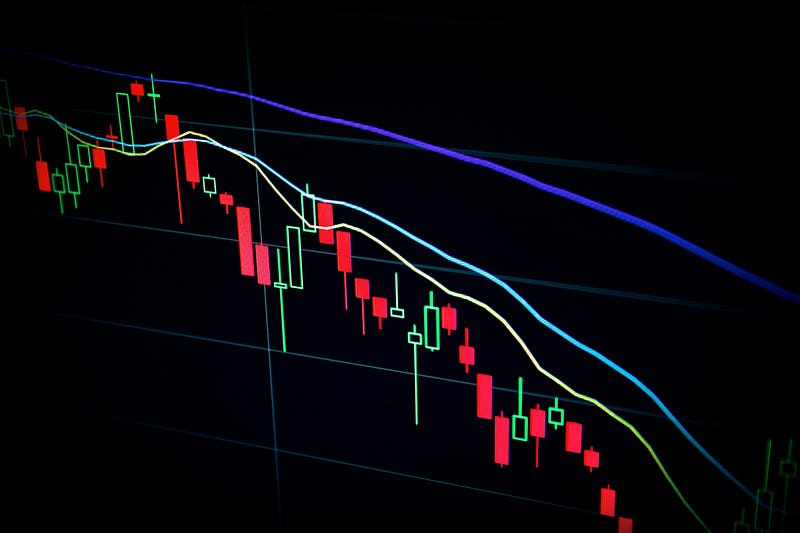
Photo by Maxim Hopman on Unsplash


SAITAMA delisting

Deposits for the affected tokens, including HNT, BTM, and SAITAMA, were halted by OKX on Nov. 3. SAITAMA, an Ethereum-centric ERC20 token, is the primary payment medium on the Saitama platform. There were mixed reactions to the delisting of the coin. One community member took to X, stating:

“I will say I do think it isn’t cool for OKX to delist #Saitama considering we didn’t get on there for the reasons specified of delisting. The listing was won through hours of Spaces and helping people get VPNs to win a contest. Regardless of what the market is doing we won fairly.”

Another Saitama project supporter took a more pragmatic view, stating:

“Delisting Is a tragedy? I don’t think so. What did the OKX listing for the token price? What is the difference between holding or selling with or without okx? Volume was too low, and this isn’t a news, so they will delist. They will relist again….#SAITAMA”

OKX has embarked upon several initiatives over the course of 2023 in an effort to further the user proposition offered by the platform. From a marketing perspective, the company took the decision in October to retire the Okcoin brand, rebranding its various sub-platforms instead to OKX.

The Seychelles-incorporated company indicated in September that it expects to have secured a virtual asset service provider (VASP) license in Hong Kong by June of next year.


Delisting banks

Tokens are not the only items to be delisted by the exchange recently. Alongside competitor Bybit, the company decided to delist sanctioned Russian banks Tinkoff Bank and Sberbank from its peer-to-peer exchange platform.

This move by OKX reflects the exchange’s efforts towards maintaining a high level of integrity and performance. Listing coins that fall below a minimum acceptable level of liquidity and trading volume can leave them much more exposed to the risk of manipulation. By adhering to stringent listing criteria and promptly addressing issues, the company is making a greater effort towards maintaining a position as a trusted and secure trading platform for cryptocurrency enthusiasts and investors.


More to Read
View All
Policy & Regulation·

Aug 16, 2023

$100M Pyramid Scheme Linked to Prominent Chinese Filecoin Project

$100M Pyramid Scheme Linked to Prominent Chinese Filecoin ProjectA courtroom showdown currently playing out in the People’s Court of Pingnan County in northeastern Fujian province in China is laying bare an intricate pyramid scheme entwined with one of China’s flagship ventures in the Filecoin ecosystem.The lawsuit thrusts five defendants into the spotlight, alleging their orchestration of an expansive pyramid scheme under the guise of their enterprise, Shenzhen Space-Time Cloud Company. The operation is purported to have siphoned off millions of dollars, leaving in its wake a trail of financial wreckage.Photo by Traxer on UnsplashAggressive project marketingAccording to a local media report published on Monday, the saga began in June 2018 when Lai Mouhang and Lai Moujun established the Space-Time Cloud Company. Subsequently, co-defendants Hu and Liang joined the ranks in the following months. However, it wasn’t until September 2019 that Lai Mouhang escalated the company’s operations, leveraging the ipfs.cn domain to aggressively market and peddle investments linked to distributed storage technology and Filecoin’s intricate economic model.Central to Filecoin’s model is its block reward system, where miners validating new blocks receive Filecoin tokens (FIL) as a reward. In a stunning revelation, the prosecution claims that Lai Mouhang and his accomplices crafted a scheme mirroring this economic structure.Their brainchild, the filpool.io platform, served as a conduit for joint mining, masquerading as a storage server vending operation for FIL mining. This platform, intrinsically linked to Space-Time Cloud Company, allegedly formed the epicenter of the defendants’ fraudulent maneuvers.Almost 60,000 usersThe gravity of the scheme becomes evident when considering the staggering numbers: a reported 57,122 members registered on the filpool.io platform and an additional 143 partners on the bpool.io platform, a sibling project of Space-Time Cloud Company. These platforms collectively amassed a jaw-dropping RMB 607 million ($83 million), alongside RMB 62 million in diverse cryptocurrencies.The modus operandi of the defendants was rooted in enticing participants with rosy prospects of exponential profits. By acquiring a minimum of 8 terabytes of cloud computing power, individuals could attain bronze membership status or higher, unlocking the ability to further recruit participants. Unsurprisingly, the magnitude of returns correlated directly with the size of investments and the recruitment spree — classic hallmarks of a pyramid scheme.The prosecution contends that the defendants exploited these platforms as bait for participants, perpetuating the myth of high returns. This alleged deception led to substantial financial losses for many unsuspecting victims. Furthermore, these actions purportedly sowed discord and upheaval in both economic and social spheres, potentially transgressing criminal law boundaries.As the investigation into this convoluted case unfurls, its implications resonate far beyond China’s territorial confines. The intertwining of cryptocurrency, blockchain, and pyramid schemes punctuates the ever-evolving narrative of financial crime. The case highlights the importance of vigilance and regulatory scrutiny in an innovative industry that has more than its fair share of bad actors.

news
Web3 & Enterprise·

Nov 15, 2024

Coincheck to become first Japanese crypto exchange to list on Nasdaq

Coincheck, a subsidiary of Monex Group, a Tokyo-based global financial services firm, has gained U.S. Securities and Exchange Commission (SEC) approval to become the first Japanese crypto exchange to list on the Nasdaq, an American stock exchange.Photo by Denys Nevozhai on UnsplashSPAC mergerThe approval by the U.S. regulator was filed on Nov. 13. The listing has been enabled due to the company’s decision to enter into a merger with a special purpose acquisition company (SPAC), namely Thunder Bridge Capital Partners (TBCP).  A SPAC raises money through an initial public offering (IPO) to either acquire or merge with an existing company. Opting for a SPAC means that Coincheck can forego a lot of the time and expense that would be necessary if it attempted to effect an IPO on its own. Parent company Monex Group published a statement outlining that Coincheck CEO Yuko Seimei had “been diligently preparing for listing its common stock on the Nasdaq Global Market (“Nasdaq”) through a previously announced business combination with Thunder Bridge Capital Partners.” Possible Nasdaq listing on Dec. 10 In a press release issued by TBCP, the company claimed that the proposed merger is anticipated to close on or about Dec. 10, 2024. That eventuality is subject to stockholder approval, Nasdaq approval and specific closing conditions. Consequently, Coincheck’s Nasdaq listing could potentially happen as early as Dec. 10. TBCP is holding a shareholder vote on the merger on Dec. 5. If all conditions are satisfied to pave the way for listing, the company’s stock will be listed using CNCK as the Nasdaq stock ticker. Once the merger and Nasdaq listing have been accomplished, Coincheck will still remain a subsidiary of Monex Group. The merged business will gain access to $237 million, held in trust by TBCP, with Monex retaining an 82% stake in the company. Furthermore, Thunder Bridge CEO Gary Simanson will lead the new company. The $1.25 billion merger had been in the works since 2022, having faced multiple delays on the path towards merger completion and Nasdaq listing. Coincheck finally filed with the SEC to merge back in May. Parent company Monex has other interests in the digital asset sector beyond its involvement with Coincheck. Last December the company acquired a majority stake in 3iQ Digital Holdings, a Canadian crypto asset management company.Monex has just launched a new brand, Monex Web3, comprising of Monex’s Web3 business portfolio. It also offers a Web3 consulting business, using its local know-how to guide Web3 startups in entering the Japanese market. Coincheck has also engaged in partnerships to assist other firms in gaining access to the Japanese market. Earlier this year the leading Japanese crypto exchange partnered with USD Coin (USDC) stablecoin issuer Circle, in an effort to expand USDC access within the local market. In January 2018 the exchange suffered what was at the time the world’s largest ever digital asset theft, losing $534 million in virtual assets in a hack of the platform.

news
Policy & Regulation·

Sep 26, 2023

Hong Kong Takes Steps to Enhance Crypto Platform Oversight

Hong Kong Takes Steps to Enhance Crypto Platform OversightIn the wake of the ongoing JPEX scandal, the Securities and Futures Commission (SFC) of Hong Kong has pledged to intensify its efforts to combat unregulated cryptocurrency trading platforms operating within the Chinese autonomous territory.Photo by Ruslan Bardash on UnsplashPublic registry plannedAs of Monday, the SFC has announced a comprehensive plan to address these concerns. One key initiative includes the publication of a publicly accessible list encompassing all licensed, deemed licensed, closing down, and application-pending virtual asset trading platforms (VATPs). The purpose of this list is to empower the public with the information needed to identify potentially unregulated VATPs conducting business in Hong Kong.Ongoing JPEX falloutThese new measures arrive in the aftermath of the ongoing JPEX crypto exchange scandal, which local media outlets have characterized as one of the most significant financial fraud cases to ever impact the region. JPEX, a Dubai-headquartered platform, stands accused of offering its services to Hong Kong residents without having applied for a license in the country.The SFC pointed directly to the issues at JPEX in its most recent announcement, stating: “The JPEX incident highlights the risks of dealing with unregulated VATPs and the need for proper regulation to maintain market confidence. It also shows that dissemination of information to the investing public through the Alert List, warnings and investor education can be further enhanced to help members of the investing public better understand the potential risks entailed by suspicious websites or VATPs.”Christopher “Kit” Wilson, the Director of Enforcement at the SFC, discussed these developments at a press briefing held on Monday, alongside addressing the JPEX scandal. Wilson revealed that, due to evasive behavior from stakeholders and unsatisfactory responses to information requests, JPEX was placed on the regulator’s alert list in July 2022.It emerged last week that Hong Kong police had taken social media influencer Joseph Lam into custody related to the scandal. More arrests followed later in the week while authorities indicated that they were looking to tighten up regulation in light of the unfolding JPEX saga. By Friday, access to the web and mobile platforms of JPEX had been blocked with JPEX encouraging users to use VPN to circumvent the measure.Wilson further elaborated that a complex investigation, involving multiple parties across various jurisdictions, was initiated by the SFC, which escalated following the receipt of the organization’s first official investor complaint in April 2023. This coincided with the full implementation of the Anti-Money Laundering Ordinance (AMLO) in June 2023, prompting the commencement of a formal fraud investigation.Wilson stated: “As a result of that investigation, we issued a formal warning on Sept. 13 and referred the matter to the police.”As it stands right now, the financial ramifications of the JPEX scandal are estimated to have reached approximately $178 million. Local law enforcement agencies have received over 2,200 complaints from affected exchange users.

news
Loading