Top

Hong Kong regulators consider opening up crypto ETFs to retail

Policy & Regulation·November 07, 2023, 12:24 AM

Hong Kong regulators are now exploring the possibility of allowing retail investors to participate in spot crypto exchange-traded funds (ETFs).

The CEO of Hong Kong’s Securities and Futures Commission (SFC), Julia Leung, was cited by Bloomberg on Sunday as having indicated that provided that the necessary regulatory approvals and checks are in place, the regulator may be open to the notion of retail participation where spot crypto ETFs are concerned. Leung emphasized the regulator’s openness to innovative technology that enhances efficiency as long as it addresses potential new risks.
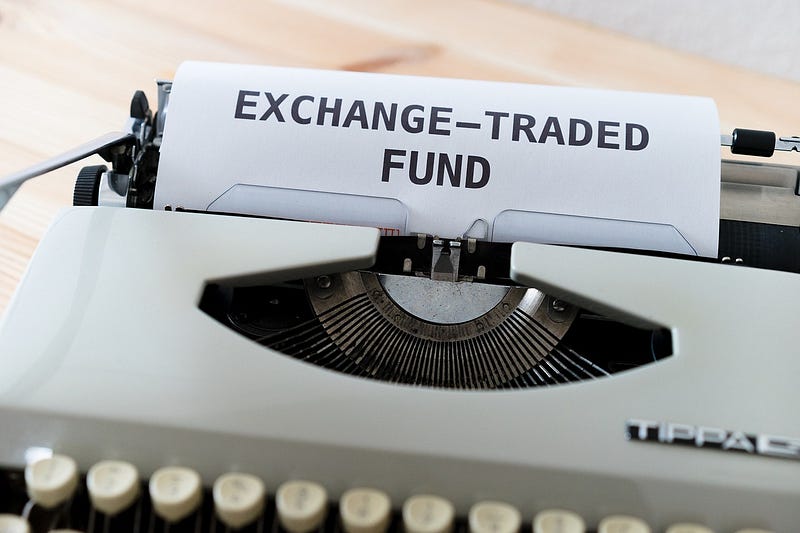
Photo by Markus Winkler on Pixabay


‘Happy to give it a try’

She stated: “We welcome proposals using innovative technology that boosts efficiency and customer experience. We’re happy to give it a try as long as new risks are addressed. Our approach is consistent regardless of the asset.”

While both the United States and Hong Kong currently permit futures-based cryptocurrency exchange-traded funds (ETFs), the adoption of such instruments has been relatively modest in comparison to the broader fund industry.

In Hong Kong, there are currently ETF listings for products like Samsung Bitcoin Futures Active, CSOP Bitcoin Futures and CSOP Ether Futures, with a total combined asset value of approximately $65 million. In June, Hong Kong’s largest ETF manager, Hang Seng, suggested that it too was considering a crypto product offering.

In accordance with the SFC’s digital asset regulations, individual investors already have the opportunity to trade prominent cryptocurrencies like Bitcoin and Ether on licensed cryptocurrency exchanges since June 1. Presently, BC Technology Group Ltd.’s OSL and HashKey Exchange are the only platforms in Hong Kong with permits for cryptocurrency trading. Additionally, there are expectations that mandatory regulations concerning stablecoins will be introduced over the course of the next year.


Prioritizing investor protection

Leung expressed the regulator’s cautious approach, stating:

“As the crypto ecosystem evolves step-by-step to the point where we’re comfortable, then we’re happy to open up more access to the wider investing public.”

Notably, Hong Kong also recently unveiled its Web3 plans, highlighting its commitment to embracing blockchain and decentralized technologies.

Hong Kong introduced a specialized regulatory framework for virtual assets in June which are designed to attract businesses while prioritizing investor protection. That need to protect consumers has been underscored recently by the alleged fraud that has subsequently been uncovered involving HK$1.6 billion ($204 million) at the unlicensed JPEX cryptocurrency exchange in the city.


Market reaction

The significance of such a move isn’t lost on crypto market participants. Taking to X, one wrote: “Seismic shift. Hong Kong’s play could reshape the Asian crypto landscape. #Bitcoin ETFs? A strategic move to anchor HK as the digital nexus of Asia.” Another claimed that this “might redefine the crypto landscape and fuel the next bull market.”

A report published by the Hong Kong Stock Exchange in April found that crypto ETFs have the potential to play a significant part in the next phase of digital asset innovation in Asia.

Leung emphasized the importance of a strong and comprehensive regulatory structure, highlighting the SFC's efforts to enhance transparency in processing license applications for virtual asset exchanges.

Moreover, the Hong Kong Monetary Authority (HKMA), the Chinese autonomous territory’s central bank, is actively exploring the possibility of offering guidance to banks regarding the provision of digital asset custodial services. These services are considered vital for nurturing the growth of a digital asset ecosystem and ensuring investor security.


More to Read
View All
Web3 & Enterprise·

Aug 30, 2023

India’s CoinSwitch Trims Workforce Amid Market Downturn

India’s CoinSwitch Trims Workforce Amid Market DownturnIn the wake of an extended cryptocurrency market downturn, India’s CoinSwitch, a crypto investing app, has become the latest platform to downsize its staff, as reported by local news agency Moneycontrol on Monday.Photo by Kelli McClintock on UnsplashCustomer support cutsThe exchange has reportedly let 44 employees go from its customer support division this month, attributing the move to redundant roles caused by the bear market’s decline in customer queries.In a statement, CoinSwitch explained: “We continuously evaluate our business to stay competitive, prioritizing innovation, value, and service for our customers. To that end, we right-sized our customer support team to align with the present volume of customer queries on our platform.”The company noted that this decision led to the voluntary resignation of 44 members from its support team, following detailed discussions with their managers. The 44 employees represent a significant portion — approximately 8% — of CoinSwitch’s total workforce. The company’s LinkedIn profile currently indicates that it has 519 employees.Following local industry trendCoinSwitch’s staff reduction news emerged barely a week after another prominent local exchange, CoinDCX, downsized its workforce by 12%, based on an overall headcount of around 730 employees (according to LinkedIn data).The fact that both businesses have taken the decision to cut staffing is indicative of an overall market downtrend currently. That said, CoinSwitch had onboarded 60 people since April, which would imply that the firm is expanding in other areas despite these customer service-related layoffs.This may reflect the company’s plan to change strategic direction. Going forward, CoinSwitch intends to diversify its product offering and transition towards becoming a wealth tech platform.CoinDCX layoffsCoinDCX’s Co-Founders, Sumit Gupta and Neeraj Khandelwal, stated last week that they were making what was a very difficult decision to reduce the size of the team by 12% and that they regretted that talented team members would be moving on from the organization. The founders attributed the decision to market challenges and also pointed out the impact of the 1% Tax Deducted at Source (TDS) applied to local crypto exchanges. They clarified:“These factors had a significant impact on our volumes and thus revenues. To adapt, we undertook several proactive measures, including direct cost optimization and investment in automation to drive efficiency and productivity.”According to the announcement, the affected CoinDCX employees will receive a support package including severance pay equivalent to their full notice period, an additional month of salary, extension of health insurance, and other forms of assistance.CoinSwitch was founded by Ashish Singhal, Govind Soni, and Vimal Sagar Tiwari in 2017. The company received the backing of leading venture capital firms such as Andreessen Horowitz (a16z), Sequoia Capital, Tiger Global, Paradigm, Coinbase Ventures, and Ribbit Capital. In 2021 it was recognized as India’s second crypto firm to reach unicorn status, following a $260 million Series C funding round that saw the company reach a valuation of $1.9 billion.In 2022 India introduced a 30% tax on cryptocurrency gains, resulting in the exodus of numerous cryptocurrency service providers and a steep decline in crypto trading activity. The country has also implemented a 1% TDS for crypto exchanges, mandating that exchanges pay 1% on all crypto asset transfers.

news
Policy & Regulation·

Oct 15, 2025

South Koreans warm to stablecoins as interest surges, but central bank urges caution

South Korea is moving closer to the global stablecoin trend as public curiosity and real-world trials accelerate, even as the country’s central bank signals it wants tight guardrails. A recent analysis from Shinhan Card, reported by Money Today, finds that internet searches for “stablecoin” in South Korea jumped 403% in the first half of this year compared with the previous six months, based on data from major portals such as Google and Naver. Mentions on social media rose 359% over the same period. The spike reflects growing expectations that U.S. dollar-pegged tokens could make cross-border payments faster and cheaper by enabling near-instant settlement at prevailing foreign-exchange rates. Interest has been reinforced by user reviews of actual payment experiences, which climbed between May and July. Crypto-linked cards, including RedotPay and Bybit’s offerings, are already usable domestically and allow top-ups with leading stablecoins such as USDT and USDC. One user described buying a cup of coffee at a local shop with a RedotPay card via Apple Pay. The small purchase underscores how crypto rails are edging into routine spending.Photo by Oat Appleseed on UnsplashFrom curiosity to checkoutTrading venues remain the main arena. According to CryptoQuant, transactions in USDT and USDC on the country’s five leading exchanges totaled nearly $71 billion from January through August, underscoring stablecoins’ central role in crypto liquidity and price discovery. Stablecoin interest in Korea shows a skew toward younger users and men, with men making up 74% of related searches and women 26%. By age, people in their 20s–40s accounted for 66% of searches, while those aged 50 and above represented 34%. Public debate is widening alongside adoption, with some online commenters predicting that stablecoins could chip away at the influence of traditional card networks. At the same time, banks, card companies, and exchanges are bracing for the arrival of a won-pegged counterpart, as the government and parliament prepare a regulatory framework and aim to introduce a bill as early as this month. Domestic card issuers, drawing on their merchant networks and settlement systems, are already exploring how to integrate won-backed tokens in ways that maximize convenience and scalability. Adoption meets skepticismSkeptics counter that Korea’s existing payments infrastructure is already world-class, leaving only marginal gains for a won stablecoin. They also argue that cross-border benefits would be modest because the won lacks reserve-currency status and broad global demand. The Bank of Korea (BOK) has struck a notably conservative tone. Governor Rhee Chang-yong has previously questioned the benefits of a won-denominated stablecoin and warned of risks to the monetary system. Earlier this month, in documents submitted to a lawmaker and reported by The Herald Business, the BOK advised that parliament consider granting it authority to require issuers to deposit reserves at the central bank when necessary. According to the bank, such a measure would strengthen user protection during heavy redemptions, curb money-supply growth outside its control, and ensure that any seigniorage benefits flow to the public. That approach could reduce issuer profits, since deposits at the BOK would not earn interest, just as is the case for commercial banks. The documents also recommend sizing reserves to match the total stablecoin supply, while clarifying that not all of it would necessarily need to be held at the central bank. Issuance path and next stepsAs for who should issue a won-pegged token, the BOK favors starting with a consortium of banks, citing their track record on compliance and the need for a controlled pilot that lets regulators assess and mitigate risks before widening access. The developments suggest a country exploring how stablecoins might integrate into an already sophisticated payments network. Consumers are showing interest, exchanges are handling large flows, and regulators are shaping the legal framework that will define the place of any future won-based digital currency. 

news
Policy & Regulation·

Feb 14, 2024

Korea Customs Service to form task force to combat crypto-related crimes

The Korea Customs Service (KCS) is preparing to establish a dedicated task force to combat the surge in cryptocurrency-related crimes. According to a report by local media outlet Joseilbo, this initiative was deliberated in a meeting chaired by KCS Commissioner Ko Kwang-hyo, specifically convened to discuss strategies against foreign exchange violations. The KCS reported that last year, it uncovered a total of 198 criminal incidents related to foreign exchange activities, with the combined value reaching approximately KRW 1.9 trillion ($1.4 billion).Photo by Mathew Schwartz on UnsplashCrypto involved in 88% of forex violations Of the total amount mentioned, violations of the Foreign Exchange Transaction Act comprised KRW 1.654 trillion, with 88% of these incidents involving virtual assets. This represents a dramatic surge in the involvement of virtual assets in financial crimes, especially when compared to 2020, where crypto-related offenses constituted 3% of the total value linked to forex violations. This trend underscores the rapidly growing role of virtual assets in such illicit activities. To address these issues, the KCS is set to broaden its crackdown on illicit cryptocurrency activities. This crackdown targets practices such as transferring foreign currency overseas to acquire virtual assets for arbitrage trading and using virtual assets to conceal trade payments, thereby attempting to bypass customs duties.Task force’s international collaborationAs part of this initiative, the country's customs agency aims to build a task force focused on tackling crypto crimes. This specialized group will be responsible for gathering and analyzing data, conducting investigations and recommending regulatory enhancements. The task force will collaborate with financial regulators to obtain crypto transaction records from domestic cryptocurrency exchanges. Moreover, it will work with customs authorities of other countries, including Hong Kong, to collect details on crypto transactions conducted abroad. 

news
Loading