Top

CoinGecko Report Points to Q3 Market Contraction

Markets·October 26, 2023, 2:11 AM

The third quarter of 2023 was marked by a significant market downturn and market cap contraction. That’s one of a number of findings in a Q3 crypto industry report compiled by Malaysian cryptocurrency ranking platform CoinGecko.
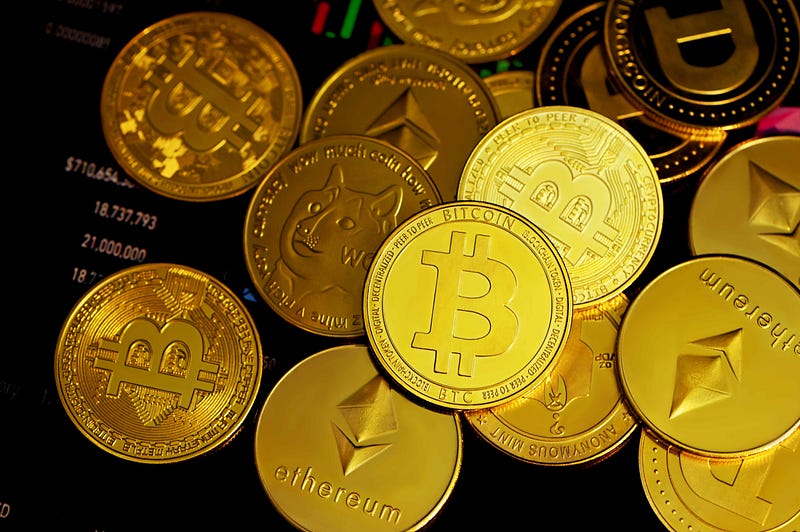
Photo by Kanchanara on Unsplash


Market cap contraction

The company released its latest research on Tuesday. In mid-August, Bitcoin (BTC) witnessed a sudden drop from approximately $29,000 to around $26,000, leading to a dip in the total cryptocurrency market capitalization from $1.2 trillion to $1.1 trillion.

The total crypto market capitalization recorded a nearly 10% decline, amounting to a drop of $119.1 billion. Since reaching its local peak on April 17, the total market capitalization has experienced a decline of 16.3%.

Notable shifts in the top 30 cryptocurrencies include Solana (SOL) climbing to #7, TrueUSD (TUSD) rising to #19, Litecoin (LTC) falling to #14, Avalanche (AVAX) dropping to #22, and Binance USD (BUSD) sliding to #27.


Stablecoin shrinkage

The top 15 stablecoins saw a 3.8% decrease in market capitalization during Q3 2023, reaching $121.3 billion. Tether (USDT) maintained its market cap during this period. USD Coin (USDC) experienced the largest absolute loss at -$2.26 billion (-8.3%), while Binance USD (BUSD) faced the most significant percentage decline of -45.3%, amounting to a drop of -$1.87 billion. TrueUSD (TUSD) was the sole gainer among the top 5, with a 12.8% increase in market cap.


NFT trading volume cut in half

Trading volume for NFTs declined by 55.6%, dropping from $3.67 billion in Q2 to $1.63 billion in Q3. Ethereum maintained its dominance, accounting for 83.2% of the NFT market during Q3. ImmutableX NFTs, driven by trading card game Gods Unchained, experienced a strong Q3, with a market share increase from 2.1% in Q2 to 3.9% in Q3.


Continued growth for RWAs

The Real World Asset (RWA) sector has continued to grow in 2023, with tokenized US treasury bills gaining popularity. The market cap for these tokenized T-bills increased from $114.0 million in January 2023 to $665.0 million by the end of September, marking a 5.84x gain. Traditional financial institutions led the way, with American asset manager Franklin Templeton controlling almost half of the overall market share, followed by Ondo Finance at 27%. Ethereum held 49% of the market cap share, while Stellar followed closely behind with 48%.


Spot DEX and CEX trading volume down

In Q3, spot trading volume on the top 10 decentralized exchanges (DEX) totaled $105 billion, a 31.2% drop from Q2. THORchain experienced a significant gain in volume, though this was partially attributed to illicit transfers.

Spot trading volume on the top 10 centralized crypto exchanges (CEX) amounted to $1.12 trillion, a decrease of 20.1% compared to Q2. Binance’s market share dropped to 44%, facing regulatory pressures and significant executive departures. Among the Asian exchange platforms, HTX, previously known as Huobi, secured the third spot with an 8% market share. Only Upbit and Bybit saw gains, while Kucoin was edged out of the top 10.

While Q3 may not have been the most positive industry quarter recently, things are looking a lot more promising as Q4 develops, with Singapore-based digital assets financial services platform Matrixport predicting a bitcoin unit price of $45,000 by year end.


More to Read
View All
Web3 & Enterprise·

Apr 19, 2023

Korean Game Developers to Benefit from Higher NFT Trading Volume

Korean Game Developers to Benefit from Higher NFT Trading VolumeKorean game companies preparing to launch web 3.0 games are expected to benefit from the higher non-fungible token (NFT) trading volume, according to Korean news outlet Financial News.©Pexels/Tony LitvyakA report from decentralized app analytics platform DappRadar states that the NFT trading volume reached $4.7 billion in the first quarter this year, up 137.04% from the previous quarter. This volume is the highest since the second quarter of 2022.This year’s strong NFT market so far is good news for Korean game developers, which were negatively affected by a slowdown in the crypto industry last year due to various factors, including the Terra USD collapse and the bankruptcy of crypto exchange FTX.In fact, many game and content companies are expanding their ecosystems by tokenizing their game items and intellectual property (IP) rights.NexonOne such example is Nexon, the developer of the massively multiplayer online role-playing game MapleStory. Based on its IP rights, Nexon is creating the MapleStory Universe, an NFT-based blockchain ecosystem. The MapleStory Universe will enable trading of NFTs, which users can obtain while hunting or accomplishing quests. Its first major project, a personal computer game named “MapleStory N,” will be launched to attract gamers worldwide.NetmarbleNetmarble, another Korean game company, will launch Modoo Marble 2: Metaworld on Wednesday for global gamers. The popular mobile board game will be rolled out on the MBX ecosystem operated by Netmarble’s blockchain subsidiary Marblex. Participation in the board game and involvement in the Metaworld would allow users to earn Meta Cash as rewards, which can then be swapped for different virtual assets. The trade of buildings and land within the game would likely be facilitated through the use of NFTs.Com2uS HoldingsCultural content company Com2uS Holdings is also making its own efforts to expand its blockchain ecosystem. Its subsidiary Com2uS Platform recently forged a partnership with animation firm Daewon Media to strengthen its NFT business based on Daewon’s popular IP rights.A game industry official said NFT trading can address issues that caused concerns for gamers who doubted the legitimacy and price of items they traded. The official further elaborated that incorporating elements like NFTs and the metaverse would enhance the gaming experience and excitement for gaming enthusiasts.

news
Web3 & Enterprise·

Jun 19, 2023

Korean Blockchain Fund Supports Web3 Game Developer Growth in Southeast Asia

Korean Blockchain Fund Supports Web3 Game Developer Growth in Southeast AsiaHashed, a Seoul-based blockchain venture fund, has spearheaded a seven-figure investment round for Decentralised Gaming Ventures (DGV), a Web3 game development support entity primarily serving Southeast Asia (SEA), according to a press release. This funding will help DGV in its mission to foster the growth of promising game developers in the region.Photo by Timo Volz on PexelsSEA as a Web3 Game HubDGV has set its sights on making SEA a hub to nurture game developers and bolster the Web3 game sector. The company has already established a studio in Singapore, where 32 talented game developers work in eight different teams, providing them with the necessary resources to design and introduce new gaming titles. Over the past year, DGV has supported the release of 15 games.Studio in SingaporeDGV further plans to help game developers in the region through alliances with renowned entertainment intellectual property (IP) owners. In the past, the company has teamed up with Singapore-based designer toys and art collectibles studio Mighty Jaxx, and recently appointed gaming veteran Derrick Sim as its Chief Operating Officer. Sim has expertise in collaborating with major entertainment IPs, including Marvel, StarCraft II, and FIFA Online 2.DGV CEO Samson Oh articulated the firm’s aspiration to forge an environment that empowers developers in SEA to create blockchain-powered Web3 games, anticipated to be the gaming industry’s future. With the support from Hashed, DGV looks to reinforce the region’s reputation as a fertile ground for innovative game developers.Hashed’s Co-Founder Ryan Kim commended DGV’s effective leadership, SEA governmental backing, and firm groundwork for expansion in the Web3 gaming industry. The investment in the firm signals the Korean fund’s belief in DGV’s seasoned team and its mission to leverage IP accessibility to advance its digital ownership initiative in the gaming realm.

news
Markets·

Mar 11, 2024

Korea’s daily crypto trading volume surpasses that of stocks at nearly $9B

With Bitcoin prices hitting an all-time high, the daily crypto trading volume in South Korea has surpassed that of the stock market, local media outlet The Financial News reported.  As of yesterday at noon (KST), the local daily trading volume of cryptocurrencies over the past 24 hours stood at over KRW 11.8 trillion, or nearly $9 billion, according to data from crypto platform CoinMarketCap. Meanwhile, the daily trading volume on the Korea Composite Stock Price Index, or KOSPI, was KRW 11.4 trillion on Friday.  The total daily crypto trading volume was tallied by adding trading volume across Korea’s five major crypto exchanges – Bithumb posted KRW 8.8 trillion, Upbit KRW 2.7 trillion, Coinone KRW 176.4 billion, Gopax KRW 55.2 billion and Korbit KRW 32 billion. Photo by Alexander Mils on UnsplashUnlike stock markets which have a closing time, crypto assets are traded 24/7, which makes it difficult to do an apple-to-apple comparison. Still, the numbers clearly demonstrate retail investors’ bullish sentiment toward the crypto market.  According to the U.S. crypto exchange Coinbase, the Bitcoin price touched $70,199 on Friday (UST), just three days after the flagship coin surpassed $69,000 on March 5, an already record-breaking price in 28 months since November 2021.  Inflation and recession drive retail investors to crypto Financial experts say that Korea’s persistently high inflation and slowing economic growth are driving local retail investors to seek relatively riskier yet high-yielding assets such as cryptocurrencies. Young investors in their 20s and 30s are particularly leaning towards investing in crypto, as they fear not being able to buy houses solely with their wages. Moreover, Koreans’ average monthly real wage declined by 1.1% year-on-year, which marks a continuous decline for two consecutive years since 2022.  Despite the country’s economic slowdown, the KOSPI has actually risen, fueled by capital influx from foreign investors who are expecting a valuation increase in local firms. In contrast, local retail investors are rushing out from the stock market as they see a lack of outperforming companies.  Data from the Korea Exchange (KRX), the sole securities exchange operator in the country, showed that foreign investors purchased KRW 4.4 trillion in stocks over the past month on the KOSPI market, while local retail investors sold KRW 3.3 trillion worth of stocks during the same period.  Local crypto boom prompts ‘Kimchi Premium’ effectThe recent bullish sentiment in the Korean crypto market can largely be attributed to local retail investors, because current laws prohibit foreign investors from trading crypto assets in the country and regulations limit enterprises from making direct investments in crypto.  While the KOSPI market grapples with the so-called Korea Discount effect, which refers to the undervaluation of the Korean stock market, the local crypto market is experiencing the exact opposite trend – crypto investors are benefitting from something called the Kimchi Premium effect, a newly coined term referring to the overvaluation of crypto assets in Korean crypto markets compared to those in their foreign counterparts. As of yesterday at 14:00 (KST), Bitcoin changed hands at KRW 917.4 million on foreign exchanges while at KRW 971.8 million on Korean exchanges, per data from local crypto exchange Upbit.  Cho Dong-keun, a professor at the Economics Department at Myongji University, described the current Korean economic situation as “a competition for the country’s limited wealth”. He said that the stagnant national growth has pushed people to fight for more wealth, urging them to invest in crypto assets, adding that Kimchi Premium could substantially appeal to many retail investors.   

news
Loading