Top

Korbit Joins Zero-Fee Crypto Trading Trend in South Korea

Web3 & Enterprise·October 20, 2023, 2:55 AM

South Korean cryptocurrency exchange Korbit reduced trading fees to zero on October 20 (local time) for all of the cryptocurrencies supported on the platform. This move follows in the footsteps of Bithumb, another Korean exchange that introduced zero-fee trading earlier this month.

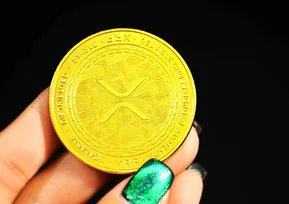
Photo by Jeremy Perkins on Unsplash


No extra registration required

Korbit users can now benefit from zero-fee trading immediately, with no special registration required. This arrangement will continue indefinitely until further notice.


Market maker incentives continue

Korbit’s market maker incentive program will remain in place. Under this program, users earn 0.01% of the transaction value whenever they place an order.

Oh Se-jin, CEO of Korbit, underscored the exchange’s commitment to enhancing user satisfaction. He pointed out several initiatives they’ve undertaken, including enhancing the login system, raising the daily Korean won (KRW) deposit and withdrawal limits, and eliminating transaction fees. He further noted that by removing trading fees, they aim to alleviate the cost pressures of crypto trading for their users and breathe new life into the market.

More to Read
View All
Web3 & Enterprise·

May 17, 2023

Sun Flags Unjust Token Profits of Huobi Founder’s Brother

Sun Flags Unjust Token Profits of Huobi Founder’s BrotherJustin Sun, Founder of the Tron blockchain and stakeholder in Seychelles-based global crypto exchange Huobi, has stated that the younger brother of the founder of the exchange, Li Wei, has received millions of Huobi tokens ($HT) when he shouldn’t have.Taking to Twitter, Sun wrote:“Li Lin’s younger brother Li Wei has repeatedly acquired a large amount of zero-cost HT through abnormal means. He has sold it on the Huobi platform many times in history, and has withdrawn huge amounts of cash”.Negotiating a refund and token burnSun went on to outline the action that he is in favor of taking in unison with decisions taken by the Huobi Global Advisory Committee (HGAC). “In order to protect people’s interests, the [HGAC] and the HT DAO community decided to recover and destroy the HT obtained by Li Wei at zero cost,” he wrote. “The HT destruction will be announced in the HT community. Such behavior will not be condoned,” he added.Sun complained that not only were the tokens wrongly allocated to Li Wei, he had been dumping the tokens on the market, selling them off for fiat money. In addition to the tokens being burnt, Sun says that he alongside the HGAC will “negotiate a refund” by engaging directly with Li Wei relative to the fiat money that he has already extracted through selling off the token.The Tron founder added that he doesn’t think it equitable that Wei should benefit from the token allocation as he hasn’t made any contribution to the Huobi community, stating that “fairness and the importance of rewarding those who genuinely contribute to the growth and development of HT DAO” are important.Double standardsSome in the crypto community would call double standards on Sun’s claims of a lack of fairness. At the time of the collapse of the FTX exchange in November of last year, Sun offered to help, collaborating with FTX’s Sam Bankman Fried to allow assets related to Sun’s crypto projects (TRX, BTT, JST, SUN, and HT) held by FTX customers on the exchange to be traded out of the exchange into external wallets.Trading in these assets recommenced for a time, with the price within the exchange being exorbitant relative to the regular market price outside of FTX. Many FTX customers ended up buying these tokens at excessive prices, without being able to extract them from the exchange like Sun had promised. To cap it off, those customers then had the newly installed FTX Debtor under the guidance of John J. Ray III, record their loss at the time the exchange officially went bankrupt at the normal market price for these tokens.Although originally a China-based exchange, Huobi moved out of the Chinese market due to adverse regulation, re-establishing itself in the Seychelles. The firm maintains offices in South Korea, the United States, Japan, and Hong Kong, where it has had a listing on the Hong Kong Stock Exchange since 2018.The $HT token has proven to be very volatile both in intraday trading on Tuesday and over the course of the past seven days. In both instances, it has hit high points in excess of $3.00 and low points of $2.70. At the time of publication, the token was trading at $2.90.Photo by Ant Rozetsky on Unsplash

news
Web3 & Enterprise·

Nov 24, 2023

NEOPIN teams up with Ticker Capital to expand Web3 ecosystem

NEOPIN teams up with Ticker Capital to expand Web3 ecosystemCentralized decentralized finance (CeDeFi) protocol NEOPIN announced on Friday (local time) that it has signed a business agreement with global accelerator Ticker Capital to expand its Web3 ecosystem, explore new business opportunities and nurture promising Web3 projects.Photo by Shubham’s Web3 on UnsplashGlobal Web3 allianceNEOPIN has been accumulating its blockchain expertise and technology by serving as a node validator in multiple global blockchain projects, including Ethereum, Tron, Cardano and Cosmos. Its CeDeFi protocol was launched more recently last year to provide Web3 users with a safe and convenient DeFi platform.Ticker Capital is an investment firm dedicated to early-stage blockchain technology projects. It has invested in, consulted with and accelerated more than 50 projects since 2018, including Carry Protocol, SuperWalk, Lillius and more. It operates multiple branch offices around the world, including in South Korea, Singapore and Hong Kong.While Ticker Capital has established a strong foothold in Chinese-speaking countries, NEOPIN has done so in other countries like the United Arab Emirates, Japan and the Southeast Asian region. By leveraging these dispersed geographical influences along with their distinct business models and expertise, the two companies plan to expand NEOPIN’s Web3 ecosystem to include new games, metaverses, NFTs and services built on the CeDeFi protocol. They also revealed plans to integrate their respective platforms in the event that a Web3 project nurtured by Ticker Capital is deemed compatible with NEOPIN.“Through this MOU, we will expand our global foothold and diversify our Web3 ecosystem,” said Ethan Kim, CEO of NEOPIN. “Since NEOPIN and Ticker Capital possess different strengths, we expect to create solid synergies through our mutual partnership.”The partnership’s main goal is to integrate innovative Web3 projects into the NEOPIN ecosystem, launch DeFi services and acquire users around the world. NEOPIN’s business partners will also be able to boost their opportunities for global success by gaining access to networking with Ticker Capital.Boosting presence in the UAEEarlier this year, NEOPIN was selected to participate in the Innovative Program of the Abu Dhabi Investment Office (ADIO), attracting a series of investments. It is also working with the Abu Dhabi Global Market (ADGM), an international financial center and free zone in the UAE, to create the world’s first DeFi regulations through a public-private partnership.

news
Web3 & Enterprise·

Jul 19, 2023

Polymesh’s APAC Digital Asset Regulation Report Highlights Challenges

Polymesh’s APAC Digital Asset Regulation Report Highlights ChallengesThe project team behind Polymesh, an institutional-grade permissioned blockchain built specifically for regulated assets, released a report on digital asset regulation within the Asia Pacific (APAC) region on Tuesday, highlighting several challenges that regulators are attempting to overcome.In a press release, the company outlined that the report covers recent regulatory developments in South Korea, Singapore, Hong Kong, and the broader APAC region.Photo by Jéan Béller on UnsplashProgressive regulatory effortsRegulators within the APAC region are currently striving to introduce legislation for digital assets, while several centers within the region are vying to establish themselves as hubs for digital asset-related business.The report explores the individual efforts of regulators in various APAC nations as they work towards crafting regulatory frameworks tailored to their jurisdictions. Those efforts encompass implementation, investigation, and enforcement of legislation in a borderless industry.Regulators in South Korea, Singapore, and Hong Kong have all embarked on formulating rules for emerging asset categories, albeit using different terminologies such as “digital assets,” “digital payment tokens,” and “virtual assets.” Their focus lies in striking a balance between consumer protection, market integrity, and industry development.Additionally, all three regulators adhere to the principle of “same activity, same regulations, same risks” when it comes to tokenized securities. They argue that regulatory requirements do not significantly differ solely because a security is in tokenized form. Each state has been actively engaged in local and global activities surrounding security tokens, including state involvement in the advancement of security token technology and cross-border transactions.Main findingsThe report’s main findings emphasize that while regulators in the APAC region are making strides in introducing digital asset legislation, the road ahead will not be without challenges.Legislating a cross-border industry poses difficulties that necessitate harmonization to foster a robust and interconnected ecosystem. Digital assets originating in Asia can be traded globally and vice versa. Merely identifying the asset’s place of origin is no longer sufficient.Although the report delves into the efforts of individual regulators, it emphasizes the need for long-term collaboration to establish a unified vision and practical implementation of regulations for this borderless phenomenon.Regulatory challengesThe regulatory challenges faced by South Korea, Singapore, and Hong Kong in driving the growth of digital assets in the APAC region are multifaceted. They include the intricacies of legislating an inherently cross-border industry. In turn, that can lead to the potential violation of legislation from other jurisdictions.The lack of harmonization among different jurisdictions, and variations in regulatory approaches among the three regulators are likely to be problematic. Furthermore, there are push-pull dynamics between the industry and regulators, with even the regulators themselves not always in agreement.However, despite these challenges, all three regulators have initiated the formulation of rules for new asset categories, with a strong emphasis on safeguarding consumer interests, maintaining market integrity, and fostering industry development.

news
Loading