Top

Ripple and the Republic of Palau Collaborate to Mint First PSC Stablecoin

Policy & Regulation·July 27, 2023, 12:10 AM

In a groundbreaking partnership, the Republic of Palau has teamed up with Ripple Labs to introduce its inaugural stablecoin, the Palau Stablecoin (PSC).

This occasion was shared by Jay Hunter Anson, the Director of Palau’s Digital Residency Program and a member of Palau’s Ministry of Finance, who took to Twitter on Wednesday to shed light on the collaboration between the Palau National Treasury and Ripple Labs.

The event unfolded at the National Capitol in Ngerulmud, Palau, where representatives from both the Palau National Treasury and Ripple gathered to celebrate the successful launch of the Palau Stablecoin. Anson emphasized that this marks a significant step in their joint exploration of the stablecoin’s potential use cases within the Micronesian island nation.
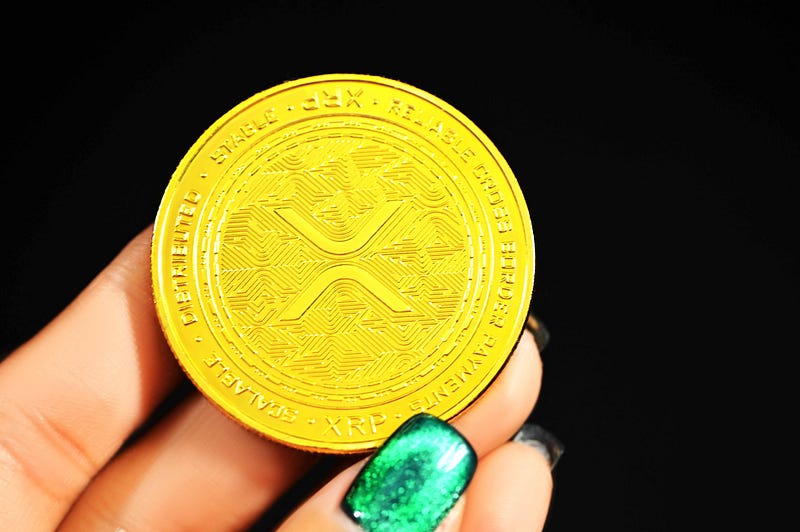
Photo by Kanchanara on Unsplash


Reducing payment costs

Palau’s Ministry of Finance initiated the Stablecoin project to address specific needs within the nation’s financial landscape. By sponsoring this project, the ministry aims to reduce payment costs within the Republic of Palau and enhance access to financial services, especially for underserved communities and various socio-economic groups, utilizing digital solutions.

Notably, the Palau Stablecoin operates on the XRP Ledger (XRPL), demonstrating Ripple’s technology as the backbone of this financial initiative.

Anson’s tweets also shed light on the meticulous approach taken in developing the Palau Stablecoin. Controlled and limited PSC pilot tests have been conducted to assess the effectiveness and efficiency of the solution co-designed with Ripple. These pilot experiments provide valuable insights into the stability and usability of the Palau Stablecoin before its potential public release.


Extensive testing

Already, the Palau Stablecoin pilot program has seen volunteer users actively participating in the testing phase. Videos shared by Anson on Twitter showcased smooth transactions at partner vendors in Palau, promptly confirming the transaction receipts.

The successful implementation of the Palau Stablecoin pilot program has drawn attention from the XRP community, and anticipation is building for the official joint press release scheduled for July 27, Thursday morning in Ngerulmud, Palau, as Anson revealed.

The collaboration between Ripple and the Republic of Palau was initiated at the end of 2021, with launch originally scheduled to take place in 2022. Ripple has claimed to be in dialogue with in excess of twenty governments relative to enabling central bank digital currency (CBDC) issuance.

Given that the island state lacks a functioning central bank and the US dollar is recognized as the primary medium of exchange throughout the country, the creation of a USD-backed stablecoin is a significant achievement resulting from the national stablecoin initiative. The president described this as a “step towards our own central bank digital currency.”

There has been plenty of activity in Micronesian nations relative to cryptocurrency in recent times. Tonga is understood to be considering introducing bitcoin as legal tender. The Marshall Islands is considering issuing a CBDC although it is being discouraged by the International Monetary Fund (IMF) in that endeavor. Meanwhile, the government of Vanuatu announced its support for the Satoshi Island project.

With a strategic focus on addressing financial needs and enhancing accessibility within Palau, this partnership sets the stage for a new era of digital financial solutions for the Micronesian nation.

More to Read
View All
Web3 & Enterprise·

Dec 05, 2023

Crypto.com unlocks regulated expansion through UK FCA licensing award

Crypto.com unlocks regulated expansion through UK FCA licensing awardSingapore’s Crypto.com has obtained an Electronic Money Institution (EMI) license from the Financial Conduct Authority (FCA) in the United Kingdom. The approval complements the platform’s existing status as a registered crypto-asset business, a milestone achieved in August 2022.Photo by Robert Tudor on UnsplashSet to expand product offeringIn a press release published to its website on Monday, the company outlined that the EMI license represents a pivotal step for the firm, empowering the exchange to issue and manage electronic money. This expansion goes beyond its initial crypto-asset business focus, which concentrated primarily on compliance with anti-money laundering (AML) and counter-terrorist financing (CTF) regulations.The regulatory nod came after Crypto.com underwent a comprehensive examination of its business and compliance practices, ensuring alignment with the stringent AML and CTF requirements in the UK.With this authorization in hand, Crypto.com is poised to introduce a range of e-money products tailored for the UK market. This move aligns the company with other cryptocurrency firms like Coinbase and Gemini, which have previously secured similar licenses.Notwithstanding that, while some other well-known platforms have struggled with recently introduced rules related to the marketing of crypto products and services in the UK, Crypto.com’s UK subsidiary company, FORIS DAX UK LIMITED, had successfully registered with the FCA in October.Building out global expansionWhile a trend has emerged in 2023 for crypto platforms to expand within regional markets around the world beyond the United States, Crypto.com has been following a global strategy for some time already. Last month, CRO DAX Middle East, a subsidiary company of Crypto.com, secured a license from the Virtual Assets Regulatory Authority (VARA) in Dubai to offer regulated virtual asset services.Earlier this year, Patrick Yoon, General Manager of Crypto.com’s Korean business outlined plans for expansion within that market, including the aspiration to obtain the banking relationship required in order to conduct virtual asset trading business in South Korea.Dutch licensing successEarlier in July, Crypto.com received approval from the Dutch central bank, De Nederlandsche Bank (DNB), to extend its cryptocurrency services in the Netherlands.This recognition places Crypto.com among the 36 cryptocurrency-related businesses approved by the Dutch central bank, joining major industry players like Coinbase Europe, eToro and Bitstamp. Notably, this approval followed Binance’s inability to secure registration in the Netherlands, leading to its exit from the country.Expressing enthusiasm about this achievement, Kris Marszalek, CEO of Crypto.com, emphasized the importance of the UK market for their business. He stated:“The UK has and continues to be a hugely important market for our business and the greater industry. We look forward to continuing to collaborate with a global regulatory leader in the FCA in our collective pursuit of responsible innovation for crypto.”Crypto.com’s global expansion strategy includes regulatory approvals in Singapore, France, Italy, Dubai and Australia. However, in a strategic shift, the platform discontinued its institutional exchange service for professional customers in the United States in June. Citing a decline in demand, this move aligns with the broader market conditions in the U.S., influenced by ongoing legal actions against major exchanges such as Binance and Coinbase.

news
Web3 & Enterprise·

Nov 14, 2023

Upbit D Conference participants share insights on Web3 and blockchain

Upbit D Conference participants share insights on Web3 and blockchainBlockchain specialists from 29 countries gathered on Monday (local time) at Upbit D Conference (UDC) 2023 in Seoul to explore capital markets in the forthcoming Web3 era. This era is characterized by user-controlled, communal data management, a notable shift from the Web2 space where major tech corporations held dominant control over data.Organized by Dunamu, the operator of South Korea’s Upbit cryptocurrency exchange, the conference featured 39 experts, focusing on the transformative potential of blockchain technology in this new internet phase.Photo by Shubham Dhage on UnsplashAsset tokenization and investment opportunitiesAccording to a report by the Asia Business Daily, one of the key speakers at the conference, Wally Yu, a Solutions Architect at San Francisco-based Chainlink Labs, delved into how cross-chain solutions and asset tokenization could add to the financial industry. He explained that Chainlink’s Cross-Chain Interoperability Protocol (CCIP), designed to connect various blockchains, is only beginning to reveal its capabilities in integrating with traditional financial markets. Yu pointed out the growing interest from banks in tokenizing their conventional assets and transferring them to the blockchain. This move, he suggested, could lead to increased liquidity and open up new investment opportunities.Yu also compared the current DeFi market to traditional sectors like stock, real estate, and derivatives, noting DeFi’s relatively smaller scale. However, he underlined blockchain’s transparency as a key advantage over traditional markets, where transparency is often lacking. According to Yu, the adoption of blockchain by traditional financial firms could address longstanding issues more effectively.Looking ahead to the Web3 era, Yu envisioned a scenario where different tokens are interconnected, potentially bringing an estimated $900 trillion worth of assets onto the blockchain. This, he believes, would significantly enhance liquidity in the financial markets.From Web2 to Web3During the conference, Korean mobile network provider SK Telecom’s (SKT) Vice President, Oh Se-hyun, outlined the company’s forward-looking strategy to transition its 30 million subscribers from Web2 to Web3. She highlighted SKT’s search for high-value markets to expand its business scope, underscoring the company’s active efforts in constructing Web3 infrastructure. This strategic pivot aligns with their vision for the upcoming Web3 era.SKT, which established its Web3 division in 2017, initially engaged in developing a private mainnet. However, the company has since shifted its focus towards services aimed at boosting customer engagement, such as custody, web and app services. Oh emphasized the need for Web3 wallets to support a diverse range of assets and decentralized applications (dApps), but she stressed that ease of use is paramount. She views that these wallets will serve as gateways for customers entering the blockchain space.SKT has developed and is improving its own Web3 wallet, dubbed Wallet T. Oh shared her belief that the future of financial business models will pivot from traditional and big-tech banks to those based on public chains. In preparation for this shift, SKT is contemplating strategies to embrace blockchain-based Web3 services.Crypto regulationThe conference also touched on the potential integration of virtual assets within regulatory frameworks. There’s growing anticipation in the market for the approval of spot bitcoin exchange-traded funds (ETFs) by the United States Securities and Exchange Commission, especially following the inclusion of asset manager BlackRock’s proposed spot bitcoin ETF in the Depository Trust and Clearing Corporation’s (DTCC) clearing-house eligibility file.Emily Parker, Executive Director at CoinDesk, mentioned that a spot bitcoin ETF is on the horizon in the U.S. She anticipated that such a development would not only boost cryptocurrency prices but also positively impact the market for non-fungible tokens (NFTs). Echoing this sentiment, Oh Se-hyun from SKT predicted that the approval of a spot bitcoin ETF could unlock access to a $30 trillion market.SKT’s Oh also addressed the complexities surrounding the regulatory landscape for cryptocurrencies. She acknowledged the challenge facing authorities in developing these regulations all at once, highlighting the gradual progress in this area. She cited the outcome of Ripple’s lawsuit in the U.S., which resulted in Ripple’s XRP tokens being classified differently for different investors: as a security for institutional investors but not for retail investors. Additionally, Oh pointed to the upcoming Markets in Crypto-Assets Regulation (MiCA) in the European Union, slated for implementation in December 2024. She emphasized that the establishment of such regulatory guidelines brings clarity and reduces uncertainty, which can be reassuring for businesses operating in the crypto space.Providing further insights into this matter, Kim Gap-rae, a senior researcher at the Korea Capital Market Institute (KCMI), spoke about the importance of regulatory clarity in the cryptocurrency sector. He pointed out that it’s more crucial for governments to have clear regulations rather than focusing on the extent of regulation. Understanding new regulatory or legislative trends is essential for governments as they look to develop new infrastructures.According to Kim, a potential spot bitcoin ETF approval in the U.S. could prompt South Korea to consider a similar approval. However, he noted that Korea currently lacks a regulatory framework for Bitcoin custody, which could lead to a competitive environment among crypto companies in the country. Kim believes that a deeper understanding of custodian regulations will enable better adaptation to new types of ETFs and foster their growth in Korea.

news
Policy & Regulation·

Aug 18, 2025

Japan’s FSA set to approve JPYC stablecoin

The Japanese Financial Services Agency (FSA), a government body that oversees banking, securities and the digital assets market in Japan, is gearing up to approve the country’s first stablecoin pegged to the yen. Local media platform Nikkei reported on Aug. 18 that it is anticipated that the FSA will approve the issuance of the JPYC stablecoin in the coming months.Photo by Dayo Adepoju on UnsplashEfficient payment infrastructureJPYC, Inc. was founded by Noritaka Okabe in 2019, establishing the JPYC yen-pegged stablecoin in 2021. Okabe believes that the company can better enable innovation in Japan through a more efficient payment infrastructure that JPYC claims to provide via its stablecoin. Prior to launching the stablecoin, JPYC had entered into proof-of-concept and regulatory discussions with the FSA. The JPYC stablecoin has almost complete market dominance within its domestic market, with stablecoins to the value of 30 billion yen ($202.7 million) having been issued. In 2022, JPYC registered with the FSA as a third-party prepaid payment instrument service provider. It’s understood that the company will seek registration once again within the month, this time as a money transfer business. Japan’s Payment Services Act recognizes the issuance of stablecoins by banks, trust companies and money transfer businesses. JPYC backs its stablecoin with liquid assets such as Japanese government bonds and bank deposits. Growing stablecoin importanceOn a global basis, the leaders in terms of stablecoin market capitalization are Circle (USDC) and Tether (USDT), both U.S. dollar-pegged stablecoins. The U.S. recently enacted its GENIUS Act stablecoin legislation with many politicians and market commentators taking the view that USD-pegged stablecoins will promote ongoing use of the U.S. dollar internationally.U.S. Treasury Secretary Scott Bessent took to X on Aug. 18 on that topic, stating:”Stablecoins will expand dollar access for billions across the globe and lead to a surge in demand for U.S. Treasuries, which back stablecoins.”Foreign governments are starting to see the significance of supporting stablecoins pegged to their country’s sovereign currency. The ongoing development of U.S. dollar-pegged stablecoins has not escaped the attention of Chinese officials. In July, government officials in Shanghai held a meeting to explore policy strategies for stablecoins. The same month, Darryl Chan, Deputy Chief Executive of the Hong Kong Monetary Authority (HKMA), said the authority was likely to issue its first stablecoin license in early 2026. His comments preceded the rollout of Hong Kong’s stablecoin regulatory framework on Aug. 1. Last week, JPYC’s Okabe said that JPYC would soon start "buying up Japanese government bonds.” He added, “The interest rates on government bonds in countries where stablecoin issuance does not grow will likely continue to rise. It’s no exaggeration to say that the interest rates on Japanese government bonds rest on JPYC’s shoulders.” Okabe is also going out of his way to draw a clear distinction between his company’s stablecoin and cryptocurrency. On X, he stated that “JPYC is an electronic payment method, not a cryptocurrency.” He went on to assert that given that the JPYC stablecoin is a currency-denominated asset whose value is linked to fiat currency, it incorporates the best qualities of both digital cash and deposits.

news
Loading