Top

Report by Xangle and Tiger Research Explores Indonesia’s Web3 Potential

Web3 & Enterprise·October 11, 2023, 3:54 AM

In partnership with South Korean crypto data platform Xangle, Web3 consulting firm Tiger Research has released a report focusing on the Web3 market in Indonesia. This collaborative project also featured contributions from Jakarta-based blockchain game provider Avarik Saga and Hong Kong-headquartered metaverse company Animoca Brands.

In the process of crafting this paper, teams from Tiger Research, Xangle, Avarik Saga, and Animoca Brands spent a week in Indonesia, conducting interviews with local experts.
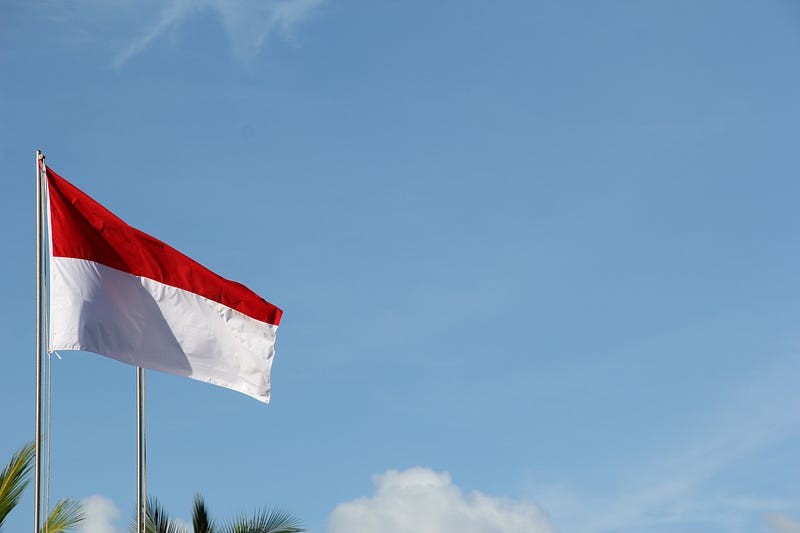
Photo by Nick Agus Arya on Unsplash


Positive factors

The report assesses Indonesia’s Web3 market as having significant potential. It highlights factors such as the country’s status as the world’s fourth-largest population, a youthful demographic with a median age of 30, political stability, and favorable policies towards Web3 technologies. The Indonesian government has adopted a favorable approach to the Web3 industry, providing a range of incentives to boost the growth of the Web3 gaming sector. Additionally, they have taken the initiative to establish a dedicated committee for the blockchain sector within the Indonesia Financial Services Authority (OJK).


Crypto exchanges driving growth

As per the report, the Indonesian market is primarily propelled by cryptocurrency exchanges, with over 30 exchanges currently in operation. These exchanges serve a customer base of approximately 10 million individuals, which accounts for around 4% of the country’s population. This is comparable to the number of investors on the Indonesia stock exchange.


Several challenges

Meanwhile, the paper also highlighted several areas where the world’s largest archipelagic state faces challenges. One of these challenges is its non-fungible token (NFT) market, which has seen a consistent decline in recent months, hitting an all-time low. It was found that most individuals prefer global NFT marketplaces over local ones. Furthermore, concerning the development of the Web3 ecosystem, the shortage of blockchain developers has prompted startups to seek development services overseas.

More to Read
View All
Policy & Regulation·

Dec 27, 2024

Proposed stablecoin legislation advances to Hong Kong’s Legislative Council

Legislation geared towards regulating stablecoins has reached the Legislative Council stage in the Chinese autonomous territory of Hong Kong.  The bill, which extends to a 285 page document, has been formulated following “extensive consultations” with industry stakeholders, according to Eddie Yue, CEO of the Hong Kong Monetary Authority (HKMA).  This latest development moves the Chinese autonomous territory one step closer to having a comprehensive regulatory framework in place for stablecoins. The bill’s arrival at the Legislative Council follows its publication on Dec. 6 in Hong Kong’s Gazette. Subsequently, on Dec. 18, it made its preliminary entry at the Legislative Council by way of a first reading. The legislation will deem a digital asset a stablecoin if it is operated on a distributed ledger, is expressed as a unit of account and maintains an equivalent value relative to another asset that it references. Digital assets issued by governments or central banks will be excluded from that stablecoin definition.Photo by Laurentiu Morariu on UnsplashThree readings requiredBefore the bill can be enacted into law, it is required to go through a series of three readings. Allied to that process is a requirement for a series of debates, with the bill coming under the scrutiny of lawmakers. Depending upon the issues raised, this process may also require the introduction of amendments to the proposed legislation. If passed following the third reading, it will then be forwarded to the autonomous territory’s chief executive, John Lee Ka-chiu, to be signed into law. Once signed into law, stablecoin issuers in Hong Kong will then be required to obtain a license from the city's central bank, HKMA. That licensing process would implicate the HKMA scrutinizing the applicant with an emphasis on the evaluation of the issuer, its resources, the use of reserve assets and the means through which the stablecoin’s value will be rendered stable. Stablecoin optimismThis latest milestone has provoked a cause for optimism among some commentators. Sean Lee, co-founder of Hong Kong-based Web3 firm IDA, told the South China Morning Post (SCMP) that “the applications of stablecoin will be numerous.” Lee outlined that stablecoins can be used for payments, settlements, payrolls and financing, while adding that “new products will spring up, and transactions will be faster, instant, 24/7 – and at a lower cost.” Dominic Maffei, Standard Chartered’s head of digital asset and fintech for Hong Kong, is similarly encouraged. Maffei stated: “As of today, we think that stablecoins are the best available tool for connecting traditional finance and Web3 markets and have proven use cases and business models to support that belief.” Once enacted, the bill is likely to have a significant impact on the stablecoin market in Hong Kong. In Europe, the application of the Markets in Crypto Assets (MiCA) regulation is having such an impact. It has led to a growth in Euro-denominated stablecoin trading while leading U.S. dollar stablecoin Tether (USDT) is being delisted by many platforms due to its non-compliance with these regulations.

news
Policy & Regulation·

Sep 25, 2023

The Need for Crypto Regulation Improvements in South Korea

The Need for Crypto Regulation Improvements in South KoreaAlthough the cryptocurrency market entered a bearish phase last year, there are prospects for growth as regulatory inclusion and market transparency begin to improve. However, the domestic market is currently hindered by deepening monopolies and inadequate support policies, limiting the development of the industry, said Kim Jin-won, Executive Director of Korean crypto exchange COREDAX, during a conference last Friday in Seoul.The conference, hosted by the Federation of Korean Industries, invited experts to discuss the oncoming era of convergence and the current status and challenges of virtual asset legislation in South Korea, as well as the necessary steps for improving regulations on virtual assets.Photo by Kanchanara on UnsplashGlobal decentralization trendsOverseas, various decentralized projects, such as the integration of blockchain technology into traditional financial markets, have led to the growth of related markets such as Bitcoin futures, decentralized finance (DeFi), over-the-counter (OTC) trading, custodial services, the metaverse, and Web3. However, in Korea, the lack of clear guidance or policy management for crypto businesses and services prevents the market from thriving.Countries like the US and Japan as well as the European Union (EU) are overhauling regulations in order to dominate the global industry and market through blockchain technology and virtual assets. Kim emphasized that Korea also needs to incorporate such flexible regulatory improvements considering the likely possibility that various industries are going to thrive on crypto-related businesses.Challenging existing regulations and calls for clarityHe started off by stating that the implicit regulation known as the “One Exchange, One Bank” principle was created for administrative convenience and is acting as a barrier to entry into the crypto industry. He argued that it is a discriminatory regulation, especially considering the fact that securities firms choose to operate stock trading accounts through multiple banks.Regarding the standards for issuing bank accounts under real names, which will be determined by the Financial Intelligence Unit (FIU), he argued that they are difficult to comply with, even for banks that already have contracts with crypto exchanges. He called for the FIU to express a clear stance on the retroactive application of these standards to avoid potential consequences such as barriers to market entry for late-movers.“The crypto market — including DeFi, non-fungible tokens (NFTs), artificial intelligence (AI), the metaverse, and Web3 — is growing at an annual average rate of 12.8%, and is expected to reach a scale of $4.9 billion by 2030,” he said. “When combined with Web3 innovation, the metaverse will evolve into a 3D platform business that incorporates the use of payment methods, NFTs, and virtual assets.”Promoting innovation in the crypto industryTo foster such industry growth, it is necessary to actively explore new types of services as well as potential challenges. Innovative financial services should also be designated or promoted through regulatory sandboxes. The regulatory sandbox is a system run by the Korean government that exempts or suspends existing regulations for a designated amount of time for companies releasing new products and services and regulates them post-mortem if there is a problem.Kim went on to propose specific measures such as negative regulations — regulations that outline what is prohibited by law while allowing everything else — to promote new industries. He also suggested that banks should be allowed to engage in custodial services for virtual assets.Furthermore, he highlighted the need for cooperation between payment companies and crypto firms. “Payment service providers like Visa and Mastercard are already collaborating with global crypto exchanges to incorporate virtual assets into their businesses,” he said. “With companies like Tesla, eBay, and more adopting or considering adopting cryptocurrency as a payment method, we must consider allowing collaborations between domestic credit card companies, payment gateway companies, and crypto firms.”He also urged for the early approval of initial exchange offerings (IEOs) to stimulate the crypto market and advocated for support policies for virtual asset service providers (VASPs). He cited examples such as brokering transactions for security tokens, allowing OTC trading, requesting security token issuance assessments through system integration with account management agencies, and permitting outsourcing for issuance operations.

news
Policy & Regulation·

Feb 13, 2024

South Korea intensifies scrutiny on cryptocurrency exchanges

South Korea is ramping up its scrutiny on cryptocurrency exchanges, with the Financial Intelligence Unit (FIU) of the Financial Services Commission (FSC) announcing its intention yesterday to remove platforms that lack the necessary qualifications, according to the Korea Economic Daily.Unqualified exchangesIn its announcement yesterday, the FIU revealed its aim to block unqualified virtual asset service providers (VASPs) from facilitating trades in Korean won, the currency of the country. Those currently providing Korean won trading services will be eliminated from the market unless they can demonstrate they meet the required standards. With many exchanges set to renew their registrations in the latter half of this year, the FIU is gearing up for thorough evaluations through June to identify and remove unqualified VASPs. The FIU's assessments will focus on determining whether VASPs have adequate measures in place for user protection and are safeguarded against risks of money laundering. To bolster its efforts in preventing money laundering risks, the FIU intends to establish a framework where lawyers and accountants participate in crypto oversight activities.Photo by Andrea Piacquadio on PexelsExamining majority shareholder of VASPThe financial watchdog is also looking to propose amendments to the Financial Transaction Reports Act, aiming to raise the standards for VASP registration by introducing more stringent requirements. Beyond the current assessments of a VASP operator and its executives, the new regulations will involve close examination of its majority shareholder. This additional layer of scrutiny will evaluate the credibility of the major parties related to the VASP, taking into account factors such as their history of loan defaults. The FIU is set to create a system for analyzing cryptocurrency transactions and will strengthen its communication channels, not just with financial institutions but also with prosecutors and police forces. Furthermore, the agency is reviewing the Financial Action Task Force's (FATF) recommendation for freezing transactions in cases of suspicious activities. Once implemented, this will enable the FIU to temporarily halt suspicious transactions before bringing the issue to prosecutors.

news
Loading