Top

Kbank’s Upbit Customer Deposits Total $2.2B

Web3 & Enterprise·October 10, 2023, 9:13 AM

Kbank, an internet-only bank in South Korea, is facing criticism due to its relatively high proportion of cryptocurrency customer deposits compared to other banks. Kbank reportedly manages approximately KRW 3 trillion (equivalent to $2.2 billion) in deposits from customers of cryptocurrency exchange Upbit, which accounts for about 18% of its total customer deposits.

This percentage stands out, being notably higher than other banks that provide accounts to the other four crypto-to-fiat exchanges in Korea. That is according to a report by Maeil Business Newspaper, which obtained documents submitted to lawmaker Kim Hee-gon by the Financial Services Commission (FSC).

According to Korean law, crypto exchanges must secure real-name bank accounts from banks to offer crypto trading services against the Korean won. Kbank offers its accounts to Upbit, the dominant player in the Korean crypto market.
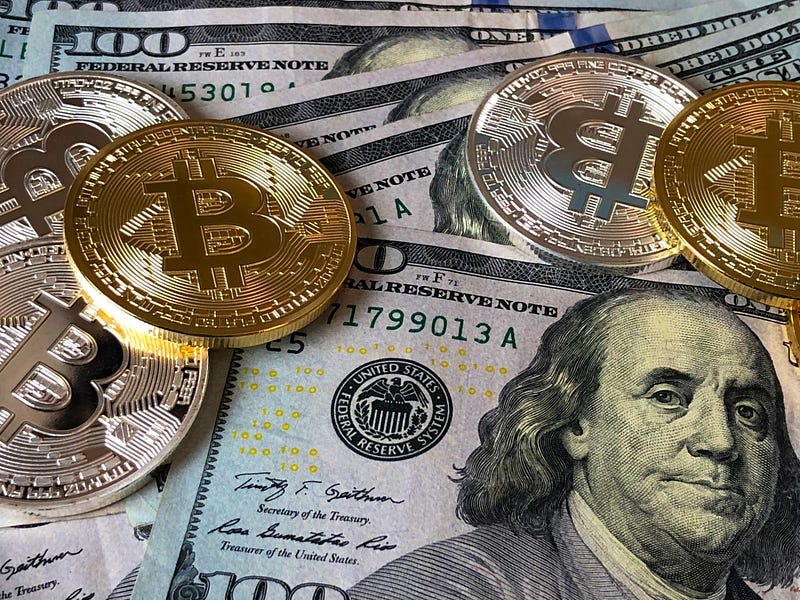
Photo by David McBee on Pexels


Notable exposure to crypto exchange

The FSC documents showed that Kbank’s Upbit customer deposits totaled KRW 3.09 trillion, making up 18% of its total deposits, which amount to KRW 17.2 trillion.

In a striking contrast, Nonghyup Bank had 0.2% of its deposits, equivalent to KRW 557.8 billion, in Bithumb, which is the nation’s second-largest cryptocurrency exchange. Kakaobank, another internet-only bank, had 0.3% (KRW 112.2 billion) of its deposits in Coinone. Shinhan Bank held 0.01% (KRW 43 billion) in Korbit, and Jeonbuk Bank had a similarly small 0.02% (KRW 4.2 billion) in Gopax.

Lawmaker Kim pointed out that Kbank has become a bank dedicated to crypto trading. Kim proposed that financial authorities take proactive measures to assess the potential risks that may emerge when Kbank utilizes Upbit customer deposits as a basis for offering credit loans. Such risky financial practices could potentially result in higher loan defaults and the emergence of a greater number of individuals with poor credit histories, which could ultimately jeopardize the stability of the financial market.


Regulatory gap

The current Financial Transaction Reporting Act mandates that virtual asset service providers (VASPs) segregate customer deposits from their own assets as a measure to combat money laundering. However, it has been noted that there are regulatory gaps stemming from the absence of specific guidelines for the custody of these deposits.

According to the Financial Supervisory Service (FSS), Nonghyup and Kakaobank store deposits in separate accounts within the bank. On the other hand, Kbank and Jeonbuk Bank keep deposits in corporate accounts under their respective exchange partners’ names.

When deposits are stored in separate accounts within the bank, only the bank has access to those funds, and they are essentially operated in a manner similar to a trust, preventing the bank from using the funds arbitrarily. In contrast, funds held in corporate accounts can be used by the bank as a source for lending. Lawmaker Kim warned that in scenarios such as exchange bankruptcies or similar situations, banks holding customer funds in corporate accounts could face difficulties in ensuring customer protection.

Each of these banks receives reserve funds from crypto exchanges in anticipation of potential compensation requirements in the event of unforeseen losses. The FSS states that as of the end of last month, the reserve amounts held by each bank were as follows: Kbank had KRW 200 billion, Nonghyup Bank had KRW 100 billion, Kakao Bank had KRW 73 billion, and both Shinhan Bank and Jeonbuk Bank had KRW 30 billion.

Kbank’s Upbit customer deposits are approximately 72 times larger than Shinhan Bank’s Korbit customer deposits. However, the reserve amounts held by Kbank are only 6.7 times greater than those held by Shinhan. Lawmaker Kim emphasized the importance of banks maintaining reserve funds that are proportional to the customer deposits held in their partner crypto exchanges.


Signs of recovery

Meanwhile, the Korean cryptocurrency industry, which faced a downturn in the latter half of last year due to events like the Terra collapse and FTX’s bankruptcy, has exhibited signs of recovery in the first half of this year.

The Financial Intelligence Unit (FIU) of the FSC recently reported that the cryptocurrency market cap in South Korea has reached KRW 28.4 trillion as of the end of June this year. This reflects a 46% increase compared to the end of last year when it stood at KRW 19.4 trillion. Additionally, the total operating profit of domestic exchanges surged by 82% to KRW 227.3 billion over the past six months, compared to the previous figure of KRW 124.9 billion.

The total market’s max drawdown (MDD) was 62%. MDD assesses the extent to which an asset has declined in value from its highest point to its lowest point within a specific time frame, before experiencing a recovery. The FIU considers this MDD to be high, urging investor caution.


More to Read
View All
Web3 & Enterprise·

Nov 28, 2023

SK C&C to provide ChainZ Security Token service for Hana Securities

SK C&C to provide ChainZ Security Token service for Hana SecuritiesSK C&C, a comprehensive digital solutions provider and the affiliate of South Korean conglomerate SK Group, announced Tuesday (local time) that it will provide the blockchain-based ChainZ Security Token service to Hana Securities for the securities firm’s construction of a security token system.Security tokens enable the conversion of assets such as real estate, art and carbon credits into digital tokens. These digital representations open up opportunities for retail investors to make fractional investments in assets that were previously beyond their reach due to high minimum investment requirements.Hana Securities’ involvement in security tokens emerged when its parent company, Hana Financial Group, joined a consortium called the Next Finance Initiative (NFI) in June to expand the security token ecosystem. In this collaborative effort, Hana Securities is set to develop infrastructure that will enable the establishment of extensive security token services. This infrastructure will support functions such as the issuance, distribution and procurement of security tokens.Photo by Shubham Dhage on UnsplashSecurity tokens on EthereumThe ChainZ platform allows the creation, issuance and trading of tokenized assets on the Ethereum network by simply calling an application programming interface (API). The company explained that being compatible with several Ethereum standards, including ERC-20, ChainZ enables users to create diverse token-related services with just a few clicks.SK C&C will leverage the ChainZ platform, which supports distributed ledger services, to manage token offerings and allocations. Additionally, the company will offer security token-related services, which will include processing investor orders and facilitating the buying and selling of tokens.Choi Cheol, Head of SK C&C’s Web3 and Convergence Group, said that the security token system of Hana Securities will lay a foundation for securities firms to adopt security token services and engage in business collaborations with each other. According to Choi, SK C&C is committed to providing secure trading services for security tokens, catering not only to securities companies but also to a broader range of enterprises and general investors. The tech company is also planning to take an active role in NFI and other consortiums with securities firms as a part of its strategy to enhance these efforts further.

news
Policy & Regulation·

May 15, 2023

Korea’s Premier Law Firm to Jointly Hold Seminar on Preventing Crypto Exploits

Korea’s Premier Law Firm to Jointly Hold Seminar on Preventing Crypto ExploitsKim & Chang, a leading law firm in South Korea, has announced its collaboration with crypto exchange operator Dunamu to host a seminar on anti-money laundering (AML) and the prevention of crypto exploits. The event will take place at Korea University on Thursday, as reported by Moneytoday.Photo by David McBee on PexelsInauguration of a digital asset forumThe seminar is being organized by the Digital Assets Policy Forum, an organization dedicated to developing the digital asset market and safeguarding investors. The inauguration ceremony of the forum will also be held at the event.Talks by distinguished figuresThe seminar will commence with a keynote speech by Aaron Bice, Senior Subject Matter Expert at Chainalysis, a blockchain data analysis firm based in New York.Following Bice’s address, several distinguished individuals from South Korea will deliver presentations. Ahn Chang-kook, a high-level official from the Financial Intelligence Unit at the Korean Financial Services Commission, will elucidate the challenges and solutions associated with crypto exploits. Oh Jeong-eun, a prosecutor from the Incheon District Prosecutors’ Office, will provide insight into the investigations of unlawful foreign exchanges in banks and their implications. Advisor Ko Cheol-soo of Kim & Chang will shed light on the evolving global landscape of AML regulations in the crypto sector. In addition, Kim Kwang-hoon, a manager at Dunamu, will explore the topic of crypto AML systems.Panel discussionsA representative from Kim & Chang said that the event will gather a diverse group of experts in digital asset regulation, policy, and law from various sectors, including government, academia, and industries. These experts will not only deliver informative presentations but also actively engage in panel discussions during the event.

news
Web3 & Enterprise·

Aug 22, 2023

Korea Information Certificate Authority Dives into NFT Domain with New Platform Launch

Korea Information Certificate Authority Dives into NFT Domain with New Platform LaunchKorea Information Certificate Authority (KICA), a South Korean certification service provider, has recently ventured into the NFT domain through its new platform, Web3id.kr.Photo by Choong Deng Xiang on UnsplashNFT domainsNFT domains function as user-friendly addresses that simplify the cumbersome 42-character cryptocurrency wallet address. As part of this new initiative, KICA partnered with the Web3 identity platform, Unstoppable Domains, in February to facilitate the creation of NFT domains specifically for the South Korean market.An official from KICA emphasized the versatility of NFT domains, noting that a single domain can act as a distinctive username across various dApp platforms. To celebrate the debut of Web3id.kr, KICA is conducting a promotional event between August 17 and September 16. At the end of this event, 100 lucky participants, chosen randomly from those who promote Web3id on their social media accounts, will be awarded credits. These credits can then be redeemed at Unstoppable Domains for an NFT domain.From Web2 to Web3KICA, with its 24-year legacy, has been a frontrunner in offering Web2 authentication services such as public key infrastructure (PKI) and biometric solutions, emphasizing its prominence in the Know Your Customer (KYC) authentication sector. The firm is currently ramping up its efforts to stay ahead in the evolving Web3 space. A testament to this is its recent acquisition in August of Digitalzone, a digital certificate solution provider that holds a market share of over 50% in the domestic certificate sector for universities and hospitals.

news
Loading