Top

Japan’s Cryptoasset Group Proposes Self-Regulatory Reforms for IEO System

Policy & Regulation·September 26, 2023, 7:43 AM

The Japan Cryptoasset Business Association (JCBA) has revealed a preliminary draft advocating for reforms in self-regulation to bolster the soundness of the initial exchange offering (IEO) system. This draft has been submitted to the Japan Virtual and Crypto Assets Exchange Association (JVCEA).

IEOs serve as a mechanism enabling various enterprises to accrue funds and broaden their user base by orchestrating token sales on cryptocurrency exchanges for Web3 projects. This fundraising method holds the potential to enhance trust as crypto exchanges, supervised by the Japanese Financial Services Agency, undertake evaluations of project feasibility and maintain ongoing oversight.

Photo by Takashi Miyazaki on Unsplash


Positive regulatory developments

The ameliorating regulatory landscape is also a positive development, highlighted by this year’s tax law amendment, which grants exemptions to enterprises’ self-issued tokens from year-end corporate taxation. In Japan, four IEOs have been conducted so far, with the inaugural IEO amassing over 900 million yen (approximately $6 million). The cumulative amount from the four IEOs has surpassed 4.4 billion yen. However, given that the IEO is a relatively nascent fundraising method, improvements in token price stability and operational modalities are required to ensure that businesses and users can engage with it confidently.


Enhanced user protection

Against this backdrop, JCBA, an organization comprised of various enterprises involving virtual assets and Web3, has been discussing the direction of the IEO system from a corporate viewpoint since May of this year. Establishing price stabilization measures and selling restrictions within the Japanese IEO system will contribute to user protection by allowing investors to manage their assets under domestic regulations. JCBA stated that users will find domestic exchanges more secure in comparison to foreign ones.

As this proposal represents an initial draft, deliberated and formulated only within the JCBA, the group intends to consult and assess the feasibility of the self-regulatory rules with each pertinent organization as necessary.


Four key points

The document submitted by JCBA to JVCEA presented four key points concerning the IEO. Pertaining to pricing, it suggested the diversification of calculation methods customized to each project and the specification of price-related disclaimers. On liquidity, it posited that liquidity objectives should be established at the time of listing, and an environment conducive to securing liquidity should be developed. JCBA also pointed out the necessity of establishing rules for price stabilization measures at the time of listing. Finally, regarding selling restrictions, it was noted that both token issuers and exchanges should adhere to a minimum three-month lock-up period for tokens.


More to Read
View All
Policy & Regulation·

Aug 19, 2023

SEC Seeks to Question Co-Founder of Singapore’s Terraform Labs

SEC Seeks to Question Co-Founder of Singapore’s Terraform LabsThe United States Securities and Exchange Commission (SEC) has taken a step forward in its ongoing case against Singapore’s Terraform Labs by seeking to question Daniel Shin, the Co-Founder of the company.The SEC's intention is to gather evidence related to Chai Corporation, a payments company associated with Terraform and the Terra blockchain. District Judge Jed Rakoff granted the SEC’s request earlier this week, which is part of the regulatory body’s efforts to build a case against Terraform Labs and its Co-Founder, Do Kwon. The decision was based upon a motion originally filed in July.Photo by Bermix Studio on UnsplashRequesting South Korean assistanceThe motion, which was granted on Tuesday, allows the SEC to reach out to South Korea for assistance in questioning Shin and obtaining documents related to Chai Corporation. The regulatory body aims to gain insights into Kwon’s role at Chai, the utilization of the Terra blockchain by Chai, and the disclosures made by Chai regarding its relationship with Terraform.Additionally, the SEC is interested in understanding the reasons behind Chai’s separation from Terraform, as the two companies shared offices and staff until their split in 2020.No opposition filedOn a previous occasion, Kwon unsuccessfully challenged the SEC's attempt to access company records on the basis of a lack of jurisdiction given that Terraform is a Singapore-domiciled company. In June, both Terraform and Kwon attempted unsuccessfully to have the entire action thrown out.On this occasion neither Terraform Labs nor Kwon have opposed the SEC’s motion. In fact, they have even included their own set of questions and document requests. Both the Singaporean firm and its Co-Founder have denied the SEC’s allegations, which were filed earlier this year.The SEC’s lawsuit claims that Terraform’s cryptocurrencies, specifically Terra Luna Classic (LUNC) and Terra ClassicUSD (USTC), were involved in fraudulent activities. The US regulatory body further alleges that Kwon and Terraform falsely promoted the use of the Terra blockchain by Chai for processing and settling transactions.The SEC’s lawsuit also accuses Terraform and Kwon of fabricating transactions involving TerraKRW (KRT), a Korean won-pegged stablecoin, to give the impression that Chai was actively utilizing the Terra blockchain.Collapse falloutTerra, an interconnected crypto ecosystem, faced a collapse in May 2022, resulting in the loss of approximately $40 billion in value and impacting the wider cryptocurrency market. The aftermath of this collapse led to legal actions against individuals associated with Terraform Labs. South Korean prosecutors, for instance, charged Shin with multiple fraud offenses in April, alleging that he had concealed the risks of investing in Terraform’s cryptocurrencies.Kwon’s legal situation is equally complex. He is currently serving a prison sentence in Montenegro for attempting to leave the country using a fake passport. He faces criminal charges in both the United States and South Korea, and both countries have requested his extradition.The ongoing investigation sheds light on the intricate relationships within the Terra ecosystem, having an impact across different jurisdictions. As legal proceedings unfold, the outcome will likely have implications for the regulation and oversight of cryptocurrency and blockchain projects internationally.

news
Web3 & Enterprise·

Jan 23, 2024

Intella X teams up with Galxe to ramp up ecosystem

Blockchain gaming platform Intella X has partnered with Galxe, a Web3 protocol that allows users to own, manage and share their digital credentials, according to an official announcement by Intella X’s operator Neowiz on Tuesday (KST). The two companies vowed to leverage Galxe's community network and expertise to create an Intella X channel on the Galxe platform, revitalizing the Intella X ecosystem.Photo by GuerrillaBuzz on Unsplash"Through this partnership, we look forward to exchanging our knowledge with Galxe and effectively growing the Intella X community, which will help revitalize the Intella X ecosystem and strengthen our global competitiveness," said Jose Ko, CEO of Intella X. Leading the way in Web3 communitiesWith over 14 million on-chain users, Galxe is a pioneer in Web3 community building. Its vast network supports 26 blockchains and various social networking websites, including X, Discord and more. In particular, the protocol also operates a rewards-based Loyalty Points system with over 3,300 partners, including Optimism, Polygon and Arbitrum, which distributes points rewards based on participation in project campaigns. "We will strive to leverage the Galxe community and introduce Web3 technology that serves to expand the Intella X ecosystem. Through our collaboration, we will bring innovations, developers and gamers to the Web3 market,” said Galxe CEO Charles Wayn. Revolutionizing blockchain gamingIntella X, which is built on the Polygon Network, is a Web3 gaming platform that emphasizes contribution and rewards. Services include a decentralized exchange (DEX), NFT marketplace and digital wallet, as well as a service protocol that rewards platform participants. In December last year, the platform also beta-launched a service last month dubbed Space Candy Store, an innovative platform service designed to reward gameplay.

news
Policy & Regulation·

Dec 26, 2024

South Korea sanctions North Korean tech workers for cybercrimes and crypto theft

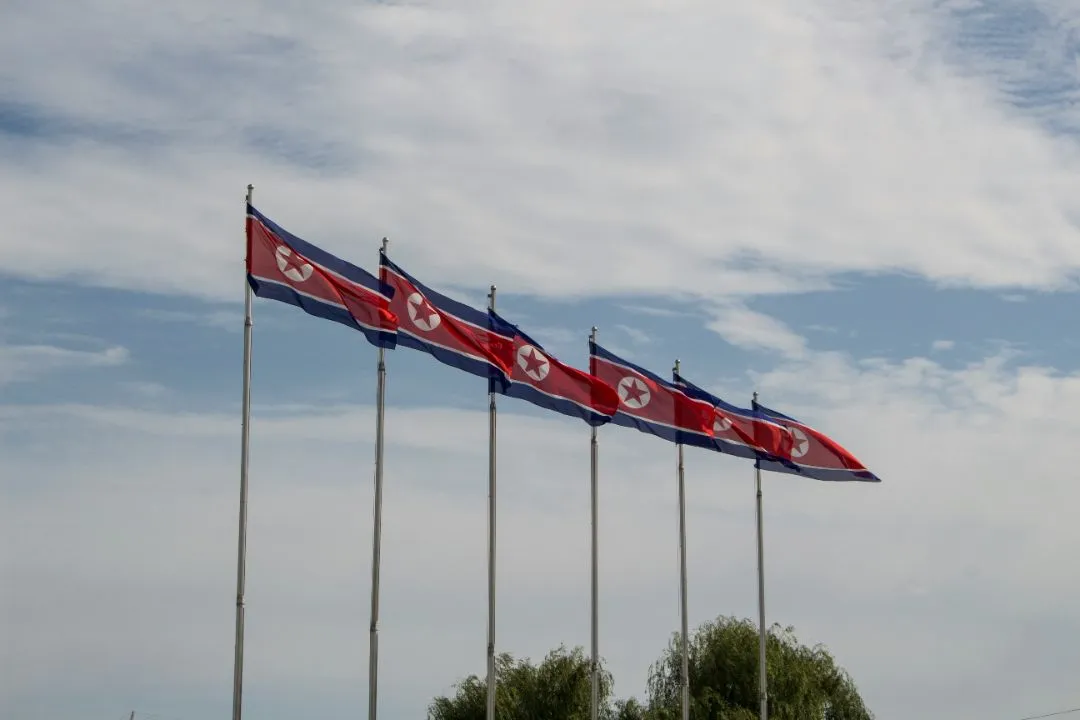
The South Korean Ministry of Foreign Affairs (MOFA) announced on Dec. 26 through an official website press release that it has imposed sanctions on 15 North Korean individuals and one institution for their involvement in illegal cyber activities, including cryptocurrency theft, to fund the country's nuclear and missile programs.Photo by Micha Brändli on UnsplashAccording to the MOFA, the sanctioned individuals have been stationed overseas as part of the 313 General Bureau of the North Korean Munitions Industry Department (MID), which is already subject to UN Security Council sanctions. The bureau is allegedly responsible for deploying North Korean tech personnel abroad and using the foreign currency earned to finance the development of nuclear weapons and missiles. The sanctions, which will come into effect at 15:00 UTC on Dec. 29, will prohibit financial and foreign exchange transactions with the designated entities unless approved in advance by South Korean authorities. Violations of these sanctions may result in legal consequences under South Korean law. North Korea behind 61% of 2024’s stolen cryptoThe MOFA cited a recent report by blockchain analysis firm Chainalysis, which showed that North Korean crypto hackers took roughly $1.34 billion in 47 separate incidents in 2024. These thefts account for 61% of the year's total stolen crypto funds and 20% of all incidents. In 2023, they had stolen approximately $660.5 million over 20 incidents. It's believed these funds help finance North Korea's weapons of mass destruction programs. The ministry further stated that North Korean tech personnel are often dispatched to countries such as China, Russia and nations in Southeast Asia and Africa, where they disguise their identities and secure work from global tech companies. Some of these individuals are also suspected of engaging in information theft and cyber attacks. Emphasizing the threat these activities pose to cybersecurity and international peace, South Korea has vowed to continue its efforts to thwart North Korea's illicit cyber activities in cooperation with the international community.

news
Loading