Top

South Korea sanctions North Korean tech workers for cybercrimes and crypto theft

Policy & Regulation·December 26, 2024, 11:11 AM

The South Korean Ministry of Foreign Affairs (MOFA) announced on Dec. 26 through an official website press release that it has imposed sanctions on 15 North Korean individuals and one institution for their involvement in illegal cyber activities, including cryptocurrency theft, to fund the country's nuclear and missile programs.
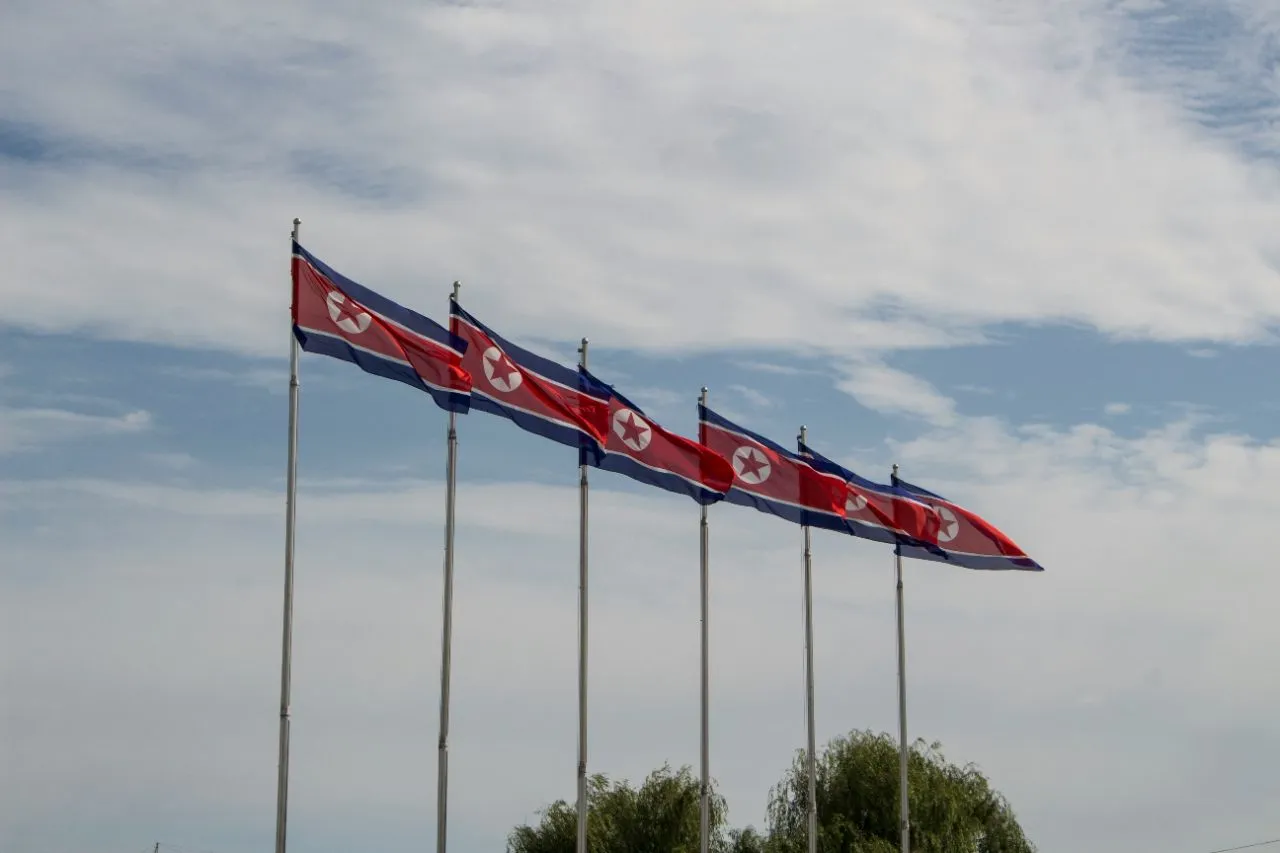
https://asset.coinness.com/en/news/ca16e8c10673807088db9eaedd16f416.webp
Photo by Micha Brändli on Unsplash

According to the MOFA, the sanctioned individuals have been stationed overseas as part of the 313 General Bureau of the North Korean Munitions Industry Department (MID), which is already subject to UN Security Council sanctions. The bureau is allegedly responsible for deploying North Korean tech personnel abroad and using the foreign currency earned to finance the development of nuclear weapons and missiles.


The sanctions, which will come into effect at 15:00 UTC on Dec. 29, will prohibit financial and foreign exchange transactions with the designated entities unless approved in advance by South Korean authorities. Violations of these sanctions may result in legal consequences under South Korean law.


North Korea behind 61% of 2024’s stolen crypto

The MOFA cited a recent report by blockchain analysis firm Chainalysis, which showed that North Korean crypto hackers took roughly $1.34 billion in 47 separate incidents in 2024. These thefts account for 61% of the year's total stolen crypto funds and 20% of all incidents. In 2023, they had stolen approximately $660.5 million over 20 incidents. It's believed these funds help finance North Korea's weapons of mass destruction programs.


The ministry further stated that North Korean tech personnel are often dispatched to countries such as China, Russia and nations in Southeast Asia and Africa, where they disguise their identities and secure work from global tech companies. Some of these individuals are also suspected of engaging in information theft and cyber attacks.


Emphasizing the threat these activities pose to cybersecurity and international peace, South Korea has vowed to continue its efforts to thwart North Korea's illicit cyber activities in cooperation with the international community.

More to Read
View All
Policy & Regulation·

May 19, 2023

BOK Staffers Assess Crypto Market Vulnerabilities and Their Implications

BOK Staffers Assess Crypto Market Vulnerabilities and Their ImplicationsOn Thursday, the Bank of Korea’s (BOK) staff members published an assessment of the vulnerabilities in the cryptocurrency market and their potential implications. Here is the summary of the report.Photo by D Tan on Unsplash2022 crypto winterThroughout 2022, the worldwide crypto market faced a series of adverse occurrences, such as significant drops in the prices of major crypto-assets and the collapse of prominent crypto companies. These events shed light on the vulnerabilities that had accumulated during the rapid growth of the market.The first major event occurred in May 2022 when the algorithmic stablecoin TerraUSD experienced a sharp decline, resulting in substantial losses and bankruptcies for numerous retail investors and crypto firms. This incident significantly eroded confidence in the overall crypto market. The subsequent bankruptcies of prominent crypto lender Celsius and hedge fund Three Arrows Capital (3AC) further highlighted the realization of risks commonly associated with traditional financial markets, such as multiple collateral loans and maturity and liquidity mismatches, within the crypto market.In November 2022, the well-known crypto exchange FTX filed for bankruptcy, demonstrating that the activities of a large crypto company can propagate risks through moral hazard and excessive profit-seeking behavior when it operates outside the realm of regulatory oversight.Similarities with TradFiThese negative events that unfolded in the global crypto market in 2022 share similarities with issues previously observed in financial markets, such as unsustainable business models, liquidity risk, leverage, and lack of transparency in financial conditions. These parallels suggest that if the crypto markets were subjected to comparable levels of regulation as traditional financial markets, it is plausible that the triggering of these risks could have been avoided altogether, or at the very least, the resulting damage could have been mitigated to some extent.Implications for the Korean marketAt present, it is deemed unlikely that events akin to those witnessed in overseas crypto markets will transpire in the Korean market. The Korean crypto-asset market has primarily evolved through exchanges, with limited influence from other enterprises such as crypto issuers and decentralized lending platforms. In addition, Korean crypto exchanges are subject to regulation under the Act on Reporting and Using Specified Financial Transaction Information. This mandates the separation of customer deposits from exchange assets and the strict management of custodial crypto-assets through secure wallets. Additionally, Korean exchanges are prohibited from listing their own tokens on their platforms.However, there remains a dearth of information regarding the business structures of crypto companies that offer services similar to those in the traditional financial industry. This lack of information poses challenges in accurately assessing risk and providing adequate investor protection. Meanwhile, there is a potential for a deeper integration between the crypto market and users’ daily lives, particularly through major technology companies, gaming companies, and security tokens.SuggestionsIt is vital to ensure that crypto-assets are regulated based on the principle of “same activity, same risk, same regulation” through the ongoing development of crypto-asset-related legislation. The Financial Stability Board, an international body monitoring the global financial system, explained this principle in a 2022 paper: “Where crypto-assets and intermediaries perform an equivalent economic function to one performed by instruments and intermediaries of the traditional financial sector, they should be subject to equivalent regulation.”Additionally, it is necessary to stay aligned with major countries in terms of the speed and comprehensiveness of regulatory measures to prevent regulatory discrepancies across borders due to the global nature of crypto risks.Enhancing the effectiveness and efficiency of regulation requires the establishment and maintenance of a close cooperation system between authorities. This collaborative effort should encompass various aspects, including monitoring, information gathering, and supervision of the crypto-asset market. Notably, the widespread adoption of stablecoins can affect the stability of the overall financial system, including monetary systems and payment and settlement systems. Hence, it is necessary to strengthen the involvement of central banks in the monitoring and supervision framework for crypto-assets, including stablecoins, as demonstrated by legislative approaches adopted by major economies like the EU. Furthermore, imposing disclosure requirements, external audits, and documentation submission obligations on crypto-asset operators is advisable.

news
Web3 & Enterprise·

Nov 03, 2023

Dubai’s VARA grants WadzPay ‘initial approval’ of trading license

Dubai’s VARA grants WadzPay ‘initial approval’ of trading licenseIn the latest demonstration of the emirate’s crypto-friendly credentials, Dubai regulator, the Virtual Assets Regulatory Authority (VARA), has granted an “Initial Approval” license to WadzPay.WadzPay was founded in 2018 in Singapore as a business-to-business (B2B) technology firm that concentrates its efforts on enabling digital asset-based transaction processing and settlement. This licensing approval is a significant step forward for the startup, as it inches closer to obtaining a full-fledged Virtual Asset Service Provider (VASP) license.Photo by Paul MARSAN on UnsplashGearing up for service roll-outWith this approval in hand, WadzPay is gearing up to offer a range of virtual asset services, specifically under the forthcoming VASP License for Transfer and Settlement, as well as Broker-Dealer trading activities.That said, the current VARA license places certain restrictions on WadzPay’s offerings. While WadzPay is known for providing a wide array of services to businesses (B2B) and individual users through its B2B2C platform, the “Initial Approval” license limits its scope to only a subset of its virtual asset products and services.Flurry of approvalsDubai has taken center stage in the realm of crypto-friendly jurisdictions, granting a flurry of operational licenses to numerous crypto firms and exchanges in recent months. The regulatory framework in Dubai is underpinned by robust guidelines for VASPs. To operate fully within this framework, crypto firms must navigate a meticulous three-tier licensing process, starting with provisional approval, followed by a minimal viable product (MVP) license, culminating in a total market product license.One of the recent beneficiaries of VARA’s approvals is Backpack, a virtual currency wallet provider. Last month, Backpack received its VASP license, allowing the introduction of the Backpack Exchange to the market. However, similar to WadzPay’s situation, Backpack’s license comes with certain limitations.It permits the offering of crypto exchange services within Dubai but restricts the rollout of other virtual asset services. The Backpack Exchange sets itself apart with advanced features, including zero-knowledge (ZK) proof-of-reserves, multi-party computation (MPC) for secure custody and lightning-fast order execution capabilities.Nomura portfolio company approvalsKomainu, a collaborative venture involving financial heavyweights like Nomura, CoinShares and Ledger, is another notable success story. After a diligent licensing journey, Komainu secured its full operating license from VARA, approximately 10 months after obtaining its MVP license in November 2022.Laser Digital, a crypto division under the vast umbrella of financial giant Nomura, also earned its operational license from VARA in August. Through its dedicated subsidiary, Laser Digital Middle East FZE, based conveniently in Dubai, Nomura has showcased its VASP license. The permit enables the firm to offer a suite of services, including brokerage, virtual asset management and investment offerings within the emirate.Notably, Laser Digital’s licensure followed closely on the heels of Binance, the global crypto exchange. Binance secured its operational minimum viable product (MVP) license from VARA, paving the way for providing crypto exchange and virtual asset broker-dealer services within the region.This flurry of licensing activities and approvals in Dubai is suggestive of the emirate’s commitment to fostering a progressive and regulated crypto environment.

news
Web3 & Enterprise·

Oct 05, 2023

CMCC Global Launches $100 Million Fund for Asian Blockchain Startups

CMCC Global Launches $100 Million Fund for Asian Blockchain StartupsCMCC Global, a crypto-focused venture capital firm based in Hong Kong, has successfully raised $100 million for its newly established Titan Fund.That’s according to a report on Wednesday (local time) published by the South China Morning Post (SCMP). The fund is dedicated to providing crucial support to startups operating in Asia’s developing blockchain sector.Photo by Shubham Dhage on UnsplashProminent backersOver 30 prominent investors, including Winklevoss Capital and Animoca Brands Founder Yat Siu, have eagerly backed the initiative. Last month, CMCC led a funding round into Animoca. Among the notable investors joining this venture are EOS blockchain developer Block.one, Richard Li’s Pacific Century Group, and Hong Kong-based growth equity investment firm Jebsen Capital.The Titan Fund is structured to channel its capital into three primary investment categories: blockchain infrastructure, consumer applications, and crypto financial services. Martin Baumann, Co-Founder of CMCC Global, emphasized the fund’s commitment to fostering innovation in the blockchain space. He stated:“If Hong Kong continues on its route of embracing Web3, there will naturally be more and more entrepreneurs starting companies in that space. And we can be their first capital.”Exploiting Asia’s Web3 opportunityBased on commentary by Baumann earlier this year, the CMCC Global Co-Founder certainly believes that an opportunity has opened up in Asia where Web3 is concerned. In May Baumann told Bloomberg TV that regulatory issues unfolding in the United States represented an opportunity for Asia.In criticizing the US, Baumann stated:“The US has been quite negative from the regulatory perspective and it really seems to us that the US is shooting itself in the foot with a machine gun.”Developing upon the inherent opportunity implicated in that difficulty in the US, he said: “We see places like Hong Kong having a real opportunity at this point in time to bring those firms and entrepreneurs to the city.”There’s plenty of capital sitting on the sidelines waiting for the right entry valuations to pull the trigger,” he added.Hong Kong’s crypto ascendencyThe venture capitalist may have been right on both counts. This funding announcement coincides with Hong Kong’s resurgence in the crypto arena. Historically, the city had been home to industry giants like BitMEX and Alameda Research.Recent developments indicate that Hong Kong is actively collaborating with China to establish itself as a thriving hub for crypto innovation. The Chinese autonomous territory has been encouraging crypto start-ups on the Mainland to relocate to Hong Kong. In August, it granted licenses to HashKey Exchange and OSL to offer crypto trading services to retail traders.The Titan Fund’s successful capitalization demonstrates the growing interest and confidence in Asia’s blockchain ecosystem. CMCC Global, with its pool of investors, is aiming to play a pivotal role in supporting and nurturing the next wave of blockchain startups in the region.

news
Loading