Top

Crypto Exchange Korbit Raises Daily KRW Deposit Limits From 300K to 5M

Web3 & Enterprise·September 26, 2023, 5:15 AM

Korbit, one of the leading cryptocurrency exchanges in South Korea, raised the daily deposit limit for its customers as of 16:00 KST on September 25. This move aligns with the early implementation of the operation guidelines of real-name bank accounts for cryptocurrencies, which is scheduled to be introduced in January next year. Korbit collaborates with Shinhan Bank, utilizing its real-name accounts to facilitate Korean won transactions.
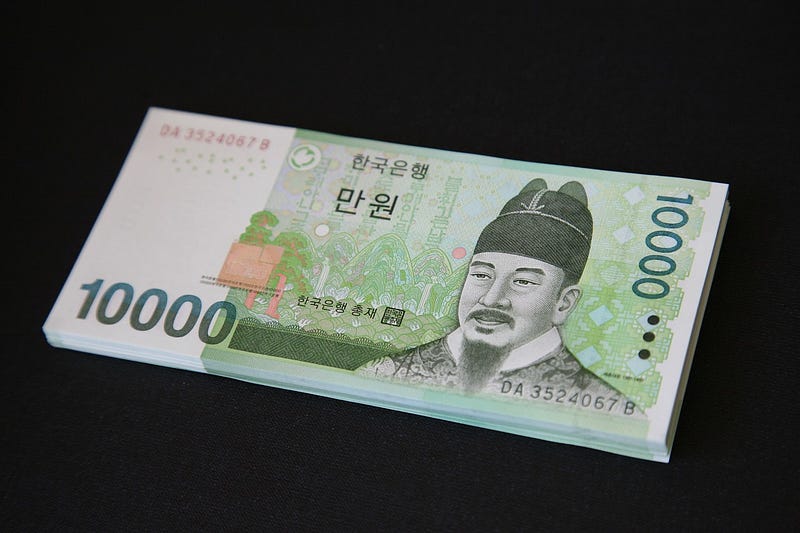
Photo by manseok Kim on Pixabay


User protection and AML

The operation guidelines have been established to fortify the protection of virtual asset users and to bolster efforts against money laundering. Financial authorities, the Korea Federation of Banks, and cryptocurrency exchanges have collaborated to initiate these measures at every local exchange starting next January. Meanwhile, exchanges are obliged to maintain reserves in their banks beginning this month, ensuring they are poised to provide compensation for involuntary losses in the event of hacking incidents or system failures.


Investor inconvenience and market confusion

Since the introduction of the real-name bank account system in 2018, banks and crypto exchanges have had different terms of use and user protection measures, leading to varied deposit and withdrawal limits as well as reserve levels across different exchanges. These inconsistencies have resulted in inconvenience to customers and have sown confusion in the market. In response, the entities in question have agreed to implement a shared set of guidelines for real-name bank accounts from January next year.


Daily limit of KRW 300K to KRW 5M

With the implementation of these guidelines, Korbit has elevated the current daily deposit limits from KRW 300,000 (approximately $222) and KRW 1.5 million to KRW 5 million. Moreover, once the bank authenticates the user’s transaction purpose — for instance, purchases of KRW 5 million or more in virtual assets in a month following the initial KRW deposit — and verifies the source of the funds, the constrained account can transition to a standard account. This adjustment allows the daily deposit and withdrawal limit of up to KRW 500 million.

The limitations associated with constrained and standard accounts apply solely to fund transfers between the crypto exchange and the bank. When holders of Shinhan accounts initiate fund transfers to accounts in other banks, the limitations imposed by Shinhan continue to apply.

Oh Sejin, CEO of Korbit, expressed enthusiasm that the higher deposit limit enabled by the new guidelines would improve investor convenience and draw in new customers. He added that the crypto exchange is committed to collaboration with Shinhan Bank, aiming to enhance user protection and anti-money laundering (AML) measures.


More to Read
View All
Web3 & Enterprise·

Nov 14, 2023

Modhaus attracts $8M in advancing blockchain-based K-pop fan engagement

Modhaus attracts $8M in advancing blockchain-based K-pop fan engagementModhaus, a South Korean Web3 startup focused on blockchain-driven K-pop promotion, recently announced that it has raised $8 million in Series A funding, according to a report by local news outlet Maeil Business Newspaper. This latest funding round brings the company’s total investment to over $12 million.Photo by C D-X on UnsplashKey investorsThis Series A funding was led by Sfermion, a Chicago-based venture capital firm focused on non-fungible tokens and the immersive internet. The investment round also saw participation from various investors, including SM Culture Partners, Laguna Investment, the KDDI Open Innovation Fund, Foresight Ventures, Reflexive Capital, NFT song collector Cooper Turley, Quantstamp CEO Richard Ma and Playco CEO Michael Carter.Modhaus had previously attracted investment from other players in earlier funding rounds. These included UNOPND, a venture division of Web3 venture capital firm Hashed; Naver D2SF; CJ Investment and Futureplay.Digital photo cards and tokensDoubling as an entertainment agency, Modhaus operates Cosmo, an app that empowers fans to play a role in their favorite artists’ operations. Through Cosmo, fans can purchase digital photo cards, earning tokens in return. These tokens then allow fans to vote on various aspects of their artists’ activities. The use of blockchain technology ensures that all votes are transparently and securely recorded, boosting the fan-artist relationship.Sfermion’s general partner, Dan Patterson, expressed enthusiasm about their investment in Modhaus, explaining that it “has innovatively bridged the K-pop fandom with both tangible and digital realms through NFTs. [The new] investment signifies more than just financial backing; it’s a venture into melding the energetic world of K-pop with the expansive narrative of the metaverse.”Jaden Jung, CEO of Modhaus, said, “K-pop fans possess keen insights. With their sharp eyes for talent and trendspotting, we aim to enhance artist value through amplified fan involvement.” He emphasized the crucial role of fan engagement in the entertainment industry, pointing out that Modhaus is dedicated to elevating this aspect to new heights. He referred to the achievement of girl group TripleS, which has garnered 1.74 million subscribers on YouTube since its debut in February of this year, as an example of what they envision for Cosmo. He suggested that Cosmo has the potential to evolve into a platform akin to LinkedIn or Kickstarter within the K-pop sector, aiming to maximize the value and reach of artists.Deepening artist-fan connectionsModhaus seeks to use the funds raised from this recent investment round to advance its Cosmo platform. This improvement aims to deepen the connections between fans and artists, providing fans with more opportunities to actively engage with and contribute to their favorite idol groups.At the helm of Modhaus are co-founders Jaden Jung and Kwanghyun Joseph Baek. Jung brings over two decades of experience as a producer at JYP Entertainment and Woollim Entertainment. Baek, on the other hand, has a background as the Chief Operating Officer at Playlist Originals, a digital content studio, and as a consultant at Bain & Company.Their team also includes Chief Product Officer Park Jae-hyun, formerly Product Owner at Viva Republica, the fintech company behind the internet-only bank Toss. Chief Creative Officer Kim Jong-soo has a history in the music industry as well, having produced girl groups like Dreamcatcher and Dal Shabet. Chief Business Officer Lee Gyu-hwa comes from MyMusicTaste, a K-Pop platform, while Chief Financial Officer Yang Ji-eun brings her experience from venture capital firm NCORE Ventures.

news
Policy & Regulation·

Oct 24, 2024

Vietnam sets out blockchain strategy with goal of regional leadership by 2030

In a statement published to Vietnam.vn on Oct. 23, a website run by the Office of Foreign Information Service under Vietnam’s Ministry of Information and Communications, Vietnam revealed its official National Blockchain Strategy. Key objectives In announcing its National Blockchain Strategy, the Vietnamese government articulated several key objectives that it feels will lead to Vietnam eventually taking a leadership role in blockchain development within the region.  These key objectives include an emphasis on research relative to the further roll-out of blockchain innovation. The Vietnamese authorities intend to promote blockchain research, innovation and international cooperation. Another specific action area has been identified as perfecting the legal environment with respect to blockchain development.  The development of infrastructure has been cited as a key objective, with the Ministry proposing that this should incorporate the formation of a blockchain industrial ecosystem. Additionally, the statement highlighted the need to focus on developing human resources in respect of blockchain, while also pointing to an overall need to promote blockchain development generally and the application of the technology. A number of branches of the Vietnamese government have been tasked with achieving these key objectives, including the Government Cipher Committee, the Ministry of Education and Training, the Ministry of Science and Technology, as well as the Ministry of Information and Communications.Photo by Hugo Heimendinger on PexelsPositive reaction The plan has been broadly welcomed by Vietnam-based crypto stakeholders. Jenny Nguyen, Chief Operating Officer (COO) of Ho Chi Minh City-based crypto venture fund Kyros Ventures, suggested the development was bullish. She wrote: “This is the most bullish policy on blockchain from the Vietnam Government in history, which not only acknowledges the importance of blockchain, but also defines clear expectations for the development of this technology sector in the years to come.“ Nguyen also pointed out that regulations on digital assets are currently being discussed within Vietnam’s National Assembly, with legislators working towards a 2025 completion date. On the basis of these two developments, she believes that “the future for blockchain and crypto in Vietnam is looking brighter and brighter day by day.” KardiaChain, a hybrid blockchain infrastructure provider to governments in Vietnam and other Southeast Asian countries, outlined on social media that it had been a key contributor in shaping the strategy. The project believes that the strategy “will enable us as builders more opportunities to impact the country's blockchain development, and further accomplish our mission of mass adoption that we set out on day one.” Laura Nguyen, head of Vietnam at Ava Labs, said that the strategy was forward-thinking and that consequently Vietnam is “primed to become a blockchain powerhouse, pushing the boundaries of technological innovation and fostering global collaboration.” As part of the strategy, the Vietnamese government plans to bring about the development of 20 blockchain brands for platforms, products and services. Additionally, the strategy aims to put in place three testing centers located in major Vietnamese urban centers as part of an effort to create a national blockchain network. 

news
Web3 & Enterprise·

Jun 24, 2025

OKX mulls U.S. IPO

OKX, a global crypto exchange, is understood to be considering carrying out an initial public offering (IPO) in the United States. That’s according to a report published by The Information on June 22. The development indicates changing fortunes for the firm in North America. In February, the company agreed to pay a fine of $84 million and surrender revenues earned through U.S. customers of around $420 million to the U.S. Department of Justice (DoJ). Photo by appshunter.io on Unsplash‘New era for OKX’The DoJ had taken action against the crypto exchange on the basis of allegations of unlicensed money transfers. Having put this matter behind it and in taking advantage of a more positive regulatory approach to the crypto sector in the U.S. by the Trump administration, in April OKX relaunched its service offering in the U.S. The company described the newly launched service as a “new era for OKX in the U.S.” Another consequence of that positive regulatory approach in the U.S. has been a renewed interest from crypto companies in pursuing IPOs. Yueqi Yang, a reporter with The Information, stated on X: “From IPOs to crypto treasury stocks, crypto is booming right now, but the rally is playing out in the stock market, at valuations that even surprised industry insiders.” USDC stablecoin issuer Circle (CRCL) executed its IPO on the New York Stock Exchange (NYSE) on June 5. Circle’s experience is likely to be encouraging for other crypto firms considering going public. Since going public, the company’s stock has surged by more than 675%. Circle raised in excess of $1 billion with an IPO share price of $31. During Monday’s trading, the company’s market cap exceeded that of Coinbase (COIN). The current market environment has encouraged other crypto firms to follow suit. In March, American crypto exchange platform Gemini filed confidentially for an IPO. Bullish has also taken this option, according to reports earlier this month. Kraken, another global crypto exchange platform, has indicated that it intends to pursue an IPO in Q1 2026. OKB token holder fearsNews of OKX’s intentions to go public has led to crypto community discussions surrounding the use of an exchange token as a means of fundraising versus a traditional stock market listing. OKX launched OKB, its native token, in March 2018.  Commentators have pointed out that those who invest in traditional shares will have access to more liquid markets whereas platform token liquidity is oftentimes concentrated on that specific exchange. Some OKB token holders fear that following the IPO, their token will be sidelined or abandoned. OKX has been working towards expanding across various regional markets recently. Last year it launched OKX TR to cater towards the crypto community in Turkey. It also acquired trading licenses in Singapore and the United Arab Emirates (UAE).  It emerged last week that the company had launched its services in Germany and Poland having acquired regulatory approval in both countries.  OKX was first founded in Beijing in 2013, later moving its headquarters to the Seychelles due to regulatory changes in China.

news
Loading