Top

Tether Alters ToS in Singapore Restricting USDT Redemption

Policy & Regulation·September 26, 2023, 1:19 AM

Tether, the issuer of the world’s largest stablecoin, USDT, has made substantial revisions to its Terms of Service (ToS), which may have a significant impact on its user base in Singapore.

News of the change emerged on Monday, with Dr. Julian Hosp, CEO of Cake Group, the project team behind Singapore-based Cake DeFi, taking to social media and providing a copy of an email from Tether’s Compliance Department, confirming the change. That notification read:

”Tether has changed its terms of service to, among other things, restrict its onboarding standards. Corporates controlled by; another entities, directors, shareholders residing in Singapore are no longer permitted to be Tether customers.”

In his commentary, Hosp stated that he wouldn’t be in a position to confirm “if redeeming $USDT into $USD is actually possible, due to being in #Singapore.”
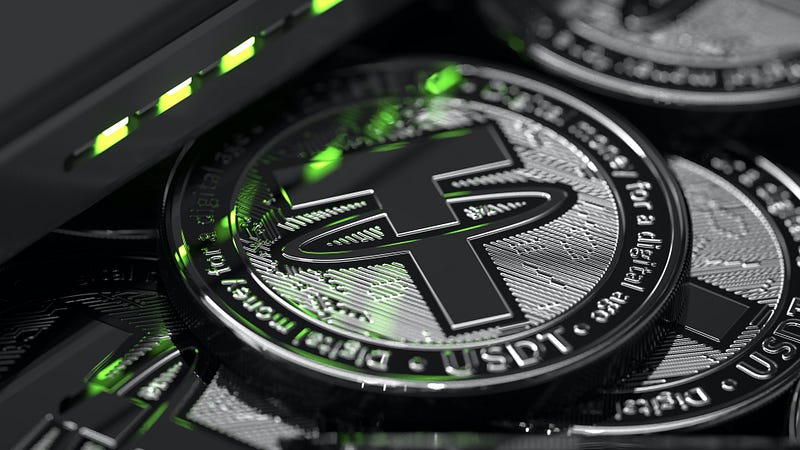
Photo by DrawKit Illustrations on Unsplash


ToS Change in Context

Within the cryptocurrency ecosystem, eyebrows have been raised regarding the timing of Tether’s ToS change, as it has coincided with a major instance of crypto-related money laundering. Conversely, some argue that the issue could be specific to Cake DeFi. The DeFi protocol had been flagged for enhanced due diligence (EDD), suggesting that the modification in Tether’s ToS might potentially be a result of a partnership issue between the two entities.

Stablecoins like USDT play a pivotal role in the digital asset ecosystem, serving as a bridge between the volatile world of cryptocurrencies and the stability of traditional fiat currencies like the US dollar. Any disruption in their usage can trigger a domino effect in the crypto markets.

The cryptocurrency sector is grappling with regulatory uncertainties worldwide, and Singapore is no exception. The Monetary Authority of Singapore (MAS) has been actively reviewing and updating its crypto-related regulations to align with international standards and mitigate risks to financial stability.

The precise motive behind Tether’s decision to restrict USDT redemption for specific customers in Singapore remains unclear. Notwithstanding that, Tether’s Chief Technology Officer (CTO) Paolo Ardoino expressed the view that the matter is being misunderstood. He tweeted:


Spreading FUD

”Before spreading FUD [fear, uncertainty and doubt] it would be great if you guys did take a look at webarchive… This is Jan 2022…. And if you open the link below: Last updated: May 12, 2020… Again, take a moment to search and verify information before YOLO [you only live once] posting.”

Clearly Ardoino is making the point that the ToS change is consistent with existing compliance policy which has been in place since 2020. Notwithstanding that, in reviewing related records, media outlet Protos found that USDT issuance and redemption after May 2020 demonstrate that the firm continued to do business with Singapore-based entities. The publication cited UQPAY specifically, a Singapore-based payments processor. It was found to have issued USDT between May 14 and May 18 in 2020.


More to Read
View All
Policy & Regulation·

May 02, 2023

Bhutan Quietly Mining Bitcoin Since $5,000

Bhutan Quietly Mining Bitcoin Since $5,000The tiny nation of Bhutan continues to be full of surprises recently where crypto is concerned, with the latest report suggesting that the kingdom has been mining bitcoin for a number of years already.© Pexels/Pema GyamtshoAccording to a recent report in The Bhutanese, a Bhutan-based publication led by investigative journalist, Tenzing Lamsing, the landlocked nation had been mining bitcoin over the course of a “few years” already, in an effort to diversify its sovereign portfolio.Long-term investment strategyUjjwal Deep Dahal, CEO of Druk Holding and Investments (DHI), told the publication that the venture was part of a long-term investment strategy. DHI is the commercial arm of the Royal Government of Bhutan. It was formed pursuant to a Royal Charter in 2007 with the mandate of making investments on behalf of Bhutan while optimizing usage of resources.The mining activity had centered on Bitcoin although there was a small provision for Ethereum-based mining when Ethereum was a mineable proof-of-work (PoW)-based blockchain network. It’s unclear of the precise timeline but the report outlines that DHI has engaged in the mining space over a number of years, and at a time in which the Bitcoin unit price was as low as $5,000.Exploiting cheap hydroNestled in the Himalayas, Bhutan has considerable hydroelectric resources. Bitcoin mining is ordinarily an expensive exercise but in scenarios where there are plentiful energy resources with a marginally cheaper cost of production than the average, it can be an attractive and profitable enterprise. Dahal outlined that these conditions enabled DHI to reinvest profits back into additional mining equipment.The precise time-frame of DHIs entry into Bitcoin mining is open to speculation. However, we do know that the Bitcoin unit price was last below $5,000 at the onset of the pandemic in March 2020. Prior to that, Bitcoin had risen above $5,000 in April 2019 following an acute bear market in 2018.Crypto lender entanglementsBhutan and DHI hit the crypto radar last month when it was revealed that the kingdom had made significant investments into and out of failed crypto lenders Celsius and BlockFi. Dahal has said that the royal charter-mandated firm had taken out loans with both crypto lenders and had fully repaid those loans. However, that may have been something that happened later than anticipated. The Bhutanese company had a $30 million loan from BlockFi. BlockFi liquidated the Bitcoin collateral associated with that loan in 2022 but it left a shortfall of $800,000. The failed lender subsequently sued DHI. As of an April 13 court filing, BlockFi submitted a voluntary dismissal of the lawsuit to the courts, presumably because the shortfall was subsequently paid by DHI.In the case of Celsius, DHI had withdrawn $65 million from the lending platform prior to it declaring bankruptcy. Consequently, the matter has been the subject of speculation relative to the potential for the Celsius bankruptcy estate to pursue DHI for a clawback of the withdrawn funds.

news
Web3 & Enterprise·

Oct 06, 2023

Wemade Partners with Katnappe to Bring Arcade Game to Blockchain Platform

Wemade Partners with Katnappe to Bring Arcade Game to Blockchain PlatformSouth Korean blockchain game developer Wemade has entered into a partnership with Katnappe sp. z o.o. to introduce Hoomeez, a multiplayer casual arcade game from the Poland-based indie game publisher, onto Wemade’s blockchain gaming platform, WEMIX PLAY.Hoomeez has been developed by Sourena Games Studio and is made accessible to players worldwide through Katnappe, which was established in 2008.Photo by Shubham Dhage on UnsplashAddition of casual gamesThanks to this partnership between these two entities, users of WEMIX PLAY will now have the opportunity to engage in casual games like racing, ball games, hazard elimination, and coin collection, using cartoon avatar Hoomie, and compete with friends from around the world.Through collaborations with game companies across North America, Europe, and Asia, Wemade has been strengthening the competitiveness of WEMIX PLAY, and its commitment extends to acquiring a broader range of games encompassing various genres.Omnichain network developmentWemade’s global collaborations extend beyond the realm of gaming and encompass the development of the Web3 ecosystem. Recently, Wemade’s WEMIX Foundation forged a strategic partnership with oracle solutions provider Chainlink Labs in order to establish an omnichain network named the Unbound Networking and Accelerating Growth Initiative (Unagi). Blockchain oracles allow developers to bring data from off-chain sources onto the blockchain.In this collaborative effort, the two companies will implement the Chainlink Cross-Chain Interoperability Protocol (CCIP) into Unagi’s core engine, unagi(x). The integration of CCIP will facilitate the creation of a decentralized omnichain messaging protocol, enhancing the ability to conduct swift and secure transactions between on-chain and off-chain systems.Furthermore, Chainlink Labs will become the inaugural member of the Certified Organizations for Unagi Round Table (COURT), a group dedicated to advancing technological research and development with the aim of nurturing a sustainable omnichain ecosystem.Leveraging the support of Unagi, the WEMIX Foundation is working towards connecting diverse blockchains to construct an extensive Web3 ecosystem. Additionally, the foundation is committed to an ongoing recruitment drive for global partners, seeking to expand the ranks of COURT members in pursuit of technological innovation.Sergey Nazarov, the co-founder of Chainlink Labs, shared his excitement about collaborating with Wemade to further the widespread adoption of Web3 games. He mentioned that Chainlink’s CCIP will open new horizons for unagi(x) in the blockchain sphere and help it secure interoperability between different blockchain networks.Henry Chang, CEO of Wemade, resonated with this perspective. He emphasized that their partnership stems from a mutual goal of advancing technological innovation and shaping the blockchain’s future. Chang expressed that Chainlink’s CCIP will bolster the Korean company’s efforts in enhancing its user-centric Web3 gaming platform.

news
Web3 & Enterprise·

Oct 11, 2023

Dunamu Restructures Leadership at Its Blockchain Research Arm

Dunamu Restructures Leadership at Its Blockchain Research ArmDunamu, the operator of South Korea’s largest cryptocurrency exchange Upbit, has implemented leadership changes at its blockchain research arm, Lambda256. That’s according to a report by local media outlet Decenter.Photo by Lea L on UnsplashCo-leadership structureStarting this month, Lambda256 welcomes a co-leadership structure, with tech maven Chung Ui-chung and financial specialist Park Yong-shin stepping in as co-CEOs. Each CEO holds independent signing authority. Chung previously held the role of Chief Technology Officer (CTO) at internet messaging giant Kakao, while Park Yong-shin boasts a distinguished career in public administration and finance, having passed the civil service examination and later steering the helm at Heungkuk Investment Trust Management, currently known as Heungkuk Asset Management.Tech expert and gov’t affairs specialistThe reshuffle follows the departure of former CEO Park Jae-hyun, who resigned last month. Shedding light on the division of roles, a Lambda256 official mentioned that Chung will spearhead practical endeavors, whereas Park Yong-shin will liaise with government sectors. Industry analysts perceive this strategic move as Lambda256’s intensified drive to hone its technological edge and navigate the evolving government regulations surrounding security tokens and associated blockchain ventures.Dunamu, holding a dominant 60.6% ownership in Lambda256, established the company in 2018, entrusting the leadership to Park Jae-hyun, a former employee of SK Telecom and Samsung Electronics. The subsequent year saw Lambda256 evolve into a subsidiary, rolling out blockchain platforms like Luniverse. However, financial challenges loomed, with the firm recording net losses of KRW 2.1 billion ($1.6 million) in 2020, KRW 3.7 billion in 2021, and KRW 46.5 billion in 2022.

news
Loading