Top

Chinese Central Bank Official Emphasizes Need for Digital Yuan Retail Payments

Policy & Regulation·September 05, 2023, 12:11 AM

A senior official from the People’s Bank of China (PBOC) has underscored the importance of making China’s digital yuan, commonly referred to as the e-CNY, accessible in all retail payment scenarios within China.
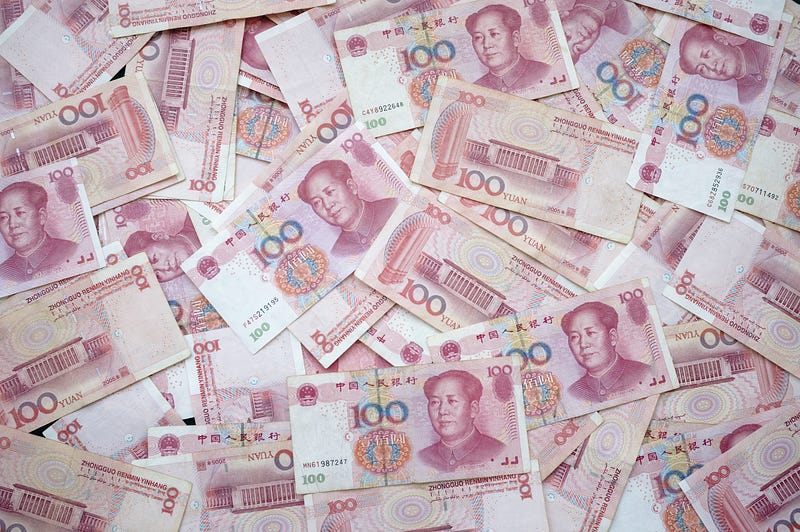
Photo by Eric Prouzet on Unsplash


Streamlining retail e-CNY payments

The remarks were delivered by Changchun Mu, Head of the Digital Currency Research Institute, during a trade forum in Beijing. Mu emphasized the need for standardizing QR codes in payment systems, particularly those dominated by giants like WeChat Pay and Alipay.

Local media reported on Sunday that the central bank official highlighted that various wallet providers, including WeChat, Alipay, commercial banks with mobile banking apps, and other payment apps associated with e-CNY operations, must remain vigilant about complying with relevant financial regulations and obtaining the necessary licenses. He stressed that the initial step in this process should involve the adoption of the digital yuan as the preferred payment method for all retail transactions.


Standardizing QR code payments

Mu explained that in the short term, authorities can start by unifying QR code standards on a technical level to achieve barcode interoperability. In the long run, he suggested that they will steadily implement the upgrade of payment tools.

The move towards standardizing QR code payments aligns with the central bank’s commitment from the previous year to promote universal QR payment codes. This initiative aims to allow consumers to make payments by scanning a unified barcode. Currently, QR code payment systems are widely prevalent in China, with WeChat Pay and Alipay being dominant players.

The PBOC has been actively testing the e-CNY, having introduced a pilot app in January 2022. The digital yuan pilot programs, initiated in late 2019, have expanded to encompass at least 26 locations across 17 provincial-level cities and regions, including major cities like Beijing, Shanghai, Shenzhen, and Suzhou, according to state media Xinhua.

The extent of China’s promotion of its digital yuan has been unmatched despite the fact that most central banks globally have had ongoing central bank digital currency-related (CBDC) projects open for a number of years already.

Recent months have seen the launch of a whole host of initiatives to further the use of the CBDC. These initiatives have included integration of the currency into the education system in Jiangsu province, the installation of digital yuan ATMs in Hainan, among many other such projects, and paying state employees with the currency in Changshu. That said, despite these efforts, widespread adoption of the e-CNY remains a work in progress.


Bringing about e-CNY integration

Mu also emphasized that the existing interbank payment and settlement systems function effectively, indicating that there is no immediate need to replace them with the CBDC system. Instead, he suggested that seamless integration could be achieved by ensuring comprehensive interoperability between the e-CNY and existing electronic payment tools and commercial bank deposit systems.

Moreover, at a wholesale level, Mu proposed the use of the digital yuan for settlement within the financial market infrastructure. Smart contracts could also be leveraged for such activities, thereby enhancing efficiency in wholesale payments.

Mu’s remarks underscore the Chinese central bank’s determination in advancing the development and adoption of the digital yuan while ensuring it remains integrated into the existing financial ecosystem.


More to Read
View All
Web3 & Enterprise·

Nov 01, 2023

CPLABS and Protocol Capital to collaborate on blockchain-enhanced autonomous driving in Qatar

CPLABS and Protocol Capital to collaborate on blockchain-enhanced autonomous driving in QatarKorean blockchain development firm CPLABS (formerly known as Coinplug) announced on Wednesday (local time) that it has signed a memorandum of understanding (MOU) with Qatar-based company Protocol Capital to collaborate on blockchain-driven ventures in the Middle Eastern country.Protocol Capital is known for partnering with institutional clients and delivering bespoke solutions to investors in sectors such as real estate, energy, construction, and manufacturing.Photo by Lucca Belliboni on UnsplashBlockchain and autonomous drivingThrough this agreement, the two companies aim to execute projects that leverage and champion blockchain technology, with initiatives including an autonomous driving pilot project. They also plan to register with Qatar’s Tasmu Digital Valley, established by the Ministry of Transport and Communications (MoTC) and the Qatar Free Zones Authority (QFZA), as part of their collaborative efforts towards Qatar’s National Vision 2030.CPLABS plans to integrate its blockchain platform and upcoming 2024 Web3 portal into the autonomous driving pilot project. This move will grant the Korean firm an avenue to offer identity verification and payment services, further broadening its footprint in the finance and information communications technology (ICT) sectors.”As a dedicated Web3 tech firm, CPLABS possesses around 320 blockchain patents both domestically and internationally. Its projects encompass areas such as decentralized identifiers (DIDs), decentralized finance (DeFi), security token offerings (STOs), non-fungible tokens (NFTs), and decentralized autonomous organizations (DAOs).Commenting on this joint effort, Uhr Joon-sun, CEO of CPLABS, stated that the company aims to deliver Web3 platforms that connect Korea with the global community.

news
Web3 & Enterprise·

Aug 14, 2023

UAE Royal Office to Visit South Korea Next Month for Web3 Ventures

UAE Royal Office to Visit South Korea Next Month for Web3 VenturesAIITONE, an immersive tech company based in South Korea, said Monday that officials from the Royal Private Office of H.H Sheikh Ahmed Bin Faisal Al Qassimi in the United Arab Emirates (UAE) are set to visit South Korea next month. During the visit, the Royal Office will work with AIITONE to enhance collaboration with Korean enterprises leading the Web3 sector, including information technology (IT) and blockchain, and explore cooperative opportunities across different sectors such as energy and finance.The Royal Office will also engage in practical preparations for establishing the UAE banks’ Korean branches and meet with members of the Korean National Assembly and related business officials.Photo by Saj Shafique on UnsplashNurturing international relations“This visit will consist of meetings and discussions with Korean lawmakers, further strengthening political cooperation between our two countries and facilitating the exchange of opinions on crucial international matters,” a representative from the Royal Office commented.“During the visit, a South Korea-UAE Web3 forum will also be held, expediting discussions on fintech-related collaboration possibilities such as blockchain and STO,” the representative added.Transcontinental fintech growthAIITONE and the Royal Office had previously signed a memorandum of understanding (MOU) vowing to work together to expand their respective business operations into each other’s regions — East Asia and the Middle East — and subsequently bolster the fintech industries there.Under the partnership, AIITONE plans to convene with major Korean companies in order to analyze industry trends and explore potential areas for collaboration. The discussions are expected to cover various areas, including the establishment of Islamic banks in Korea, setting up offices for the investment of Arab capital in Asia, and strengthening cooperation in the field of security tokens.The company will also work with the Royal Office on security token projects and central bank digital currencies (CBDCs) — areas where Dubai leads innovation.“Through activities such as the UAE Web3 forum and blockchain-based security token ventures, we aim to pioneer new models of cooperation and achieve sustainable development,” said Bruce Jeong, Principal of Middle East Investment and AIITONE.

news
Policy & Regulation·

Apr 11, 2023

Malaysia Looking to Wean Itself Off Dollar Dependency

Malaysia Looking to Wean Itself Off Dollar DependencyAccording to Prime Minister Anwar Ibrahim, China is willing to engage in discussions with Malaysia regarding the creation of an Asian Monetary Fund. This proposal, which has been circulating for decades, aims to decrease the dependence on the US dollar.©Pexels/Sergei StarostinAsian Monetary FundAnwar highlighted the necessity to minimize reliance on the dollar and the International Monetary Fund and proposed the establishment of this fund at the Boao forum in Hainan last week. He stressed that the fund would aid in diversifying the financial landscape of Asia and improving its resilience against economic challenges.Following a state visit to China last week, Anwar stated that “there is no reason for Malaysia to continue depending on the dollar.” The Prime Minister told the Malaysian parliament on Tuesday that China’s President Xi Jingping was receptive to the idea of an Asian Monetary Fund and welcomed further discussions on such a proposal.Anwar Ibrahim, serving as both the Finance Minister and Prime Minister of Malaysia, stated that the country’s central bank is already taking measures to allow for negotiations between Malaysia and China using their respective currencies, the ringgit and renminbi.The robustness of the US dollar poses a significant challenge for Malaysia and other Asian countries, particularly as Malaysia is a net importer of food. In September 2022, the Bloomberg dollar index reached an all-time high, leading to a decline in the value of the ringgit and other Southeast Asian currencies to levels not seen in decades.As a result, Anwar Ibrahim’s proposal for a shift towards bilateral trade negotiations with China using the ringgit and renminbi holds the potential to alleviate some of the region’s dependence on the dollar and reduce the impact of its fluctuations.International shift away from dollarThis development comes as other officials in the region, particularly Singapore, have been discussing strategies to manage the effects of a dominant US dollar that has weakened local currencies and been used as an instrument of economic power by the United States.There has been a raft of deals struck in recent weeks all pointing towards an international shift away from the US dollar as the global reserve currency. Russia has agreed with China to trade in renminbi. A major trade deal was struck recently between China and Brazil that will see the two countries trade in reals and renminbi. Major oil producer Saudi Arabia has made similar soundings and signed similar deals with Beijing.Bitcoin as a reserve currencyAll of this recent upheaval has brought further consideration of bitcoin acting as a reserve currency back into view. It’s expected that even if there is a shift away from the US dollar, the renminbi won’t be capable of acting as a single dominant global reserve currency. Taking to Twitter on Wednesday, Bloomberg Intelligence Crypto Market Analyst Jamie Coutts suggested that bitcoin’s performance in Q1, 2023 marks “a significant milestone in its ascendancy as a potential global reserve asset.”Coutts believes that it marks the first occasion that the leading cryptocurrency has acted as a safe haven asset during a liquidity crisis. Bitcoin remains at an early stage of development. Nobody expects that it could serve as the global reserve currency at this point. However, it is not unreasonable to anticipate it increasingly growing into a role as a reserve currency used for international trade and settlement. Especially so, as issues bubble over relative to banking and a desire to escape the clutches of US dollar domination.

news
Loading