Top

Malaysia Looking to Wean Itself Off Dollar Dependency

Policy & Regulation·April 11, 2023, 2:06 AM

According to Prime Minister Anwar Ibrahim, China is willing to engage in discussions with Malaysia regarding the creation of an Asian Monetary Fund. This proposal, which has been circulating for decades, aims to decrease the dependence on the US dollar.

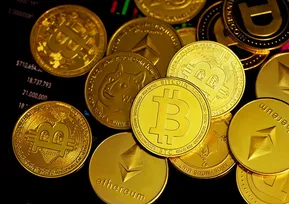
©Pexels/Sergei Starostin


Asian Monetary Fund

Anwar highlighted the necessity to minimize reliance on the dollar and the International Monetary Fund and proposed the establishment of this fund at the Boao forum in Hainan last week. He stressed that the fund would aid in diversifying the financial landscape of Asia and improving its resilience against economic challenges.

Following a state visit to China last week, Anwar stated that “there is no reason for Malaysia to continue depending on the dollar.” The Prime Minister told the Malaysian parliament on Tuesday that China’s President Xi Jingping was receptive to the idea of an Asian Monetary Fund and welcomed further discussions on such a proposal.

Anwar Ibrahim, serving as both the Finance Minister and Prime Minister of Malaysia, stated that the country’s central bank is already taking measures to allow for negotiations between Malaysia and China using their respective currencies, the ringgit and renminbi.

The robustness of the US dollar poses a significant challenge for Malaysia and other Asian countries, particularly as Malaysia is a net importer of food. In September 2022, the Bloomberg dollar index reached an all-time high, leading to a decline in the value of the ringgit and other Southeast Asian currencies to levels not seen in decades.

As a result, Anwar Ibrahim’s proposal for a shift towards bilateral trade negotiations with China using the ringgit and renminbi holds the potential to alleviate some of the region’s dependence on the dollar and reduce the impact of its fluctuations.


International shift away from dollar

This development comes as other officials in the region, particularly Singapore, have been discussing strategies to manage the effects of a dominant US dollar that has weakened local currencies and been used as an instrument of economic power by the United States.

There has been a raft of deals struck in recent weeks all pointing towards an international shift away from the US dollar as the global reserve currency. Russia has agreed with China to trade in renminbi. A major trade deal was struck recently between China and Brazil that will see the two countries trade in reals and renminbi. Major oil producer Saudi Arabia has made similar soundings and signed similar deals with Beijing.


Bitcoin as a reserve currency

All of this recent upheaval has brought further consideration of bitcoin acting as a reserve currency back into view. It’s expected that even if there is a shift away from the US dollar, the renminbi won’t be capable of acting as a single dominant global reserve currency. Taking to Twitter on Wednesday, Bloomberg Intelligence Crypto Market Analyst Jamie Coutts suggested that bitcoin’s performance in Q1, 2023 marks “a significant milestone in its ascendancy as a potential global reserve asset.”

Coutts believes that it marks the first occasion that the leading cryptocurrency has acted as a safe haven asset during a liquidity crisis. Bitcoin remains at an early stage of development. Nobody expects that it could serve as the global reserve currency at this point. However, it is not unreasonable to anticipate it increasingly growing into a role as a reserve currency used for international trade and settlement. Especially so, as issues bubble over relative to banking and a desire to escape the clutches of US dollar domination.


More to Read
View All
Web3 & Enterprise·

Jul 27, 2023

Milk Partners Launches Blockchain-Powered Reward Points System in Indonesia

Milk Partners Launches Blockchain-Powered Reward Points System in IndonesiaSouth Korean tech company Milk Partners, which operates blockchain-powered reward points platform MiL.k, has announced the official launch of its services in Indonesia, according to a report by local news outlet Etoday. MiL.k simplifies the process of handling and exchanging reward points from multiple companies by offering an integrated platform for users.Photo by Dino Januarsa on UnsplashLocal readinessIn order to provide stable local service, MiL.k has registered as an electronic system organizer (ESO) in Indonesia. Moreover, the platform has implemented a passport and identification card verification system to meet know-your-customer (KYC) requirements.As of today, Indonesian users can download the MiL.k app from the App Store and Google Play. Within this month, they will be able to utilize their reward points from two local companies: GetPlus, a loyalty point integration service, and Indonesia AirAsia, a budget airline.Southeast AsiaTo expand its reach and promote the platform further, Milk Partners has plans to collaborate with local partners on a range of promotional events. Additionally, the company aims to boost its marketing efforts in Southeast Asia, encouraging more businesses and projects to join the MiL.k platform.Cho Jung-min, CEO of Milk Partners, shared his excitement about the official launch of MiL.k in Indonesia, which is a significant step in the company’s global expansion plan. He stressed the commitment to providing reasonable and tangible services and asked for customers’ interest and support in this endeavor.Recent token listingIn line with this development is last month’s listing of the trading pair of MLK/IDR on Indodax, an Indonesian cryptocurrency exchange. MLK stands for Milk Coin, a key currency that can be exchanged for reward points on the MiL.k platform.

news
Markets·

Nov 28, 2025

Upbit suffers $30M breach, overshadowing Dunamu’s major merger announcement

South Korea’s largest crypto exchange, Upbit, suffered a security breach on Nov. 27 that resulted in the theft of 44.5 billion won ($30.4 million) in digital assets, all taken from the exchange’s hot wallets. The stolen tokens were all Solana-based, and Upbit CEO Oh Kyoung-suk said in a statement that no users will incur losses, as the company will cover the full amount with its own reserves.Photo by FlyD on UnsplashHot-wallet breach hits 24 tokensThe exchange said in a statement that the compromised tokens were transferred to an unknown external wallet at around 7:42 p.m. UTC on Nov. 26. In total, 24 cryptocurrencies were affected, all within the Solana ecosystem. The stolen assets ranged from infrastructure tokens such as Solana (SOL) to staking-related assets like Jito (JTO), along with the stablecoin USD Coin (USDC) and memecoins including Bonk (BONK), Moodeng (MOODENG), and Official Trump (TRUMP). According to Oh, the breach was followed by an emergency security review of the affected networks and wallets. He added that all remaining assets were moved to cold storage to prevent further unauthorized transfers. Oh also said the exchange is working to trace the stolen assets and block on-chain movements wherever possible, noting that Solayer (LAYER) tokens worth 2.3 billion won ($1.6 million) have already been frozen. Upbit is also reaching out to relevant projects and institutions for assistance. This marks Upbit’s second theft case. The first took place on Nov. 27, 2019, exactly six years ago to the day, according to News1. Authorities focus on Lazarus’ involvementFinancial authorities are investigating the incident, and North Korea’s Lazarus Group is being treated as the leading suspect, the Maeil Business Newspaper reported. Lazarus is also believed to have been behind the 58 billion won ($40 million) worth of Ethereum (ETH) stolen from Upbit in 2019. A government official told the paper that the latest breach did not appear to stem from a server intrusion but may have involved a stolen administrator account, allowing the attackers to impersonate internal staff and move assets—similar to the method used in the 2019 case. Security analysts echoed that assessment. One investigator said the stolen funds moved through exchange wallets before being mixed, a pattern often linked to Lazarus. He added that mixers, which are prohibited in Financial Action Task Force (FATF)-member jurisdictions, make tracing difficult and that attackers typically route assets through countries outside that framework, further pointing to North Korea. Following the incident, Upbit suspended deposits and withdrawals for all assets and said services will resume once security is fully verified. The halt has also affected trading dynamics on the exchange, with CryptoQuant CEO Ki Young Ju noting that retail investors are fueling altcoin spikes as arbitrage bots remain offline. Dunamu, Naver set $6.8B growth planThe security crisis struck at a particularly sensitive moment for Upbit’s operator, Dunamu, overshadowing what was intended to be a celebratory corporate milestone. On that same day, Dunamu, Naver, and Naver Financial held a joint press conference to outline their global expansion strategy. Dunamu brings its blockchain and crypto infrastructure, Naver contributes its position as Korea’s dominant search engine, and Naver Financial adds its payment platform serving 34 million users. The event came after reports that Naver Financial and Dunamu had approved a merger plan through a comprehensive share swap, with the ratio set at 1 to 2.54. The three companies said they will combine their respective strengths to invest 10 trillion won ($6.8 billion) over the next five years in building an ecosystem centered on Web3 and artificial intelligence (AI).During the press conference, Naver CEO Choi Soo-yeon said no decisions have been made on a Nasdaq listing for the newly combined Naver Financial–Dunamu entity or on whether it might eventually merge with Naver, according to TechM. She said dual listings remain a matter requiring national consensus. Choi also noted that while Naver Financial is a Naver subsidiary, Dunamu is the larger partner, and a later merger between the combined entity and Naver is unlikely.

news
Policy & Regulation·

Aug 08, 2023

Singapore Pledges $112M to Boost Fintech Solutions Including Web3

Singapore Pledges $112M to Boost Fintech Solutions Including Web3Acknowledging the growing significance of collaboration with industry stakeholders in propelling advancements in emergent technologies such as Web3, Singapore’s central bank, the Monetary Authority of Singapore (MAS), has unveiled plans to allocate up to 150 million Singapore dollars (approximately $112 million) towards supporting a spectrum of financial technology solutions, with a special focus on Web3.Photo by Jason Leung on UnsplashDistributed over three yearsThis financial commitment, outlined in a press release published to the MAS website on Monday, will be distributed over a three-year period as part of the revamped Financial Sector Technology and Innovation Scheme (FSTI 3.0), designed to invigorate and fortify innovation by backing projects that leverage cutting-edge technologies.The renewed innovation scheme encompasses multiple avenues, including the Enhanced Centre of Excellence track, the Environmental, Social and Governance (ESG) fintech track, and the Innovation Acceleration track — the last incorporating the realm of Web3.Emphasizing industry partnershipsMAS underlined the importance of forging partnerships with industry participants to bolster inventive fintech solutions originating from emerging technologies such as Web3.“MAS will conduct open calls for the use of innovative technologies in industry use cases. Grant funding will be provided to support actual trial and commercialization,” the central bank stated.In addition to these efforts, the initiative will maintain its commitment to encouraging adoption across domains like artificial intelligence, data analytics, and regulatory technology (RegTech). Furthermore, there will be an emphasis on fostering adoption within companies that are still digitally maturing and seeking to integrate RegTech solutions.Applicants across the various program tracks will be required to allocate resources toward nurturing talent. This strategy aims to augment Singapore’s fintech talent pool, ultimately contributing to the nation’s expertise in the sector.Ravi Menon, the Managing Director of MAS, underscored the substantial investment that the Financial Sector Development Fund (FSDF) has funneled into the FSTI program since its inception in 2015.Menon highlighted that this initiative’s overarching objective is to spur innovation and facilitate the seamless integration of novel technologies within the financial landscape. Over the years, the program has exemplified its commitment to driving transformation and pioneering the adoption of new technology across the financial sector.Nurturing Web3 innovationPotential Web3 and crypto hubs have come and gone, but Singapore has been vying to take its place as a center for Web3 innovation over a sustained period after it suffered some setbacks in 2022 related to a string of crypto business failures.While Binance had not been permitted to serve customers in the city-state, that meant that a disproportionate number of Singaporeans got caught up in the failure of the FTX crypto exchange. Alongside that regulatory failure, state investment giant Temasek had to write off a substantial investment in the company, while suffering reputational damage for not having detected the FTX fraud.The city-state has also been home to the failure of crypto lender Hodlnaut and crypto hedge fund Three Arrows Capital (3AC). Despite these setbacks, Singaporean authorities are continuing to work towards setting the proper stage to further develop Web3 innovation. In June, MAS proposed a comprehensive framework for the design of open networks relative to tokenized digital assets. This latest initiative will further Singapore’s ambition to grow its Web3 sector.

news
Loading