Top

TRYB Emerges as Turkish Alternative to Dollar-Pegged Stablecoins

Web3 & Enterprise·September 02, 2023, 11:12 AM

In a market typically dominated by dollar-backed stablecoins like Tether (USDT) and USD Coin (USDC), a new player has emerged in Turkey to operate alongside those dominant stablecoins.

According to a report by CoinDesk on Friday, BiLira’s TRYB stablecoin, pegged to the Turkish lira (TRY), has rapidly climbed the ranks to become the world’s second-largest non-US dollar-pegged stablecoin. It currently trails Tether’s euro-pegged EURt, which according to Coingecko data, currently holds a market cap of $221 million. In just three weeks, TRYB has skyrocketed, quadrupling its market cap to $136.10 million.
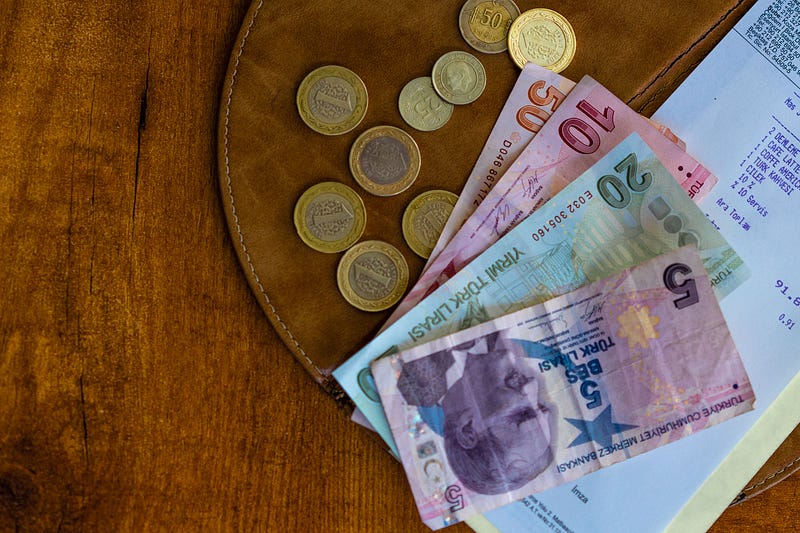
Photo by Oleksandr P on Pexels


Market cap volatility

However, TRYB's market cap had fallen off a cliff on Friday, dropping from $135 million earlier in the day to $40 million. TRYB, an Ethereum-based stablecoin, offers a unique proposition in that it is pegged to the Turkish lira, allowing users to exchange 1 TRYB for 1 TRY. The stablecoin offering, which is administered by Istanbul-based BiLira, is underpinned by 100% fiat reserves held in Turkish banks.

The Turkish lira has earned its reputation as one of the most volatile fiat currencies globally, often experiencing fluctuations against the US dollar. Over the course of the last five years, the currency has lost 94% of its value when benchmarked against the performance of the US dollar.

In response to this volatility, TRYB has found its purpose as a medium of exchange. It can act as a gateway to transition user’s Turkish lira into cryptocurrencies and vice versa. This trend aligns with the global use of stablecoins as the foundation of crypto trading pairs, providing traders with a stable asset while sidestepping fiat currency’s unpredictability.


Exiting the lira

The US Federal Reserve acknowledged the significance of stablecoins in December 2022, highlighting their role in facilitating crypto trades, serving as collateral for crypto loans, and minimizing inefficiencies tied to fiat-to-crypto conversions. In fact, stablecoins account for over 80% of the trading volume on centralized exchanges, attesting to their pivotal role in the crypto ecosystem.

It’s likely that the Lira-pegged stablecoin will act as a means to access other cryptocurrencies and US dollar-pegged stablecoins like USDT and USDC, rather than be considered as a rival or replacement. That’s by virtue of the ongoing difficulties of the Turkish sovereign currency which it tracks. So long as the lira continues to erode in terms of buying power, it’s likely that citizens will be looking for avenues to escape from that erosion of value.


Increased interest in crypto

Given this monetary backdrop in Turkey, it shouldn’t surprise anyone to learn that interest in crypto is on the rise. In a recent report published by Seychelles-based cryptocurrency exchange KuCoin earlier this week, a significant increase in the number of crypto investors in Turkey over the course of the past eighteen months has been identified.

The report found that 52% of the adult Turkish population have participated in crypto-related investments. Over the past 18 months, the number of Turkish adults embracing crypto has risen to that 52% level from 40%.

More to Read
View All
Markets·

Apr 12, 2023

NVT Ratio Signals Overvalued BTC

NVT Ratio Signals Overvalued BTCThe network value to transaction (NVT) ratio of Bitcoin, which has been staying at a high level since the beginning of the year, has signaled its overvaluation, according to Yonhap Infomax.However, some argue that this will not necessarily lead to a crypto winter, considering that the nature of Bitcoin as an asset has changed and there is no sign of overheating in other indicators.©Pexels/PixabayPrice and NVT ratio correlationYonhap Infomax found out that the correlation between the NVT ratio and the price of Bitcoin over the past six years is -0.35. A value of 1 represents a completely positive correlation, while a value of -1 represents a completely negative correlation.Extending this period to 2010 makes the correlation close to 0, but during the early years, NVT ratios showed high volatility, shooting up to four digits. Such a high volatility doesn’t suggest much correlation. Until 2021, there was a high correlation of up to -0.44.The NVT ratio is calculated by dividing the market cap by the transacted volume. Conceptually, it is similar to the price-to-earnings ratio for the stock market.In 2017, when the crypto market was bullish, the average Bitcoin NVT ratio was 7.3. This number became 8.7 in 2021 when the market experienced a similar pattern. In retrospect, single-digit NVT ratios usually hint at bullish markets.This year so far, Bitcoin has been relatively overvalued, given that the average NVT ratio is 23.6.BTC price recoveryWhen the crypto market sentiment lost its confidence due to the FTX bankruptcy last year, the price of Bitcoin went down to $15,000. It later recovered to the near $30,000 level. The Bitcoin price once had reached an all-time high in 2021, surpassing $65,000.The years that manifested similar patterns as this year were 2018 and 2019. In those years, the Bitcoin NVT ratio plateaued around 20.Uncertain outlookThe NVT ratio itself could point to a possible crypto winter, but researchers say it’s hard to say.Jang Kyung-pil, a research analyst at crypto data platform Xangle, said that people now consider Bitcoin as a store of value rather than a means of transactions, pointing out that BTC’s market value to realized value (MVRV) ratio has hit the bottom at 0.84 and now reached 1.4. According to Jang, MVRV values under 1 indicate undervaluation and those above 3 indicate overvaluation.Jung Seok-moon, head of the research center at crypto exchange Korbit, said that the current NVT ratio signals BTC overvaluation. He added that the Fed is likely to turn dovish in its monetary policy, which would prompt a strong BTC uptrend.

news
Web3 & Enterprise·

Nov 23, 2023

Seoul Labs to build layer 2 blockchain mainnet using SASEUL

Seoul Labs to build layer 2 blockchain mainnet using SASEULSouth Korean blockchain solutions provider Seoul Labs announced Thursday (local time) that it will build a layer 2 mainnet utilizing the third-generation blockchain engine SASEUL. This comes in an effort to strengthen the scalability of the SASEUL network and improve capabilities for large-scale traffic processing. Layer 2 refers to a set of off-chain solutions built on top of a layer 1 network to reduce bottlenecks with scaling and data.Photo by Shubham Dhage on UnsplashScalability and stabilitySeoul Labs plans to actively utilize the mainnet’s core functions, such as its HAP-2 hypothesis acceptance verification algorithm and dual chain mechanism as well as its ability to solve storage space problems. In particular, the HAP-2 hypothesis acceptance verification algorithm is a more efficient method for generating blocks than the proof of Work (PoW) algorithm that is widely used in blockchain mainnets, significantly improving scalability.According to the company, the layer 2 mainnet will implement an approach to becoming a node on the network without a graphics processing unit (GPU).“By building the layer 2 mainnet, we will be able to build the SASEUL blockchain network into a stable and scalable platform,” said Dohee Jang, CEO of Seoul Labs.Multifaceted solutionThe project is also poised to become a solution to the excessive computing resources and electrical energy required to run blockchain networks that lead to environmental repercussions. In addition, the company is facilitating research and development for the implementation of central bank digital currencies (CBDCs) into the global economy. Notably, the South Korean government is also planning to launch a CBDC pilot project by 2024.“Recently, central banks around the world have been promoting the integration of CBDCs, but they are facing various problems in terms of scalability and speed,” said an unnamed employee at ArtiFriends, the company behind the SASEUL mainnet. “Layer 2 mainnet is a stable and scalable platform suitable for CBDCs.”

news
Web3 & Enterprise·

Jun 02, 2023

Gemini Targets UAE Crypto License

Gemini Targets UAE Crypto LicenseGemini, the US-headquartered cryptocurrency exchange owned by the Winklevoss twins, has announced its intention to obtain a cryptocurrency service license in the United Arab Emirates (UAE). The move comes as the exchange seeks to navigate the perceived “hostility and lack of clarity” surrounding cryptocurrency regulations in the United States.In a blog post published on Wednesday, Gemini highlighted the growing interest in cryptocurrencies among UAE citizens and referred to positive interactions with UAE regulators as driving factors behind its pursuit of the license. The co-CEOs of Gemini, Cameron and Tyler Winklevoss, explained in an interview with The National that their decision was influenced by the challenges they faced with crypto regulation in the US. Gemini CEO Tyler Winklevoss expressed optimism about the regulatory environment in the UAE, stating:“We’ve been super encouraged with our conversations here with the regulators. There’s an effort to make the UAE a home and a hub for crypto and, most importantly, to enact thoughtful regulation that connects, that protects both consumers, but also a company’s ability to innovate.”Photo by Nextvoyage on PexelsAbu Dhabi or Dubai — or bothAs of now, the Winklevoss twins have not yet determined the specific location for Gemini’s operations in the UAE. They hinted that the exchange’s headquarters could be established in both Abu Dhabi and Dubai, reflecting the potential for growth and development in both cities.Gemini’s decision to pursue a crypto license in the UAE underscores the country’s growing importance in the cryptocurrency industry. With its efforts to create a favorable regulatory environment and attract crypto-related businesses, the UAE aims to position itself as a crypto hub while safeguarding the interests of both consumers and innovators.Discouraging US outlookAccording to Gemini’s Global State of Crypto Report, which provides insights into cryptocurrency adoption and usage, more than 35% of respondents surveyed in the UAE reported purchasing crypto. In contrast, only 20% of respondents in the United States said they had bought cryptocurrencies.The report also revealed that nearly 32% of non-crypto owners in the UAE expressed their intention to enter the market within the next year. Furthermore, 33% of UAE crypto holders indicated that they plan to use their digital assets for in-person purchases at physical retailers, a significantly higher percentage compared to the global average of 19%.Although still a US-headquartered business, Gemini has been turned off the US market more recently. The Winklevii twins have taken a similar stance to Coinbase’s Brian Armstrong and Ripple’s Brad Garlinghouse. Coinbase has expanded in Singapore, acquired digital asset licensing in Bermuda, and has the intention of establishing a presence in Abu Dhabi.Garlinghouse has matched Armstrong’s outspokenness in criticizing the regulatory approach to digital assets in the United States. Likewise, he has acted to place Ripple on an international footing, establishing a presence in Dubai. In April, Gemini announced the opening of an engineering center in India, together with plans to expand its base in Singapore.As Gemini proceeds with its application for the UAE crypto license, industry observers will be closely monitoring the development, anticipating the potential impact of this expansion on the exchange’s operations and the broader cryptocurrency landscape in the region.

news
Loading