Top

HashKey Gears Up to Offer Trading Service to Retail Traders

Web3 & Enterprise·August 26, 2023, 12:11 AM

HashKey is gearing up to launch its services to retail traders in Hong Kong with the intention of offering them Bitcoin and Ether trading products initially.

The Hong Kong-based digital asset management platform received full licensing approval from the local regulator, the Securities Futures Commission (SFC), earlier this month. It’s anticipated that the platform will launch to retail on August 28.

That’s according to a report from a local media source earlier this week. Financial publication Investing.com stated: “General investors in the period can only trade Bitcoin (BTC) and Ethereum (ETH), because these two currencies currently account for most of the trading volume in the market.“

It’s worth noting, however, that investors will be subject to a cap, permitted to allocate only up to 30% of their net worth into the realm of cryptocurrencies while utilizing the platform.
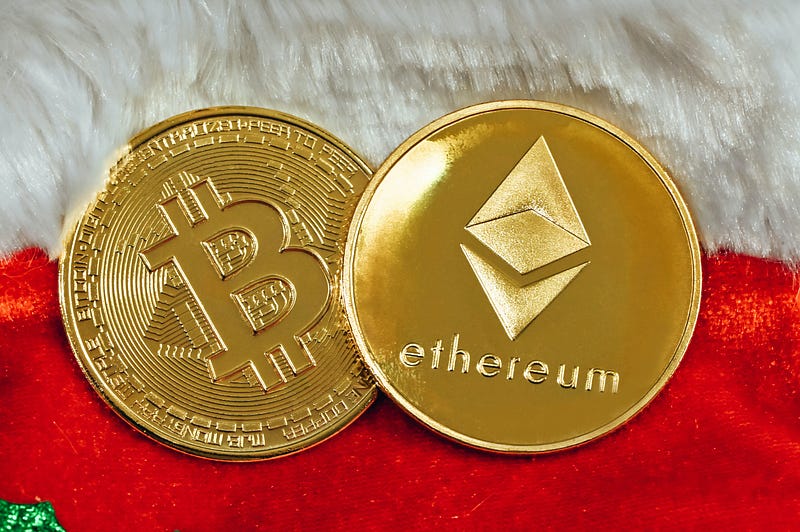
Photo by Traxer on Unsplash


Serving retail clients

It’s a significant milestone for both HashKey and the regulator, given that Hong Kong has been making huge efforts to further the development of digital asset innovation within the Chinese autonomous territory over the course of the past twelve months. Hashkey, alongside brokerage and exchange business OSL (also successful in obtaining a license), has been collaborating with regulators from an early stage in the lead-up to both receiving full licensing.

HashKey got to this point by focusing on two pivotal licenses offered by the SFC. The first of these licenses, known as Type 1, paved the way for HashKey to initiate a virtual asset trading platform, aligning seamlessly with the regulatory framework laid out under Hong Kong’s securities laws. The second license, Type 7, empowers the crypto platform to furnish automated trading services to both institutional and retail clientele.


Nurturing digital asset innovation

Hong Kong has maintained a resolute focus on cultivating a crypto-friendly environment within its borders in 2023. Echoing this sentiment, Financial Secretary Paul Chan asserted the government’s and regulatory bodies’ determination to incubate a robust crypto and fintech ecosystem throughout the year.

By March, over 80 crypto enterprises signaled their intent to establish a presence in Hong Kong, with several major players in the crypto industry among them. In April, the Hong Kong Monetary Authority (HKMA) issued a call to banks, urging them to extend their services to cryptocurrency companies.

Banking remains a difficulty in Hong Kong for crypto businesses despite the HKMA’s efforts. However, in the case of both HashKey and OSL, both are being banked by Hong Kong’s largest virtual bank, ZA Bank.

In May, the HKMA unveiled a comprehensive licensing framework tailored for crypto platforms, imposing a deadline of June 1 for compliance. As August rolled in, a select few crypto platforms clinched the green light to offer crypto trading services to an eclectic client base encompassing both retail and institutional participants.

This regulatory framework, designed to safeguard the interests of investors, is playing a large part in Hong Kong’s recent success in developing the sector. In this particular instance, it will mean that retail traders will be granted access to Bitcoin and Ethereum exclusively. This curtailed selection provides a good starting point for retail trading, and it’s likely that we will see HashKey’s trading offering being extended to cover additional digital assets as soon as local regulators permit it.

More to Read
View All
Markets·

Dec 01, 2023

Coinone’s recent addition of USDT/KRW trading pair expected to reduce Kimchi premium

Coinone’s recent addition of USDT/KRW trading pair expected to reduce Kimchi premiumCoinone, a major South Korean cryptocurrency exchange, listed USDT, a stablecoin pegged to the US dollar on the platform’s Korean won-denominated market on Thursday (local time). Its listing price was KRW 1,289.Tether Limited, the company behind USDT, asserts that their stablecoin is “backed 100% by Tether’s reserves.” These reserves comprise a variety of real-world assets such as U.S. Treasuries, overnight reverse repurchase agreements, corporate bonds and precious metals. According to CoinMarketCap, USDT’s market capitalization stands at $89 billion, ranking it third in the cryptocurrency market, just behind Bitcoin and Ethereum.Photo by DrawKit Illustrations on UnsplashFirst to list USDT/KRW trading pairDespite the significance of USDT in the cryptocurrency market, Korean exchange users have faced the limitation of not being able to purchase the stablecoin using Korean won, although these exchanges did offer markets denominated in USDT. This limitation has prompted Koreans to turn to foreign cryptocurrency services for acquiring USDT. With Coinone’s latest move, the platform has become the first to facilitate USDT/KRW trading among the nation’s five fiat-to-crypto Korean exchanges — Upbit, Bithumb, Coinone, Korbit and Gopax.Regarding this development, Kwon O-hoon, Managing Partner at the law firm Cha and Kwon, told local news outlet Decenter that there seem to be no particular legal concerns with the crypto exchange’s engagement in USDT transactions. This perspective stems from the absence of stablecoin regulations in the country.Reducing the Kimchi premiumAccording to Decenter, crypto experts anticipate that the introduction of USDT/KRW trading will help in reducing the Kimchi premium, a term referring to the discrepancy in cryptocurrency prices on South Korean exchanges compared to those in foreign exchanges.For instance, according to data from CoinNess, the average price of BTC on Korean exchanges is around KRW 51,177,250. This is about 2.34% higher than its average price on foreign exchanges, which stands at KRW 50,005,909. This difference means that users on Korean exchanges need to pay an additional KRW 1,171,340 to buy one BTC, compared to what they would pay on international platforms.However, the newly added trading pair will streamline transactions between exchanges, making it simpler for investors to engage in arbitrage. This ease of transfer is expected to lead to more balanced pricing across different markets, reducing the Kimchi premium.In light of this development, Jo Dong-hyeon, CEO of blockchain company Undefined Labs, said various institutions and blockchain projects will likely find USDT increasingly useful as a store of value, given USDT facilitates easy transfers between different exchanges.

news
Policy & Regulation·

Aug 29, 2023

OKX and Bybit Exclude Sanctioned Russian Banks from P2P Services

OKX and Bybit Exclude Sanctioned Russian Banks from P2P ServicesIn response to the mounting pressure on crypto firms to improve general compliance standards, prominent digital asset exchanges OKX and Bybit, based in the Seychelles and Dubai, have decided to delist sanctioned Russian banks from their peer-to-peer (P2P) services.Photo by Eduardo Soares on UnsplashThe move by the two exchange platforms, brought to light by Russian media reports, comes just days after Binance had done the same.Tinkoff Bank and Sberbank, two significant Russian financial institutions, have been expunged from the P2P platforms of OKX and Bybit. This effectively removes the option for Russian crypto users to exchange their assets for fiat through these banks. The decision sees the exchanges fall into line with Western sanctions imposed on the banks due to Russia’s actions in Ukraine.Enforcement difficultiesWhile the removal of these banks from the platforms is a significant step, the nature of P2P transactions introduces complexities in enforcing such bans comprehensively. Reports indicate that certain users are still engaging in P2P transactions with these banks through private channels, showcasing the challenges in regulating this decentralized method of exchange.In the case of OKX, at the time of publication, the platform still allows Russian users to receive fiat through accounts held with the Russian Standard Bank and the Russian branch of Raiffeisen Bank.This action aligns OKX and Bybit with Binance, which faced a similar scenario last week. Binance came under scrutiny when it continued to list the sanctioned banks as part of its payment methods. Following a report by The Wall Street Journal, Binance eventually removed the banks from its platform.Binance’s compliance effortsA spokesperson from Binance conveyed that while the banks have been delisted, the company remains committed to ensuring compliance by continuously updating its systems.“We regularly update our systems to ensure compliance with local and global regulatory standards,” they said. “When gaps are pointed out to us, we seek to address and remediate them as soon as possible.”Despite this stance and the latest action it has taken, users on Binance’s P2P platform are still posting ads for the sale of crypto using the “green bank,” referring to the sanctioned banks, as the preferred method of payment.Western-imposed sanctions have led to significant economic challenges in Russia, pushing individuals and institutions towards cryptocurrencies as a potential solution. In a country that has previously banned private cryptocurrencies, the attraction of decentralized digital assets has grown stronger as a means to break through the sanctions-induced financial stranglehold.Sanctions impactReports from Russian financial institutions reveal dramatic declines in profits, some as high as 90%, as they find themselves cut off from the global payments network SWIFT. Tinkoff Bank, for instance, reported a substantial decline of 67% in the second quarter of 2022, attributing the drop to escalating global tensions.In April, the Bank of Russia introduced a bill that could potentially allow cryptocurrencies to be used in international trade, a measure aimed at mitigating the impact of sanctions. While this could potentially open doors for cross-border transactions involving cryptocurrencies, the restrictions on local transactions remain intact.

news
Web3 & Enterprise·

Jan 09, 2024

Metalpha invests in Nextgen Digital Venture

Metalpha Technology Holding Limited, based in Hong Kong, has strategically invested in NextGen Digital Venture Limited, aiming to enhance institutional participation in the digital asset space. This move is part of Metalpha's broader effort to bridge the gap between traditional finance (TradFi) and the crypto sphere.Photo by cottonbro studio on PexelsBuilding on Next Generation FundNews of the collaboration broke via a PR Newswire press release published by Metalpha on Monday. The deal builds upon a previous partnership struck by the two companies in April of last year, which resulted in the creation of Next Generation Fund I. This fund is specifically tailored to leverage Grayscale Investments LLC's suite of products, with Grayscale being one of the world’s largest crypto asset managers. Notably, the fund has demonstrated solid performance, surpassing bitcoin's annualized return by 35%. This success has instilled confidence in Metalpha, fostering optimism for the fund's future achievements. NextGen Digital is a Hong Kong-based investment company that aims to provide cryptocurrency and Web3 exposure to institutional clients in the conventional finance realm. Alongside its previous partnership with Metalpha, the firm has invested directly in Web3 startups such as iZumi Finance, a liquidity-as-a-service DeFi protocol. In announcing the Metalpha investment, NextGen founding partner Jason Huang said that the company “is committed to providing secure, compliant cryptocurrency investment opportunities and is always focused on achieving alpha returns.” The company is leveraging its Hong Kong Type 9 license, while aspiring to deliver secure and compliant cryptocurrency investment opportunities. Adrian Wang, president and director of Metalpha Technology Holding, expressed enthusiasm about the partnership, stating: "The launch of the NextGen fund marks the first step for both parties to jointly develop compliant products with generous returns. We look forward to establishing a more solid partnership in the future.” Wang had previously stated that clients of the Next Generation Fund were overseas Chinese institutions. “Some of them are family offices, some of them are public companies,” he stated. On-boarding TradFi investmentPositioned as a notable platform in Asia, NextGen aims to facilitate traditional finance's seamless entry into the realm of cryptocurrencies. This strategic investment by Metalpha underscores the evolving landscape where traditional financial institutions increasingly embrace the potential of digital assets. Metalpha, recognized as one of Asia's leading providers of crypto derivatives solutions, collaborates closely with traditional financial entities, including family offices and crypto mining firms. Holding both Type 4 and Type 9 licenses from the Securities and Futures Commission (SFC) of Hong Kong, Metalpha is authorized to advise on securities and engage in real estate investment scheme management or securities and futures contracts management. In May of last year, Metalpha secured a $5 million investment from leading crypto mining equipment manufacturer, Bitmain. Metalpha counts hybrid crypto exchange GRVT among its portfolio of investments. In September it emerged that it had invested in ParaX, a Web3 super app developed by Parallel Finance. In February 2023, the Litecoin Foundation partnered with Metalpha in an effort to provide environmentally friendly mining techniques to the Litecoin ecosystem.

news
Loading