Top

QCP Capital: Bitcoin Has $34K Price Potential

Markets·August 16, 2023, 2:35 AM

Bitcoin’s potential for a significant price rally toward $34,000 has been discussed recently by analysts at QCP Capital, the Singapore-headquartered crypto asset trading firm. Despite Bitcoin’s recent lack of major volatility catalysts, QCP’s analysis suggests that a classic support rebound might trigger the return of the highest Bitcoin prices in over a year.
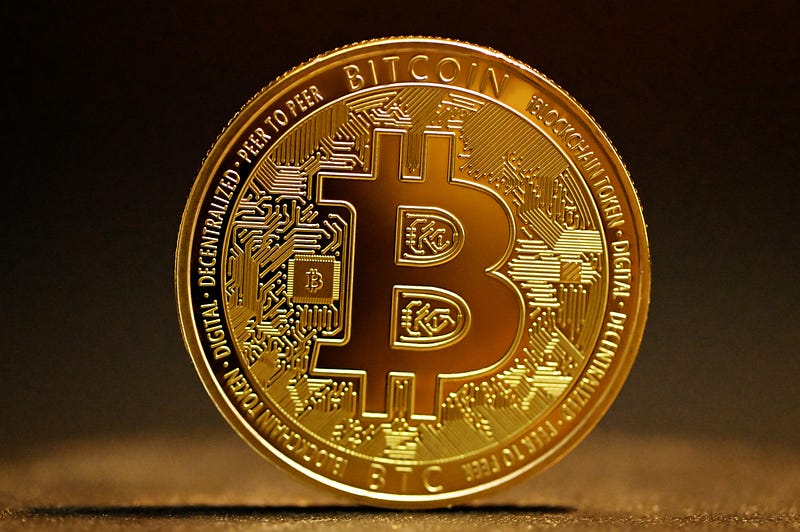
Photo by Kanchanara on Unsplash


Crucial price action time-frame

According to QCP Capital’s latest market update on Tuesday, the upcoming weeks are poised to be crucial for Bitcoin’s price action. The cryptocurrency has been range-bound for months, leaving market observers speculating about the emergence of a new market trend.

QCP Capital highlights September as a pivotal month due to the completion of a rising wedge pattern that started during the end of the 2022 bear market. This pattern has guided Bitcoin’s price movement, with the wedge reaching its first termination point at the beginning of September. The specific level of interest is $29,300, which aligns with the current focal point of the Bitcoin spot price.


Rally potential

The analysis ponders whether there will be a sharp rally that pushes the price to the $34,000 resistance level. This scenario has occurred three times this year, as the price kissed the support trendline. The report acknowledges that it might take a few more quiet weeks before the outcome becomes clear. The analysts expressed their intention to buy back their end of September short calls and anticipate going long on end of December volatility in due course.

QCP Capital’s perspective aligns with other optimistic views on Bitcoin’s short-term price strength. Some projections even suggest that the 2023 Bitcoin bull market might return by October, although the market sentiment is varied, with some cautioning about the possibility of new lows before a broader recovery.


Macroeconomic trends

Turning to macroeconomic trends, QCP Capital indicates that significant change is not on the immediate horizon, echoing the status quo in the crypto space. Comparing the current situation to the compressed trading environment of the crypto winter in 2018 and 2019, the analysis suggests that a macroeconomic shift would be required to reinvigorate the market, similar to what has happened in the past.

Bitcoin’s volatility has reached historic lows, as illustrated by data just published by on-chain market intelligence firm, Glassnode. While a game-changing macro environment shift isn’t imminent, there are short-term catalysts on the crypto calendar for the upcoming months.

These include events like Mt. Gox creditor payouts, the GBTC vs. Securities and Exchange Commission (SEC) lawsuit, potential SEC decisions on Blackrock/Fidelity’s Bitcoin spot ETF applications, and potential news related to centralized crypto exchanges and stablecoins.

The September deadline for comments on the initial Bitcoin spot price exchange-traded fund (ETF) applications is particularly noteworthy, as it’s widely seen as a turning point for the industry. Europe’s first Bitcoin spot ETF, which began trading on Tuesday, is being custodied by Fidelity Investments, marking another step in the maturation of the cryptocurrency market.
More to Read
View All
Policy & Regulation·

Aug 04, 2023

Hong Kong Lawmaker Explores Digital Asset Links With Mainland

Hong Kong Lawmaker Explores Digital Asset Links With MainlandIn a move aimed at bolstering its position as a rising global Web3 hub, Hong Kong Legislative Council member Johnny Ng has expressed his aspiration to foster greater collaboration between digital asset platforms in Hong Kong and a Shanghai-based exchange.Photo by Simon Zhu on UnsplashDigital asset exchange interconnectivityAs Hong Kong continues to position itself as a key player in the emerging Web3 landscape, Ng envisions a future where licensed virtual asset exchanges in Hong Kong could be interconnected with their counterparts in Shanghai.Ng’s remarks came during an interview with Chinese media outlet The Paper. Drawing a parallel with the established Shanghai-Hong Kong Stock Connect program that seamlessly connects the stock markets of both cities, Ng raised the question of whether a similar connection could be established for licensed digital asset exchanges. Ng’s idea hinges on the potential to bridge appropriate platforms in Shanghai with those licensed in Hong Kong for virtual asset trading.Interconnected talent poolThe lawmaker’s enthusiasm for interconnectivity also extends to the talent pool. He expressed his desire for more Web3 talent exchanges between Hong Kong and the mainland, recognizing Shanghai’s status as a financial hub boasting numerous exceptional financial enterprises.Hong Kong’s approach to the Web3 landscape stands in contrast to mainland China’s stringent cryptocurrency regulations. While China banned cryptocurrency transactions in 2021, Hong Kong has embraced crypto firms, even encouraging partnerships between these firms and local banks.This year, Hong Kong authorities unveiled a series of cryptocurrency-related policy statements, aimed at fortifying its stature as a global financial center. A significant step followed in December, when the Hong Kong Legislative Council passed an amendment introducing a comprehensive licensing framework for virtual asset service providers (VASPs).In a recent development underscoring Hong Kong’s pro-crypto stance, HashKey and OSL have become the pioneering recipients of licenses for retail trading under the new regulatory regime, which commenced on June 1.Differing policy approachesPeople following developments in crypto and Web3 in China and East Asia have been speculating if the strategic positive shift in Hong Kong towards developing as a regional hub relative to the sector is indicative of a softening in the approach of mainland China towards the industry. It appears that Hong Kong’s pursuit of crypto business has been sanctioned by Beijing.Commentators have been monitoring the emergence of further encouraging signals. In May, Chinese state television featured a segment that covered cryptocurrency and in particular Bitcoin. Binance CEO Changpeng Zhao (CZ) was sufficiently encouraged by the development to suggest that it was “a big deal,” although the clip was later removed from the broadcaster’s website.Ng’s proposal aligns with the broader narrative of Hong Kong’s ambitious push into the Web3 landscape, capitalizing on its favorable regulatory environment to attract crypto-related ventures. As discussions evolve around the potential interconnectivity between Hong Kong and Shanghai’s digital asset exchanges, the global cryptocurrency community watches with interest to see if there are any emerging signs that Beijing will reciprocate positively.

news
Web3 & Enterprise·

Jun 27, 2023

Algorand Foundation and DWF Labs Partner for Ecosystem Growth

Algorand Foundation and DWF Labs Partner for Ecosystem GrowthThe Algorand Foundation has joined forces with DWF Labs, a global digital asset market maker and Web3 investment firm, in a strategic partnership aimed at accelerating the growth of the Algorand ecosystem.An announcement of the collaboration was made on Monday, with the expectation that it will provide more opportunities for developers, businesses, and the wider blockchain community where the Algorand layer one blockchain is concerned.Photo by Shubham Dhage on Unsplash$50M token purchaseDWF Labs has committed to purchasing $50 million worth of $ALGO tokens, the native cryptocurrency of the Algorand network. This infusion of funds will enhance liquidity within the Algorand ecosystem, bolstering stability and growth.Beyond the token purchase, the partnership is reinforced by a memorandum of understanding (MOU), establishing a comprehensive funding framework to support projects built on the Algorand blockchain. This commitment will foster innovation across various sectors such as decentralized finance (DeFi), art and music, gaming, oracles and bridges, and infrastructure.Ecosystem collaborationsWeb3 investment firms like DWF Labs play a pivotal role in accelerating the growth of blockchain ecosystems. By investing in startups and projects that complement existing blockchain platforms, DWF Labs creates synergies that drive growth.It’s not the first time that DWF Labs has collaborated with blockchain network ecosystem projects. Earlier this month, the firm announced a deal with the project team behind layer one blockchain TRON, that will see it become a liquidity provider to that TRON network.In April, DWF entered into a partnership with the EOS Network Foundation (ENF) which included a $45 million $EOS token purchase agreement, with a further $15 million allocated towards investment into EOS ecosystem projects.Andrei Grachev, Managing Partner of DWF Labs, expressed enthusiasm for the partnership, highlighting Algorand’s technological superiority, security, and commitment to environmental sustainability and social impact.Through funding and strategic collaboration, DWF Labs will support the creation of diverse applications, services, and solutions within the Algorand ecosystem. This will foster the ALGO network effect, attracting more users and driving further growth.Algorand network stability and growthThe Algorand Foundation and DWF Labs partnership aligns with ongoing efforts to drive blockchain network adoption. Algorand’s platform offers scalability and security, while DWF Labs’ expertise and financial support will propel the ecosystem’s growth and adoption.The Algorand network is a proof of stake (PoS)-based blockchain network. It aims to accelerate the convergence between existing TradFi and emerging decentralized networks and technologies.The $50 million investment in ALGO tokens injects liquidity into the ecosystem, promoting stability and facilitating economic activities. The partnership’s funding framework ensures that projects built on Algorand receive the necessary resources.Collaborations like this drive blockchain adoption and development. The Algorand Foundation and DWF Labs share a vision of innovation and collaboration, fostering a thriving ecosystem.As the blockchain industry expands, strategic alliances play a crucial role in accelerating innovation and establishing interconnected ecosystems. The collective efforts of the Algorand Foundation and DWF Labs contribute to blockchain’s advancement, leading towards a decentralized future with transparency and inclusivity.

news
Web3 & Enterprise·

Oct 19, 2023

OSL Parent Company Denies Sale Plans

OSL Parent Company Denies Sale PlansBC Technology Group, a Hong Kong-based investment holding company, has firmly denied recent reports suggesting it is exploring the sale of its licensed digital asset business, OSL, for up to HK$1 billion (US$137.3 million).Photo by Nextvoyage on PexelsCompany stock plummetsThis comes in response to a report that emerged via Bloomberg on Monday. The news of the possible sale had a significant impact on the company’s stock, which plummeted by over 22% to HK$3.35 the following day.BC Technology Group, which has been listed on the Hong Kong stock exchange since 2012, is the parent company of OSL. The reports hinted at the possibility of selling off parts of the business, citing undisclosed sources.In response to these rumors, BC Technology Group issued a formal statement to clarify the situation, deeming the article “factually inaccurate and highly misleading.” It vehemently refuted any intention to sell OSL, a key player in the cryptocurrency exchange sector.First licensed exchangeOSL was the first cryptocurrency exchange to be licensed by the Securities and Futures Commission (SFC) in Hong Kong in 2020, initially operated under a voluntary scheme and was limited to serving professional investors. However, the recent licensing requirement broadened its scope, allowing it to cater to retail investors as well, including popular cryptocurrencies like Bitcoin and Ethereum.Both OSL and HashKey had their licenses upgraded this year, enabling them to serve retail investors as per the new policy. However, the reception to this new regulatory framework has been somewhat lukewarm, with only five local exchanges applying for the new virtual asset trading platform (VATP) license. The SFC had to publish a list of applicants following a financial scandal involving the JPEX crypto exchange, which led to over 2,500 complaints and losses totaling approximately HK$1.5 billion.The backdrop of this unfolding situation is Hong Kong’s efforts to establish itself as a significant virtual asset hub. The city announced its ambition to transform into a hub for digital assets a year ago, drawing considerable attention from cryptocurrency exchanges. These efforts included implementing new regulations in June that mandated licensing for cryptocurrency exchanges.Several companies with connections to Hong Kong and mainland China have expressed their intent to obtain a license, potentially taking advantage of Hong Kong’s favorable stance toward virtual assets when compared to mainland China’s strict regulations.High compliance costsNonetheless, high compliance costs in Hong Kong continue to pose a barrier, potentially preventing the city from becoming the primary base of operations for crypto businesses. Industry insiders estimate that the cost of compliance from start to finish can be as high as HK$60 million for a company. Firms have reported that obtaining a trading license in Hong Kong can involve an outlay of between HK$20 million and HK$200 million.As per BC Technology Group’s mid-year report, the company reported a net loss of HK$94.7 million in the first half of 2023. This marked a notable improvement compared to the HK$312.1 million in losses during the same period the previous year. OSL remains a significant source of income for the company.

news
Loading