Top

Dubai Tempts AI and Web3 Enterprises With Subsidized Commercial Licenses

Web3 & Enterprise·August 16, 2023, 12:01 AM

Dubai has demonstrated over the past twelve months that it has its sights set on becoming a regional hub for innovation, and we have further evidence of that strategy today with news that the city is now enticing artificial intelligence (AI) and Web3 businesses with an unprecedented offer — commercial licenses at a 90% subsidy.
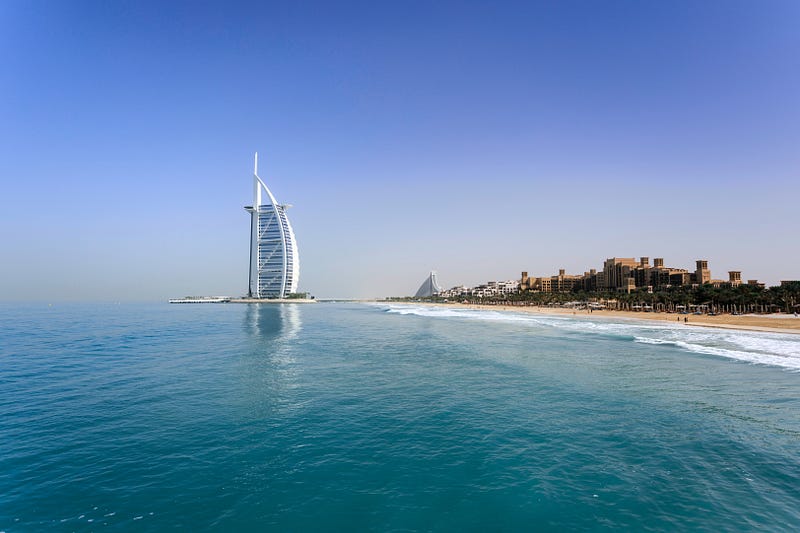
Photo by Aleksandar Pasaric on Pexels


AI and Web 3.0 Campus

The focal point of this strategic move is the Dubai AI and Web 3.0 Campus, a burgeoning tech haven designed to foster innovation and collaboration. The campus recently unveiled its decision to heavily subsidize licenses for companies choosing to establish a foothold within the city, publishing details of the move on Monday via a press release. The issuance of these licenses falls under the auspices of the Dubai International Financial Centre (DIFC), underscoring the city’s determination to attract global talent and diverse investment opportunities.

Mohammad Alblooshi, CEO of DIFC’s Innovation Hub, expressed confidence in the power of this initiative, stating:

“We are confident that by granting these licenses, we will attract more global talent and investment to the region and create a culture of collaboration and innovation.”

The Dubai AI and Web 3.0 Campus is geared up to cater to its prospective denizens, equipped with cutting-edge AI lab facilities, comprehensive training programs, essential hardware support, and accelerator initiatives.

All enterprises setting their sights on seizing the opportunity presented by the 90% subsidized commercial licenses are required to follow an application process.


Crypto trading licensing

Dubai’s tech evolution extends beyond AI and Web3 realms. The city has been proactive in granting operational licenses to cryptocurrency exchanges, marking yet another stride toward its tech-driven future.

In a recent development, Nomura’s crypto arm, Laser Digital Middle East, secured an operational license from Dubai’s Virtual Asset Regulatory Authority (VARA). This coveted license empowers Laser Digital to provide broker-dealer services and manage virtual asset investments within the emirate.

The progressive regulatory approach taken in Dubai has led to crypto exchanges such as Bybit, choosing the city as the location for its headquarters. In June MENA-focused digital assets platform BitOasis became the first crypto company to be awarded a broker dealer license by the Dubai regulator.

The regulatory approach taken in Dubai is proving to be progressive yet firm. The emirate hasn’t made the mistake of opting for ineffective light touch regulation that would attract the wrong type of crypto startup.

That’s evidenced by the response of VARA to the establishment of the OPNX exchange within its jurisdiction. OPNX was founded by Su Zhu and Kyle Davies, the founders of failed Singapore-based crypto hedge fund, Three Arrows Capital (3AC). VARA issued the business’ founders with a reprimand earlier this year, for establishing a crypto-related platform in Dubai without having obtained a crypto trading license.

Dubai’s willingness to embrace innovative technologies, coupled with its strategic initiatives and progressive regulation, is propelling it to the forefront of the global tech revolution. As it beckons AI and Web3 pioneers with enticing subsidized licenses and facilitates the growth of the cryptocurrency ecosystem, Dubai is carving a unique niche as a hub of technology and innovation and exploiting the potential growth opportunity that presents as a consequence.


More to Read
View All
Web3 & Enterprise·

Jul 01, 2023

China Mobile Establishes Metaverse Industry Alliance

China Mobile Establishes Metaverse Industry AllianceChina Mobile, one of the leading telecommunications companies in China, has taken a significant step forward in the development of the metaverse by announcing the establishment of an industry alliance during the 2023 Mobile World Congress in Shanghai.News of the development broke via a state-backed media outlet, the Shanghai Securities Journal, in its reporting from the event on Wednesday.Photo by julien Tromeur on UnsplashA trillion yuan marketAt the forefront of this endeavor is Zhao Dachun, Deputy General Manager of China Mobile. Dachun emphasized the metaverse’s potential as a trillion-yuan level market. Recognizing its significance, China Mobile has unveiled the first batch of 24 members of the metaverse industry alliance. Among them are renowned companies such as iFlytek, a leading AI company, HTC, a prominent manufacturer of VR goggles, and MGTV, a popular video streaming platform.The establishment of the alliance serves multiple purposes. It provides a platform for industry partners to engage in discussions and collaboratively shape the future of the metaverse industry. This cooperative effort will contribute to the development of industry standards, facilitating a shared vision for the metaverse ecosystem.More effective metaverse collaborationAdditionally, the alliance aims to foster resource sharing, encouraging deeper integration and collaboration among its members. By adopting a win-win mindset, the alliance members seek to collectively benefit from the new opportunities that arise within the digital economy.Further supporting the metaverse vision, Migu, the digital content unit of China Mobile, has taken significant steps by establishing its metaverse headquarters in Xiamen, a city located in the Fujian province of China.Regional government partnershipIn a promising partnership, Migu has entered into a strategic cooperation agreement with the Xiamen government to spearhead the development of a metaverse within the city. The metaverse, a digital world created through advanced technologies such as virtual reality and augmented reality, holds great potential for transforming Xiamen into a “high-quality, high-value, modern, and international” city that thrives on digital intelligence.Migu’s plans extend beyond theoretical concepts, as they outline concrete steps to realize the metaverse vision. Key application scenarios, such as the development of a metaverse version of Gulangyu Island, a renowned tourist destination celebrated for its natural beauty and historical significance, will be a primary focus. By bringing this iconic location to the metaverse, visitors will have the opportunity to experience its charm in a new digital dimension.Moreover, Migu is dedicated to accelerating research on digital governance within the metaverse. With the metaverse expected to have a profound impact on society, understanding how to effectively manage and regulate this emerging digital landscape becomes paramount. Migu aims to lead the way in establishing best practices and frameworks for responsible and inclusive digital governance.Through collaborative efforts, the promotion of industry standards, and strategic investments in key application scenarios, China Mobile is likely to play an important role in unlocking the vast potential of the metaverse. In turn, the initiative is likely to fuel the growth and transformation of the digital economy.

news
Policy & Regulation·

Apr 21, 2023

Korea’s FSS Seeks to Protect Investors from Crypto Exploit Losses

Korea’s FSS Seeks to Protect Investors from Crypto Exploit LossesLee Bokhyun, Governor of the Korean Financial Supervisory Service, said the agency will seek to protect investors from losses resulting from cryptocurrency exchange exploits, according to Korean newspaper Donga Ilbo.©Pexels/RODNAE ProductionsEfforts to enact legislationWhile delivering a congratulatory speech at a forum co-hosted by Donga Ilbo and its subsidiary broadcasting company Channel A on Wednesday, Lee underlined that the agency will be committed to enacting legislation that obligates crypto exchanges to be held accountable for customer asset losses caused by hacks.He explained that amidst a continued crypto winter triggered by multiple failures, such as the collapse of the stablecoin Terra last year, cases of security vulnerabilities are subsequently occurring.Cold wallet requirementsIn response to this situation, financial authorities and the National Assembly are collaborating on legislation that would require crypto exchanges to store a portion of their custody assets in cold wallets, which are disconnected from the Internet, or face liability for damages resulting from hacks.A February report from blockchain data platform Chainalysis showed that losses to crypto hacks last year amounted to $3.8 billion. Earlier this month, Korean crypto exchange GDAC suffered an exploit of 20 billion KRW (~$15 million).Lee said the agency will work with the financial industry to bolster the fraud detection system and build an immediate response system that prevents uncanny transactions when abnormalities are detected. These efforts are to curb the rise in financial crimes, which followed the growing popularity of remote banking services.Experts’ inputsAt the event held to discuss the protection of consumer information in the digital age, senior researcher Kim Gap-rae at Korea Capital Market Institute said that a law should be introduced to penalize unfair practices, such as market manipulation and use of undisclosed information, in the virtual asset market.Lee Joo-hwan, head of the information security management division at Hana Bank, suggested the approach used in the US, which is recovering ill-gotten gains from financial crimes to compensate victims.Kang Byung-hoon, a professor who teaches cyber security at KAIST, anticipated that the financial industry would accelerate the adoption of confidential computing, a highly secure system, to which even administrators have limited access.

news
Web3 & Enterprise·

Apr 03, 2025

Japan’s SMFG expresses interest in stablecoin launch

Sumitomo Mitsui Financial Group (SMFG), a leading Japanese multinational financial services corporation and holding company, has outlined plans to launch a stablecoin.Photo by JJ Ying on UnsplashIn a press release published on its website on April 2, the company outlined details of a memorandum of understanding (MOU) it has signed with a view towards initiating discussions on the commercial use of stablecoins. Among the parties that have signed the MOU is Sumitomo Mitsui Banking Corporation (SMBC), Japan’s second-largest bank and a core unit of SMFG’s overall business. Other parties include local IT firm TIS, Inc., digital asset infrastructure firm Fireblocks and Ava Labs, the creator and developer behind the Avalanche layer-1 blockchain. Developing a framework for stablecoin issuanceThe agreement will see these stakeholders collaborate in an effort “to develop a framework for stablecoin issuance and circulation, including exploring key technical, regulatory, and market infrastructure requirements both in Japan and further afield.” The initiative will seek to examine a number of stablecoin use cases that SMFG believes can best leverage the characteristics of stablecoins. These include “a settlement method for tokenized financial and real-world assets (RWAs), such as government and corporate bonds, as well as real estate.” The company acknowledged that the tokenization of RWAs has been growing rapidly, with stablecoins emerging as an important settlement tool. It also acknowledged their growing use in the areas of international remittances, corporate payments and small-value, high-frequency transactions. SMBC sees potential in the use of stablecoins to reduce reliance on intermediaries where cross-border payments are concerned, improving upon traditional finance which relies on use of the SWIFT financial messaging network. It has identified savings that can be made in terms of the time taken to effect cross-border transactions and associated costs. According to a report published by Japanese financial news outlet Nikkei on April 1, Ava Labs is expected to use its know-how in order to construct the foundational basis for the stablecoin.  Meanwhile, Fireblocks will be responsible for the development of a management system for any stablecoin token that is subsequently issued as a consequence of the initiative. It will also get involved with the development of system security in relation to the project. The bank will work with TIS to support the developmental phase of the project. While the initiative is currently at the planning stage, trials are scheduled to begin during the second half of this year.If all goes to plan and work proceeds as per the schedule that has been established, a stablecoin could potentially be issued as a consequence sometime in 2026. It’s not the first time that SMBC has delved into consideration of stablecoins. Last September, it joined with Mitsubishi UFJ Financial Group (MUFG) and Mizuho to launch Project Pax, a cross-border stablecoin transfer platform. That initiative relies upon Progmat, a distributed ledger technology (DLT) platform founded by MUFG for the purpose of tokenization and the issuance of stablecoins. Japanese legislators have been working towards adding an amendment to the Payment Services Act, with some changes proposed relative to stablecoins. The changes would permit greater diversity in terms of stablecoin reserves. 

news
Loading