Top

STX Token Debuts on Korean Exchange Bithumb

Markets·May 23, 2023, 3:53 AM

STX, the native token of the Stacks network, made its debut on the KRW market of Bithumb, a renowned Korean cryptocurrency exchange, at noon (Korea Standard Time) on Tuesday. The listing price is 828.5 KRW per unit.
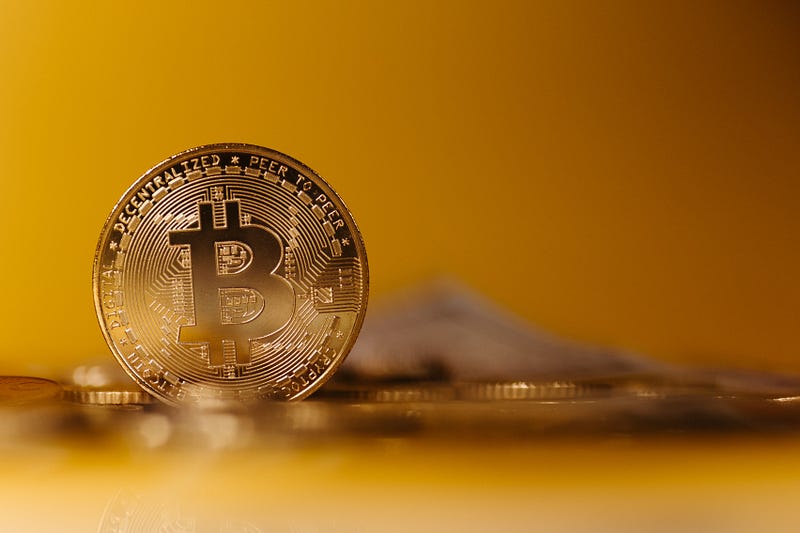
Photo by Jonathan Borba on Unsplash


Bitcoin scalability solution

Stacks is a Bitcoin scalability solution that addresses the challenge of transaction latency through the use of microblocks. It utilizes the programming language Clarity and benefits from the security of Bitcoin by employing its unique consensus algorithm called Proof of Transfer (PoX). This mechanism enables Stacks to settle transactions on the Bitcoin network.

Stacks is one of the most anticipated projects associated with Bitcoin, and its token was approved by the U.S. Securities and Exchange Commission in 2019.


STX token usage

The STX token serves multiple purposes within the Stacks blockchain ecosystem. Users can utilize it for stacking, participating in governance activities, and paying transaction fees.

More to Read
View All
Policy & Regulation·

Dec 08, 2023

Korea invites distinguished financial officials to discuss digital money

Korea invites distinguished financial officials to discuss digital moneyThe Bank of Korea (BOK), South Korea’s central bank, announced on Friday (local time) its participation in an international conference focused on the economic impact and future prospects of digital currencies. This event, co-hosted by the BOK, the Ministry of Economy and Finance (MOEF), the Financial Services Commission (FSC), and the International Monetary Fund (IMF), is scheduled to take place in Seoul on Dec. 14 and 15.The conference, titled “Digital Money: Navigating a Changing Financial Landscape,” is set to welcome high-ranking officials such as Kristalina Georgieva, the Managing Director of the IMF; Choo Kyung-ho, the Minister of the Ministry of Economy and Finance (MOEF); Rhee Chang-yong, the Governor of the Bank of Korea (BOK); and Kim So-young, the Vice Chairman of the Financial Services Commission (FSC). This event is particularly significant as it marks the first visit of IMF head Kristalina Georgieva to South Korea.Photo by pan zhen on UnsplashCrypto, stablecoins, CBDCsDuring the conference, MOEF Minister Choo and FSC Vice Chairman Kim will kick off the event with welcome remarks, followed by a keynote speech from IMF’s Managing Director, Kristalina Georgieva. Spanning over two days, the conference will include seven sessions, covering a diverse range of topics. These sessions will delve into various aspects of digital money, such as practical use cases of digital currencies, regulatory approaches to cryptocurrencies, and discussions on stablecoins and central bank digital currencies (CBDCs).The conference will feature prominent financial officials in both its opening and closing sessions. On the first day, Thursday, a distinguished panel, including IMF Chief Georgieva; Stefan Ingves, the former Governor of Sveriges Riksbank; FSC Vice Chairman Kim; David E. Rutter, the Founder of R3; and Shin Hyun-song, the Economic Adviser at the Bank of International Settlements (BIS), will discuss the opportunities and challenges facing digital money.The final session on Friday will see another group of high-level financial authorities sharing their expertise and insights. This session will include BOK Governor Rhee; Eddie Yue, the Chief Executive of the Hong Kong Monetary Authority; Serey Chea, the Governor of the National Bank of Cambodia; and Veerathai Santiprabhob, the former Governor of the Bank of Thailand. Their discussion will focus on regulatory policies surrounding digital currencies.Live-streaming scheduledThe two sessions of this conference will be accessible to a global audience as they will be live-streamed on the BOK’s official YouTube channel. This provides an opportunity for interested individuals from around the world to tune in and gain insights into the evolving landscape of digital money and its regulatory environment.

news
Web3 & Enterprise·

Aug 18, 2023

BIT Exchange Unveils XRP Options Trading

BIT Exchange Unveils XRP Options TradingBIT Exchange, a cryptocurrency derivatives platform, has announced the introduction of XRP options trading in a move that provides for more advanced trading dynamics within the digital assets space.The development, disclosed via a blog post published to the company’s website on Thursday, offers users the unprecedented opportunity to engage in XRP options trading without the need to possess the actual cryptocurrency.Photo by Kanchanara on UnsplashUS dollar settlementA distinguishing feature of this initiative is that profit and loss settlements will be conducted in US dollars. To ensure a seamless experience, BIT Exchange has partnered with OrBit Markets to maintain robust order book liquidity. This expansion of offerings complements the exchange’s existing suite, which already includes stalwarts like Bitcoin (BTC), Ether (ETH), Cardano (ADA), Toncoin (TON), and Milady (LADYS).Facilitating hedgingFor the uninitiated, options are derivative contracts that empower the holder with the right to buy or sell the underlying asset at a predetermined price before a specified date. Call options grant the holder the buying privilege, while put options provide the selling prerogative. Typically deployed for hedging purposes, options play a pivotal role in mitigating bullish or bearish risks, and they can also act as a supplementary revenue source when traders “write” options alongside their spot market holdings.Justin Buitendam, BIT Exchange’s Global Head of Institutional Sales, remarked on the milestone, stating: “We’re excited to be among the early platforms offering XRP options trading to institutional and retail traders, providing both long and short options trading opportunities.”XRP boostAs of now, XRP boasts a market capitalization of $26.5 billion, positioning it as the world’s fifth-largest cryptocurrency. Notably, XRP, akin to several other alternative cryptocurrencies, exhibits greater volatility compared to the more established Bitcoin and Ether.The native token of the Ripple global payments network has experienced a market resurgence in recent weeks, following a positive outcome to a lawsuit taken by the Securities and Exchange Commission (SEC) against Ripple Labs in the United States. In the wake of that decision, many cryptocurrency exchanges that had delisted the token immediately reinstated it. BIT Exchange’s strategic move to introduce XRP options aligns with those recent legal developments.Ripple, as the issuer of the XRP token, garnered a partial victory in its ongoing legal battle against the SEC. The court ruled that XRP is not classified as a security when traded on centralized exchanges. However, a different classification may apply when XRP is directly sold to institutions.The matter is far from settled, however. More recently, the SEC has sought permission to challenge the court’s verdict, underscoring the dynamic and evolving landscape of cryptocurrency regulations.BIT Exchange was spun out of Singapore-based crypto financial services platform, Matrixport. Both have been co-founded by Jihan Wu, better known for having founded leading Chinese crypto mining outfit Bitmain.

news
Policy & Regulation·

Jun 16, 2023

Tether Critics Point to Previous Chinese Securities Backing

Tether Critics Point to Previous Chinese Securities BackingUSDT stablecoin issuer Tether (USDT) has long faced persistent scrutiny and criticism due to the lack of transparency surrounding the assets backing their digital currencies. The latest allegations come in the form of a report by Bloomberg on Friday suggesting that the world’s largest stablecoin was once backed by securities issued by Chinese companies.Photo by Manuel Joseph on PexelsNYAG releases documentsThese findings were based on documents made public by the New York Attorney General (NY AG). The documents disclosed that Tether had listed securities issued by China’s state-owned Industrial and Commercial Bank of China, China Construction Bank, and Agricultural Bank of China as part of its reserves backing the USDT stablecoin.Rumors about USDT’s exposure to Chinese securities have circulated for a number of years. In 2021, a Bloomberg research report revealed that Tether’s reserves reportedly included billions of dollars in short-term loans to China-based companies, as well as a significant loan to the collapsed crypto lender Celsius Network.However, in February 2021, Tether reached a settlement with the NY AG’s office over accusations of providing misleading information about its reserves and losses. To address these concerns, Tether handed over documents such as letters, bank accounts, reserve holdings, and wallet addresses through the law firm Steptoe.Attestation reportTether’s latest attestation report for Q1 2023, released on May 10, offered further details about its reserves. According to the report, Tether’s reserves were valued at $81.8 billion at the end of the quarter, a significant increase from the earlier period of $14.8 billion. These reserves consisted of $53 billion in US Treasuries, $1.5 billion in Bitcoin, and $5.3 billion in loans described as “over-collateralized.”The disclosure of Tether’s previous backing by Chinese securities adds another layer of complexity to the stablecoin landscape, raising questions about the risk exposure and potential impact on the stability of these digital assets. Using Chinese commercial paper to back a US dollar stablecoin is a risky endeavor.It raises the same issues as we’ve seen with the plethora of crypto lenders that went bankrupt in 2022. In those cases, they were using customer money to speculate and turn a profit. That’s fine when it works but when it goes wrong, it is customers who suffer. In its defense, Tether has stated that it only held A1 rated banking sector Chinese commercial paper in 2022 in state-owned Chinese companies like Industrial & Commercial Bank of China Ltd., China Construction Bank Corp., and Agricultural Bank of China Ltd. It reduced this exposure to zero later that year.With the cryptocurrency community and regulators seeking greater transparency and accountability, the industry is likely to face increased scrutiny and calls for enhanced regulations to ensure the integrity of stablecoin operations moving forward.As regulators continue to assess and navigate the evolving crypto market, it remains to be seen how the industry will address these concerns and establish clearer guidelines for stablecoin issuers to ensure the trust and confidence of market participants.

news
Loading