Top

Hyosung TNS and APoT Join Hands to Promote NFT Portal Service

Web3 & Enterprise·August 04, 2023, 8:56 AM

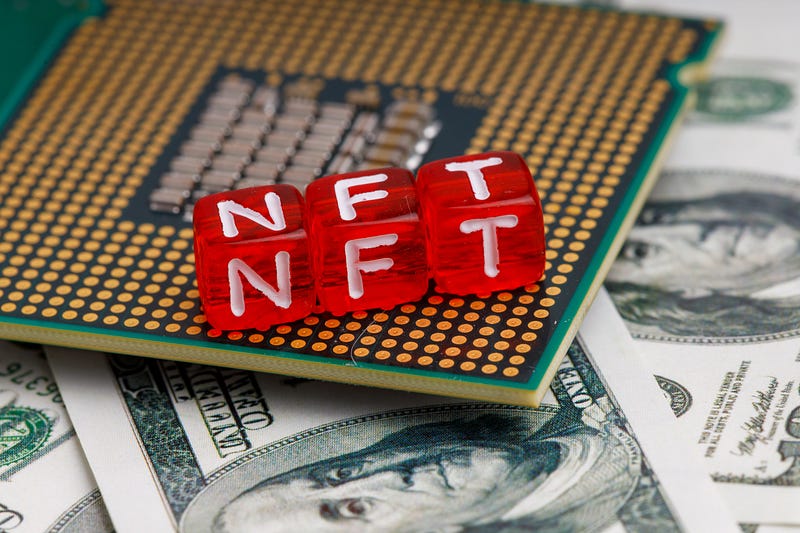
South Korean IT infrastructure and financial solutions provider Hyosung TNS announced that it is teaming up with APoT Platforms, a company specializing in developing blockchains for real-world assets (RWAs), to promote NFTtown — Hyosung TNS’ portal service dedicated to providing information, news, and educational content on NFTs.

Photo by Andrey Metelev on Unsplash


Bringing real-world assets to blockchain

APoT Platforms is equipped with technology that is able to embed data on RWAs, such as artwork and luxury goods, thereby connecting them to the blockchain. The company also maintains an extensive network of collaborative relationships with various NFT artist organizations and communities both domestically and abroad.

Hyosung TNS plans to bring APoT’s artist network to NFTtown, allowing users to easily access information regarding NFT artists and their works.

The two companies will also work together on other efforts, including introducing NFT artworks, digital product transfers, and events for NFT holders.


NFT art exhibition

As the first step of their collaboration, they plan to exhibit and sell works by renowned NFT artists such as Han Kwang-suk, Quiet Eye, and HAN (Han Sun-ok) this month at the Lotte Department Store Ilsan’s Spazio We;R Gallery.

More to Read
View All
Policy & Regulation·

Jul 06, 2023

Korea’s Virtual Asset User Protection Act to Take Effect in July Next Year

Korea’s Virtual Asset User Protection Act to Take Effect in July Next YearThe Virtual Asset User Protection Bill was passed during the South Korean National Assembly’s plenary session last Friday, according to a report by news agency Newsis. The legislation aims to safeguard customer assets, establish regulations against unfair trading practices, and enforce penalties. The act is scheduled to take effect one year after its passage.Photo by KS KYUNG on UnsplashDefinition of virtual assetsUnder the act, a virtual asset is defined as a digital representation of economic value that can be digitally traded or transferred. It’s important to note that central bank digital currencies (CBDCs) are not considered virtual assets. Virtual assets with characteristics of securities will initially fall under the jurisdiction of the Capital Market Act.Roles of Korea’s central bankThe act grants the Bank of Korea (BOK) the authority to request data and information from virtual asset service providers (VASPs). This provision is deemed necessary for the Korean central bank to formulate monetary and financial policies, despite virtual assets not being equivalent to traditional currencies.Responsibilities of VASPsMoreover, VASPs are obligated to segregate users’ virtual assets from their own holdings. VASPs are also required to reserve the same type and quantity of virtual assets entrusted by users and maintain a certain proportion of these assets in a cold wallet, which is an offline storage solution.Unfair trading practices will be regulated in a similar manner as outlined in the Capital Market Act. The act specifically prohibits the use of undisclosed information, price manipulation, fraudulent transactions, and trading of self-issued virtual assets. VASPs are barred from suspending deposits and withdrawals without legitimate reasons. They are also mandated to monitor suspicious transactions and take appropriate measures to safeguard users. Any suspected unfair trading practices must be promptly reported to financial authorities. Violators of these rules may face criminal penalties, liability for damages, and potential class action lawsuits.Powers of financial authoritiesThe act also clarifies the powers of financial authorities in supervising, inspecting, and taking action against virtual asset operators. Unfair trade practices can result in imprisonment for more than one year (up to 10 years for violations related to self-issued virtual assets) or fines ranging from three to five times the illicit gains. Assets acquired through unfair trade practices will be confiscated, or an equivalent value will be charged if confiscation is not feasible.Impact on crypto investigationsThe absence of legislation directly addressing unfair trading practices in the virtual asset market has posed challenges for prosecutors. They had to rely on existing statutes related to fraud, the capital market, and financial investments. Once the new act takes effect, prosecutors will no longer need to determine whether a virtual asset qualifies as a security or not.Regarding this development, a prosecutor told local legal news outlet Law Times that the implementation of the new act will escalate prosecutorial investigations into cryptocurrency incidents.Meanwhile, the individuals behind the crash of Terraform Labs’ stablecoin TerraUSD and its sister coin Luna will not be subject to this act due to the legal principle of nulla poena sine lege, which prevents the retrospective enforcement of criminal laws. Do Kwon, co-founder of Terraform Labs, was recently sentenced to four months in prison by a Montenegrin court for passport forgery after being arrested in March. The other co-founder, Daniel Shin, has been indicted by prosecutors in Korea.

news
Web3 & Enterprise·

Jul 18, 2023

P2E Game Covenant Child Developer Partners with Pala for Global NFT Collaboration

P2E Game Covenant Child Developer Partners with Pala for Global NFT CollaborationCityLabs, a South Korean smart city integration platform company, made an announcement today regarding its subsidiary, Metablock, which has entered into a memorandum of understanding (MOU) with Pala, the nation’s largest non-fungible token (NFT) trading platform.Photo by Andrey Metelev on UnsplashGlobal expansionAccording to a report by Newsis, the collaboration between the two companies aims to explore various cooperative efforts in the global development and expansion of NFT projects related to games. To accomplish this, they will utilize the intellectual properties (IPs) of Covenant Child, a global play-to-earn (P2E) game developed by MetaBlock.NFT marketplaceThe initial step of this partnership involves the establishment of an NFT trading platform. MetaBlock recently concluded the final closed beta test for Covenant Child on a global scale. In the upcoming months, the company plans to launch a dedicated NFT marketplace for Covenant Child sometime during the open beta test period. Additionally, MetaBlock will conduct pre-sales of NFTs and list the governance token on cryptocurrency exchanges.Cho Young-joong, CEO of CityLabs, expressed enthusiasm for the partnership, noting that it will provide users with a more convenient and reliable NFT trading environment. Cho further emphasized the company’s commitment to creating an infrastructure that allows users to readily enjoy content developed on MetaBlock.

news
Markets·

Dec 01, 2023

Coinone’s recent addition of USDT/KRW trading pair expected to reduce Kimchi premium

Coinone’s recent addition of USDT/KRW trading pair expected to reduce Kimchi premiumCoinone, a major South Korean cryptocurrency exchange, listed USDT, a stablecoin pegged to the US dollar on the platform’s Korean won-denominated market on Thursday (local time). Its listing price was KRW 1,289.Tether Limited, the company behind USDT, asserts that their stablecoin is “backed 100% by Tether’s reserves.” These reserves comprise a variety of real-world assets such as U.S. Treasuries, overnight reverse repurchase agreements, corporate bonds and precious metals. According to CoinMarketCap, USDT’s market capitalization stands at $89 billion, ranking it third in the cryptocurrency market, just behind Bitcoin and Ethereum.Photo by DrawKit Illustrations on UnsplashFirst to list USDT/KRW trading pairDespite the significance of USDT in the cryptocurrency market, Korean exchange users have faced the limitation of not being able to purchase the stablecoin using Korean won, although these exchanges did offer markets denominated in USDT. This limitation has prompted Koreans to turn to foreign cryptocurrency services for acquiring USDT. With Coinone’s latest move, the platform has become the first to facilitate USDT/KRW trading among the nation’s five fiat-to-crypto Korean exchanges — Upbit, Bithumb, Coinone, Korbit and Gopax.Regarding this development, Kwon O-hoon, Managing Partner at the law firm Cha and Kwon, told local news outlet Decenter that there seem to be no particular legal concerns with the crypto exchange’s engagement in USDT transactions. This perspective stems from the absence of stablecoin regulations in the country.Reducing the Kimchi premiumAccording to Decenter, crypto experts anticipate that the introduction of USDT/KRW trading will help in reducing the Kimchi premium, a term referring to the discrepancy in cryptocurrency prices on South Korean exchanges compared to those in foreign exchanges.For instance, according to data from CoinNess, the average price of BTC on Korean exchanges is around KRW 51,177,250. This is about 2.34% higher than its average price on foreign exchanges, which stands at KRW 50,005,909. This difference means that users on Korean exchanges need to pay an additional KRW 1,171,340 to buy one BTC, compared to what they would pay on international platforms.However, the newly added trading pair will streamline transactions between exchanges, making it simpler for investors to engage in arbitrage. This ease of transfer is expected to lead to more balanced pricing across different markets, reducing the Kimchi premium.In light of this development, Jo Dong-hyeon, CEO of blockchain company Undefined Labs, said various institutions and blockchain projects will likely find USDT increasingly useful as a store of value, given USDT facilitates easy transfers between different exchanges.
news
Loading