Top

Binance Set For Japanese Market Re-Entry With 34 Token Listings

Web3 & Enterprise·August 02, 2023, 12:44 AM

Binance, the world’s largest cryptocurrency exchange, is gearing up to re-enter the Japanese market with a bang on August 14. According to a report published by local crypto media outlet Coinpost, Binance Japan is set to immediately list an impressive 34 tokens.

The move will put Binance ahead of its domestic rivals, as the offering will be the most extensive in terms of the selection of tokens made available to Japanese customers.

Photo by David Edelstein on Unsplash


BNB token offering

In addition to that, Binance intends to make its native token, BNB, available in Japan for the first time. Exchange tokens have proven to be controversial in recent times. In November 2022, FTX’s reliance on their native token FTT caused a run on the exchange which Binance started once it started to sell off the token. Similar concerns have been expressed ever since about a similar reliance within Binance relative to its BNB token.

The expansion into Japan will likely prove a tonic for Binance, given the difficulties it has experienced in other markets recently. Regulatory pushback has forced Binance out of markets such as Germany, Belgium, the Netherlands, and Cyprus over the course of the past three months.

The company has been actively working to comply with Japan’s regulatory environment. In a Twitter video posted in July, Changpeng Zhao (CZ), Binance’s Founder and CEO, expressed his excitement about re-entering the Japanese market. He praised Japan’s clear and progressive approach to crypto regulations, citing the well-established framework that dates back to 2017, as well as recent developments, including the opening up of crypto listing frameworks and the passing of stablecoin regulations in June.


Roadmap to market re-entry

Binance’s journey back into Japan started in November 2022 when it acquired 100% ownership of Sakura Exchange BitCoin (SEBC). The acquisition paved the way for Binance to be regulated by the Japan Financial Services Agency (JFSA). As part of this move, SEBC underwent a name change, rebranding itself as Binance Japan Inc. The company then announced in May its plans to re-enter the Japanese market.

The re-entry comes after the JFSA had previously issued warnings in 2021 against Binance for operating in the country without proper registration. Now, with the acquisition of SEBC and its regulatory compliance, Binance has gained a foothold in the Japanese market once again.

Binance Japan aims to provide a comprehensive suite of services to its Japanese customers. New users can access spot trading, Earn products, and the NFT marketplace, while existing customers can migrate to the local subsidiary starting August 14. The token offerings include a diverse range of assets, and the addition of BNB presents exciting opportunities for traders and investors in Japan.

Rival exchanges such as Coinbase and Kraken have decided to halt their operations in the country as they struggled to adjust to Japanese market conditions. The move by Binance to re-enter Japan’s market will be closely watched to see if it can succeed where others have failed.

More to Read
View All
Web3 & Enterprise·

Apr 01, 2024

Koscom strengthens ties with brokerages to boost security token platforms

As the South Korean capital market eyes the burgeoning potential of security token offering (STO) businesses, Koscom, a financial IT company, is increasingly coming into focus among securities firms for its dedicated STO platform. With four securities companies already in partnership, Koscom is actively seeking to expand its collaboration network further. Koscom is a technology subsidiary of Korea Exchange, the country’s only securities exchange operator.More partnerships with securities firmsAccording to its press release published a few weeks ago, Koscom inked a memorandum of understanding (MOU) with Yuanta Securities Korea, the South Korean branch of the Taiwanese retail broker. Through the partnership, the two entities pledged to collaborate on developing blockchain platforms and discovering new STO projects.  The MOU between Koscom and Yuanta is the fourth STO-related partnership Koscom has inked with a securities company. Koscom's other three brokerage partners are Kiwoom Securities, Daishin Securities and IBK Securities. With over four decades of experience in managing ledgers for brokerages, Koscom is highly skilled in constructing technical infrastructure for the capital market. As the operator of its own blockchain platform, this fintech company has been developing blockchain technology and acquiring relevant expertise.Photo by Shubham Dhage on UnsplashSecurity token issuance and distributionThe necessity for blockchain-based STO platforms provided by companies like Koscom for brokerages stems from regulations set forth by the Korean financial authority. The Financial Services Commission (FSC) mandates that the issuance and distribution of security tokens must be carried out by separate entities. This regulatory framework necessitates a platform that enables securities firms to connect and interact with each other. Koscom offers a joint STO platform designed to streamline transactions between brokerages, improving cost-effectiveness. In light of this, the financial IT company concentrates on developing such platforms with the aim of laying a solid foundation for the emerging STO market. According to local media outlet Etnews, Koscom has set its sights on completing the platform development within the first quarter, with plans to address additional requirements from brokerages subsequently. Striving to expand its network of partnerships to include companies both large and small, Koscom recognizes that a more diverse array of participating firms can enhance the efficiency of token issuance and distribution, which would in turn accelerate the adoption of STOs. Koscom’s strategy offers its partners an opportunity to test its STO infrastructure before the relevant legislation governing the management of security tokens is passed at the National Assembly. Regarding this development, Kim Sung-hwan, Head of the Digital Business Division at Koscom, said, “Koscom’s joint STO platform is emerging as an alternative method for brokerage firms to venture into the security token business. Factors such as costs and workforce requirements have made it difficult for many firms to proceed independently.” He added, “We will provide full technical support for our platform users, allowing them to focus on identifying reliable underlying assets for security tokens.” 

news
Web3 & Enterprise·

Sep 02, 2023

TRYB Emerges as Turkish Alternative to Dollar-Pegged Stablecoins

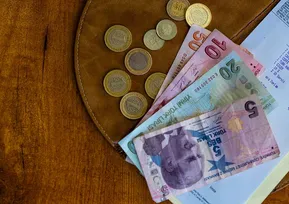
TRYB Emerges as Turkish Alternative to Dollar-Pegged StablecoinsIn a market typically dominated by dollar-backed stablecoins like Tether (USDT) and USD Coin (USDC), a new player has emerged in Turkey to operate alongside those dominant stablecoins.According to a report by CoinDesk on Friday, BiLira’s TRYB stablecoin, pegged to the Turkish lira (TRY), has rapidly climbed the ranks to become the world’s second-largest non-US dollar-pegged stablecoin. It currently trails Tether’s euro-pegged EURt, which according to Coingecko data, currently holds a market cap of $221 million. In just three weeks, TRYB has skyrocketed, quadrupling its market cap to $136.10 million.Photo by Oleksandr P on PexelsMarket cap volatilityHowever, TRYB's market cap had fallen off a cliff on Friday, dropping from $135 million earlier in the day to $40 million. TRYB, an Ethereum-based stablecoin, offers a unique proposition in that it is pegged to the Turkish lira, allowing users to exchange 1 TRYB for 1 TRY. The stablecoin offering, which is administered by Istanbul-based BiLira, is underpinned by 100% fiat reserves held in Turkish banks.The Turkish lira has earned its reputation as one of the most volatile fiat currencies globally, often experiencing fluctuations against the US dollar. Over the course of the last five years, the currency has lost 94% of its value when benchmarked against the performance of the US dollar.In response to this volatility, TRYB has found its purpose as a medium of exchange. It can act as a gateway to transition user’s Turkish lira into cryptocurrencies and vice versa. This trend aligns with the global use of stablecoins as the foundation of crypto trading pairs, providing traders with a stable asset while sidestepping fiat currency’s unpredictability.Exiting the liraThe US Federal Reserve acknowledged the significance of stablecoins in December 2022, highlighting their role in facilitating crypto trades, serving as collateral for crypto loans, and minimizing inefficiencies tied to fiat-to-crypto conversions. In fact, stablecoins account for over 80% of the trading volume on centralized exchanges, attesting to their pivotal role in the crypto ecosystem.It’s likely that the Lira-pegged stablecoin will act as a means to access other cryptocurrencies and US dollar-pegged stablecoins like USDT and USDC, rather than be considered as a rival or replacement. That’s by virtue of the ongoing difficulties of the Turkish sovereign currency which it tracks. So long as the lira continues to erode in terms of buying power, it’s likely that citizens will be looking for avenues to escape from that erosion of value.Increased interest in cryptoGiven this monetary backdrop in Turkey, it shouldn’t surprise anyone to learn that interest in crypto is on the rise. In a recent report published by Seychelles-based cryptocurrency exchange KuCoin earlier this week, a significant increase in the number of crypto investors in Turkey over the course of the past eighteen months has been identified.The report found that 52% of the adult Turkish population have participated in crypto-related investments. Over the past 18 months, the number of Turkish adults embracing crypto has risen to that 52% level from 40%.

news
Markets·

Jan 25, 2024

OKX to compensate service users following flash crash

OKX is set to compensate users after its native exchange token, OKB, experienced a rapid 48% flash crash on Tuesday. OKB price fluctuationThe crash occurred within a brief three-minute window, triggered by a series of liquidations resulting from an abnormal price fluctuation. During the event, OKB's diluted market capitalization plummeted by $6.5 billion. At around 9 a.m. GMT on Tuesday, the price of OKB dropped from $46.80 to $25.10, representing a 48% decrease within 15 minutes. However, the token has since recovered, currently trading at $47.63 at the time of writing. The crash led to the triggering of liquidations for large leverage positions, causing a cascading effect on pledged loans, leverage transactions and cross-currency transactions.Photo by Nicholas Cappello on UnsplashCompensation planOKX responded promptly, pledging to fully compensate users for any additional losses incurred due to abnormal liquidation. The exchange aims to launch a specific compensation plan within the next three days, taking into account users who engaged in on-chain trades. In a statement on Tuesday, the platform suggested that it is committed to enhancing "margin position tier rules, risk management controls and liquidation mechanism" to prevent similar issues in the future. The flash crash coincided with a day of notable price swings across cryptocurrency markets, partly driven by the Grayscale Bitcoin Trust's (GBTC) sale of bitcoin to meet investor redemption demands on its exchange-traded fund (ETF). Additionally, the bankrupt crypto exchange FTX has been selling nearly $1 billion worth of GBTC ETF shares recently, further contributing to market volatility. Focusing on complianceOKX has been actively focusing on regulatory compliance in recent times. On Dec. 29, the exchange announced the delisting of several privacy coins, including Monero (XMR), Zcash (ZEC), Dash (DASH) and Horizen (ZEN). Subsequently, on Jan. 2, the platform introduced additional requirements for United Kingdom users to comply with the new Financial Conduct Authority (FCA) regulations, including the mandatory completion of risk assessment questionnaires before engaging in trading activities. Flash crashes are a common occurrence in cryptocurrency markets, often attributed to thin liquidity distributed across multiple venues. The 2% market depth for OKB indicates that a sell order exceeding $224,000 could potentially trigger another price cascade. Notwithstanding that, oftentimes it can be difficult to pinpoint the precise reason for a flash crash. In 2021 global crypto exchange Kraken experienced a flash crash that saw token prices drop by in excess of 50% over the course of one hour before recovery was achieved. While some suggested it was caused by a technical glitch, Kraken founder Jesse Powell dismissed that notion, pointing instead to the possibility of a large-scale sell-off by a service user. Despite this recent challenge, OKB remains a significant player in the cryptocurrency space, boasting a market cap of $2.8 billion, making it the fourth-largest exchange token in circulation, according to CoinGecko. 

news
Loading
