Top

Indian Supreme Court Scolds Government over Crypto Regulation Delay

Policy & Regulation·July 29, 2023, 12:04 AM

The Indian Supreme Court did not mince words recently as it criticized the Union government for its failure to establish clear cryptocurrency regulations in the country.

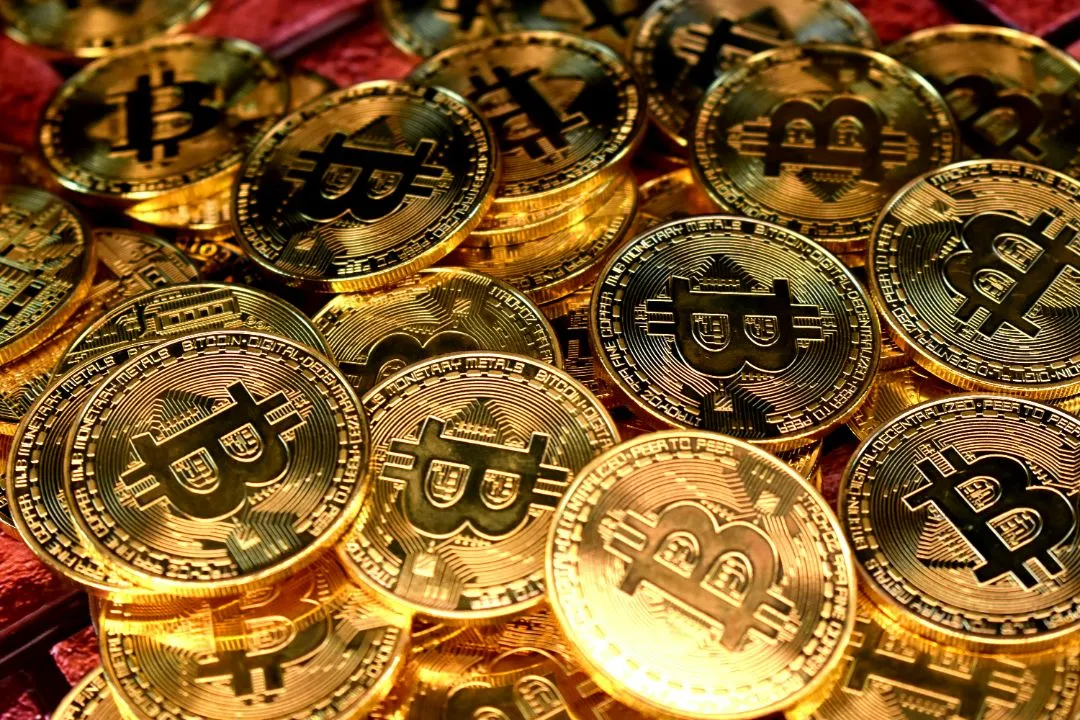
Photo by Studio Art Smile on Pexels


Lack of crypto clarity

That’s according to a report published by local media outlet, the Hindustan Times, on Friday. It’s understood that the Supreme Court is frustrated with regard to the lack of guidelines surrounding cryptocurrencies. That frustration has arisen as crypto is increasingly coming to the attention of the courts due to it being associated with a rising number of criminal activities.

The court directed the government to provide information about any plans to set up a dedicated federal agency to investigate crypto-related crimes. During the proceedings, Justices Surya Kant and Dipankar Datta expressed their disappointment, pointing out the absence of any concrete laws pertaining to cryptocurrencies.


Crypto bill failings

The context for the court’s remarks was the ongoing hearing of petitions related to cryptocurrency fraud cases across different states in India. In light of the gravity of these cases, the court demanded a response from the government regarding its capability to establish an effective mechanism to investigate crypto-related crimes.

The struggle for clear and comprehensive crypto regulations in India has been long-standing. As far back as 2018, the government was instructed by the Supreme Court to draft a crypto bill, but progress has been slow. The government has continually promised to provide legislative clarity over the past few years. Despite this, the final draft of the crypto bill has not been produced.


Crypto taxes

Governments may drag their feet when it comes to regulatory clarity relative to unfolding innovations but they’re far more responsive when it comes to taxes. The Indian government acted swiftly to impose crypto taxation laws, which took effect in April 2022.

During that bull market period, India emerged as one of the leading crypto markets, witnessing the rise of several crypto unicorns and significant trading volumes amounting to billions of dollars. However, the introduction of tax laws had an adverse impact on the thriving crypto industry. Added to that, the lack of regulatory clarity caused many established firms to relocate from India, seeking more favorable environments for their operations.


Market potential

Despite the government’s lethargic legislative response and heavy-handed tax policy, there are still reasons for optimism with regard to the development of crypto in India. India’s fintech sector is the third largest in the world, driven more recently by rapid digital adoption, together with efforts to bring about financial inclusion.

Last month, Xapo Bank, a Gibraltar-based crypto bank, was sufficiently encouraged by the potential offered in India to enter the Indian market. Earlier this week, the world’s largest asset manager, BlackRock, announced that it was partnering with Jio Financial and re-entering the Indian market after a six-year hiatus.

The move could have implications for crypto in India given that BlackRock has changed its tack on crypto, having recently filed an application to launch a bitcoin exchange-traded fund (ETF) in the United States.

Notwithstanding these developments, concrete regulatory guidelines will not only protect against criminal activities but also foster a conducive environment for legitimate innovation and growth in the cryptocurrency space.

More to Read
View All
Web3 & Enterprise·

Sep 11, 2023

UAE’s Royal Office Visits Korea to Further Security Token Collaboration with AIITONE

UAE’s Royal Office Visits Korea to Further Security Token Collaboration with AIITONEAIITONE, a Korea-based augmented reality firm specializing in security tokens, invited journalists to showcase its strategy to foster business collaborations between South Korea and the United Arab Emirates (UAE) on the occasion of the Korean visit of the Private Office of His Highness Sheikh Ahmed Bin Faisal Al Qassimi.Photo by Ethan Brooke on UnsplashPrivate Office’s return visitThe Private Office is a Dubai-based corporate conglomerate that operates businesses in various areas including real estate, energy, and finance. This visit by the Private Office marks a return visit following AIITONE’s visit to the UAE in July.The conference took place at a hotel in Gangnam, Seoul, and was attended by Lee Jin-yeop, CEO of AIITONE; Bruce Jeong, Chairman of Middle East Investment; and H.H. Sheikh Ahmed Bin Faisal Al Qassimi.Security tokens, CBDCs, smart defenseChairman Jeong, leading AIITONE’s global initiatives, said that their primary endeavor is to set up a Korean branch of the Royal Office. This branch will function as an international business hub, facilitating collaborations across three key sectors: security tokens, central bank digital currencies (CBDCs), and smart defense ventures.The event also featured presentations by AIITONE officials who introduced the company’s focus areas.Kang Man-soo, who leads AIITONE’s defense unit, highlighted the company’s technical expertise in maintenance training equipment, interactive electronic technical manuals, and integrated system support. He pointed out that AIITONE has been actively involved in the development of technical manuals and training simulators for various defense assets, including warships, guided weapons, and fighter aircraft. Kang emphasized that AIITONE’s strategic partnerships with Korean defense firms have propelled their engagement in initiatives aimed at exporting these products to countries such as Indonesia, Malaysia, and Poland.Lee Joo-hyung, the head of AIITONE’s extended reality (XR) content division, revealed the company’s plan to create portable products that can replicate the physical sensations of the real world, including sensations like physical contact and heat. Additionally, Lee introduced MOUM, a metaverse platform that features blockchain-powered security functions and generative artificial intelligence (AI) capabilities.Park Sang-il, who is at the helm of the firm’s security token project, showcased AIITONE’s comprehensive security token platform, which enables users to both issue and distribute security tokens. Notably, the platform is compatible with hyperledgers Besu and Fabric.Since arriving in Korea last Wednesday, the Royal Office has met with representatives from Standard Chartered Bank Korea and lawyers from law firm Kim and Chang, as well as lawmaker Yang Hyang-ja. Additionally, the Royal Office made a visit to smart farms located in South Jeolla Province.H.H. Sheikh Al Qassimi expressed a high regard for South Korea, acknowledging its beautiful natural landscapes and significant economic development. He underlined that this visit serves as an opportunity for the Royal Office to strengthen cooperation between UAE companies and their Korean counterparts, further fostering economic exchanges between the two countries.

news
Policy & Regulation·

Jun 17, 2023

Huobi Expands Crypto Trading Services in Hong Kong

Huobi Expands Crypto Trading Services in Hong KongHuobi, the Seychelles-headquartered prominent cryptocurrency exchange, is making strides in Hong Kong as its local subsidiary, Huobi HK, now offers crypto trading services to clients in the region.Following its expressed intention to apply for a virtual asset exchange license from the Hong Kong Securities and Futures Commission (SFC), Huobi HK has commenced providing crypto spot trading and virtual asset custody in Hong Kong. In order to comply with regulatory and anti-money laundering (AML) requirements, the exchange will collaborate with independent auditors, as announced by Huobi HK on Twitter.Photo by Shubham Dhage on UnsplashCrypto business licensingThis move aligns with the broader trend of crypto firms shifting their focus toward the East, where regulatory environments are becoming increasingly accommodative. A spokesperson for Huobi stated in a prepared statement: “Regulation of Web3 in Hong Kong will contribute to the widespread adoption of cryptocurrencies on a global scale.”Hong Kong, a Special Administrative Region under Chinese governance, recently introduced a regulatory framework for crypto exchanges, which took effect on June 1. Under these new regulations, retail investors in Hong Kong will be able to trade cryptocurrencies on licensed platforms, removing previous restrictions that limited trading to investors with portfolios exceeding HK$8 million (approximately $1 million).The new regulations impose requirements on virtual asset trading platforms to implement “suitable” onboarding processes and disclosures. Additionally, tokens must meet “minimum criteria” to ensure that “retail investors should be less prone to market manipulation.”Crypto sector interestHong Kong’s inviting regulatory landscape has already piqued the interest of crypto firms. The Greater China division of WeWork, a coworking provider, reported receiving 40 to 50 applications and inquiries from crypto businesses seeking to establish a presence in Hong Kong in recent months.Justin Sun, Tron founder and Huobi global adviser, drew parallels between the developments in Hong Kong and Beijing in a tweet, stating, “It is indeed fascinating to witness the Beijing government’s recent focus on Web 3.0, particularly considering the imminent June 1st developments in Hong Kong.” Sun added that this represents “a significant step towards recognizing the transformative potential of decentralized systems and blockchain-based solutions.”Huobi is actively involved in the development of Hong Kong’s Web3 ecosystem. In addition to its cryptocurrency trading license application, the firm became a significant contributor to Hong Kong’s first Web3 ecosystem fund during this year’s Hong Kong Web3 Carnival.HK Virtual Assets ConsortiumIn a separate announcement, Huobi disclosed that it has become the first member of the Hong Kong Virtual Assets Consortium (HKVAC), an organization dedicated to providing credit ratings for crypto asset exchanges and trading products. HKVAC, a collaborative effort between crypto industry players, including exchanges, institutional investors, and Hong Kong-licensed rating agencies, aims to enhance the security risk management capabilities of the crypto industry and assist authorities in establishing Hong Kong as a regional hub for virtual assets and digital finance.As a founding member of HKVAC, Huobi will serve as a reference point for the organization, leveraging its expertise in security technology and its compliance-oriented, standardized processes.

news
Policy & Regulation·

Oct 04, 2023

Research Center Highlights Overvaluation in Overseas Crypto Holdings Reported to Korean Tax Agency

Research Center Highlights Overvaluation in Overseas Crypto Holdings Reported to Korean Tax AgencyThe Korbit Research Center, affiliated with one of South Korea’s leading cryptocurrency exchanges, Korbit, has raised questions about the size of overseas cryptocurrency holdings reported by Korean individuals and businesses to the National Tax Service.Photo by REDioACTIVE on PixabayThe issue of market-making activitiesThe center noted that following the 2017 initial coin offering (ICO) boom, many enterprises that issued cryptocurrencies through offshore entities might still be holding onto their native tokens. This would have resulted from their inability to distribute these tokens to the market after the speculative bubble burst. The center believes these reported values could have been influenced by the issuers’ market-making activities, possibly inflating their worth.According to the National Tax Service, Korean individuals and corporations hold a total of KRW 130.8 trillion (around $98 billion) in overseas crypto accounts. Notably, 73% (KRW 120 trillion) of this sum is held by 73 corporate entities.Highlighting a critical aspect of cryptocurrency valuation, the Korbit Research Center pointed out that when tokens are priced based on market-making activities, they may be overvalued. They further underscored that even if the true value of overseas holdings by these entities is only a tenth of the reported sum, a figure like KRW 12 trillion is still substantial.Retail investors seeking overseas optionsFurthermore, the center touched on retail investors, noting that the KRW 10 trillion in their offshore accounts indicates a gap in services offered by Korean crypto enterprises. It suggests that individual investors might be exploring foreign markets due to domestic limitations like the absence of derivatives and lending options.Given the borderless nature of the crypto industry, Korean individuals readily turn to overseas services that cater to their needs. The Korbit Research Center estimates a KRW 10 trillion unmet demand in the domestic crypto sector, suggesting that stringent local regulations might be driving capital outflows.

news
Loading