Top

U.S. seizes $14B in Bitcoin from crypto scheme linked to Cambodia conglomerate

Policy & Regulation·October 16, 2025, 7:16 AM

The U.S. Department of Justice has filed a civil complaint to seize roughly 127,271 Bitcoin linked to an alleged fraud scheme tied to Prince Group, a multinational conglomerate based in Cambodia. That’s according to a press release from the U.S. Attorney’s Office for the Eastern District of New York. The digital assets are currently valued at approximately $14.18 billion and are now in the custody of the U.S. government.


Prince Group chairman Chen Zhi, now indicted by U.S. authorities, has been named as the mastermind behind the operation. FBI Assistant Director in Charge Christopher Raia said Chen oversaw an international crypto investment scam connected to a labor trafficking network that defrauded thousands of victims worldwide.
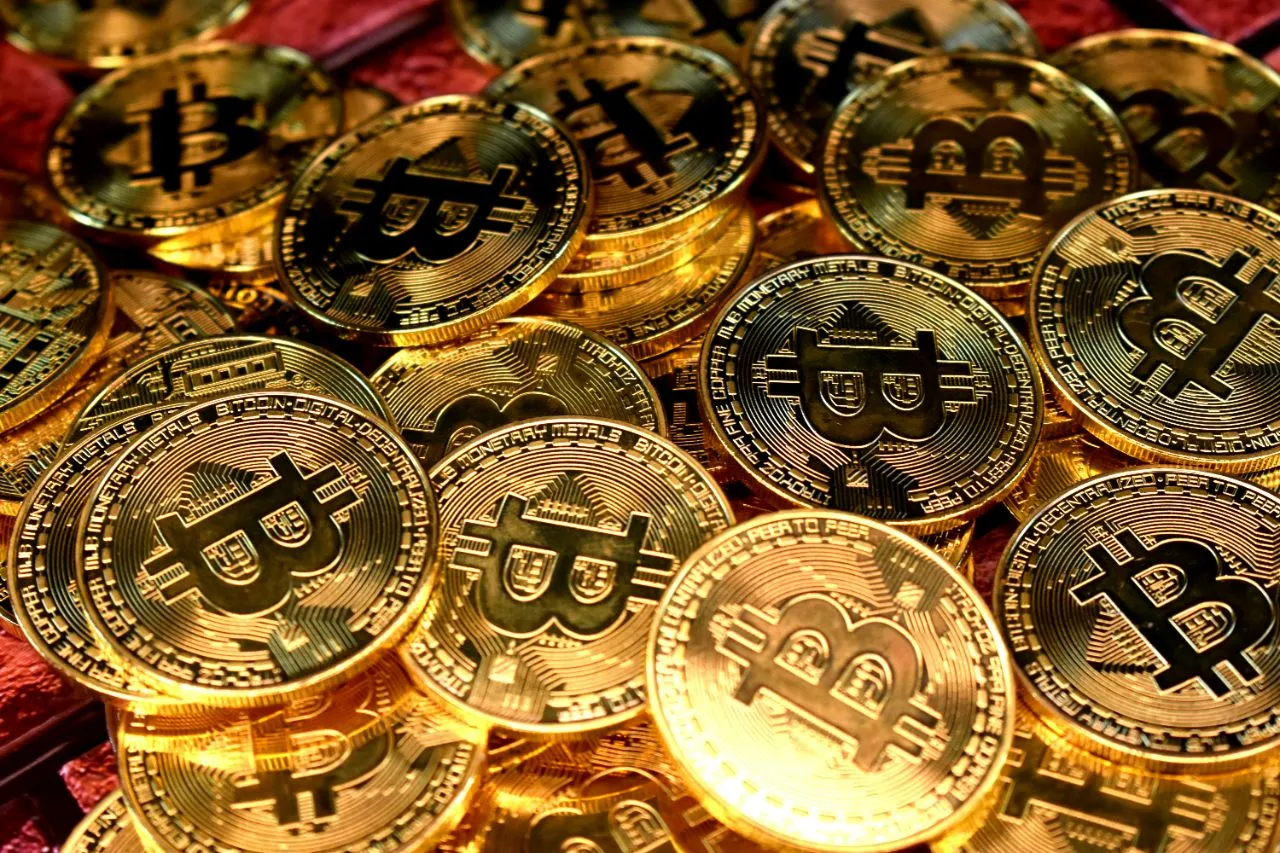
https://asset.coinness.com/en/news/75dcfbe189279270d61add559ab2aa61.webp
Photo by Kanchanara on Unsplash

Operations across 30 nations

Since 2015, Chen Zhi has headed the Prince Group, which operates in more than 30 countries. Under his direction, the group allegedly established scam compounds across Cambodia that promoted fraudulent crypto investment scams. The operations targeted victims through social media and messaging platforms with false promises of high returns. According to the allegations, funds were stolen and laundered rather than invested, and perpetrators often built trust over time before carrying out the fraud.


Authorities in Vietnam have uncovered a comparable case that did not involve the seizure of cryptocurrency. According to Tech in Asia, Hanoi police confiscated assets worth $34 million from Nguyen Hoa Binh, chairman of the tech company NextTech. The seized property includes 597 gold bars, deeds to 18 properties, and two vehicles. Investigators allege that Binh and nine associates raised funds for the AntEx cryptocurrency project by selling 33.2 billion tokens to 30,000 investors in 2021, collecting around $4.5 million. The defendants are said to have taken part in fraudulent appropriation of assets and accounting violations.


Tepid business climate in Vietnam

These incidents come as Vietnam’s government works to define its stance on digital assets. According to a Cointelegraph report published earlier this month, the Vietnamese Ministry of Finance said that since the announcement of the country’s five-year digital asset trading pilot plan, no companies have applied to participate. Sharing this update, the vice minister of finance expressed hope that this pilot would launch before 2026.


The report points to strict requirements as a likely reason for hesitation. Licensed crypto asset service providers must hold at least 10 trillion dong, about $379 million, in capital. They are also required to back all digital assets with real and tangible assets only, and the framework explicitly prohibits using fiat currencies or securities as backing. These rules leave few options that would attract retail or institutional investors.


Gemini eyes Southeast Asia as adoption grows

Meanwhile, global firms continue to look to Southeast Asia as activity increases. Dow Jones Newswires reported that Gemini, the American crypto platform founded by the Winklevoss brothers, plans to expand its footprint across the region.


In an interview, Saad Ahmed, Gemini’s head of Asia Pacific (APAC), said the company was strengthening its regional operations. A Chainalysis study provides context, showing that the APAC region recorded the fastest growth in on-chain activity compared to other markets in the 12 months ended June. The region saw total crypto transactions rise to $2.36 trillion from $1.4 trillion a year earlier.


Although Ahmed did not share investment figures, he said Gemini’s Singapore headquarters has grown to about 65 employees, up from 15 in the final quarter of 2023. He added that the expansion reflects the company’s view of Singapore as a key base for its operations in Asia and globally.


Recent criminal discoveries and tightening regulations reveal how Southeast Asia’s crypto scene remains nascent. Governments are stepping up enforcement and shaping new frameworks even as global firms expand across the region, motivated by growing adoption. How policymakers and market players respond to these early tests will define the next phase of digital asset growth in Asia.


 

More to Read
View All
Web3 & Enterprise·

Aug 31, 2025

Upbit’s banking partner Kbank, BPMG team up on overseas stablecoin pilots

South Korea’s neobank Kbank has partnered with BPMG, a domestic Web3 developer, to pursue stablecoin initiatives abroad, the Electronic Times reported. The companies are preparing proof-of-concept (POC) trials with firms in Thailand and Dubai as part of a broader push to participate in global financial infrastructure. Following a recent agreement with Kbank, BPMG has begun collaborating with a Thai company on a stablecoin project and is working with an investor in the United Arab Emirates (UAE) on the issuance and operation of stablecoins. Kbank plans to leverage BPMG’s blockchain technology to develop stablecoin business models for remittances, currency exchange and payments, and to support the build-out of related systems. The bank is focusing first on Asia and the Middle East.Photo by Shubham Dhage on UnsplashReducing intermediaries and automating regulatory complianceAnother priority is cutting intermediaries in cross-border transfers to speed up remittances and reduce costs via distributed ledger technology. Drawing on BPMG’s patents in AI and blockchain, Kbank is also developing a tool to automate regulatory analysis across jurisdictions so it can tailor services to local rules. As digital transformation accelerates, stablecoins are gaining traction as a payment method for their low volatility and ability to enable real-time cross-border transactions. In April, Kbank joined the Pax Project, a stablecoin initiative backed by Japan’s three major banks—Mitsubishi UFJ Financial Group (MUFG), Sumitomo Mitsui Banking Corporation (SMBC), and Mizuho. Through the project, Kbank is participating in trials for real-time transfers and settlement between South Korea and Japan. The bank has also formed a digital asset task force to advance the commercialization of stablecoin solutions. A Kbank official said combining blockchain with finance can deliver faster, more efficient global services and that the BPMG partnership is expected to demonstrate the practical utility of stablecoins, paving the way for integration into both domestic and international offerings. IPO timing hinges on Upbit renewalThe stablecoin push comes as Kbank is widely expected to submit a preliminary initial public offering (IPO) filing as early as this month, with a listing anticipated in October. A key variable, according to market watchers, is whether Kbank renews its contract with Upbit, South Korea’s largest cryptocurrency exchange, to provide real-name bank accounts—a regulatory requirement for fiat-to-crypto platforms. Kbank has been Upbit’s banking partner for five years, and deposits from the exchange account for roughly 20% of the bank’s total. Kbank is also seeing rising corporate activity around digital assets. As of Aug. 18, the bank had more than 100 corporate accounts dedicated to crypto trading—over double the 49 recorded at the end of last year—momentum widely attributed to its partnership with Upbit. Since launching corporate-focused services in late 2023, Kbank has provided real-name accounts to entities including government bodies, non-profits, and local municipalities. The uptick follows the financial regulator’s earlier decision to allow non-profits and trading platforms to sell crypto holdings, with implementation beginning in June.

news
Policy & Regulation·

Sep 01, 2023

KuCoin Report Points to Marked Increase in Crypto Investors in Turkey

KuCoin Report Points to Marked Increase in Crypto Investors in TurkeyAs part of its “Into The Cryptoverse: Understanding Crypto Users” series, Seychelles-based crypto exchange KuCoin published a report on Thursday that identifies a significant increase in the number of crypto investors in Turkey over the course of the past eighteen months.Photo by Dima Rogachevskiy on UnsplashCrypto adoption surgeThe report, the fifteenth such report produced by KuCoin as part of this series, reveals that there has been a substantial surge in crypto adoption among Turkish adults, with an impressive 52% of the adult population participating in crypto investments.Since November 2021 there has been a 12% increase in the number of crypto investors aged 18 to 60. These statistics underscore the growing interest and acceptance of cryptocurrencies in Turkey. It’s not likely to be a coincidence that this surge in adoption has come about against the backdrop of the local currency, the Turkish lira, losing more than 50% of its value against the US dollar.Here are some of the key insights that the report identified:Growing Crypto Adoption Among Turkish Adults: The survey indicates a significant upswing in the number of Turkish adults investing in cryptocurrencies. The percentage of adults embracing crypto has surged from 40% to 52% over the last year and a half, despite the overall crypto market finding itself in the doldrums within that time frame.Increased Female Participation: While male investors continue to dominate at a rate of 57%, the survey points to a notable trend of increasing participation among women, particularly in the younger age brackets. Approximately 47% of female crypto investors are between the ages of 18 and 30.Youth-Driven Growth: Younger generations are leading the crypto adoption charge, with investors aged 31 to 44 constituting the largest group at 48%. Furthermore, a significant proportion of investors under 30 joined the market within the past year, indicating the influence of youth within the crypto space.Many have expressed the view that crypto adoption will come about through the younger demographic. It’s a factor that has not gone unnoticed by crypto platforms, including fellow Seychelles-based exchange Bitget.Motivations for Crypto Investments: The report delves into the motivations behind crypto investments among Turkish adults. A substantial 58% express the desire to create long-term wealth, transcending generational boundaries. This suggests a widespread belief in crypto’s potential as a tool for financial freedom.Popular Cryptocurrencies: Bitcoin remains a favored choice, capturing 71% of overall investor interest. Ethereum follows closely with 45% interest, while stablecoins garnered the attention of 33% of surveyed participants.Crypto Trading Dominates: A significant 70% of Turkish participants use crypto for trading, indicating the prevalent use of cryptocurrencies as investment instruments. Meanwhile, 22% have ventured into buying NFTs.Influence of Personal Connections: Personal relationships play a pivotal role in driving crypto adoption in Turkey. About 57% of participants learned about crypto through family and friends, highlighting the significance of these connections in introducing newcomers to the crypto world.This finding resonates with a similar finding relative to a recently published report covering crypto adoption in Vietnam.The report has been based upon online surveys carried out by KuCoin between May 5 and May 12 of this year.

news
Policy & Regulation·

Nov 24, 2023

Singapore proposes additional rules to safeguard retail crypto investors

Singapore proposes additional rules to safeguard retail crypto investorsSingapore announced on Thursday its intention to implement new regulations aimed at protecting individuals by limiting their ability to trade cryptocurrencies.Photo by Daniel Welsh on UnsplashRules follow public consultation processIn a press release published to its website on Thursday, the Monetary Authority of Singapore (MAS), the city-state’s central bank and financial regulator, finalized these measures following a yearlong public consultation and review of cryptocurrency platforms, also known as digital payment token (DPT) service providers.Effective in phases from mid-2024, one key measure will prevent operators from accepting purchases through locally issued credit cards. Along the same lines, the regulator wants operators to discourage the use of margin and leverage transactions, or borrowing to facilitate trading activity. Market commentators, such as Custodia Bank Founder and CEO Caitlin Long, have long warned of the havoc that leverage has played in the crypto sector. Last year Long commented:”SO MUCH of the garbage in #crypto during this cycle was just leverage dressed up as tech innovation.”Additionally, incentives that encourage individuals to trade digital tokens will be banned. Such incentives could include providing free trading credits or digital assets as rewards during sign-ups or referrals.Curbing speculationWhile the MAS acknowledges the speculative and highly risky nature of cryptocurrency trading, it asserts that these regulations aim to help cryptocurrency operators protect customer interests. However, the MAS emphasizes that the regulations “cannot insulate customers from losses associated with the inherently speculative and highly risky nature of cryptocurrency trading.”Ho Hern Shin, the Deputy Managing Director for Financial Supervision at the MAS, urged consumers to exercise caution, stating:“We urge consumers to remain vigilant and exercise utmost caution when dealing in DPT services and to not deal with unregulated entities, including those based overseas.”The MAS expanded the scope of these measures to include all retail customers, regardless of their residency, following public feedback. This includes individuals who are not accredited investors or institutional investors. Accredited investors are those with over $1 million in net financial assets, among other criteria.Responding to crypto platform failuresThese regulatory steps come in response to the increasing access of individuals to the risky asset class, driven in part by the collapse of several unlicensed cryptocurrency companies in Singapore such as Hodlnaut and Vauld last year. The resulting calls for greater oversight prompted the MAS to initiate a feedback-gathering exercise in October, seeking input from industry players on proposed measures and other framework-establishing proposals.The bankruptcy filing of cryptocurrency group FTX the following month further accelerated the need for regulatory action globally, including in Singapore. In July, the MAS published the initial set of measures based on the consultation, requiring operators to keep customer assets in a trust and limiting their lending and “staking” of digital payment tokens.Staking, a process enabling investors to earn yields by depositing crypto assets for use in blockchain transactions, is among the activities facing restrictions. MAS Managing Director Ravi Menon criticized cryptocurrencies recently, stating that they have “failed the test of digital money,” citing poor performance as a medium of exchange or store of value and susceptibility to sharp speculative swings, leading to significant losses for many investors.

news
Loading