Top

Myanmar Government in Exile Backs Crypto Bank Launch

Policy & Regulation·July 21, 2023, 12:36 AM

Myanmar is on the cusp of a financial revolution as the National Unity Government (NUG), the country’s exiled shadow government, introduces the Spring Development Bank (SDB), a crypto-based financial institution.

With a mission to bestow long-awaited financial freedom and digitized sophistication upon the nation’s citizens, the SDB aspires to reshape Myanmar’s financial landscape.


Built on Polygon

The bank derives its name from the Spring Revolution, an opposition movement that bravely challenges the ruling military junta. The goal of the SDB is to bring “freedom and democracy to the 55 million citizens of Myanmar,” a lofty ambition that reflects the NUG’s determination to empower its people through innovative means.

Constructed on the Polygon Network, the SDB aims to revolutionize domestic and international payments, making them faster and more efficient. But the bank’s vision extends beyond just payments. Following a recent press conference, bank officials revealed plans to offer a diverse range of financial products, including fixed deposits, currency exchange services, cross-country remittances, and even digital gold savings options.


Reaching the Burmese diaspora

Notably, the SDB’s reach extends beyond Myanmar’s borders to the two-million-strong Burmese diaspora residing abroad. This diaspora frequently sends money back to their homeland, but the current remittance fees can soar as high as 30%. The bank intends to alleviate this burden, reducing the costs associated with sending money back to Myanmar.

The Spring Development Bank operates under the licensing and regulation of the Interim Central Bank of Myanmar, which is under the control of the NUG. U Calvin, the bank’s CEO, emphasized that this launch marks the initial step towards restoring financial independence to Myanmar.

The bank’s emergence comes amid Myanmar’s complex relationship with cryptocurrencies. While there is no specific legislation addressing cryptocurrencies, the Central Bank of Myanmar issued a ban on them in 2020, and the military junta later proposed a cybersecurity law that criminalized their usage in January 2022.
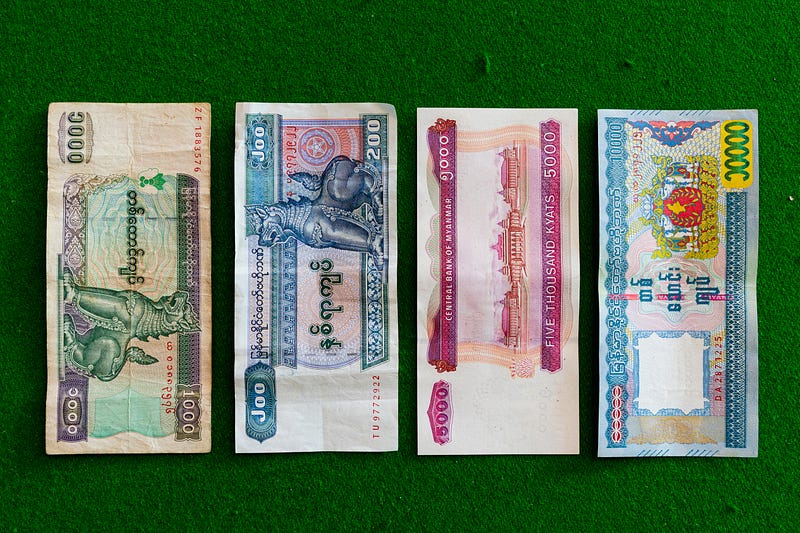
Photo by Dan Gold on Unsplash


July soft launch

A soft launch of the SDB is scheduled for July 22, with 1,000 private beta users and 100 relationship managers. The bank expects to achieve a full launch in late August, with the goal of attracting 100,000 active users within the first six months of operation.

Despite these regulatory challenges, Myanmar’s people have turned to cryptocurrencies as an escape from their dire financial situation. Since the February 2021 coup, the country’s economy has suffered significantly, with the World Bank estimating an alarming 18% annual contraction. Fading trust in the traditional banking system, controlled by the military, has further crippled the financial market.

The Myanmar kyat (MMK) plummeted to an all-time low of 2,200 against the US dollar (USD) in September 2021, down from 1,330 in February 2020 (currently 1 USD = 2,100 MMK).

The SDB’s arrival signals a glimmer of hope amidst these trying times, offering a beacon of financial opportunity for the citizens of Myanmar. With the support of the NUG, the bank is looking to take an innovative approach to better serve Burmese citizens, both at home and abroad.


More to Read
View All
Markets·

Jun 03, 2023

Beosin Report: Crypto Rug Pulls Surpass DeFi Exploits in May

Beosin Report: Crypto Rug Pulls Surpass DeFi Exploits in MayAccording to a recent report by blockchain security firm Beosin, losses from “rug pulls” or “exit scams” in the cryptocurrency space exceeded the amount stolen from decentralized finance (DeFi) projects during the month of May.The report, published on June 1 by Beosin Blockchain Security, revealed that rug pulls and scams resulted in losses of over $45 million across six incidents during the month. Beosin is headquartered in Chengdu, in China’s Sichuan province. The firm uses formal verification methods to secure smart contracts.In general there were 22 security incidents in the digital assets space over the course of the month. That overall figure accounts for losses totaling $20 million, and represents a vast improvement on the previous month.Three of the incidents were accounted for by security issues related to hardware wallets such as the Trezor and imKey wallets. Six were rug pulls/crypto scams, two were crypto crime incidents while another implicated a critical vulnerability relative to zero-knowledge proof technology.Photo by Tara Winstead on PexelsDeFi protocol attacksIn contrast, there were 10 attacks on DeFi protocols, amounting to $19.7 million in stolen funds. This figure represents a significant decrease of nearly 80% compared to April, and the losses from these types of exploits had been declining for two consecutive months, as per Beosin’s findings.The largest rug pull incident in May involved the alleged disappearance of $32 million associated with the crypto project Fintoch on May 24. Meanwhile, the largest attack on a DeFi platform was a $7.5 million breach targeting Jimbos protocol, according to Beosin’s report.Shifting hacker strategyBeosin noted a shift in the targeting strategy of hackers and scammers, who are now increasingly focusing their attacks on ordinary users rather than various project parties. To mitigate risks, the report recommended that crypto users enhance their anti-fraud awareness, conduct thorough due diligence before investing in projects, and learn how to improve the security of their digital assets.The report also issued a warning against using shared or public charging devices for mobile phones. Beosin highlighted the potential risks associated with these devices, as they could be manipulated to inject malicious programs that compromise private keys. This caution aligns with a similar advisory issued by the United States Federal Bureau of Investigation (FBI) in April.The FBI’s Denver office cautioned against using public USB ports, including those found at airports, due to the potential introduction of malware and monitoring software onto devices. Instead, they suggested carrying a personal charger and USB cord for use with electrical outlets.As the cryptocurrency landscape continues to evolve, it is crucial for users to remain vigilant and proactive in safeguarding their investments. With the rise of rug pulls and the ongoing threats in the DeFi space, staying informed, exercising caution, and adopting robust security measures are essential for protecting one’s digital assets in this rapidly changing industry.

news
Web3 & Enterprise·

Jul 17, 2023

Blockchain Firm NEOPLY Rebrands as Neowiz Partners to Focus on Investment

Blockchain Firm NEOPLY Rebrands as Neowiz Partners to Focus on InvestmentNeowiz Holdings, a South Korean investment holding company, announced today that its blockchain subsidiary NEOPLY held an extraordinary general meeting of shareholders and rebranded itself as Neowiz Partners, according to local news outlet News1. Upon this name change, the company will participate as a liquidity provider in the industry through strategic partnerships with investment firms such as venture capital firms and private equity funds.Photo by Precondo CA on UnsplashAbu Dhabi’s supportEarlier, it was revealed that Neowiz Partners became a part of the Innovation Programme offered by the Abu Dhabi Investment Office (ADIO) in the United Arab Emirates (UAE). This program offers incentives to various businesses operating in high-growth areas like financial services and technology.Diverse portfolioUnder its new name, Neowiz Partners aims to build a diverse portfolio of investments in promising companies committed to emerging technologies such as artificial intelligence (AI) and robotics. This strategic move is intended to foster future growth and seize the potential offered by these innovative sectors.Neowiz Partners’ global headquarters, known as H-Lab, located in the Abu Dhabi Global Market (ADGM), will oversee investment and management related to its blockchain businesses. Meanwhile, the operations of these blockchain projects will continue to be managed by NEOPIN, a subsidiary of H-Lab and a CeDeFi protocol that operates as a one-stop solution for those seeking a non-custodial wallet.Earlier reports highlighted NEOPIN’s achievement in launching Korea’s first liquid staking products for ETH. This approach enables users to deposit their cryptocurrencies into a staking pool and receive liquidity provider tokens in return. These tokens can then be deposited again to generate additional yields.On the occasion of this renaming, Neowiz Partners will establish itself as a dedicated investment company, while H-Lab will concentrate on serving the blockchain industry and associated ventures.

news
Web3 & Enterprise·

Jan 05, 2024

Ethereum Foundation targets Asian expansion with Bangkok set for Devcon 7

The Ethereum Foundation is set to make a significant impact on the Southeast Asian Ethereum community as it announces Bangkok as the location for Devcon 7.Photo by Viktor Forgacs on UnsplashFocusing on Southeast AsiaThe Ethereum developer conference will be held in the Thai capital from Nov. 12 to 15. The decision signifies a broadened vision for the event, shifting from a city-focused approach to embracing the entire Southeast Asia region as the backdrop for this community gathering. To underscore the Foundation’s intent, it has renamed the event from Devcon 7 to "Devcon Southeast Asia." Expressing enthusiasm about the potential and rapid growth of the Ethereum community in Southeast Asia, the Ethereum Foundation sees the scheduling of Devcon 7 for 2024 as an opportunity to deeply engage with local communities, providing meaningful support and empowerment. This shift aims to make Devcon 7 a more inclusive and regionally focused event, aptly named "Devcon Southeast Asia" to highlight its broader reach and impact. There has already been a positive reaction from crypto community members in the region in response to the choice of Bangkok for the conference. Navaporn Nalita, the founder of Crypto City Connext in Thailand wrote that “Bangkok's collaborative ecosystem, welcomes Devcon 2024 with open arms (and open blockchains)! Thailand's vibrant dev scene is primed to ignite alongside the world's brightest minds.” In short order, community builders have been looking to make the most out of the opportunity. Aligning with crypto growth potentialAccording to the blog post published by the Ethereum Foundation outlining the announcement, the choice of Bangkok as the host city aligns with the region's crypto adoption growth. Countries like Vietnam, the Philippines, Indonesia and Thailand have shown remarkable positions in the Global Crypto Adoption Index, underscoring the pivotal role of Southeast Asia in the global Ethereum landscape. To support Ethereum events, grassroots communities and educational initiatives in Southeast Asia, the Ethereum Foundation (EF) initiated the Road to Devcon (RTD) Grants round on June 29. This grant round is specifically aimed at individuals in Southeast Asia actively building communities, developing educational activities, and contributing to the growth of the Ethereum ecosystem. Encouraging smaller meet-ups over large events, the EF set the maximum grant at $1,000. The initiative aims to empower the Southeast Asian Ethereum community by providing support along the Road to Devcon. In a recent Chainalysis research report, Vietnam has emerged as the leader in cryptocurrency adoption within Southeast Asia, claiming the top spot in the region and ranking third globally in the Global Crypto Adoption Index for 2023. This index considers transaction volumes, protocols, web traffic patterns and factors like population size and purchasing power. The competition among Southeast Asian countries to establish themselves as crypto hubs is evident. Each nation adopts different regulatory approaches, with Singapore and Thailand implementing stricter measures. There has been a steady stream of Ethereum developer-centric conferences in recent years. 2022 featured EthDenver, Avax Barcelona, Devconnect Amsterdam, Devcon Bogota and EthSF (San Francisco). EthDenver, EthCC Paris and Devconnect Istanbul followed in 2023. As Devcon Southeast Asia approaches, the Ethereum Foundation anticipates fostering deeper connections and collaboration in this vibrant and evolving ecosystem. 

news
Loading