Top

Ethereum Foundation targets Asian expansion with Bangkok set for Devcon 7

Web3 & Enterprise·January 05, 2024, 7:54 AM

The Ethereum Foundation is set to make a significant impact on the Southeast Asian Ethereum community as it announces Bangkok as the location for Devcon 7.
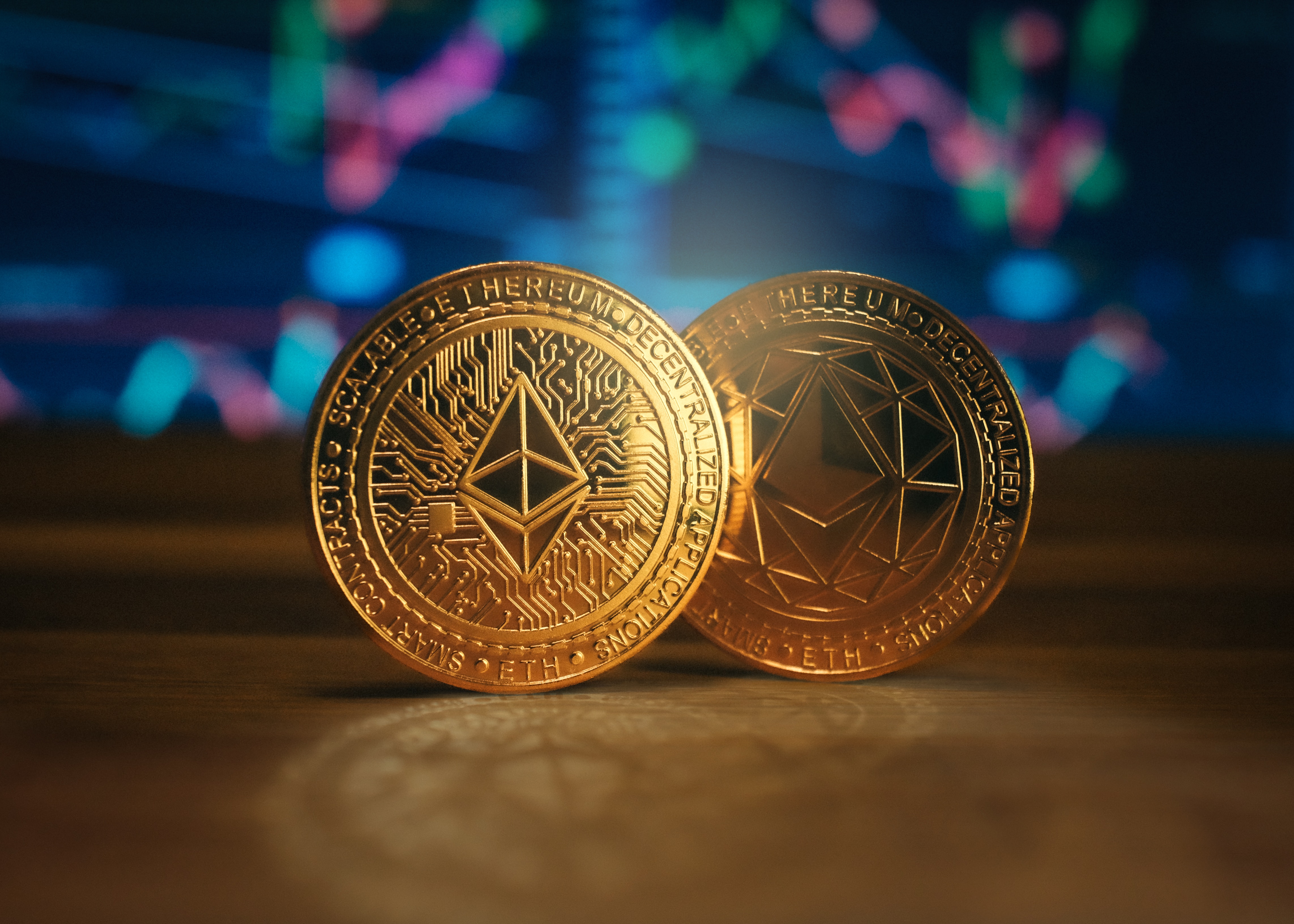
https://asset.coinness.com/en/news/e99c0bb6deec5bc7cc701b920bc27002.jpg
Photo by Viktor Forgacs on Unsplash

Focusing on Southeast Asia

The Ethereum developer conference will be held in the Thai capital from Nov. 12 to 15. The decision signifies a broadened vision for the event, shifting from a city-focused approach to embracing the entire Southeast Asia region as the backdrop for this community gathering. To underscore the Foundation’s intent, it has renamed the event from Devcon 7 to "Devcon Southeast Asia."


Expressing enthusiasm about the potential and rapid growth of the Ethereum community in Southeast Asia, the Ethereum Foundation sees the scheduling of Devcon 7 for 2024 as an opportunity to deeply engage with local communities, providing meaningful support and empowerment. This shift aims to make Devcon 7 a more inclusive and regionally focused event, aptly named "Devcon Southeast Asia" to highlight its broader reach and impact.


There has already been a positive reaction from crypto community members in the region in response to the choice of Bangkok for the conference. Navaporn Nalita, the founder of Crypto City Connext in Thailand wrote that “Bangkok's collaborative ecosystem, welcomes Devcon 2024 with open arms (and open blockchains)! Thailand's vibrant dev scene is primed to ignite alongside the world's brightest minds.” In short order, community builders have been looking to make the most out of the opportunity.


Aligning with crypto growth potential

According to the blog post published by the Ethereum Foundation outlining the announcement, the choice of Bangkok as the host city aligns with the region's crypto adoption growth. Countries like Vietnam, the Philippines, Indonesia and Thailand have shown remarkable positions in the Global Crypto Adoption Index, underscoring the pivotal role of Southeast Asia in the global Ethereum landscape.


To support Ethereum events, grassroots communities and educational initiatives in Southeast Asia, the Ethereum Foundation (EF) initiated the Road to Devcon (RTD) Grants round on June 29. This grant round is specifically aimed at individuals in Southeast Asia actively building communities, developing educational activities, and contributing to the growth of the Ethereum ecosystem.


Encouraging smaller meet-ups over large events, the EF set the maximum grant at $1,000. The initiative aims to empower the Southeast Asian Ethereum community by providing support along the Road to Devcon.


In a recent Chainalysis research report, Vietnam has emerged as the leader in cryptocurrency adoption within Southeast Asia, claiming the top spot in the region and ranking third globally in the Global Crypto Adoption Index for 2023. This index considers transaction volumes, protocols, web traffic patterns and factors like population size and purchasing power.


The competition among Southeast Asian countries to establish themselves as crypto hubs is evident. Each nation adopts different regulatory approaches, with Singapore and Thailand implementing stricter measures.


There has been a steady stream of Ethereum developer-centric conferences in recent years. 2022 featured EthDenver, Avax Barcelona, Devconnect Amsterdam, Devcon Bogota and EthSF (San Francisco). EthDenver, EthCC Paris and Devconnect Istanbul followed in 2023.


As Devcon Southeast Asia approaches, the Ethereum Foundation anticipates fostering deeper connections and collaboration in this vibrant and evolving ecosystem.

 

More to Read
View All
Web3 & Enterprise·

Sep 07, 2023

Socket Protocol Raises $5M in Strategic Partnership

Socket Protocol Raises $5M in Strategic PartnershipSocket Protocol, an interoperability protocol founded by Indian duo Rishabh Khurana and Vaibhav Chellani, has raised $5 million with the strategic investment coming from Coinbase Ventures and Framework Ventures.Despite the ongoing bear market, cross-chain protocols like Socket have continued to attract substantial investment, underlining the growing belief in a future where different blockchains seamlessly connect.Photo by Towfiqu barbhuiya on UnsplashMore than just fundingSocket Protocol, designed to enhance communication between various blockchains, secured this funding to further its collaboration with Coinbase. The firm articulated the nature of the funding and that collaboration on X (formerly Twitter) on Wednesday.The partnership aims to create bridging opportunities for developers and users of Coinbase Wallet and Base, Coinbase’s recently launched layer-2 network built on Ethereum. Socket explained that there is already evidence of that collaboration, borne out by a bridging feature that has already been built into Coinbase Wallet, and powered by Socket Protocol.In relation to the newly launched Base network, the project stated: “We are also helping developers and apps expand to Base with a seamless onboarding experience. Rainbow Wallet, Layer3, Bungee, Zapper & more apps leverage Socket to get their users onboarded to Base already!”As the cryptocurrency ecosystem witnesses the emergence of new layer-2 networks or “rollups” and the continuous expansion of layer-1 blockchains, Socket Protocol positions itself as a critical player in connecting these fragmented ecosystems.Seamless cross-network communicationThe protocol’s primary goal is to facilitate communication between different blockchains, allowing them to interact seamlessly. By offering a bridge for assets, Socket Protocol simplifies cross-network transactions, effectively making the experience akin to operating on a single unified blockchain.Socket boasts that since the launch of the project, it has facilitated over 2.5 million cross-channel transactions, accounting for $3.5 billion in value transfer, while claiming that this is just the starting point, with the project aspiring to grow past that milestone going forward.The recent fundraising highlights the increasing interest in interoperability solutions like LayerZero, as investors recognize the significance of bridging for the future of blockchain technology. Notably, inter-bank messaging system Swift revealed experiments involving the transfer of tokenized value across various private and public blockchains, with Chainlink’s Cross-Chain Interoperability Protocol playing a pivotal role in these experiments.Socket Co-Founder Chellani emphasized the importance of scalable solutions for the future. He noted that “rollup-to-rollup communication is really important” for achieving scalability, aligning the scaling future with the concept of a multi-chain or cross-chain future. “I think the scaling future, and the multi- or cross-chain future are the same thing,” he added.This investment in Socket Protocol, coming at a time of market uncertainty within the crypto space, reflects the growing confidence in the potential of blockchain interoperability to unlock new possibilities and create a more interconnected blockchain landscape.

news
Policy & Regulation·

Sep 19, 2023

HKMA Issues Warning Against Crypto Firm Misrepresentation

HKMA Issues Warning Against Crypto Firm MisrepresentationThe Hong Kong Monetary Authority (HKMA), the central bank for the Chinese autonomous territory, has taken a stand against cryptocurrency businesses that falsely present themselves as “banks” and market their products as “deposits,” issuing a public advisory to raise awareness about the issue.Photo by Marcel Eberle on UnsplashBanking ordinance violationsIn a press release published to its website on Friday, the HKMA said that instances had arisen where crypto firms had labeled themselves as “crypto banks,” “crypto asset banks,” and “digital trading banks.” The regulatory authority underscored that such misrepresentations could be in violation of the Banking Ordinance in Hong Kong.In addition to adopting misleading bank-related titles, these crypto firms have been advertising “savings plans” as “low risk” with “high return,” potentially misleading the public into believing that these entities are authorized banks in Hong Kong, where they can securely deposit their funds.The HKMA stressed that only entities such as licensed banks, restricted license banks, and deposit-taking companies, collectively referred to as “authorized institutions” and holding a license granted by the HKMA, are legally permitted to engage in banking or deposit-taking activities in Hong Kong.Furthermore, funds held on crypto exchanges are not covered by Hong Kong’s Deposit Protection Scheme. “Under the Banking Ordinance, only licensed banks, restricted license banks and deposit-taking companies, which have been granted a license by the HKMA can carry out banking or deposit-taking business in Hong Kong,” the HKMA stated.Misuse of banking termsAny entity using the term “bank” in its business name or implying that it offers banking services in Hong Kong is committing an offense, according to the central bank. The same rule applies to any entity engaging in deposit-taking activities in Hong Kong or soliciting the public to make deposits.It’s important to note that crypto firms not officially recognized as banks in Hong Kong are not subject to the oversight of the HKMA.The HKMA advised the public to exercise caution. In cases of uncertainty regarding an entity claiming to be a bank or soliciting deposits in Hong Kong, individuals are encouraged to consult the register of authorized institutions on the HKMA’s website, and if doubts persist, it suggests that they should contact the authority via its Public Enquiry Service hotline.According to section 97 of the Banking Ordinance, only a bank or a central bank can use the term “bank” or its derivatives in its business name in Hong Kong without the written consent of the HKMA.Additionally, sections 11 and 12 of the Banking Ordinance stipulate that only entities possessing a valid banking license or recognized as authorized institutions are permitted to engage in banking or deposit-taking activities in Hong Kong. As per section 92 of the Banking Ordinance, only an authorized institution is authorized to issue advertisements inviting the public to make deposits, with certain exceptions.The HKMA’s advisory serves as a stern reminder to the crypto industry that regulatory compliance and transparency are essential, particularly when using terms associated with traditional banking, to protect the interests of the public.

news
Policy & Regulation·

Aug 27, 2025

Japan’s finance minister acknowledges crypto investment merits

Katsunobu Katō, a Liberal Democratic Party politician and Japan's Minister of Finance under Prime Minister Shigeru Ishiba's government since October 2024, has said that cryptocurrency assets can play a role in a diversified investment portfolio. Katō made the remarks while speaking at an event that was held in Tokyo related to the subject of crypto assets on Aug. 25, according to Bloomberg. Katō stated:''Crypto assets run the risk of high volatility, but if an appropriate investment environment is created, they can become targets for diversified investment.''Photo by JJ Ying on UnsplashGrowing crypto user baseKatō acknowledged that there is a growing user base in Japan related to digital assets. With that, he intends to work towards the provision of a healthy trading environment in Japan for stakeholders within the digital assets sector. The finance minister added that he has been trying to balance regulation with a need to leave the digital assets sector with sufficient freedom so as to enable the development of innovation. Crypto tax reformIt emerged over the weekend that the Japanese financial regulator, the Financial Services Agency (FSA), intends to include tax reform measures in respect of the crypto sector in 2026 tax revision proposals that it will bring to the Japanese government. It’s expected that the proposals, scheduled for submission by the end of this month, will call for a separate taxation category for digital assets and the implementation of a flat 20% tax rate. Under Japan’s existing tax regimen, crypto trading gains must be reported under the categorization of “miscellaneous income,” with those gains subject to tax rates of up to 55%. The move would bring taxation on crypto trading gains in line with the tax treatment that’s currently in place for equity trading gains. Equities have been given their own category and are taxed at a flat rate of 20%. Reclassifying cryptocurrenciesAdditionally, the FSA plans to propose legislation next year that would result in the reclassification of cryptocurrencies, removing them from their current treatment as a means of payment under the Payment Services Act. The regulator wants crypto to come under the Financial Instruments and Exchange Act, reclassifying it as a financial product. Katō has outlined his party’s commitment to the consideration of reviewing crypto asset taxation. That item was incorporated into his government’s tax reform plan for 2025, while the Japanese cabinet approved a proposal to amend the Payment Services Act back in March. As part of plans to have digital assets categorized as financial products, the FSA is also understood to be interested in broadening the scope of insider trading restrictions. Kato’s remarks are being interpreted as positive for the crypto sector. According to International Monetary Fund (IMF) data, Japan is the world’s fifth-largest economy, with a gross domestic product (GDP) exceeding $4.1 trillion.Source: World Economic Outlook (April 2025)In further positive news for the sector in Japan, it was reported on Aug. 18 that the FSA is likely to approve the issuance of JPYC, a Japanese yen-backed stablecoin, over the course of the coming months.

news
Loading