Top

South Korean Banks Adopt Blockchain for Streamlined Civil Servant Loans

Policy & Regulation·July 14, 2023, 6:49 AM

South Korea’s state-run financial organizations and banks are embracing blockchain technology to streamline the loan process for government employees and enhance loan management for banks.

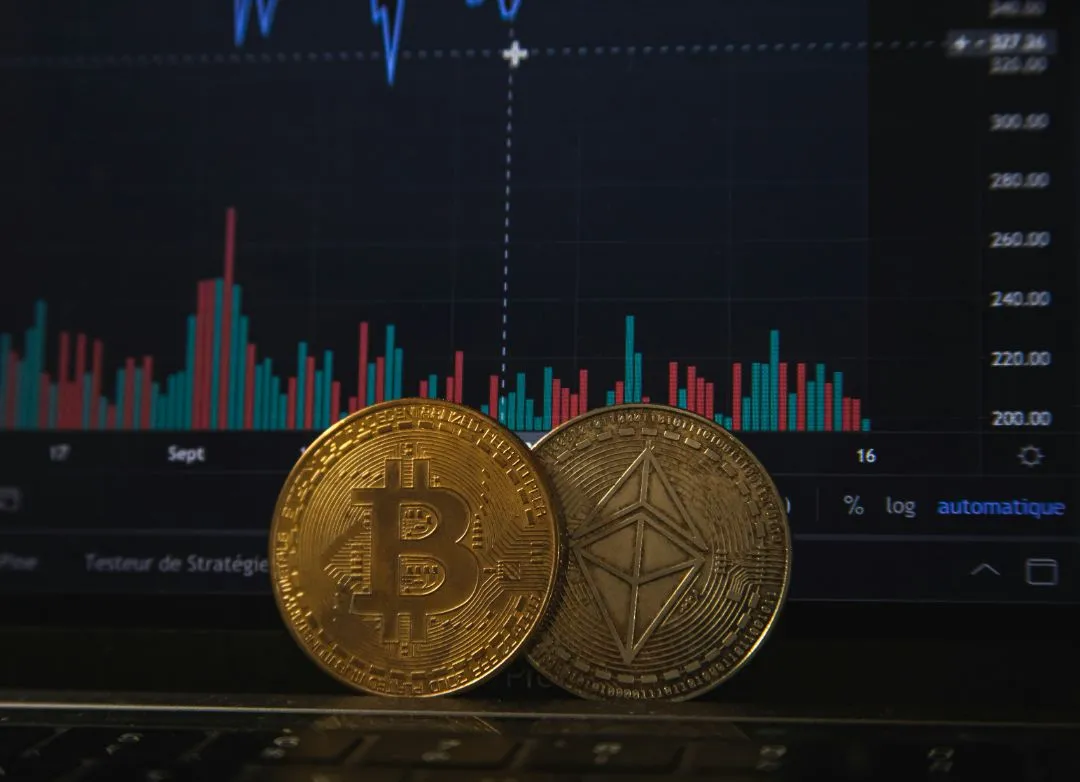
Photo by Shubham Dhage on Unsplash


Blockchain-aided loan services

In a collaboration announced today at the Korea Federation of Banks (KFB) in Seoul, the Korea Financial Telecommunications and Clearings Institute (KFTC), the Government Employees Pension Service (GEPS), and four local banks are coming together to introduce blockchain technology in providing loan services specifically tailored for civil servants. The four participating banks are NongHyup Bank, Hana Bank, DGB Daegu Bank, and Gwangju Bank.


Easier application

At present, civil servants are required to acquire a physical loan recommendation letter from the GEPS in order to apply for a bank loan. However, with the implementation of the new loan system, the GEPS will have the capability to issue blockchain-based letters, which can be obtained by civil servants either in-person or remotely at banks. This innovative approach will significantly simplify the verification process for these letters.


Easier management

Furthermore, the manual exchange of loan-related information, such as repayment history and retirement details, between banks and the GEPS will be replaced by a more efficient system. The KFTC will take on the role of mediator, ensuring that any changes to this information are immediately reflected in real time. This streamlined approach will significantly enhance loan management for lenders.

The launch of this service is scheduled for November this year, bringing about improved accessibility to loans for government employees. As the project progresses, other financial institutions are expected to join in, further enhancing the convenience of public servants. Additionally, these collaborating organizations will explore joint services aimed at providing the necessary support to stabilize the livelihoods of civil servants.

More to Read
View All
Web3 & Enterprise·

Dec 21, 2023

Starbucks Korea implements NFT initiative to boost sustainability efforts

Starbucks Korea implements NFT initiative to boost sustainability effortsStarbucks Korea is set to take on several eco-friendly initiatives in the new year to promote the use of personal reusable cups, including an NFT wallet and a new tumbler coupon policy, according to local news outlet Newsis on Thursday (KST).Photo by Battlecreek Coffee Roasters on UnsplashNFTs and eco-friendly effortsIn a newfound development, the brand also said that it would start issuing NFTs through a new NFT wallet on its mobile app next month as part of its eco-friendly consumption campaign. Until now, NFTs have been widely utilized in fields like art, music and entertainment due to their ability to prove individual ownership of digital assets. Starbucks’ adoption of the technology is a significant step in its implementation into daily life, which will lead to an increase in the number of real-world use cases and an acceleration in the transition to the era of Web3.To celebrate the launch of the NFT wallet, Starbucks plans to hold a promotional event where customers who use a reusable cup for one beverage ordered via the Siren Order function will receive one Eco Stamp. Up to three stamps can be collected per day. These can be exchanged for various types of NFTs, which are categorized as Basic, Creative and Artist, and each customer can only own one.Starbucks’ NFTs will be minted in collaboration with Seoul-based art platform and gallery Print Bakery (PBG) and PBG exclusive artist DADAZ, featuring images of unique cups, tumblers and more.The franchise plans to hold an offline exhibition to showcase images of the NFTs as well as its achievements in corporate sustainability at the Starbucks Jongno R store located in Jongno-gu, central Seoul, early next month.Sustainable sipsThe coffee franchise is also known for offering a complimentary beverage voucher to customers who purchase a reusable cup or tumbler. Next month, this voucher will be renamed the Eco Tumbler Beverage Coupon, which customers can exchange for a tall-sized beverage of their choice. This policy is aimed at encouraging the use of personal cups and providing tailored benefits to customers who embrace sustainable options.This new introduction was partially driven by the steady increase in the number of personal cups used at Starbucks stores around the country over the past three years. The annual number of cases has risen from 17.39 million in 2020 to 21.9 million in 2021, then 25.3 million last year.This figure has spiked significantly this year in particular, with the cumulative yearly number reaching 26.7 million last month, surpassing last year’s total. If this trend continues until the end of the year, the estimated figure is expected to be around 29.6 million, representing a 17% increase compared to 2022.This upward trend is attributed to the immediate KRW 400 discount offered to customers who participate, as well as an alternative benefit where customers can earn one “Star”, or reward point, for each purchase that they make. Until last month, the total value of benefits that were distributed via these two systems — with one Star valued at KRW 500 — exceeded KRW 12 billion. The ratio of immediate discount and Star rewards in this value stands at 30% and 70%, respectively.Green commitmentStarbucks also plans to continue its No Single-Use Cup Day campaign, a collaboration with the Korea Zero Waste Movement Network that has been ongoing for the past five years. The brand dedicates the tenth of every month as a day without single-use disposable cups, giving out merchandise like mugs, tumblers, coffee ground planting kits and stickers. Since last year, various events have been organized to celebrate the day, such as coupons gifted to customers who use reusable cups the most. Approximately one million people have participated in these promotions since the campaign’s inception in 2018.Starbucks expressed its hopes that these initiatives would act as a catalyst for positive changes in local communities by encouraging the reduction of waste.

news
Web3 & Enterprise·

Aug 04, 2023

Animoca Brands Partners With Yuga Labs on ‘Wreck League’ Launch

Animoca Brands Partners With Yuga Labs on ‘Wreck League’ LaunchHong Kong’s Animoca Brands and its San Francisco-based subsidiary nWay, a developer and publisher of multiplayer games, have partnered with Yuga Labs, unveiling their latest creation: “Wreck League.”Photo by Haidan on UnsplashLeveraging Web3Diving into uncharted waters in the realm of esports, this game leverages Web3 technology to empower players with the ability to construct, possess, and engage in battles with their very own distinctive Mech fighters.“Wreck League” challenges the traditional boundaries of gaming by permitting enthusiasts to craft their fighters, engage in fierce competitions, and secure on-chain rewards. Set to debut its maiden season, the game will draw inspiration from the Web3 stalwart, Yuga Labs.The game boasts a dual-pronged design, encompassing both Web2 and Web3 versions. In a savvy maneuver to capture a wide-ranging audience, nWay has devised a marketing strategy that seamlessly integrates effective user acquisition techniques from their previous ventures while circumventing complex blockchain terminology.Clarifying the ingenious concept behind the game, Taehoon Kim, the CEO of nWay, explained: “Wreck League stands as a fusion of Web3 and Web2 concepts. Our mission revolves around unifying communities and players, tapping into the creative wellspring of the Web3 community to consistently elevate the game’s content.”Designed for player retentionWithin the player community, creators, owners, and participants converge to partake in league events. The crux of the game revolves around the assembly of high-performance Mechs, crafted from a collection of 10 distinct Mech Parts NFTs.Player retention is a cornerstone of its design, driven by an engaging trajectory of in-game progression through upgradable mech parts, enhancing gameplay dynamics, and embedding the notion of asset ownership. The more players invest in refining their assets and advancing through levels, the stronger their bond with the game becomes. Active participation in events and tournaments further reinforces player allegiance.Yat Siu, the Co-Founder and Executive Chairman of Animoca Brands, is optimistic regarding the transformative potential of “Wreck League” within the esports sector. Siu envisions the game, where digital asset ownership is the norm, as a harbinger of a monumental shift in competitive gaming dynamics.Expanding market reachFor Yuga’s part, the NFT and metaverse company is using gaming, through this particular partnership, as a mechanism to broaden the reach of its well-established NFT brand. That said, it has also made its own individual efforts in that regard recently. The Web3 studio, best known for having created the Bored Ape Yacht Club (BAYC) NFT collection, has released two games, Dookey Dash and Forge, independently.nWay and Animoca Brands get to benefit from access to Yuga’s well-known NFT collections through the partnership. The companies confirmed that as part of the gaming experience, gamers will be able to collect and take ownership of in-game digital assets in the form of NFTs.Animoca acquired nWay in December 2019 for $7.69 million. The games developer and publisher creates and distributes triple A games on console, PC, and mobile platforms. At the time of the acquisition Animoca Brands outlined that it foresaw nWay innovating in the area of blockchain-based games, with the intention of both companies working together relative to that endeavor.

news
Policy & Regulation·

Oct 17, 2025

Regulator in Tokyo moves to ban insider trading in crypto market

Japan’s Financial Services Agency (FSA) plans to ban insider trading in the cryptocurrency market, according to an Oct. 15 report in Nikkei, cited by CoinPost. The forthcoming rules would amend the Financial Instruments and Exchange Act to explicitly bar trading based on nonpublic information, with violators subject to administrative fines.Photo by Louie Martinez on UnsplashTightening oversight through the SESCThe FSA intends to hammer out the details through a working group by year’s end and aims to submit a bill amending the securities law during the 2026 ordinary session of the Diet. Under the proposal, the Securities and Exchange Surveillance Commission (SESC) would gain authority to investigate suspected violations and could recommend fines or criminal charges in cases of alleged insider trading. Experts say Japan’s system of self-regulation, led by cryptocurrency exchanges and the Japan Virtual and Crypto Assets Exchange Association (JVCEA), lacks sufficient data monitoring. The government hopes that granting the SESC oversight of crypto transactions will help ensure fairer trading and make the market more attractive to investors. The new rules would target the use of confidential information, such as advance knowledge of a token listing or a major security flaw. Yet applying insider-trading standards to crypto may prove difficult. Many tokens have no clear issuer, making it harder to determine whose information could move markets or who should be held accountable. Crypto investing has surged in Japan, with domestic trading accounts quadrupling in five years. The FSA now aims to update its rules to reflect that digital assets are traded mainly as investments, not as payment instruments. Leadership transition brings policy uncertaintyJapan’s plan to strengthen oversight of cryptocurrencies coincides with a period of political transition. Prime Minister Shigeru Ishiba has announced his intention to step down but remains in office for now. According to CNBC, Sanae Takaichi, newly elected president of the ruling Liberal Democratic Party (LDP), would typically be expected to assume the premiership, but the coalition’s collapse has upended what would otherwise be a routine transition. The parliamentary vote to choose Japan’s next leader, initially slated for Oct. 15, has been postponed to Oct. 21. In the wake of the split, the main opposition Constitutional Democratic Party (CDP) is reportedly seeking Komeito’s support for a joint prime ministerial candidate. Yuichiro Tamaki, leader of the Democratic Party for the People (DPP), is seen as a potential consensus choice. The ruling LDP currently holds 196 seats in the lower house, but a united opposition could command a larger bloc. Tamaki has also drawn attention in crypto circles. About a year ago, he proposed cutting taxes on cryptocurrency gains to 20%, a flat rate similar to that on stock profits, during his campaign against Ishiba. At present, crypto gains in Japan are classified as miscellaneous income and taxed at progressive rates that can exceed 50% when local levies are included. Metaplanet’s Bitcoin strategy tested amid market shiftsAgainst that backdrop, Metaplanet, often dubbed Japan’s answer to the U.S. firm Strategy for its aggressive Bitcoin (BTC) accumulation, is under pressure as its valuation slips below the value of its crypto holdings. The company’s market-to-BTC net asset value (mNAV) ratio fell to 0.99 on Oct. 14, dropping below 1 for the first time. The metric compares the company’s market value with its BTC holdings, and a reading below 1 means the stock is trading at a discount to its BTC reserves. The decline comes after Metaplanet paused BTC purchases for the past two weeks. As of Oct. 1, the company held 30,823 BTC on its balance sheet. 

news
Loading
