Top

Circle CEO Sees Role for Yuan-Backed Stablecoins in Hong Kong

Web3 & Enterprise·July 12, 2023, 12:31 AM

Jeremy Allaire, the Co-Founder and CEO of Circle, the USDC stablecoin operator, expressed his acceptance of mainland China’s ban on cryptocurrencies. However, he remains optimistic about the development of Web3 technology in Hong Kong and the city’s monetary authority’s move towards regulating stablecoins.
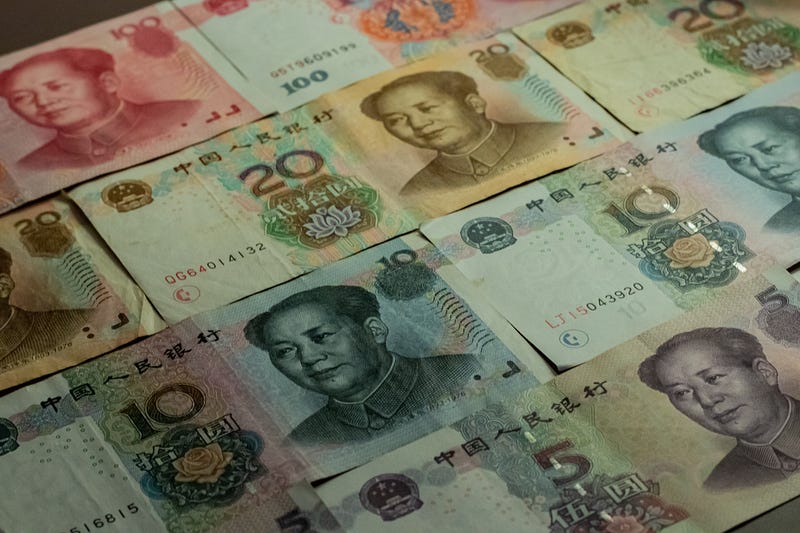
Photo by Mitchell Luo on Unsplash


Yuan internationalization

Allaire believes that Hong Kong must embrace digital assets to remain relevant in the global financial market. While he acknowledges that China is unlikely to open up its markets to cryptocurrencies, he sees potential for stablecoins to contribute to Beijing’s goal of yuan internationalization.

During an interview with the South China Morning Post (SCMP), Allaire highlighted that major financial markets worldwide are embracing digital assets and that the biggest financial institutions are adopting them. He mentioned that there is Chinese government support for stablecoins, but he clarified that it doesn’t imply opening up crypto trading on the mainland. Allaire emphasized that stablecoins could be a more immediate solution to the Chinese government’s aim of internationalizing the yuan compared to the central bank digital currency (CBDC) e-CNY.

Allaire cited the example of a stablecoin pegged to the offshore yuan (CNH) as a potential tool to facilitate the RMB’s use in global trade and commerce. He mentioned the existence of CNH Coin, a stablecoin team that also offers HKD Coin, pegged to the Hong Kong dollar.


Virtual asset hub

Hong Kong is positioning itself as a global virtual asset hub by focusing on the regulation of stablecoins. The Hong Kong Monetary Authority (HKMA) has committed to implementing stablecoin regulations by 2024, recognizing the potential impact of such assets on financial markets. Additionally, the Securities and Futures Commission (SFC) is working on complementary regulations for stablecoins following the recent implementation of licensing rules for sellers of other cryptocurrencies.

Circle’s USDC, the second-largest US dollar-backed stablecoin by market capitalization after Tether (USDT), is considered a “stored-value instrument” in the United States. Allaire expressed Circle’s encouragement regarding the HKMA’s plans and highlighted the positive motivation to expand their business in Hong Kong.

While central banks worldwide have expressed concerns about stablecoins’ impact on financial stability, the HKMA has proposed that the value of reserve assets should match the outstanding stablecoins at all times. The HKMA has also been researching the possibility of a digital Hong Kong dollar and is part of a cross-border trial for the e-CNY using a blockchain known as the mBridge.


CBDCs alongside stablecoins

Regarding the future role of stablecoins in a well-regulated environment alongside CBDCs, Allaire believes that CBDCs and private coins are complementary. He sees CBDCs as an upgrade to central banks’ systems and views the private sector’s work on innovation in distributed ledger technology as distinct and valuable.

Allaire noted that Circle conducts significant business activity in Asia, particularly in Hong Kong, which is its largest non-US market, employing around 125 individuals.

While mainland China maintains its ban on cryptocurrencies, Allaire remains optimistic about Hong Kong’s regulatory stance on stablecoins and believes they could contribute to the internationalization of the yuan. Allaire emphasized the importance of digital assets in the global financial market and expressed Circle’s support for Hong Kong’s initiatives.

More to Read
View All
Markets·

Jan 24, 2024

Mt. Gox edging closer to BTC payouts sparks market fears

The trustee of the failed Japanese cryptocurrency exchange Mt. Gox is preparing to initiate repayments of bitcoin (BTC) and bitcoin cash (BCH), prompting fears of a market sell-off among traders and investors.Photo by Dmytro Demidko on UnsplashConfirming repayment detailsThe crypto community on the /mtgoxsolvency subreddit disclosed that the Tokyo-based bitcoin exchange has initiated the process of verifying creditors' addresses for forthcoming repayments. Emails have been sent to creditors, confirming that their repayment details have been validated with relevant cryptocurrency exchanges. The communication from Mt. Gox appears to be staggered, with users on different platforms receiving emails at varying times. Some Bitstamp users reported receipt of the email, while several Kraken customers mentioned that they were still awaiting the confirmation. Mt. Gox, cautioning creditors, clarified that users with disabled or frozen accounts would not be able to receive repayments using the provided addresses. Additionally, the emails specifically pertain to payments in bitcoin and bitcoin cash. This recent communication follows Mt. Gox's announcement in November, where it committed to returning approximately 142,000 bitcoin, 143,000 bitcoin cash and 69 billion Japanese yen, valued at over $5.67 billion at the announcement date and approximately $6.46 billion at the present moment. During the November announcement, Mt. Gox assured creditors that repayments would commence in the following months and weeks. Creditors with payment methods deemed "effective at this time" were earmarked to receive their assets first. Towards the end of December, some creditors reported the addition of yen-denominated balances to their PayPal accounts by Mt. Gox, signaling progress in the repayment process. Market fearsThe fear among market participants of a distribution of bitcoin from the Mt. Gox estate has cast a shadow over the sector over the course of a number of years. With this latest development, it appears that the estate is finally on the cusp of executing on that distribution. If distribution is achieved in the short term, it will come at a time when bitcoin has experienced a major unit price pullback already. Since the approval of spot bitcoin exchange-traded funds (ETFs) in the United States earlier this month, it appears that another bankrupt crypto exchange, FTX, has sold $1 billion worth of Grayscale Bitcoin ETF shares into the market. That move is believed to have been responsible for a dramatic drop in bitcoin’s unit price. In tandem with that event, some commentators believe that a pullback at this point is healthy for the market. That’s the view of Charles Edwards, founder of Capriole Investments. Taking to social media, Edwards wrote:”We're still not here yet. This pullback is very overdue and lower is healthier.” At the time of writing, bitcoin has a unit price of $39,884, down from a high earlier this month of $48,494. Confirmation emails have been reported by several Reddit users, with Bitstamp confirming for most, and a few Kraken users also acknowledging receipt. Nevertheless, a significant number of Kraken users mentioned they are yet to receive the confirmation email. Mt. Gox officially closed its doors in February 2014, almost a decade ago, after succumbing to an exploit in 2011.  

news
Policy & Regulation·

Jun 08, 2024

Turkey considers limited tax on crypto transactions, not profits

Turkey has decided not to tax profits from stocks and cryptocurrencies but is considering implementing a “very limited” tax on transactions, according to Treasury and Finance Minister Mehmet Şimşek. In a recent interview in Ankara, Şimşek stated the government's intention to ensure every financial sector contributes to the national revenue without specifying the size of the potential tax. He emphasized that the approach aims to enhance fairness and effectiveness in the taxation system. Historically, in 2008, Turkey lowered its tax rate on stock market profits from 10% to 0%, promoting investment in the stock market. Despite earlier reports from Bloomberg suggesting new taxes on gains from stock and cryptocurrency trading, the government has clarified its position to only consider transactional taxes.Photo by Engin Yapici on UnsplashCrypto tax regulationsCurrently, Turkey lacks specific regulations for taxing cryptocurrencies but is actively working to establish a comprehensive legal framework for digital assets. A bill introduced by Turkey’s ruling party on May 16 mandates crypto businesses to obtain licenses and adhere to international standards. This includes regulation by capital markets boards and mandatory revenue collection from crypto service providers. The bill also aims to ban foreign crypto brokers, fostering a locally regulated ecosystem and addressing concerns from the Financial Action Task Force (FATF) to remove Turkey from its "gray list." According to a report by Chainalysis, a blockchain analytics firm, Turkey ranks fourth globally in cryptocurrency market activity, with an estimated trading volume of $170 billion between July 2022 and June 2023, surpassing countries like Russia, Canada and Germany. Since 2021, Turkish regulations have prohibited the use of cryptocurrencies for payments, reflecting a cautious approach towards the integration of digital assets into the financial system.   

news
Policy & Regulation·

Jun 04, 2025

MAS sets deadline for unlicensed crypto firms serving clients overseas from Singapore

The Monetary Authority of Singapore (MAS), the city-state’s central bank and primary financial regulator, has set a deadline of June 30 for unlicensed digital token service providers (DTSPs) working out of Singapore to cease offering their services to clients in overseas markets.Photo by Hu Chen on UnsplashResponding to feedbackThe deadline emerged by way of a process MAS has followed as part of the Financial Services and Markets Act 2022 (FSM Act). Last October, the regulator invited feedback from stakeholders related to the authority’s approach to the regulation of DTSPs. MAS published its response to that feedback on May 30.  It stated:”DTSPs which are subject to a licensing requirement under section 137 of the FSM Act must suspend or cease carrying on a business of providing DT services outside Singapore by 30 June 2025.” It added that it was not including any transitional arrangement for DTSPs despite MAS receiving such a suggestion from a number of feedback respondents. Instead, unlicensed DTSPs will need to abide by the June 30 deadline and have acquired a license by then or cease unlicensed activity.The regulator defines DTSPs as individuals, partnerships or Singapore corporations operating from a place of business in Singapore, including those formed or incorporated in Singapore who offer digital token services outside Singapore. Those found in breach of the regulation could face up to three years in prison and fines of up to S$250,000 ($195,000). Companies who have already obtained licensing or those exempted by way of the Securities and Futures Act, Payment Services Act and the Financial Advisers Act are free to continue trading. Challenging licensing requirementsThose who wish to become compliant will have to satisfy some challenging requirements. For those granted a license, an annual license fee of S$10,000 ($7,780) applies. Small-scale DTSPs need to satisfy a $150,000 ($116,670) ongoing capital requirement, while larger, well-established DTSPs must comply with a S$250,000 ($195,000) capital requirement. Additionally, MAS has put in place competency requirements related to a DTSP's CEO, directors, partners and managers. Hagen Rooke, a partner at law firm Gibson, Dunn & Crutcher, outlined on LinkedIn that while it's possible for unlicensed operators to obtain licensing, it will be very difficult to get a license. In its feedback response document, the regulator stated: “MAS will approach the licensing of DTSPs in a prudent and cautious manner and there will be extremely limited circumstances under which MAS will consider granting an applicant a licence under section 138 of the FSM Act.” Rooke advised crypto companies that may be affected to act swiftly in order to derisk through an operational restructuring or removing the businesses' Singapore touchpoints. He suggested that firms need to consider if it has customers outside of Singapore or front-office functions located outside of the city-state to determine if they could be affected by this regulatory measure. A number of Asian countries have moved to take action against unlicensed foreign firms that have engaged with local investors, with Thailand becoming the latest country to do so recently. However, the Singaporean authorities have approached the issue from the opposite perspective, citing the potential reputational risk that unlicensed DTSPs pose for Singapore.

news
Loading