Top

Korean Blockchain Startups to Showcase Products in KINTEX in November

Web3 & Enterprise·July 07, 2023, 4:24 AM

South Korean blockchain startups are set to benefit from increased opportunities to participate in exhibitions organized by the Korea International Exhibition Center (KINTEX) in Ilsan, located northwest of Seoul, the nation’s capital.

According to a report by local news outlet Dailian, KINTEX recently announced a collaboration with Onoffmix, a social gathering platform, with the aim of expanding exhibitions and bolstering the startup ecosystem.

Under the newly signed agreement, KINTEX and Onoffmix will leverage the latter’s startup business network and event platform to encourage startups to take part in more than 20 exhibitions organized and hosted by KINTEX. Onoffmix, boasting a subscriber base of 1.45 million, will serve as a valuable resource in this partnership.
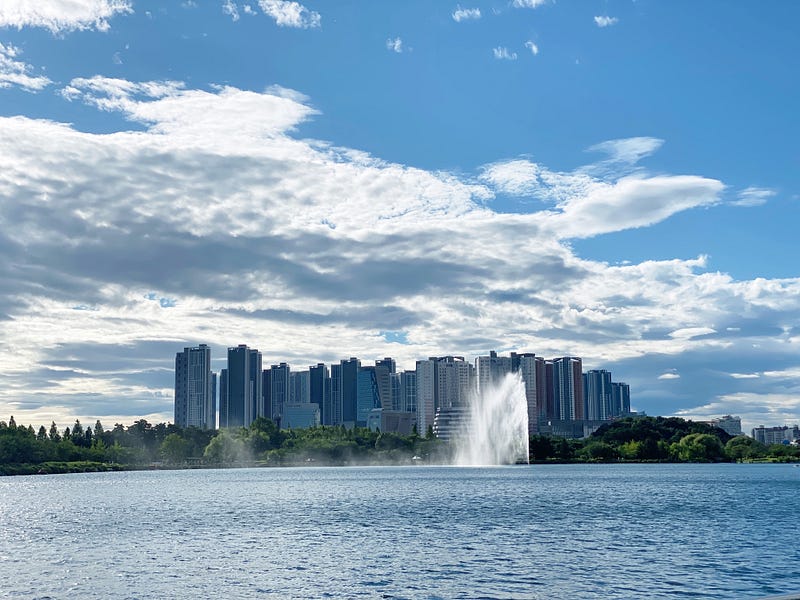
Photo by Seungwon Lee on Unsplash


Global trend

This move aligns with the global trend of increasing startup participation in exhibition shows. One notable example is the Consumer Electronics Show, a prominent annual tech trade show in the United States that features Eureka Park, an event for startups to showcase their products. With 1,340 startups participating this year, Eureka Park has been witnessing consistent growth in participation year after year.

Another instance is 4 Years From Now (4YFN), the startup event held during the annual mobile tech show, Mobile World Congress. 4YFN offers opportunities for over 2,000 startups to connect with potential buyers and investors.


Startup exhibition in November

In line with this global shift, KINTEX and Onoffmix aim to assist local startups in exhibiting their cutting-edge technologies, establishing connections with industry experts and investors, and participating in conferences and pitching events. One of their first such endeavors is the Digital Media Tech Show (DMTS) scheduled for November. DMTS will showcase innovative products in various tech areas such as metaverses, non-fungible tokens (NFTs), and blockchain. In addition to the exhibition, conferences will be held to facilitate knowledge sharing among startups regarding industry trends, business ideas, and investment opportunities.

Lyu Jaewon, the Chief Business Officer at KINTEX, said that this partnership will contribute to the convention center’s expansion of exhibitions and promotion of sustainable growth.

Onoffmix CEO Yang Joon-cheol highlighted the company’s commitment to collaborating with KINTEX to expedite the growth of local startups and support their expansion into overseas markets.


More to Read
View All
Policy & Regulation·

May 21, 2023

Pakistan Implements Ban on Cryptocurrency

Pakistan Implements Ban on CryptocurrencyPakistan has moved to ban cryptocurrency once more, with the country’s Minister of State for Finance and Revenue, Aisha Ghaus Pasha disclosing the move last week.According to multiple local media reports within Pakistan, on May 16 Ghaus Pasha stated at a session of the Senate Standing Committee on Finance and Revenue, that cryptocurrencies are banned and “will never be legalized in Pakistan.”Photo by Hamid Roshaan on UnsplashFATF Grey ListGhaus Pasha supported this position by outlining that the Financial Action Task Force (FATF) had set the banning of crypto as a condition for Pakistan’s removal from its “Grey List.”FATF is an initiative of the G7 group of countries, first established in 1989. Its mandate is to develop policies geared towards combating money laundering, and most especially, terrorist financing. The FATF grey list includes those jurisdictions who are deemed to require increased monitoring relative to their efforts to keep money laundering and terrorist financing to an absolute minimum.Pakistan had found itself on the FATF grey list over the course of a number of years. That meant reputational damage on an international basis, together with loss of investor confidence. It also signals the likelihood of weaknesses in a country’s financial system and in its financial controls. The categorization would have had an impact on the country’s ability to access international finance, impacted trade relations, and involved increased compliance costs.Against that background, there may be a certain logic to the Finance Minister’s stance, despite it naturally being distasteful to those of us that support the development of decentralized systems, blockchain, and cryptocurrency. After an extended period on that Grey List, Pakistan was only removed from it in October of last year.Currency devaluationNotwithstanding that, governments in the developing world may have added incentives in banning cryptocurrencies. Their currencies are oftentimes unstable, and the Pakistani rupee is no exception. Cryptocurrencies like bitcoin find their greatest use case in countries that have their currencies devalued or economies that fall into the trap of hyperinflation relative to the sovereign currency.In Pakistan’s case, the rupee plummeted to a record low against the US dollar in January. Naturally, that hurts ordinary citizens and provides the conditions under which people are more likely to investigate decentralized cryptocurrencies. On that basis, we shouldn’t be surprised to learn that the Pakistani government’s decision to ban crypto was publicly supported by Sohail Jawad, Director of the State Bank of Pakistan (SBP).Pakistani banks are naturally following the government and the central bank’s lead, in implementing the ban. One circular obtained by CoinDesk stated: “As per regulatory instructions from the State Bank of Pakistan (SBP), any remittance of foreign exchange directly/indirectly outside Pakistan to overseas foreign exchange trading, margin trading, and CFD trading apps/websites/platforms through any payment channel is not allowed/permitted by SBP and such payments are inherently risky and illegal.”Community reactionNaturally enough, the crypto community internationally and locally, is not enamored by the move. However, people who have been in the space over the last few years are accustomed to ever-changing stances taken by governments as a reaction to a technology that they simply don’t know how to deal with.Waqar Zaka, a Pakistani who works within the Web3 space commented previously on a ban that was implemented in Pakistan in 2017, only later to be found to be unconstitutional. Another Pakistani community member took to Twitter in taking a stand against the decision. Others still immediately considered how they could circumvent the ban.Crypto has always benefited from jurisdictional arbitrage, and while bans are not in any way helpful, in the longer run, they will never stop the roll out and further development of this innovation.

news
Web3 & Enterprise·

Jul 19, 2023

Polymesh’s APAC Digital Asset Regulation Report Highlights Challenges

Polymesh’s APAC Digital Asset Regulation Report Highlights ChallengesThe project team behind Polymesh, an institutional-grade permissioned blockchain built specifically for regulated assets, released a report on digital asset regulation within the Asia Pacific (APAC) region on Tuesday, highlighting several challenges that regulators are attempting to overcome.In a press release, the company outlined that the report covers recent regulatory developments in South Korea, Singapore, Hong Kong, and the broader APAC region.Photo by Jéan Béller on UnsplashProgressive regulatory effortsRegulators within the APAC region are currently striving to introduce legislation for digital assets, while several centers within the region are vying to establish themselves as hubs for digital asset-related business.The report explores the individual efforts of regulators in various APAC nations as they work towards crafting regulatory frameworks tailored to their jurisdictions. Those efforts encompass implementation, investigation, and enforcement of legislation in a borderless industry.Regulators in South Korea, Singapore, and Hong Kong have all embarked on formulating rules for emerging asset categories, albeit using different terminologies such as “digital assets,” “digital payment tokens,” and “virtual assets.” Their focus lies in striking a balance between consumer protection, market integrity, and industry development.Additionally, all three regulators adhere to the principle of “same activity, same regulations, same risks” when it comes to tokenized securities. They argue that regulatory requirements do not significantly differ solely because a security is in tokenized form. Each state has been actively engaged in local and global activities surrounding security tokens, including state involvement in the advancement of security token technology and cross-border transactions.Main findingsThe report’s main findings emphasize that while regulators in the APAC region are making strides in introducing digital asset legislation, the road ahead will not be without challenges.Legislating a cross-border industry poses difficulties that necessitate harmonization to foster a robust and interconnected ecosystem. Digital assets originating in Asia can be traded globally and vice versa. Merely identifying the asset’s place of origin is no longer sufficient.Although the report delves into the efforts of individual regulators, it emphasizes the need for long-term collaboration to establish a unified vision and practical implementation of regulations for this borderless phenomenon.Regulatory challengesThe regulatory challenges faced by South Korea, Singapore, and Hong Kong in driving the growth of digital assets in the APAC region are multifaceted. They include the intricacies of legislating an inherently cross-border industry. In turn, that can lead to the potential violation of legislation from other jurisdictions.The lack of harmonization among different jurisdictions, and variations in regulatory approaches among the three regulators are likely to be problematic. Furthermore, there are push-pull dynamics between the industry and regulators, with even the regulators themselves not always in agreement.However, despite these challenges, all three regulators have initiated the formulation of rules for new asset categories, with a strong emphasis on safeguarding consumer interests, maintaining market integrity, and fostering industry development.

news
Policy & Regulation·

Dec 31, 2024

Legislator calls for Bitcoin reserve in Hong Kong

In an interview with local media, Hong Kong legislator Johnny Ng called for the Chinese autonomous territory to implement a national Bitcoin reserve. Ng made the comments in a discussion with Hong Kong-based state-owned Chinese language media outlet, Wenweipo. The legislator believes that there is an opportunity for Hong Kong to take advantage of China’s “one country, two systems” approach to governance, which gives it the freedom to implement such a reserve despite mainland China remaining much less enthusiastic where Bitcoin and cryptocurrencies are concerned.Photo by Kanchanara on UnsplashSpot Bitcoin ETF impactThe Hong Kong Legislative Council member suggested that as a first step, Hong Kong needs to assess the impact that spot Bitcoin exchange-traded funds (ETFs) in the United States have had. Spot Bitcoin ETFs were launched in the U.S. in January. The leading spot Bitcoin ETF, IBIT, provided by asset manager BlackRock, has achieved a growth rate five times faster than any other ETF launched in the past. El Salvador and the Kingdom of Bhutan are examples of nations that have made Bitcoin a significant component within their national reserves. A recent report suggests that El Salvador currently holds 6,000 Bitcoin which it purchased at an average price of $45,465. In November, Arkham Intelligence reported that Bhutan was holding Bitcoin with a dollar value which had exceeded $1 billion at that time. Ng also referred to a move by individual states in the U.S. towards holding Bitcoin as a reserve asset. In August, the state of Wisconsin increased its holdings of shares in BlackRock’s spot Bitcoin ETF, IBIT. Last month, the state of Pennsylvania introduced a bill to make Bitcoin a strategic asset. Ohio has proposed similar legislation while Alabama’s State Auditor, Andrew Sorrell, has suggested that his state should establish a Bitcoin reserve. Reducing price volatilityNg believes that furthering the Chinese autonomous territory’s dealings relative to Bitcoin could prove beneficial, given that Bitcoin has the potential to play a role in attracting more talent and investment to Hong Kong. Additionally, he feels that the development of Bitcoin reserves at state level could help in reducing the price volatility of the asset as it goes through the process of global adoption. The Hong Kong lawmaker also believes that there is an opportunity for the Chinese antonymous territory to benefit from first mover advantage, stating that “the value of Bitcoin will be more stable, causing more and more other countries to follow suit and reduce their holdings of traditional assets.” Ng's latest interview follows a similar comment he made on X in July, where he suggested that Bitcoin is worth considering as an official financial reserve for a country. David Bailey, CEO of Bitcoin Magazine, took to X stating: “Hong Kong making moves, SBR here we go. President Trump must make the Strategic Bitcoin Reserve his top priority the day he enters the White House.”In recent days, soundings from Japan and Russia suggested that neither of these countries was prepared to establish Bitcoin reserves. However, just like with the advent of the Bitcoin ETF in the U.S., following Trump’s expression of interest in the establishment of a strategic Bitcoin reserve, the level of consideration of the matter has increased considerably among governments around the world.

news
Loading