Top

Bakkt Signals Interest in Entering Hong Kong Market

Web3 & Enterprise·July 07, 2023, 12:02 AM

Bakkt, the US digital asset platform owned by Intercontinental Exchange, Inc., the owner of the New York Stock Exchange (NYSE), has set its sights on international expansion, with Hong Kong headlining its focus on regions that offer clearer regulatory frameworks for cryptocurrencies.

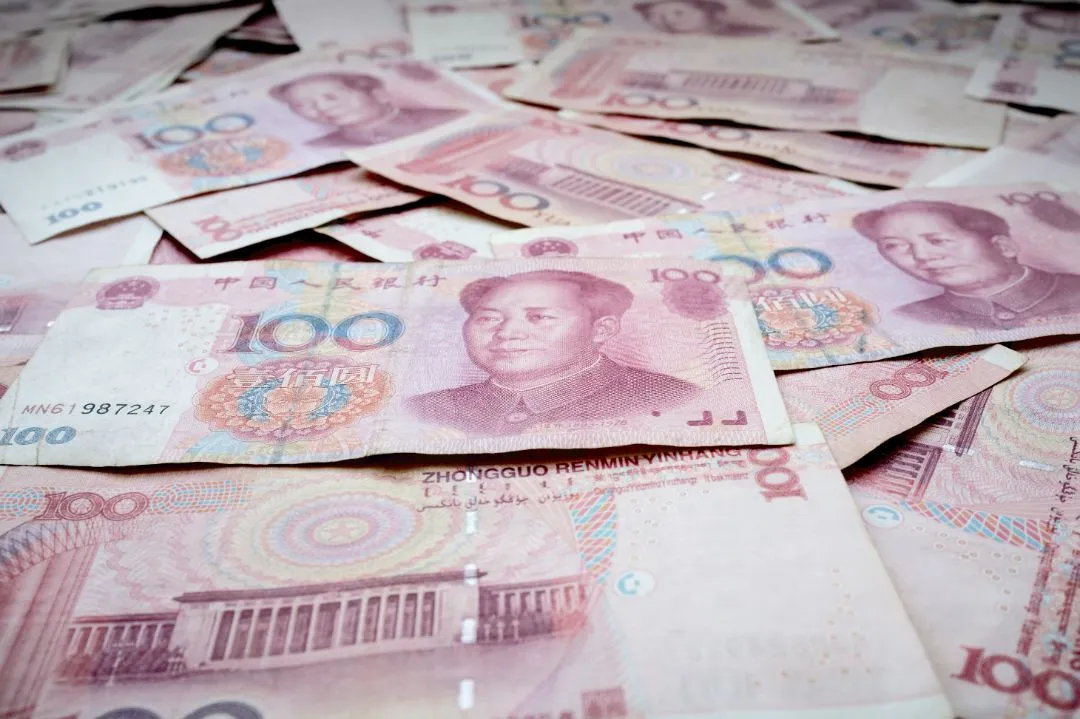
Photo by Jimmy Chan on Pexels


Greater regulatory clarity overseas

CEO Gavin Michael highlighted Hong Kong as a target market for the company, given that the autonomous Chinese territory is making rapid progress in establishing regulatory clarity, and at a faster pace than in the United States. Alongside Hong Kong, Michael also earmarked the UK and parts of the EU as possible target markets based on similar rationale.

Michael made the comments while speaking at the Piper Sandler Global Exchange & FinTech Conference in New York recently. While emphasizing the company’s commitment to the US market, Michael stated that Bakkt is actively seeking markets where it can gain traction and utilize them as a catalyst for growth. The recent acquisition of Apex Crypto, an integrated crypto-trading platform based in the US, further supports Bakkt’s international plans.


Leveraging existing partnerships

Michael anticipates leveraging Apex’s existing partnerships with companies such as Webull, M1, Public.com, and Stash to facilitate expansion into international markets. Bakkt aims to accompany these companies as they venture into offering US equities trading, enabling the addition of crypto trading with minimal barriers to entry. However, regulatory concerns have led to the delisting of 25 tokens on the Bakkt platform.

Michael highlighted the progress being made in crypto markets outside the US, where regulatory clarity is being achieved more rapidly. He cited the UK’s advancements in clear crypto regulation, Hong Kong’s allowance of trading certain cryptocurrencies, and the EU’s implementation of the MiCA framework for crypto regulation. While supportive of recent regulatory actions in the US, Michael believes that the country needs to provide further clarity, particularly at the federal level.

The lack of regulatory clarity in the US has impacted Bakkt’s ability to collaborate with domestic companies. Despite launching with notable partnerships, including Microsoft and Starbucks, Michael revealed that many firms are awaiting clear regulatory guidelines before entering the cryptocurrency space. He noted that trading activity has been slower compared to Bakkt’s custody service, as regulatory clarity plays a significant role in shaping consumer sentiment and providing operational guidelines for trading platforms.


Interest in Lightning Network

In addition to exploring international expansion, Bakkt is actively considering the use of the Bitcoin Layer 2 Lightning Network for custody and settlement services. Michael explained that this technology has the potential to revolutionize financial services, particularly cross-border payments.

Bakkt’s strategic focus on markets with regulatory clarity and its acquisition of Apex Crypto demonstrate the company’s intent to grow beyond the US. By expanding into Hong Kong, the UK, and the EU, Bakkt aims to meet the demand of partners eager to explore these markets.

However, the company recognizes the need for the US to provide clearer regulatory guidelines to foster innovation and accelerate adoption within the domestic cryptocurrency industry. With its custody services gaining traction, Bakkt is still optimistic about the potential of trading as regulatory clarity continues to improve. Moreover, Bakkt’s exploration of the Lightning Network showcases its desire to leverage emerging technologies for more efficient financial services.

More to Read
View All
Markets·

Aug 21, 2025

China mulls yuan-pegged stablecoin approval

The Chinese authorities are reportedly mulling over the possibility of approving the use of stablecoins pegged to and backed by the Chinese yuan. That’s according to a report published by Reuters on Aug. 20, with the publication citing “sources familiar with the matter.”Photo by Eric Prouzet on UnsplashInternationalization of the Chinese yuanChina’s State Council, its cabinet and primary administrative authority, has scheduled a review of yuan-backed stablecoins for later this month, a development that could potentially lead to their approval. The Chinese have been leaders in recent years in the development of a central bank digital currency (CBDC), the digital yuan. The digital yuan was further along in its development than any other CBDC globally, with the Chinese making concerted efforts to bring the digital currency into use at home, with an eye toward global use for international trade. While the U.S. dollar has enjoyed an extended period as the world’s reserve currency, the weaponization of the currency by the U.S., particularly through the application of sanctions, has led BRICS (Brazil, Russia, India, China and South Africa) nations to consider alternatives. One of Reuters sources asserted that the Chinese authorities are now homing in on the potential to internationalize the yuan via stablecoins. Setting the tone for stablecoin useMembers of the Chinese government leadership are expected to establish the tone for stablecoin use following their upcoming review, outlining the parameters within which the Chinese authorities will permit their use. Reacting to this development, Robin Brooks, a senior fellow at the Brookings Institution, asserted that China’s newfound interest in yuan-backed stablecoins is a sign of “how insecure China is in the global financial system.” Brooks added that the way to internationalize a sovereign currency is to promote the rule of law and property rights rather than pursue the use of stablecoins, which he described as “ridiculous.”  Growing global interestWhile the Brookings Institution is not directly backed by the U.S. government, the organization is nevertheless a Washington, D.C.-based think tank. Despite Brooks’ objection to the use of stablecoins, China is not the only nation to show interest in using them.Taking to X, Raphaël Bloch, co-founder of crypto media platform The Big Whale, pointed out that increasingly, nations around the world are embracing stablecoins due to the efficiency of global currency distribution that is possible via public blockchain networks.  Additionally, stablecoins offer an effective means of government debt financing, given that stablecoin reserves are backed by government bonds. In the U.S., President Donald Trump has ruled out the pursuit of a CBDC. Last month, the U.S. House of Representatives passed the Anti-CBDC Act to prohibit the development of a CBDC by the Federal Reserve. Instead, Trump has said that a stablecoin regulatory bill working its way through the legislative system will ensure global dominance for the U.S. in the crypto sector. In June a Deutsche Bank strategist claimed that the legislation would strengthen the U.S. dollar’s global dominance, with several American politicians having since expressed the same view.Earlier this week, Japan’s Financial Services Agency (FSA) signaled that it is likely to approve the issuance of a yen-pegged stablecoin. Meanwhile, the authorities in South Korea are working on a bill related to won-pegged stablecoins.

news
Web3 & Enterprise·

Feb 20, 2024

LINE NEXT enters into a strategic partnership with ReadON

LINE NEXT Inc, a U.S.-based Web3 subsidiary of messaging app giant Line Corporation, has made a strategic partnership with ReadON, a global Web3 content provider running a “Read to Earn (R2E)” app called “ReadON DAO.” The service helps users develop routine reading habits by providing tokens as rewards. Photo by GuerrillaBuzz on UnsplashThis partnership will enable LINE NEXT to feature various digital products on its “DOSI,” a global digital commerce platform where users can freely create and trade digital items including NFTs.  In cooperation with ReadON in the marketing and business sectors, LINE NEXT plans to offer a number of innovative products to over one million users of ReadOn.  Various digital collaborative merchandise On Feb. 21, the two companies are scheduled to roll out digital collaborative merchandise inspired by “Catto,” the brand character of ReadOn, with a plan to introduce DOSI x ReadON pass tickets that benefit users of both platforms. Limited edition items offering exclusive perks and tokens that can be used on ReadOn will also soon be available for purchase. ReadOn’s previous digital items have proven to be popular: items introduced in January were sold out within just 10 seconds after they were released, with other items also selling out within 30 minutes over four consecutive days. LINE NEXT is committed to collaborating with ReadON to launch more services that can reach a broader audience. Initiative to make Web3 more accessible to the publicIn a related development, LINE NEXT launched the official web and mobile versions of DOSI in January. Under the initiative to make Web3 more accessible to the public, LINE NEXT strives to expand the range of products available on DOSI.                                                                         

news
Policy & Regulation·

Dec 01, 2025

Asia diverges on crypto policy as China clamps down, neighbors embrace

A regulatory divide regarding the digital asset sector is emerging across Asia. While China is moving to strengthen its prohibition on cryptocurrency operations to ensure financial stability, Central Asian states such as Kazakhstan and Turkmenistan are increasingly formalizing frameworks to integrate and regulate the industry.Photo by Road Ahead on UnsplashChina cites renewed crypto speculationAccording to Reuters, the People’s Bank of China (PBOC) has reaffirmed its prohibition on business activities involving digital assets, citing a renewed wave of speculation as a complication in managing financial risks. At a Nov. 28 meeting on crypto regulation, the central bank reiterated that commercial activity involving cryptocurrencies remains illegal. PBOC officials stated that enforcement against unlawful financial operations tied to cryptocurrencies would be intensified to safeguard economic stability. The central bank identified stablecoins as a primary concern, noting that they fail to meet customer identification standards and broader anti-money laundering (AML) requirements. Officials warned that these assets could create vulnerabilities to fraud, money laundering, and unregulated cross-border capital flows. Kazakhstan mulls $300M crypto moveIn contrast to Beijing’s elevated oversight, Kazakhstan is exploring the integration of digital assets into its financial reserves. According to BeInCrypto, National Bank Chairman Timur Suleimenov indicated on Nov. 28 that the monetary authority is considering an allocation of up to $300 million into crypto assets. However, he clarified that deploying the full amount is unlikely. Suleimenov explained that any potential investment would be drawn from the central bank’s gold and foreign-exchange reserves rather than the National Fund. He added that the National Bank of Kazakhstan intends to wait for market conditions to stabilize, citing recent volatility as a factor making the timing of such an investment uncertain. The latest development comes after Bloomberg Law reported last month that the country is preparing to launch a crypto reserve fund valued between $500 million and $1 billion as early as next year. This proposed fund is expected to target exchange-traded products and industry-related companies rather than direct crypto purchases, with capital potentially sourced from repatriated assets and mining proceeds. Simultaneously, the government is advancing physical infrastructure for the sector. In May, President Kassym-Jomart Tokayev unveiled plans for a "CryptoCity" pilot zone in the Alatau development north of Almaty. Under this government-approved sandbox program, authorities are testing blockchain-based tools for taxation, investment, and decentralized identity systems, with the aim of positioning Kazakhstan as a regional hub for innovation. Turkmenistan to launch licensing rulesFurther deepening the regional trend toward adoption, Turkmenistan has moved to establish a formal legal infrastructure for the sector.  Another Reuters report said the country recently passed legislation to legalize and regulate digital assets, which President Serdar Berdymukhamedov has signed into law. Scheduled to take effect on Jan. 1, the legislation creates a licensing regime for crypto exchanges and mining operations. A government spokesperson said the law spells out the legal and economic status of virtual assets, covering their creation, storage, circulation, and other functions, and aims to boost digitalization and draw foreign investment. Despite their differing approaches, the three countries reflect a shared recognition of digital assets’ growing relevance in global finance. China continues to view cryptocurrencies as a source of systemic risk, while Kazakhstan and Turkmenistan are testing whether regulation, licensing, and selective investment can deliver economic gains without compromising stability. Together, these diverging paths underscore a broader debate over whether engagement or exclusion offers a more resilient long-term model. 

news
Loading