Top

China mulls yuan-pegged stablecoin approval

Markets·August 21, 2025, 2:33 AM

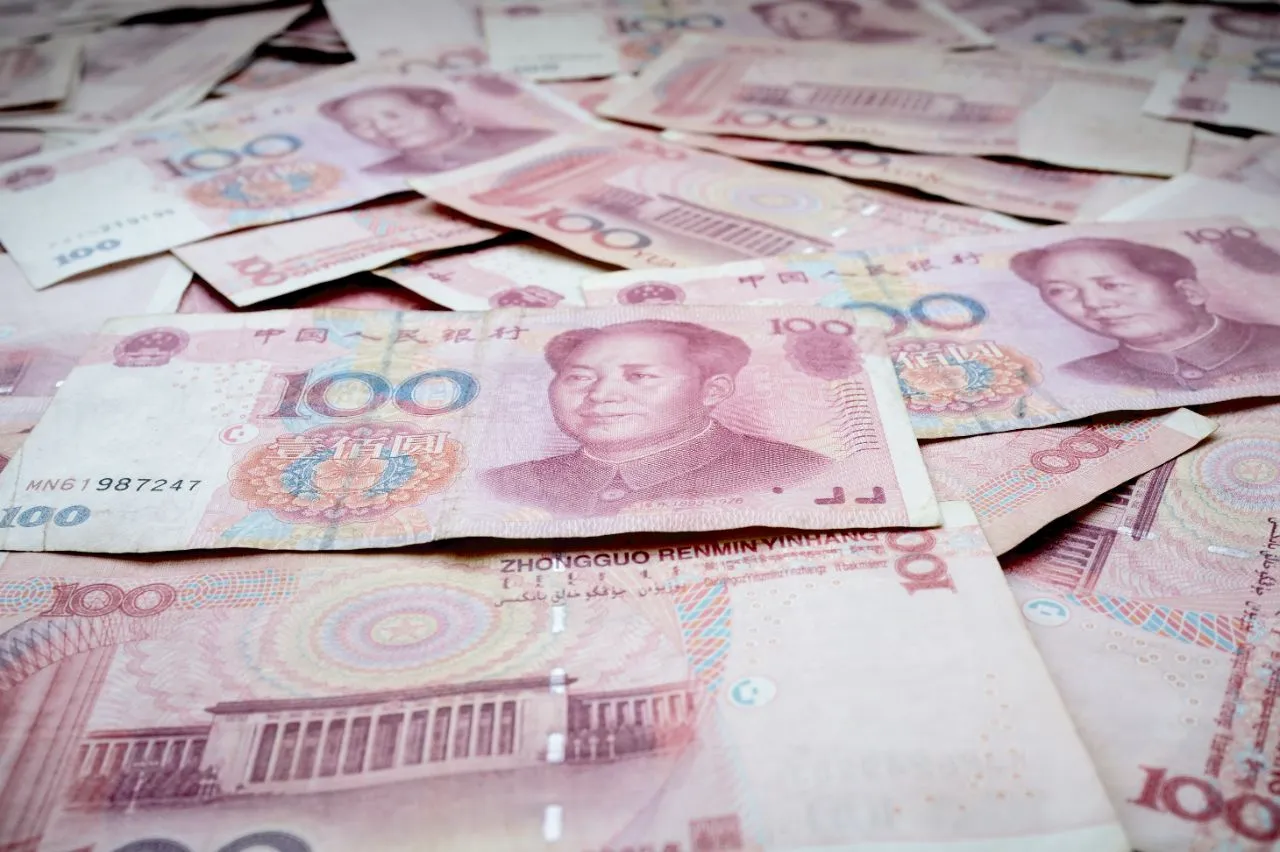
The Chinese authorities are reportedly mulling over the possibility of approving the use of stablecoins pegged to and backed by the Chinese yuan.


That’s according to a report published by Reuters on Aug. 20, with the publication citing “sources familiar with the matter.”
https://asset.coinness.com/en/news/cf8b7f92c82a395ababfae664b500dbc.webp
Photo by Eric Prouzet on Unsplash

Internationalization of the Chinese yuan

China’s State Council, its cabinet and primary administrative authority, has scheduled a review of yuan-backed stablecoins for later this month, a development that could potentially lead to their approval.


The Chinese have been leaders in recent years in the development of a central bank digital currency (CBDC), the digital yuan. The digital yuan was further along in its development than any other CBDC globally, with the Chinese making concerted efforts to bring the digital currency into use at home, with an eye toward global use for international trade.


While the U.S. dollar has enjoyed an extended period as the world’s reserve currency, the weaponization of the currency by the U.S., particularly through the application of sanctions, has led BRICS (Brazil, Russia, India, China and South Africa) nations to consider alternatives.


One of Reuters sources asserted that the Chinese authorities are now homing in on the potential to internationalize the yuan via stablecoins.


Setting the tone for stablecoin use

Members of the Chinese government leadership are expected to establish the tone for stablecoin use following their upcoming review, outlining the parameters within which the Chinese authorities will permit their use.


Reacting to this development, Robin Brooks, a senior fellow at the Brookings Institution, asserted that China’s newfound interest in yuan-backed stablecoins is a sign of “how insecure China is in the global financial system.”

Brooks added that the way to internationalize a sovereign currency is to promote the rule of law and property rights rather than pursue the use of stablecoins, which he described as “ridiculous.” 


Growing global interest

While the Brookings Institution is not directly backed by the U.S. government, the organization is nevertheless a Washington, D.C.-based think tank. Despite Brooks’ objection to the use of stablecoins, China is not the only nation to show interest in using them.

Taking to X, Raphaël Bloch, co-founder of crypto media platform The Big Whale, pointed out that increasingly, nations around the world are embracing stablecoins due to the efficiency of global currency distribution that is possible via public blockchain networks. 


Additionally, stablecoins offer an effective means of government debt financing, given that stablecoin reserves are backed by government bonds.


In the U.S., President Donald Trump has ruled out the pursuit of a CBDC. Last month, the U.S. House of Representatives passed the Anti-CBDC Act to prohibit the development of a CBDC by the Federal Reserve. Instead, Trump has said that a stablecoin regulatory bill working its way through the legislative system will ensure global dominance for the U.S. in the crypto sector.


In June a Deutsche Bank strategist claimed that the legislation would strengthen the U.S. dollar’s global dominance, with several American politicians having since expressed the same view.

Earlier this week, Japan’s Financial Services Agency (FSA) signaled that it is likely to approve the issuance of a yen-pegged stablecoin. Meanwhile, the authorities in South Korea are working on a bill related to won-pegged stablecoins.

More to Read
View All
Web3 & Enterprise·

Oct 11, 2023

Dunamu Restructures Leadership at Its Blockchain Research Arm

Dunamu Restructures Leadership at Its Blockchain Research ArmDunamu, the operator of South Korea’s largest cryptocurrency exchange Upbit, has implemented leadership changes at its blockchain research arm, Lambda256. That’s according to a report by local media outlet Decenter.Photo by Lea L on UnsplashCo-leadership structureStarting this month, Lambda256 welcomes a co-leadership structure, with tech maven Chung Ui-chung and financial specialist Park Yong-shin stepping in as co-CEOs. Each CEO holds independent signing authority. Chung previously held the role of Chief Technology Officer (CTO) at internet messaging giant Kakao, while Park Yong-shin boasts a distinguished career in public administration and finance, having passed the civil service examination and later steering the helm at Heungkuk Investment Trust Management, currently known as Heungkuk Asset Management.Tech expert and gov’t affairs specialistThe reshuffle follows the departure of former CEO Park Jae-hyun, who resigned last month. Shedding light on the division of roles, a Lambda256 official mentioned that Chung will spearhead practical endeavors, whereas Park Yong-shin will liaise with government sectors. Industry analysts perceive this strategic move as Lambda256’s intensified drive to hone its technological edge and navigate the evolving government regulations surrounding security tokens and associated blockchain ventures.Dunamu, holding a dominant 60.6% ownership in Lambda256, established the company in 2018, entrusting the leadership to Park Jae-hyun, a former employee of SK Telecom and Samsung Electronics. The subsequent year saw Lambda256 evolve into a subsidiary, rolling out blockchain platforms like Luniverse. However, financial challenges loomed, with the firm recording net losses of KRW 2.1 billion ($1.6 million) in 2020, KRW 3.7 billion in 2021, and KRW 46.5 billion in 2022.

news
Policy & Regulation·

Aug 29, 2023

Illicit Crypto Activities Estimated to Have Surpassed $100 Billion in S.E. Asia

Illicit Crypto Activities Estimated to Have Surpassed $100 Billion in S.E. AsiaA recent analysis by blockchain analytics firm Bitrace has found that over $100 billion worth of digital currency has been used in illicit crypto trading activities in Southeast Asia.Photo by Bermix Studio on UnsplashThe firm provided details of its analysis via X (formerly Twitter) on Monday. The data underscores the extensive scope of unlawful activities involving cryptocurrencies across Southeast Asia. The analysis further revealed that illicit activities involve fraudulent schemes, online gambling, and money laundering.Misuse of digital asset innovationSome of the key characteristics of digital assets include the ability to maintain anonymity, decentralization, and borderless transactions, which are generally considered positive attributes. However, the very nature of decentralized cryptocurrency means that nobody dictates who uses it or the purpose for which someone decides to use it. With that, these characteristics have rendered illegal undertakings not only more covert but also facilitated expedited transfers of pilfered resources.The silver lining, however, rests in the inherent transparency of blockchain ledgers. This quality has enabled Bitrace’s team of encryption analysts to trace funds implicated in illicit ventures through intensive on-chain analysis.Key insightsThe Bitrace research points towards the following key insights:Prevalence of Tether (USDT): The use of USDT has gained prominence in both illicit activities and gambling operations throughout Southeast Asia, with a staggering sum of over 115 billion USDT recorded in 2022 alone.Shift to Top Trading Platforms: USDT is observed to migrate from unlawful platforms within Southeast Asia towards top-tier trading platforms. Particularly favored by operators and gamblers, a significant proportion hails from the Chinese demographic, consistently gravitating towards specific exchanges.Inflow into Trading Platforms: A noteworthy development emerges as over 14.6 billion USDT prepares to traverse into trading platform accounts. The mounting risk factor diffuses across an expanding spectrum of addresses and platforms.Likely consequencesIf this blockchain analysis is found to be accurate, there are likely to be ramifications for all projects operating in the digital assets, DeFi and Web3 space. It comes at a time when the focus on the regulation of crypto-related businesses is more intense than ever before.Anti-Money Laundering (AML) and Know Your Transaction (KYT) legislation are cornerstone financial services regulations that have been established on a global basis. If these regulations are being flouted, and crypto is being used as a means to circumvent them, there’s a real risk that regulation could be applied heavy-handedly to counteract that threat of widespread illicit activity.Global crypto exchange Binance has faced criticism in this context, with a suggestion in March that its Turkey-based exchange service had been used by an organization connected with militant group Hamas for money laundering and terrorist financing.In a report last week, Binance claimed that it shared information with authorities that led to the capture of senior ISIS members. More such cooperation will likely be necessary to prevent the sector being subject to overzealous regulation.

news
Policy & Regulation·

Dec 09, 2023

Binance withdraws Abu Dhabi bid amid global licensing reevaluation

Binance withdraws Abu Dhabi bid amid global licensing reevaluationLeading global crypto exchange Binance has chosen to withdraw its bid for a trading license in Abu Dhabi, according to information gleaned from the Abu Dhabi Global Market (ADGM) register and a report published by Reuters on Thursday.Photo by Demid Druz on UnsplashChange of directionThe local subsidiary company responsible for the application, BV Investment Management Limited, initially submitted its licensing bid on Nov. 15, 2022. Much has changed in the crypto space and in the fortunes of Binance over the course of the past year, leading the firm to withdraw its application on Nov. 7.This proposed license would have granted Binance the authority to pool and invest funds from professional investors. The decision to retract the bid is part of Binance’s broader reevaluation of its overall strategy going forward. “When assessing our global licensing needs, we decided this application was not necessary,” a spokesperson from the company told Reuters.Adapting to new circumstancesMuch has changed for Binance in 2023. The company has been combating regulatory pushback in multiple jurisdictions worldwide, not least in the United States, where Binance founder Changpeng Zhao (CZ) recently reached a plea agreement with U.S. prosecutors and agreed to pay $4.3 billion for violations related to money laundering and sanctions laws.As part of that process, CZ stepped down as CEO, passing the leadership to Singaporean Richard Teng. Teng is a former regulatory executive who previously oversaw the exchange’s regional operations. A spokesperson for the company maintained that this recent decision relative to licensing in Abu Dhabi is entirely unrelated to the recently agreed-upon settlement in the United States.UAE tiesWhile Binance may be dropping its attempts to gain licensing in Abu Dhabi, in July the company acquired a Minimum Viable Product (MVP) license from the Virtual Assets Regulatory Authority in the United Arab Emirates’ (UAE) other major center, Dubai. The UAE is also the location where CZ has established his home.Some had speculated that the company had also established its headquarters within the UAE. However, CZ has always refused to disclose the firm’s global headquarters, instead suggesting that the firm has no global headquarters. Teng has taken a similar approach.Binance was originally founded in China in 2017. It then shifted its headquarters to Japan and later established a base in Malta to circumvent regulatory challenges in China. Similarly, it’s thought that regulatory scrutiny provides the rationale for the company’s ongoing stance in refusing to confirm the location of its corporate headquarters.Despite regulatory challenges, Binance had previously expressed a focus on expanding its operations in the Middle East, known for its crypto-friendly environment and specific regulatory frameworks. Binance holds various crypto licenses from regulators in the region. In May of last year, it acquired a Category 4 crypto-asset service provider (CASP) license from the Central Bank of Bahrain.The exchange maintains registrations and licenses across Europe, Asia and other regions. It’s had mixed fortunes in its endeavors over recent months, driven out of some markets while making in-roads in others. Earlier this week, its Binance Japan subsidiary became fully operational. Last week, regulators in the Philippines moved against the company due to regulatory irregularities.

news
Loading