Top

Korea’s Virtual Asset User Protection Act to Take Effect in July Next Year

Policy & Regulation·July 06, 2023, 3:24 AM

The Virtual Asset User Protection Bill was passed during the South Korean National Assembly’s plenary session last Friday, according to a report by news agency Newsis. The legislation aims to safeguard customer assets, establish regulations against unfair trading practices, and enforce penalties. The act is scheduled to take effect one year after its passage.
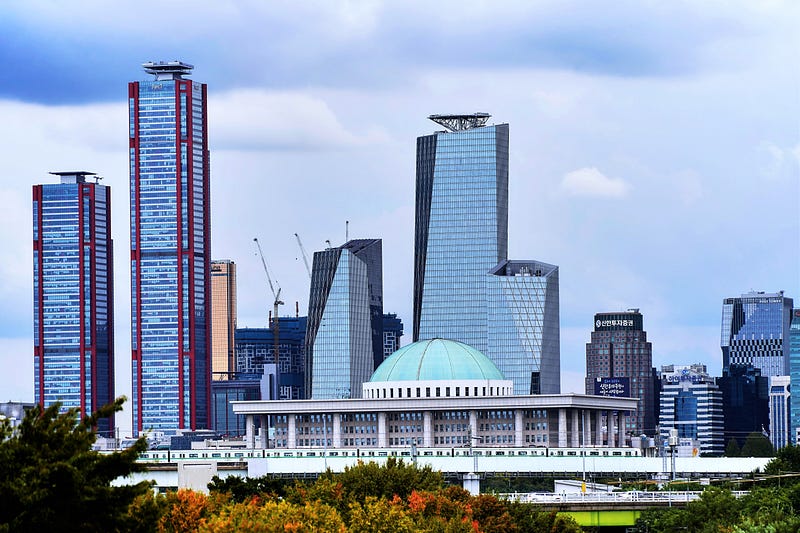
Photo by KS KYUNG on Unsplash


Definition of virtual assets

Under the act, a virtual asset is defined as a digital representation of economic value that can be digitally traded or transferred. It’s important to note that central bank digital currencies (CBDCs) are not considered virtual assets. Virtual assets with characteristics of securities will initially fall under the jurisdiction of the Capital Market Act.


Roles of Korea’s central bank

The act grants the Bank of Korea (BOK) the authority to request data and information from virtual asset service providers (VASPs). This provision is deemed necessary for the Korean central bank to formulate monetary and financial policies, despite virtual assets not being equivalent to traditional currencies.


Responsibilities of VASPs

Moreover, VASPs are obligated to segregate users’ virtual assets from their own holdings. VASPs are also required to reserve the same type and quantity of virtual assets entrusted by users and maintain a certain proportion of these assets in a cold wallet, which is an offline storage solution.

Unfair trading practices will be regulated in a similar manner as outlined in the Capital Market Act. The act specifically prohibits the use of undisclosed information, price manipulation, fraudulent transactions, and trading of self-issued virtual assets. VASPs are barred from suspending deposits and withdrawals without legitimate reasons. They are also mandated to monitor suspicious transactions and take appropriate measures to safeguard users. Any suspected unfair trading practices must be promptly reported to financial authorities. Violators of these rules may face criminal penalties, liability for damages, and potential class action lawsuits.


Powers of financial authorities

The act also clarifies the powers of financial authorities in supervising, inspecting, and taking action against virtual asset operators. Unfair trade practices can result in imprisonment for more than one year (up to 10 years for violations related to self-issued virtual assets) or fines ranging from three to five times the illicit gains. Assets acquired through unfair trade practices will be confiscated, or an equivalent value will be charged if confiscation is not feasible.


Impact on crypto investigations

The absence of legislation directly addressing unfair trading practices in the virtual asset market has posed challenges for prosecutors. They had to rely on existing statutes related to fraud, the capital market, and financial investments. Once the new act takes effect, prosecutors will no longer need to determine whether a virtual asset qualifies as a security or not.

Regarding this development, a prosecutor told local legal news outlet Law Times that the implementation of the new act will escalate prosecutorial investigations into cryptocurrency incidents.

Meanwhile, the individuals behind the crash of Terraform Labs’ stablecoin TerraUSD and its sister coin Luna will not be subject to this act due to the legal principle of nulla poena sine lege, which prevents the retrospective enforcement of criminal laws. Do Kwon, co-founder of Terraform Labs, was recently sentenced to four months in prison by a Montenegrin court for passport forgery after being arrested in March. The other co-founder, Daniel Shin, has been indicted by prosecutors in Korea.

More to Read
View All
Markets·

Mar 17, 2025

North Korea becomes major nation-state holder of Bitcoin following hack

While South Korea’s central bank has opted not to accumulate Bitcoin (BTC) at a nation-state level, North Korea has become a major holder of the leading crypto asset, albeit in a very unconventional way. The Democratic People's Republic of Korea (North Korea) is believed to currently be in possession of 13,518 BTC. That’s according to data compiled by the blockchain analytics firm Arkham Intelligence. Arkham has labeled the holding as belonging to the notorious North Korean hacking organization Lazarus Group. It’s been alleged by many observers over recent years that Lazarus is controlled by the North Korean government. Photo by Vasilis Chatzopoulos on UnsplashOn this basis, it would appear that North Korea now has a larger Bitcoin holding than the Bitcoin-friendly jurisdictions of Bhutan and El Salvador. The Kingdom of Bhutan holds 10,635 BTC through Druk Holdings and Investments (DHI), the commercial arm of the Royal Government of Bhutan.  Meanwhile, El Salvador holds 6,119 BTC. Bhutan has been accumulating Bitcoin as a consequence of Bitcoin mining activity carried out by the government in partnership with Singapore-based Bitcoin mining firm Bitdeer and others within the Asian country over recent years. El Salvador made a commitment to buy Bitcoin on an ongoing basis following its recognition of the digital asset as legal tender back in 2021. Based on Bitcoin pricing at the time of writing, Arkham’s data suggests that North Korea currently holds Bitcoin with an overall value of around $1.14 billion. It’s believed that North Korea’s overall holdings have been bumped up recently following a $1.4 billion hack of global crypto exchange Bybit last month. According to crypto data analysis firm Coin Metrics, the hack stands as one of the largest of all time.  Arkham’s data suggests that North Korea now has the third largest nation-state holding of Bitcoin, with the U.S. in first place, with 198,109 BTC, and the UK next with a holding of 61,245 BTC. Besides Bitcoin, the Lazarus Group is understood to be sitting on ETH, BNB, DAI and BUSD worth in the region of $30 million. In the immediate aftermath of the hack, the hackers moved to swap out some of the stolen Ether (ETH) for Bitcoin via the THORChain decentralized liquidity protocol. South Korea not building Bitcoin reserveWhile North Korea appears to have accumulated Bitcoin at the nation-state level through nefarious means, the Republic of Korea’s (South Korea) central bank has given an indication that it currently has no plans to accumulate Bitcoin.  According to a recent local media report, the Bank of Korea (BOK) responded in writing to a query from a Korean parliamentarian, outlining that there is no plan currently to develop a Bitcoin reserve or to stockpile Bitcoin at a national level.  The BOK is understood to have cited Bitcoin’s price volatility as a major concern. Additionally, the central bank outlined that Bitcoin doesn’t conform to the International Monetary Fund’s (IMF) guidelines relative to foreign exchange reserve management.

news
Policy & Regulation·

Sep 01, 2023

KISA and Ministry of Science and ICT Launch Blockchain Program for Innovation

KISA and Ministry of Science and ICT Launch Blockchain Program for InnovationThe Korea Internet and Security Agency (KISA) and the Ministry of Science and ICT announced on Thursday that it held an initiation ceremony for the 2023 Blockchain Nuridan — an annual program aimed at recruiting beta testers for blockchain services to foster an ecosystem for blockchain innovation.Photo by Shubham Dhage on UnsplashPublic participation in advancing blockchain in KoreaNow in its fifth year, Blockchain Nuridan offers hands-on experience in blockchain services in order to raise public awareness of blockchain technology and businesses and gather feedback on how to improve these services.This year, 150 citizens who have a high level of understanding of the industry, such as blockchain professionals, university students majoring in blockchain, and more, have been selected to test and experience various services from twelve different blockchain projects, then provide comments and feedback for improvement. They will also be responsible for choosing services to be beta tested next year as well as sharing their reviews of the services on their social media accounts.Fostering collaboration and engagement“Together with the Blockchain Nuridan, KISA will do our best to enhance the competitiveness of companies participating in blockchain projects and provide services that will bring convenience to people’s lives,” said Kwon Hyun-oh, Head of the Digital Industry Division at KISA.At the latest initiation ceremony, the citizens received certificates for their participation and were issued non-fungible token (NFT) badges. There was also an information session outlining the details and role of the program.

news
Web3 & Enterprise·

Sep 18, 2025

Credit Saison launches $50M blockchain fund, deepening push into emerging markets

Credit Saison, one of the largest credit card issuers in Japan, is accelerating its global venture strategy with the creation of Onigiri Capital, a new fund targeting early-stage startups building on blockchain technology. Set up in Singapore last month through Credit Saison’s corporate venture arm, Saison Capital, the vehicle is aiming for up to $50 million in commitments and will run for 10 years, with an optional two-year extension. The fund has already secured $35 million toward its target.Photo by Markus Winkler on UnsplashBuilding on a fintech track recordThe initiative is part of Credit Saison’s broader plan to expand in emerging markets and spur innovation in financial services, drawing on Saison Capital’s track record. Established in 2019, the venture arm has backed fintech startups across Asia and, since 2021, has increasingly focused on blockchain-based finance, investing in more than 40 companies. The firm said those investments laid the groundwork for Onigiri Capital, which will also enable other financial institutions to invest alongside Credit Saison in promising blockchain ventures. Onigiri Capital will concentrate on five areas: stablecoins, payments, asset tokenization, decentralized finance (DeFi), and financial infrastructure. The fund will invest primarily at the seed and early stages, with an emphasis on long-term growth. Managing the fund are Qin En Looi, a partner at Saison Capital involved in over 40 blockchain investments, and Hans de Back, a venture investor with more than two decades of experience. Cross-border stablecoin pilotThe launch comes as Japan steps up efforts in digital assets beyond investment alone. According to Electronic Times, the first phase of “Project Pax,” a cross-border stablecoin remittance pilot involving financial institutions in Japan and South Korea, concluded successfully last week. Participants were Progmat—a tokenization platform backed by a consortium of major institutions, including MUFG—along with Datachain and Shoko Chukin Bank from Japan, and Shinhan Bank, NH Nonghyup Bank, and Kbank from South Korea. Fair Square Lab and Korea Digital Asset Custody helped develop an application programming interface (API) for the trial. The pilot demonstrated the feasibility of a network that converts fiat currency into stablecoins for on-chain transfers and then back into local currency at the destination, an approach expected to reduce the time and cost of cross-border payments. The results add momentum to Japan’s bid to modernize financial infrastructure, a backdrop that Onigiri Capital aims to capitalize on as it deploys capital into the sector. 

news
Loading