Top

Korea Investment and Securities Completes the Construction of Security Token Infrastructure

Web3 & Enterprise·September 25, 2023, 2:48 AM

Korea Investment and Securities (KIS) recently announced that it has become the first securities firm in South Korea to successfully establish an infrastructure for security token offerings.

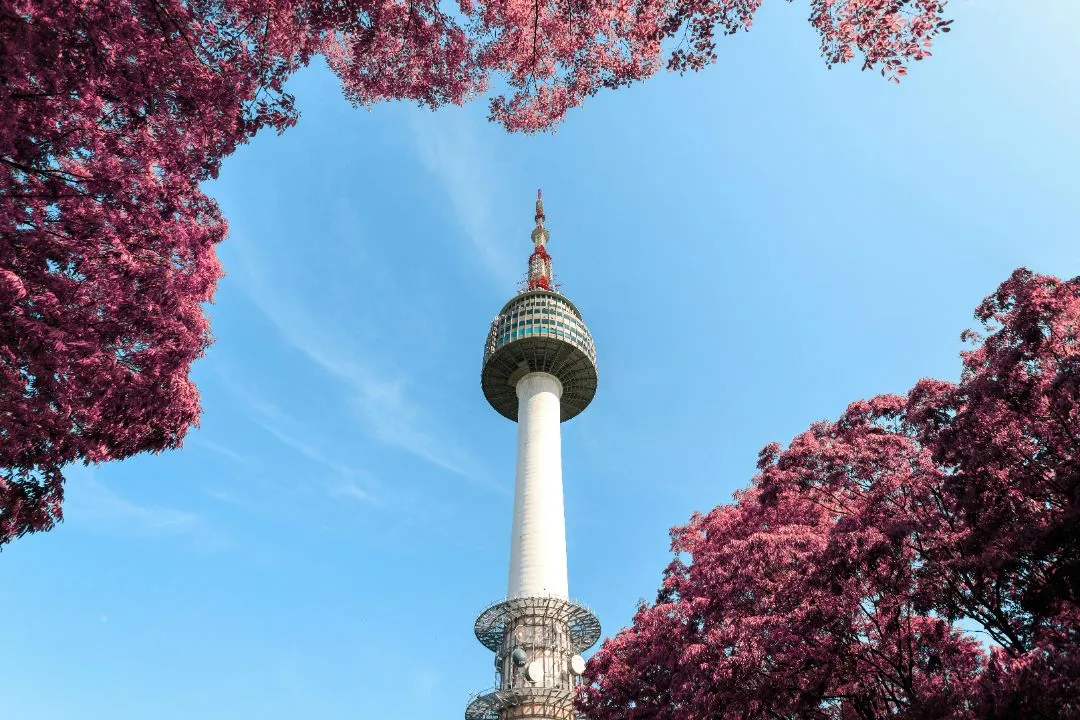
Photo by Joshua Sortino on Unsplash


Real-world assets

Security tokens are a new class of securities that are based on distributed ledger technology, allowing individuals to invest in real-world assets (RWAs) that can be tokenized. Such assets include real estate, ships, airplanes, and artworks.

In March, KIS initiated a security token consortium named “Korea Investment ST Friends,” collaborating with Internet-only banks KakaoBank and Toss Bank, AI company Kakao Enterprise, and blockchain developer Open Asset. Since May, the consortium has been diligently working with the principal objective of constructing an infrastructure leveraging distributed ledgers. Consequently, the group has finalized the development and testing of a system that manages the entire trajectory of security token projects, from issuance to liquidation.


Cloud system

Specifically, KIS has built its infrastructure on a cloud network, bearing in mind that the regulatory framework for security tokens is still in development. This cloud system is capable of adapting to regulatory modifications and implementing improvement updates. Moreover, it utilizes an agile development approach to encourage rapid decision-making and productive collaborations, enhancing time efficiency.


Compatibility with the traditional system

The newly established security token infrastructure is also compatible with the traditional security trading system. Achieving this compatibility posed numerous technical challenges as the new system operates on distributed ledgers, whereas the existing one relies on centralized servers.

KIS is preparing to file patents for some of the technologies incorporated into the new system. These technologies encompass the payment of dividends through smart contracts, assurance of immediate settlements using deposits on distributed ledgers, and the management and safeguarding of personal information. By demonstrating the infrastructure’s capability and stability, the securities firm aims to gain a technological edge.

Choi Seo-ryong, the head of the platform division at KIS, expects the new infrastructure to mark a significant milestone as distributed ledger technology merges with traditional finance. He further mentioned that the securities company will discover blue-chip assets meeting investor needs while committing to the stable establishment of the regulatory framework and the protection of investors.

Moving forward, ST Friends will continue to enhance the stability and functionalities of the infrastructure through a series of field tests related to the entire process of security token products. Aiming to construct a security token ecosystem, the group will also concentrate on developing products by collaborating with various firms, including Korean content investment platform Funderful and real estate trading platform Valuemap.

More to Read
View All
Policy & Regulation·

Oct 05, 2023

KDIC Seizes Crypto from Debtors Linked to Losses at Financial Firms

KDIC Seizes Crypto from Debtors Linked to Losses at Financial FirmsDuring the first half of this year, the Korea Deposit Insurance Corporation (KDIC) tracked the cryptocurrency holdings of 1,075 individuals and debtors responsible for causing losses at financial entities, including savings banks, according to documents obtained by local news outlet Herald Economy, from the office of lawmaker Kim Han-kyu, a member of the National Assembly’s National Policy Committee. From this scrutiny, KDIC identified 29 wrongful cases and proceeded to confiscate cryptocurrencies in 16 of those instances.KDIC is a semi-state body that has been instrumental in tracing and recovering assets from culpable employees at troubled financial firms and debtors in arrears. Meanwhile, methods for hiding wealth have become more sophisticated, typically unfolding behind the curtain.Photo by Georg Bommeli on UnsplashFirst crypto seizureOut of these individuals, 900 had taken out loans of at least KRW 3 billion ($2.2 million) from beleaguered financial institutions, while the remaining 175 were employees of these institutions, held responsible for their failures. This occasion represents the KDIC’s first seizure of virtual assets.Until recently, the KDIC struggled to reclaim hidden assets funneled into cryptocurrency exchanges, given their limited authority to seek documentation. KDIC’s purview mainly extended to requesting information from public institutions, banks, insurance companies, and securities firms. However, KDIC has now found a way to seize crypto assets by investigating the bank accounts linked to these exchanges. In Korea, crypto exchanges facilitating Korean won trades are legally mandated to secure real-name accounts from banks.Call for expanding KDIC’s authorityGiven the evidence of using cryptocurrencies to conceal wealth, many suggest that amendments to the Depositor Protection Act are necessary, enabling KDIC to directly request relevant data from exchanges and recover more hidden assets effectively.Furthermore in August KDIC secured a court order allowing them to liquidate these assets. Following this successful confiscation, the debtors’ cryptocurrencies have been frozen in their wallets, rendering them unresponsive to any market shifts. Discussions are now underway regarding the method of liquidating the debtors’ cryptocurrencies at market value on exchanges. This includes deliberations on whether KDIC will assume ownership of the cryptocurrencies and directly proceed with their sale.In a chat with Herald Economy, Lawmaker Kim emphasized the need for KDIC to have the authority to access information from virtual asset service providers. This would enable them to more effectively retrieve assets from responsible debtors. Kim further stated that such steps would enhance both the efficiency of debt collection and overall market fairness.

news
Web3 & Enterprise·

Oct 24, 2023

GRVT Debuts zkSync’s Inaugural ‘Hyperchain’

GRVT Debuts zkSync’s Inaugural ‘Hyperchain’GRVT, the hybrid crypto exchange incorporated in the British Virgin Islands, is all set to debut as zkSync’s inaugural “hyperchain,” marking a significant milestone in the zkSync ecosystem’s evolution.zkSync represents Ethereum’s second layer solution offering cheaper and faster transactions.Photo by Shubham Dhage on UnsplashCombining CEX and DEX qualitiesPronounced “gravity,” GRVT is an innovative platform that attempts to seamlessly blend the advantages of centralized and decentralized exchanges. It promises users a Robinhood-like experience while integrating self-custodial features akin to Uniswap-style exchanges. Matter Labs, the developer brains behind zkSync, shared news of GRVT's imminent project milestone in an interview with The Block.The introduction of GRVT as the first Hyperchain within the zkSync ecosystem has broadened the horizons of potential applications for this technology, according to Matter Labs. The project stated:“There is nothing like GRVT being built, not in the zkSync ecosystem nor outside of it. By being able to design and deploy custom hyperchains connected through hyperbridges, teams like GRVT’s can build entirely new use cases.”The ability to design and deploy custom hyperchains connected via hyperbridges opens the door to entirely new use cases, affording projects like GRVT the freedom to explore innovative possibilities.A layer 3 ValidiumGRVT will play a role as a Layer 3 Validium within the zkSync ecosystem. Validiums are Ethereum scaling networks that bear similarities to zk-rollups found in Layer 2 solutions. The critical differentiator is in how they handle data. Zk-rollups maintain data on-chain, whereas Validiums securely store it off-chain. This approach enhances user security by safeguarding against front-running and market manipulation.GRVT’s alpha version is set to make its debut next month, followed by the mainnet release in the first quarter of the upcoming year. Promising a transaction speed of up to 600,000 trades per second and less than two milliseconds of latency, GRVT leverages zkSync’s “horizontally scaling” infrastructure to deliver enhanced performance.Explaining the concept of horizontally scaling, Hong Yea, GRVT’s co-founder and CEO, told The Block:“Horizontally scaling means to deploy additional underlying pairs as new hyperchains. Say BTC/USDT perpetual futures is one hyperchain and so on. And we can look to add other infrastructure components like this as new hyperchains to scale throughout, as they can interoperate. This allows high-frequency traders to trade more efficiently with high transactions per second similar to a central exchange.”Token launchGRVT enjoys the backing of CMS Holdings, Hong Kong’s digital assets wealth manager Metalpha, alongside Matter Labs and others. Yea founded the company alongside CTO Aaron Ong and CCO Matthew Quek. Although incorporated in the British Virgin Islands, the firm employs people who are based in Hong Kong, the UK, Lithuania, and Singapore.It recently disclosed that it had successfully raised $7.1 million in pre-seed and seed funding in an equity with a token warrant round, achieving a $39 million post-money valuation. The launch of GRVT’s token is anticipated in 2024.GRVT is also making a concerted effort to obtain trading licenses in various jurisdictions. Currently, it has attained a virtual asset service provider (VASP) license in Lithuania, with work ongoing to achieve licensing in Bermuda. The firm hopes to then expand in Europe and the Middle East going forward.

news
Web3 & Enterprise·

Oct 11, 2023

Report by Xangle and Tiger Research Explores Indonesia’s Web3 Potential

Report by Xangle and Tiger Research Explores Indonesia’s Web3 PotentialIn partnership with South Korean crypto data platform Xangle, Web3 consulting firm Tiger Research has released a report focusing on the Web3 market in Indonesia. This collaborative project also featured contributions from Jakarta-based blockchain game provider Avarik Saga and Hong Kong-headquartered metaverse company Animoca Brands.In the process of crafting this paper, teams from Tiger Research, Xangle, Avarik Saga, and Animoca Brands spent a week in Indonesia, conducting interviews with local experts.Photo by Nick Agus Arya on UnsplashPositive factorsThe report assesses Indonesia’s Web3 market as having significant potential. It highlights factors such as the country’s status as the world’s fourth-largest population, a youthful demographic with a median age of 30, political stability, and favorable policies towards Web3 technologies. The Indonesian government has adopted a favorable approach to the Web3 industry, providing a range of incentives to boost the growth of the Web3 gaming sector. Additionally, they have taken the initiative to establish a dedicated committee for the blockchain sector within the Indonesia Financial Services Authority (OJK).Crypto exchanges driving growthAs per the report, the Indonesian market is primarily propelled by cryptocurrency exchanges, with over 30 exchanges currently in operation. These exchanges serve a customer base of approximately 10 million individuals, which accounts for around 4% of the country’s population. This is comparable to the number of investors on the Indonesia stock exchange.Several challengesMeanwhile, the paper also highlighted several areas where the world’s largest archipelagic state faces challenges. One of these challenges is its non-fungible token (NFT) market, which has seen a consistent decline in recent months, hitting an all-time low. It was found that most individuals prefer global NFT marketplaces over local ones. Furthermore, concerning the development of the Web3 ecosystem, the shortage of blockchain developers has prompted startups to seek development services overseas.

news
Loading