Top

Chinese Nationals Detained in Crypto Mining Clampdown in Libya

Policy & Regulation·June 24, 2023, 12:11 AM

Authorities in Libya have detained 50 Chinese nationals suspected of involvement in an illicit crypto mining operation in Zliten, a city located 160 kilometers east of the Libyan capital of Tripoli.

The attorney general’s office in Libya made the announcement on Friday, revealing that the individuals were caught operating a cryptocurrency mining farm within an abandoned iron factory.
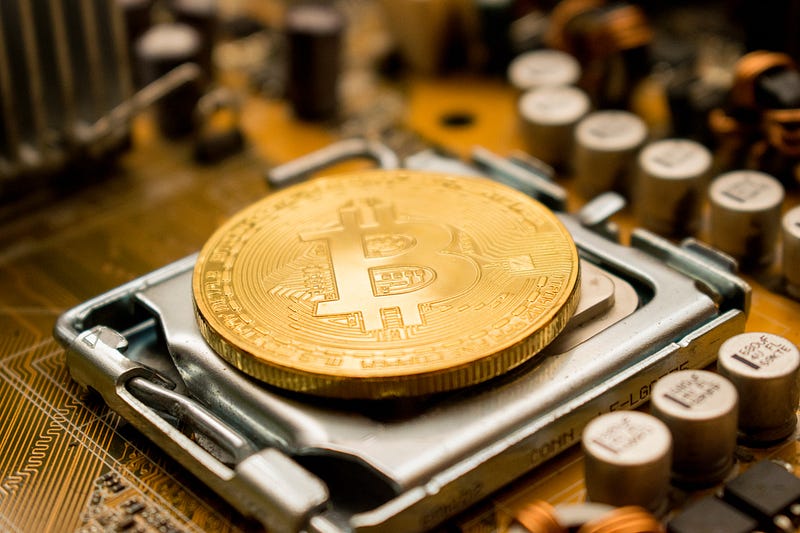
Photo by Dmitry Demidko on Unsplash


Mining operation dismantled

Photos and videos released by the office of Attorney General Siddiq Al-Sour showcased the dismantling process of the extensive mining systems discovered in Zliten.

This is not the first instance of Chinese miners being detained for crypto mining activities in the North African country. The development follows the recent arrest of ten other Chinese nationals in the city of Misrata on the Mediterranean coast, as well as at two sites within the capital, Tripoli. The individuals were apprehended on Wednesday while being caught “red-handed” with numerous powerful equipment used for intricate proof of work (PoW) mining calculations. The mining rigs were subsequently confiscated by the attorney general’s office.


Mining ban

Despite the official ban on cryptocurrency mining in the country, Libya has witnessed a high prevalence of such activities, with the nation recording the highest percentage of cryptocurrency mining across the African continent in 2021. It is estimated that Libya accounted for approximately 0.6 percent of global Bitcoin production during that year.

Libya’s appeal as a destination for cryptocurrency mining stems from its low electricity costs, which stand at a remarkably low rate of $0.004 per kilowatt hour. This cost is approximately 40 times cheaper than in the United States, making Libya an attractive location for miners.

While energy may be cheap, the increased demand for electricity that crypto mining brings puts a strain on what was an already vulnerable power grid in the country. That has resulted in frequent and lengthy power blackouts, particularly during the summer months.

A lack of oversight has also encouraged an influx of Chinese miners, albeit with these recent arrests, it appears that the Libyan authorities are stepping up the level of oversight and enforcement. The vast majority of Bitcoin miners were based in China up until a mining ban was enforced in 2021.


Global issue

That event led to an exodus of miners internationally. Some established themselves legally in the United States and elsewhere. The first casualty of illegal mining was Kazakhstan. The sudden arrival of miners led to its power grid coming under pressure. As a consequence, the Central Asian country clamped down on the activity, and later regulated it.

In response to these illegal activities, Libyan authorities have intensified their efforts to combat cryptocurrency mining operations. They are conducting investigations into alleged mining sites in Tripoli and Misrata, aiming to curtail these activities and mitigate the strain on the country’s electricity infrastructure.

The recent arrests highlight the ongoing challenges associated with illegal mining activities in jurisdictions globally where cheap energy can be exploited, giving rise to the need for enhanced regulatory measures to address these issues.

More to Read
View All
Web3 & Enterprise·

Aug 31, 2024

WazirX seeks moratorium as it looks to restructure its liabilities

Zettai Pte Ltd., the Singapore-based holding company that controls Indian crypto exchange WazirX through its subsidiary Zanmai India, has filed an application for a moratorium with the Singaporean High Court, under section 64 of the Insolvency, Restructuring and Dissolution Act 2018. Six months requestedIn the filing (HC/OA 861/2024), the company has pleaded with the court to be granted a six-month moratorium, which would give the firm the space and time needed to restructure its liabilities. The company laid out details of its moratorium application in a blog post published to its website on August 28. The firm outlined that a moratorium represents “ the most efficient way to address users’ cryptocurrency balances on the Platform and facilitate recovery for users.” An automatic moratorium of 30 days has effectively been granted as a consequence of the application itself, and it is up to the court if it approves the six-month moratorium that is being sought. A date for the hearing of that matter has yet to be scheduled.Photo by Palu Malerba on Pexels$234 million hack falloutWazirX has been dealing with the fallout from a $234 million hack which occurred in July. One key entity that is owed funds is Indian crypto app CoinSwitch. In an effort to get its funds back, the company has sued WazirX. Taking to the X social media platform, CoinSwitch outlined why it felt the need to take legal action. It stated: "From the day of the incident, we have tried to be in constant touch with the WazirX team, seeking recovery of the funds that are stuck on their exchange. However, our efforts have not come to fruition." In a follow-up tweet, CoinSwitch assured its own users that its exposure to WazirX has no impact on user balances. The company has WazirX exposure that amounts to 2% of its overall user funds. That exposure is reduced further if WazirX’ claim that only ERC-20 tokens were affected is taken on board, accounting for 1% of CoinSwitch user deposits. White KnightWazirX co-founder Nischal Shetty spoke to the notion of a “white knight” in an affidavit submitted under the Zettai name to support the application. He outlined that WazirX is in talks with 11 crypto exchanges and has signed three non-disclosure agreements (NDAs). The company has also received offers for financing and for partnering with Zettai, the WazirX parent company. WazirX has outlined that it has set aside $12 million in digital assets to cover legal and associated costs that the company anticipates incurring as part of its restructuring efforts. Matters are further compounded by the fact that a cloud hangs over the ownership of the company. Shetty has claimed that he is no longer an owner of the exchange. In 2022, he wrote that Binance had acquired WazirX. Around the same time frame, Binance’s Changpeng Zhao (CZ) outlined that Binance didn’t control WazirX systems.  India’s economic intelligence agency, the Enforcement Directorate, has claimed in the past that Shetty has gone out of his way to obscure the ownership structure by way of a complex chain of companies in Singapore.

news
Policy & Regulation·

Jun 16, 2023

Tether Critics Point to Previous Chinese Securities Backing

Tether Critics Point to Previous Chinese Securities BackingUSDT stablecoin issuer Tether (USDT) has long faced persistent scrutiny and criticism due to the lack of transparency surrounding the assets backing their digital currencies. The latest allegations come in the form of a report by Bloomberg on Friday suggesting that the world’s largest stablecoin was once backed by securities issued by Chinese companies.Photo by Manuel Joseph on PexelsNYAG releases documentsThese findings were based on documents made public by the New York Attorney General (NY AG). The documents disclosed that Tether had listed securities issued by China’s state-owned Industrial and Commercial Bank of China, China Construction Bank, and Agricultural Bank of China as part of its reserves backing the USDT stablecoin.Rumors about USDT’s exposure to Chinese securities have circulated for a number of years. In 2021, a Bloomberg research report revealed that Tether’s reserves reportedly included billions of dollars in short-term loans to China-based companies, as well as a significant loan to the collapsed crypto lender Celsius Network.However, in February 2021, Tether reached a settlement with the NY AG’s office over accusations of providing misleading information about its reserves and losses. To address these concerns, Tether handed over documents such as letters, bank accounts, reserve holdings, and wallet addresses through the law firm Steptoe.Attestation reportTether’s latest attestation report for Q1 2023, released on May 10, offered further details about its reserves. According to the report, Tether’s reserves were valued at $81.8 billion at the end of the quarter, a significant increase from the earlier period of $14.8 billion. These reserves consisted of $53 billion in US Treasuries, $1.5 billion in Bitcoin, and $5.3 billion in loans described as “over-collateralized.”The disclosure of Tether’s previous backing by Chinese securities adds another layer of complexity to the stablecoin landscape, raising questions about the risk exposure and potential impact on the stability of these digital assets. Using Chinese commercial paper to back a US dollar stablecoin is a risky endeavor.It raises the same issues as we’ve seen with the plethora of crypto lenders that went bankrupt in 2022. In those cases, they were using customer money to speculate and turn a profit. That’s fine when it works but when it goes wrong, it is customers who suffer. In its defense, Tether has stated that it only held A1 rated banking sector Chinese commercial paper in 2022 in state-owned Chinese companies like Industrial & Commercial Bank of China Ltd., China Construction Bank Corp., and Agricultural Bank of China Ltd. It reduced this exposure to zero later that year.With the cryptocurrency community and regulators seeking greater transparency and accountability, the industry is likely to face increased scrutiny and calls for enhanced regulations to ensure the integrity of stablecoin operations moving forward.As regulators continue to assess and navigate the evolving crypto market, it remains to be seen how the industry will address these concerns and establish clearer guidelines for stablecoin issuers to ensure the trust and confidence of market participants.

news
Web3 & Enterprise·

Jun 23, 2023

Lotte Group Leaps into the NFT Market to Boost Customer Engagement

Lotte Group Leaps into the NFT Market to Boost Customer EngagementThe Lotte Group, a prominent industrial conglomerate in South Korea, has embraced the realm of non-fungible tokens (NFTs) in its efforts to boost customer engagement.Building the brand’s metaverseIn a collaborative endeavor, Lotte’s affiliates, Daehong Communications and Lotte Hotels and Resorts, have come together to introduce Magic Ride NFTs. These NFTs enable their owners to contribute to the development of LOLO:VERSE, Lotte’s metaverse where virtual meets reality. As community members, holders of Magic Ride NFTs will have the opportunity to engage in decision-making processes and contribute to the design of project roadmaps for LOLO:VERSE.Photo by Markus Winkler on PexelsCooperation with NFT marketplaceMagic Ride NFTs will be made available in three different types through Korea’s largest NFT trading platform, Pala, starting from June 30. Type A NFTs will feature tickets to Lotte World, the group’s renowned amusement park. Type B will offer 60,000 KRW ($46) worth of points for use at Lotte Duty Free. Type C will include an electronic voucher worth $50, redeemable at Lotte Hotels. The price of each of these NFTs is set at 50,000 KRW ($38) or an equivalent value in MATIC tokens.Daehong Communications, the advertising agency affiliate of the Lotte Group, has been actively establishing its presence in the Web3 landscape by fostering partnerships with various blockchain enterprises. The collaboration between Daehong and Pala on the Magic Ride NFTs marks the first joint project between the two entities. Pala’s launchpad offers a user-friendly experience, particularly catering to individuals who are new to purchasing and utilizing NFTs.

news
Loading