Top

Abu Dhabi’s Venom Ventures Fund faces market challenges

Web3 & Enterprise·December 16, 2023, 1:15 AM

A report by The Block on Friday suggests that Abu Dhabi’s ambitious Venom Ventures Fund, heralded earlier this year with promises of $1 billion investment in Web3 startups, is facing challenges in following through on its mission.

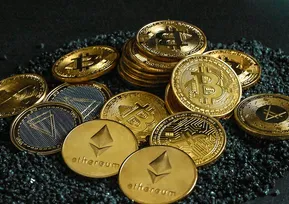
Photo by Nazar Skalatsky on Unsplash


What is Venom?

Venom is a collaboration between the Venom Foundation and Iceberg Capital, an alternative asset management company also based in Abu Dhabi. The venture was conceived by Peter Knez, former Co-Chief Investment Officer of BlackRock’s fixed income division and Mustafa Kheriba, Iceberg’s Executive Chairman.

In a tweet thread published back in August, the firm described the fund as “old money meets new, the perfect platform for leading the next iteration of blockchain development.” The fund outlined that its approach incorporated venture capital, the offering of a project incubator and a specialist advisory service.

Knez has set out lofty ambitions for the fund, stating:

“The vision is to drive billions of users into our layer one Blockchain technology by being institutional quality and regulated, and by being such we can actually partner with the government and institutions to help them develop framework for stable coins, for cross-border payment system for tokenization of real world assets and thereby help web2 businesses and citizens move to web3.”

At the time of its announcement, Venom Ventures boasted a $20 million investment in Nümi Metaverse and a $5 million strategic investment in Layer 1 blockchain Everscale.


Unexpected silence

Further details on deals struck since January have been scarce, although the fund was reported back in August to have been involved in a blockchain-based carbon credits project, backed by the United Arab Emirates (UAE) Ministry of Climate Change and Environment (MOCCAE).

According to The Block, there has been an unexpected silence from the venture as its first year in business comes to a close, despite the initial buzz in the crypto community that greeted the launch of the fund.

Venom Ventures positioned itself to cover the entire venture spectrum, from seed to late-stage investments, even offering grants ranging from $25,000 to $200,000. However, a closer look reveals a stark contrast between the fund’s ambitious promises and its current progress. The fund’s website lacks a portfolio section, displaying only a “coming soon” notice.


Blockchain mainnet yet to launch

The venture fund has yet to launch its Venom blockchain mainnet, according to Christopher Louis Tsu, CEO of the Venom Foundation. The lack of updates and communication has raised concerns among industry observers about the fund’s overall progress and its ability to fulfill its investment commitments.

The broader context of the crypto market adds to the challenges faced by Venom Ventures. Q4 2023 is expected to see a significant drop in venture funding for Web3, down to approximately $2.7 billion from the peak of $13.5 billion in Q1 2022. Market events have left VCs cautious, with notable instances of significant investments being marked down to zero.

Amidst these challenges, crypto startups have turned to the Middle East for capital. However, some industry insiders caution that the perceived ease of accessing capital in the Middle East might be a mirage. With that, it remains to be seen whether the fund can revive its initial momentum and deliver on its promise to fuel the growth of Web3 startups in the ever-evolving crypto landscape.

More to Read
View All
Policy & Regulation·

Oct 26, 2025

Coinbase Ventures invests in Indian exchange CoinDCX amid mixed regulatory signals

Coinbase's venture capital arm, Coinbase Ventures, has invested in the India-based crypto trading platform CoinDCX, the American crypto exchange company said on its official blog. This move follows Coinbase's direct entry into the Indian market earlier this year. In March, Coinbase registered with the Financial Intelligence Unit–India (FIU-IND), announcing plans to launch products for retail investors.Photo by PiggyBank on Unsplash100 million crypto holdersWhile the investment sum remains undisclosed, Coinbase highlighted CoinDCX's strong performance indicators. As of July 2025, the Mumbai-headquartered exchange reported a user base of 20.4 million, accounting for about one-fifth of the country’s estimated 100 million crypto holders. CoinDCX also recorded $141 million in annualized group revenue, $165 billion in annualized transaction volumes, and $1.2 billion in assets under custody. The investment targets a market with high adoption. According to Chainalysis’ 2025 Global Crypto Adoption Index, India ranked first among 151 countries studied. Regulatory uncertainty in IndiaCoinbase’s push into India, however, comes amid a complex and often contradictory regulatory environment for digital assets. On one hand, India maintains a cautious stance. Profits from crypto transactions are taxed at a flat 30% rate, supplemented by applicable surcharges and an additional 4% cess. Recent reforms unveiled by the Reserve Bank of India (RBI) did not mention the acceptance of crypto assets. Rather than supporting cryptocurrencies, regulators have focused on advancing the central bank digital currency (CBDC), the e-rupee, through pilot initiatives in deposit tokenization and a fintech sandbox. This conservative approach was also evident at the recent 6th Global Fintech Fest in Mumbai. According to Reuters, a handout given to speakers at the Oct. 7-9 event read, “Please avoid political, crypto, religious, or personal remarks on stage or at the venue.” On the other hand, some officials have signaled a willingness to engage. Finance Minister Nirmala Sitharaman said on Oct. 4 that India must prepare to engage with cryptocurrencies such as stablecoins, according to the Financial Times. She noted that no country can stay isolated from broader systemic shifts, possibly alluding to the pro-crypto policies emerging in the U.S. and the anticipated acceleration in adoption. Global exchanges resume operationsFurthermore, India has shown more openness to foreign crypto platforms lately. Bybit recently reinstated access to its mobile app for Indian users via the Apple App Store and Google Play. Last year, both Binance and KuCoin registered with the FIU-IND after paying penalties for earlier compliance violations. Binance was fined 188.2 million rupees (about $2.14 million), while KuCoin faced a lighter penalty of around $41,000. 

news
Web3 & Enterprise·

Dec 08, 2023

Digital wallet D’CENT and Astar Network team up to bring scalable wallet services to users

Digital wallet D’CENT and Astar Network team up to bring scalable wallet services to usersSouth Korean digital hardware wallet service D’CENT has partnered with Japan’s leading blockchain project, Astar Network, to offer users enhanced wallet scalability and seamless asset management, according to an official Medium post on Friday (local time). D’CENT will be integrated into Astar’s blockchain network.Photo by Shubham’s Web3 on UnsplashDriving blockchain innovationAstar Network is a layer 1 blockchain that supports Ethereum virtual machine (EVM) and WebAssembly (Wasm) smart contracts. Tailored to function as a centralized smart contract hub within the Polkadot blockchain ecosystem, it serves as a comprehensive platform for developers to create and deploy decentralized applications (dApps).Astar is revolutionizing blockchain for millions of users worldwide and is actively working with major South Korean companies to achieve this goal. Its newest partner, D’CENT Wallet, which currently provides cold wallet services for hundreds of users across the world, offers an easy-to-use, secure solution for managing digital assets. In particular, it boasts a convenient user experience (UX) that employs fingerprint authentication. Through the new partnership, D’CENT will become the first wallet to support Astar-zkEVM, Astar’s layer 2 scaling solution.Enhancing accessibility and interoperabilityThe two companies plan to work together to bring D’CENT’s unique services to Astar’s Japanese and global user base. Through its integration into Astar Network, the wallet now supports over 60 blockchain networks, 29 of which are EVM-compatible. Users can also store, manage and trade their ASTR tokens — Astar’s native token. This effectively removes the complicated process of managing assets across multiple blockchains.Beyond its role in asset management, the D’CENT wallet also serves as a gateway to the Polkadot ecosystem, where wallet holders can gain access to a plethora of dApps.Both D’CENT and Astar expect that their collaboration will contribute to shaping the future of blockchain transactions and fostering a more integrated blockchain ecosystem.

news
Web3 & Enterprise·

Nov 17, 2023

Binance and Gulf Energy launch digital asset exchange in Thailand

Binance and Gulf Energy launch digital asset exchange in ThailandThe world’s largest cryptocurrency exchange, Binance, has teamed up with Gulf Energy Development, a leading energy company in Thailand, to operate a digital asset exchange in the country.Photo by Than Diep on UnsplashInvitation-only launchThe new platform, Binance.th, aims to capture the growing demand for crypto services in Southeast Asia. Binance.th, which is currently in its beta testing phase, is expected to open to the public in early 2024. A filing on Wednesday by Gulf to the Thai stock exchange demonstrates that the platform has received approval from the Thai Securities and Exchange Commission to offer exchange and brokerage services for cryptocurrencies and digital tokens. The filing states:“Gulf Binance’s digital asset platform will provide digital asset exchange and digital asset broker services for both cryptocurrencies and digital tokens, prioritizing security and compliance with SEC regulations.”The platform is initially available by invitation only, and the plan is to eventually open the exchange to the general public. It’s understood that the platform will strive to provide a “globally standardized” service that will enhance the level of service in Thailand and promote the development of the country’s blockchain ecosystem.Market opportunityBinance.th enters the Thai crypto market at a time when the local leader, Bitkub, holds a dominant share of 75.4%. Bitkub benefited from the global crypto market downturn in 2022, which affected its competitors such as FTX and Zipmex.Although it has extended market share during the downturn and as a consequence of the demise of other platforms, Bitkub has also struggled with market conditions. In July its parent company Bitkub Capital Group, reduced headcount by six percent. Bitkub recorded $28.6 billion in trading volume last year, out of the total $37.94 billion generated by the top four Thai exchanges.Binance.th hopes to challenge Bitkub’s position by leveraging Binance’s global reputation and expertise in the crypto industry.Legal woesThe launch of Binance.th comes amid Binance’s legal and regulatory troubles in the U.S. and Europe. In September, the U.S. Securities and Exchange Commission (SEC) sued Binance, its U.S. subsidiary, and its founder Changpeng Zhao (CZ) for allegedly listing unregistered securities in the form of cryptocurrencies.In June, the SEC also accused CZ and Binance of illegally marketing its international platform to U.S. customers.Binance has been trying to improve its compliance and governance standards in response to regulatory scrutiny. The company has hired former regulators and executives from the traditional finance sector to lead its operations in various regions. Binance has also applied for licenses and registrations in several jurisdictions, such as the U.K., Singapore and Japan.The origins of this deal stem from a memorandum of understanding (MOU) signed between Binance and Gulf Energy in January 2022. The joint venture business which emerged acquired a digital operator license in Thailand in May of this year.By expanding its presence in Southeast Asia, Binance hopes to tap into the potential of the emerging crypto markets and diversify its revenue streams. Binance.th also marks the first bank-backed crypto exchange in Thailand, as Gulf Energy Development is partly owned by the state-owned Krung Thai Bank.

news
Loading