Top

Korean Parliament to Hold Hearing on Virtual Assets Amid Controversies

Policy & Regulation·June 15, 2023, 9:09 AM

The National Policy Committee (NPC) of the South Korean National Assembly has reached an agreement to conduct a hearing on virtual assets next month. This decision comes following discussions between the ruling and opposition parties, as reported by local news outlet Kukinews.

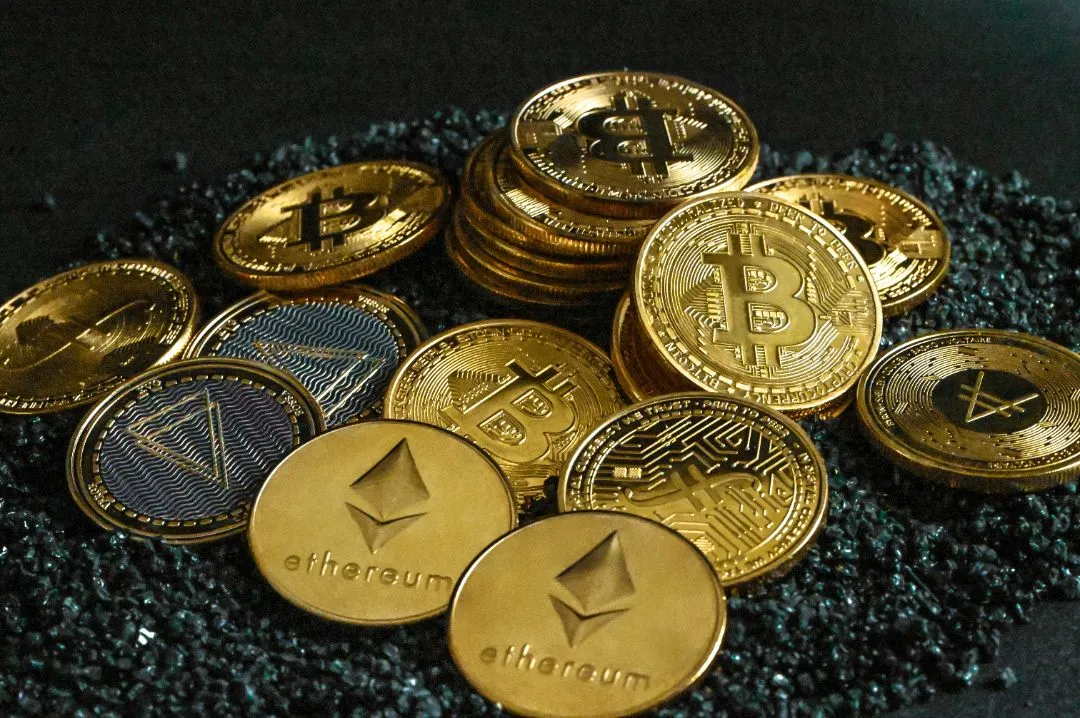
Photo by KS KYUNG on Unsplash


Hearing date

Lawmakers Yoon Han-hong and Kim Jong-min, who serve as administrative secretaries of the NPC, have agreed today to hold the virtual assets hearing on July 11. Yoon is a member of the ruling People Power Party (PPP), and Kim is a member of the opposition Democratic Party of Korea (DPK).

During a full session held this afternoon, Lawmaker Kim proposed the idea of a hearing on virtual assets, to which NPC Chair Back Hye-ryun agreed.


Growing public interest

Today’s meeting was organized to foster a better understanding of the current issues surrounding virtual assets, given the increasing public interest, particularly in light of the recent controversy involving Lawmaker Kim Nam-kook’s alleged ownership of cryptocurrency tokens and the employment of PPP leader Kim Gi-hyeon’s son in a crypto-related company.

The NPC intends to finalize the plan for the hearing on June 30, just before the plenary session on the day. The specific focus of the hearing and the participants, including witnesses, will be determined through consultations between the administrative secretaries.


More to Read
View All
Web3 & Enterprise·

Feb 19, 2025

HashKey secures $30M in funding from Chinese VC firm

A Beijing-headquartered venture capital firm has invested $30 million in Hong Kong’s HashKey Exchange. That’s according to a report published by Bloomberg on Feb. 14, citing unnamed sources understood to be familiar with the matter. HashKey’s capital injection has come from Gaorong Ventures.  The Chinese VC firm was founded in 2014, initially known as Banyan Capital before rebranding as Gaorong Ventures in 2018. The VC firm focuses on early and growth-stage investments, with a specific interest in new technology.  Gaorong has 23 IPO portfolios on its books, together with 30 projects valued at in excess of $1 billion. It has been an early-stage investor in Chinese tech firms such as Chinese shopping platform Meituan and online retailer PDD Holdings.  Last year, the company participated in a funding round for Dongchedi, the car information and trading platform belonging to ByteDance, the parent company of TikTok.Photo by Towfiqu barbhuiya on UnsplashBeyond unicorn statusIn this instance, the funds were invested with HashKey Group weighing in with a post-money valuation in the region of $1.5 billion. That puts the company well beyond unicorn status, which it achieved in a previous $100 million funding round over a year ago. At that time, HashKey didn’t disclose the names of investors other than to state that they were “prominent institutional investors” and “leading Web3 institutions.” It’s understood that the round included both existing and new investors. Surging VC investment in crypto startups This latest investment comes amid a backdrop of a surge in venture capital investment into the crypto sector. Well-known American venture investors Sequoia Capital and Andreessen Horowitz (a16z) invested almost $1.2 billion in crypto projects last month.  In 2024, $13.7 billion was invested in crypto and blockchain startups by venture capital firms, marking a 28% increase on the previous year. In Q4 2024, the United States took first place, accounting for 46% of investment into startups across the market in general. Hong Kong weighed in with 17% in second place.HashKey is also playing its own role in crypto and blockchain startup investment. HashKey Exchange’s sister company, HashKey Capital, is an institutional asset manager that also invests in crypto startups. In recent weeks, the company has invested in SignalPlus, a crypto trading software firm focused on the Asian market, and Kelpr, a Cosmos (ATOM) ecosystem wallet project. More crypto VC investment in 2025In January, HashKey Capital CEO Deng Chao told Cointelegraph that he expected more VC capital investment in crypto startups in 2025. He stated: “As we enter into a supportive macro environment driven by stimulative US policies and the formalization of crypto regulatory frameworks, these macro tailwinds are set to drive more VC investments heading into 2025.” Meanwhile, the overarching HashKey Group is positive in its outlook with regard to the crypto and blockchain sector in 2025. Last month, it outlined that it expects Bitcoin and Ethereum to surge in price, the share of the market held by decentralized exchanges (DEXs) to increase, capital inflows into the sector from institutions to grow, the approval of more crypto ETFs and further development of layer-2 networks over the course of the year.

news
Policy & Regulation·

May 22, 2025

Two Russians caught in $42M USDT cross-border transfer case in South Korea

Two Russian nationals have been referred to prosecutors in South Korea for allegedly facilitating the illegal transfer of roughly 58 billion won ($42.2 million) to Russia using USDT, a U.S. dollar-pegged stablecoin. According to a report by KBS News, the Seoul branch of the Korea Customs Service (KCS) announced the charges on May 22, citing violations of the country’s Foreign Exchange Transaction Act. The suspects, a man and a woman both in their 40s, reportedly operated an unauthorized money exchange business to carry out the transactions.Photo by Polina Tankilevitch on PexelsOver 6K transactionsAuthorities suspect the pair of repeatedly using USDT to conduct cross-border transfers between South Korea and Russia. From January 2023 to July 2023, the duo allegedly completed 6,156 illegal remittance transactions, either sending funds abroad or receiving payments on behalf of others, totaling the full 58 billion won in question. Investigators revealed that the two suspects, who hold permanent residency in South Korea and have overseas Korean status, used the messaging app Telegram to solicit clients. When transferring money to Russia, they reportedly collected funds via kiosks in convenience stores that allow users to send money without a bank account. The collected cash was then used to purchase USDT to complete the remittances. According to customs officials, the suspects would either send the cryptocurrency directly to a crypto wallet specified by the customer, or forward it to accomplices in Russia. These accomplices would then convert the crypto to cash and distribute rubles to recipients through local channels. Illicit crypto use by businesses The operation also handled export payments for South Korean businesses. The suspects reportedly accepted payments from Russian importers on behalf of Korean used car dealers and cosmetics exporters. In these cases, associates in Russia would collect ruble payments from importers, convert the funds into USDT and send the cryptocurrency to contacts in Korea. The funds were then exchanged for Korean won and deposited into the accounts of the businesses. Customs officials believe that the group’s services became particularly appealing after the start of the Russia-Ukraine war in 2022. In the wake of U.S. and international sanctions against Russia, legitimate financial channels for cross-border transactions became restricted, prompting some companies and individuals to turn to illegal alternatives. The Korean export companies involved in these transactions have been fined. The Seoul Customs Office emphasized that illegal money exchange operations are often exploited for criminal activities such as drug trafficking, voice phishing and gambling. In response, the agency committed to stronger enforcement and pledged to spare no effort in combating unlawful financial operations. Scams grow inside the borderThe surge in crypto-related financial crimes in South Korea extends beyond cross-border transactions. According to a recent report by Maeil Business Newspaper, Kakao Pay—a local mobile payment platform—has detected around 70,000 cases of malicious apps linked to virtual assets over the past month. Of those, 80% were associated with Ponzi schemes, where fraudsters lure victims with promises of high returns before disappearing with the funds. A Kakao Pay spokesperson noted that new forms of security threats are emerging alongside the rapid growth of the crypto market, adding that the company is prioritizing the development of stronger security systems. 

news
Web3 & Enterprise·

Dec 02, 2023

Antpool overtakes Foundry as largest bitcoin mining pool

Antpool overtakes Foundry as largest bitcoin mining poolAntpool, a Singapore-headquartered open access mining pool that supports ten cryptocurrencies, has recently surpassed Foundry USA to become the foremost bitcoin mining pool in terms of monthly blocks mined.That’s according to a report published by TheMinerMag, a bitcoin mining industry publication run by New York public relations firm BlocksBridge Consulting.This development indicates a shift in bitcoin mining pool dynamics since January 2022. According to Bitcoin network data, Antpool mined 1,219 blocks in November, slightly edging out Foundry USA’s 1,216 blocks. The total rewards for Antpool’s miner clients reached 8,672 BTC, excluding the 83.6 BTC designated for refunds.Photo by Norman Wozny on UnsplashBitmain affiliateAntPool is an affiliate company of leading crypto mining equipment manufacturer, Bitmain. This surge in Antpool’s hashrate aligns with Bitmain’s substantial importation of over 4,800 metric tons of Antminer S19XP and S19XP Hydro to its U.S. subsidiary in Georgia between June and November. These imports have contributed to an estimated total hashrate exceeding 37 EH/s. The exact activation status of Bitmain’s imported hashrate and whether it is utilized for its own purposes, remains unclear.Foundry USA had previously held the leading position in mining pools since early 2022, benefiting from the rise of North American mining operations following China’s crackdown in 2021. While Antpool consistently secured the second position, its hashrate began closing the gap on Foundry USA around June this year.China vs. U.S. competitive dynamicThe two companies dominate bitcoin mining. With one having a parent company headquartered in China and the other being U.S.-centric, their positioning in terms of overall blocks mined is being seen by some as a reflection of competition between entities in China and the United States in terms of bitcoin mining dominance. Addressing that dynamic in response to CoinDesk recently, CryptoQuant Web3 Analyst Bradley Park wrote:“China is aggressively mining ahead of the approval of a Bitcoin ETF. As the Bitcoin halving nears, I anticipate a competitive surge between China and the US in mining machine productivity. This is because the unit cost of mining Bitcoin is likely to escalate due to increasing power expenses and rising mining difficulty.”The bitcoin hashrate has been climbing continuously throughout 2023, reaching new all-time highs along the way.It’s worth noting that despite Antpool’s dominance in blocks mined, data from BTC.com reveals that the company’s self-reported real-time hashrate consistently lags behind Foundry USA’s over the past three months. The cause of this discrepancy remains uncertain, raising questions about variance or reporting errors affecting Antpool’s real-time hashrate.Bitmain established Antpool in 2014, and it was later spun out of Bitmain to become an independent entity in 2021. Meanwhile, Foundry is a wholly owned subsidiary of Digital Currency Group (DCG). Both Bitmain and DCG have been facing financial challenges over the course of the past year.In a separate development, Foundry took to social media platform X on Thursday to confirm that it is discontinuing support for The Graph protocol, Axelar Network, Polkadot and Flow. The firm said that the changes were decided upon in order to better align the business with its strategic business goals.

news
Loading