Top

Coinbase Wallet and TransFi partnership expands crypto accessibility in Asia

Web3 & Enterprise·May 13, 2024, 3:14 AM

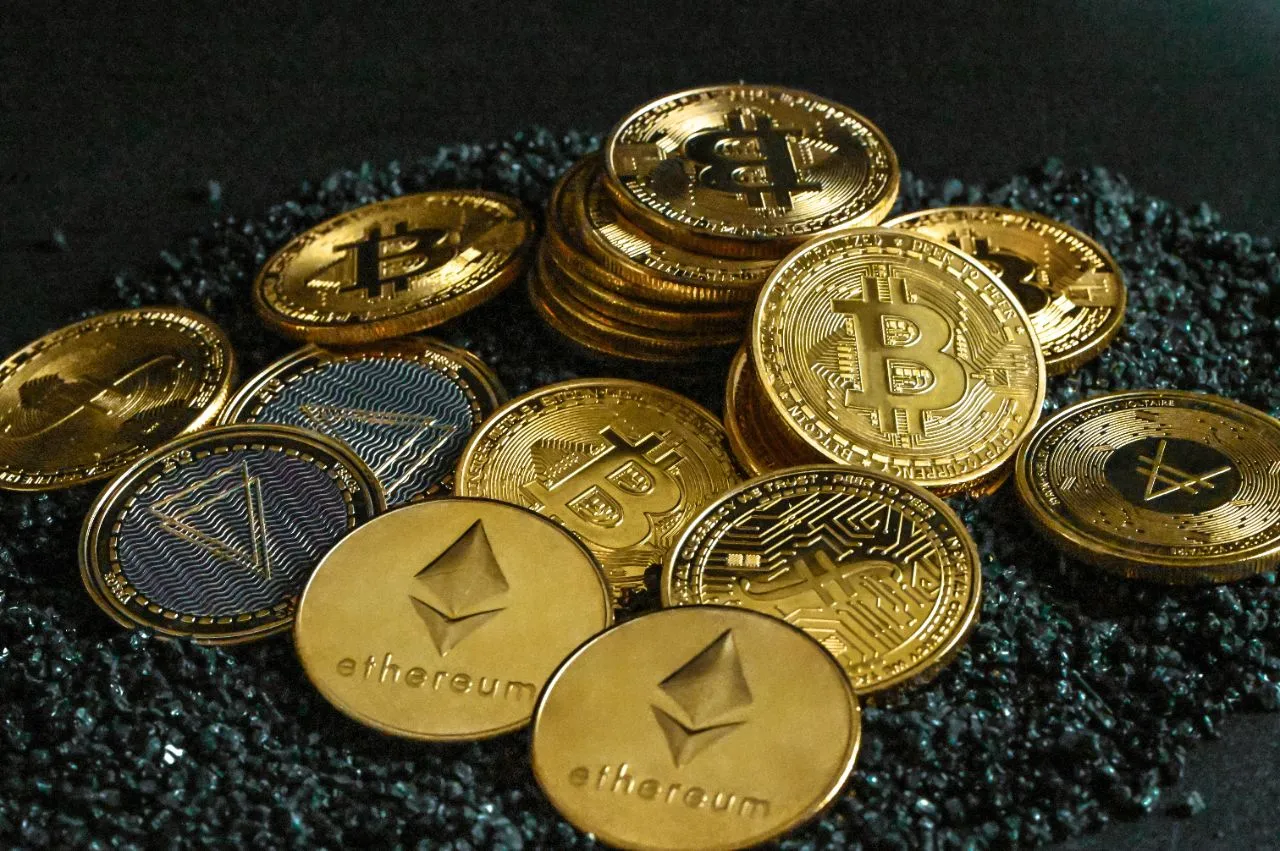
TransFi, renowned for its global payment solutions, is collaborating with Coinbase Wallet to streamline the process of purchasing cryptocurrencies, with a particular focus on enhancing user experience in Asia.

https://asset.coinness.com/en/news/4c73b012741997d2f315548f65c968dc.webp
Photo by Traxer on Unsplash

Facilitating seamless onboarding

By integrating with Coinbase Wallet, TransFi aims to simplify the onboarding process for businesses and individuals, ultimately fostering greater adoption of cryptocurrencies in the region. This strategic integration is designed to eliminate barriers to entry and make cryptocurrency transactions more efficient and accessible.


Enhanced payment options across Asia

In a significant move, users in the Philippines, Vietnam and Indonesia now have access to expanded payment options through Coinbase Wallet. In the Philippines, GCash and PayMaya, popular digital payment platforms, have been integrated, while Vietnam sees the addition of Viet QR, Momo and Viettel Pay. Indonesian users can utilize OVO and Dana, leading payment apps in the country. These partnerships leverage existing, widely-used payment infrastructures to provide users with more convenient avenues for purchasing cryptocurrencies.


The expansion into the Asian market reflects the growing demand for cryptocurrencies in the region and highlights Coinbase's commitment to broadening its reach by collaborating with local payment services. This trend underscores the increasing integration between crypto platforms and local payment solutions, signaling a positive trajectory for cryptocurrency adoption across Asia.


More to Read
View All
Markets·

Dec 15, 2023

PDAX gears up for trading surge amidst Binance market exit

PDAX gears up for trading surge amidst Binance market exitThe Philippine Digital Asset Exchange (PDAX), an order book exchange, is planning to take full advantage of Binance’s regulatory issues in the Philippines, with the expectation of an uptick in trading volume as a direct consequence.Photo by iSawRed on UnsplashMarket opportunityAccording to a Filipino English-language broadsheet publication, The Daily Tribune, PDAX CEO Nichel Gaba sees the exit of Binance, flagged by the Securities and Exchange Commission (SEC) as an unauthorized exchange in the Philippines, as a pivotal moment for local virtual asset service providers (VASPs) to expand their market presence. Gaba envisions that the anticipated migration of traders from Binance could propel the country’s cryptocurrency trading volume to an estimated $6 billion by 2024.Data from the Bangko Sentral ng Pilipinas (BSP) demonstrates that there are currently 17 VASPs in the Philippines, with 10 operational and seven inactive. As one of the operational ones, PDAX is preparing for the expected growth in the local sector.The SEC in the Philippines has been actively working towards imposing a ban on Binance, citing various issues both locally and internationally. Gaba predicts that this development will prompt a substantial number of Filipino cryptocurrency traders to seek alternative, legitimate trading platforms. Gaba stated:“Now that Binance is being banned, there are a lot of users wondering where they can go and the best option for them is to go to a licensed exchange like PDAX. Our strategy as a company is to focus on being the best alternative.”Binance ban countdownAccording to local news outlet BitPinas, the head of the Philippines SEC, Kelvin Lee, clarified that Binance and any other unregistered exchange issued with an advisory have three months before they are banned from the country.Addressing the confusion surrounding the ban during a panel discussion on Wednesday, Lee stated that the ban would be in effect three months from the issuance date of Nov. 29. In that way, time has been allowed for feedback and potential extensions.While the original recommendation was for a shorter transition period, Lee extended it, considering the upcoming Christmas holiday, stating, “Not to make it hard for Filipino investors during that time.”Two additional exchanges bannedIn addition to Binance, Lee mentioned that OctaFX and MiTrade, along with other exchanges that have received advisories for unregistered operations, will also face bans after three months. The local SEC disclosed having a sizable list of unregistered exchanges that will gradually emerge.Responding to criticisms of the ban, given that some users find Binance to be “cheaper” than other registered exchanges, Lee emphasized the importance of compliance costs and consumer protection. He urged local investors to “invest in registered entities” among the 17 VASPs registered in the country that offer fiat-to-crypto services.The BSP-regulated VASPs are expected to process crypto assets worth approximately $3 billion by the end of the year. However, this estimate does not take into account unregulated transactions occurring outside of VASP channels.

news
Web3 & Enterprise·

Dec 19, 2023

OKX NFT Marketplace hits the front on trading volume

OKX NFT Marketplace hits the front on trading volumeIn the non-fungible token (NFT) space, OKX’s NFT marketplace has emerged as the leader in daily trading volume, surpassing long-standing frontrunners such as OpenSea, Blur and Magic Eden.According to data from decentralized applications (DApp) tracker DappRadar, on Dec. 18, the OKX NFT Marketplace had recorded a 24-hour trading volume of $50 million. In more recent trading, that has reduced to around $35 million. Nevertheless, it maintains its lead over its main competitors, whose combined 24-hour trading volume stands at approximately $24 million.Photo by Kanchanara on UnsplashOrdinals driving volume uptickThe surge in trading volume can be attributed to OKX’s support for Bitcoin Ordinals NFTs and BRC-20 tokens. Notably, the NFT transaction volume on Bitcoin experienced a substantial increase, reaching $121.8 million between Dec. 10 and Dec. 17.Unlike traditional NFTs, Ordinals do not rely on smart contracts pointing to a digital asset. Described as digital artifacts by developer Casey Rodarmor, they lack smart contract features, making their trading reliant on decentralized exchanges and wallets.The Ordinals protocol has been made possible by the Bitcoin Taproot upgrade, which was implemented in November 2021. The upgrade allows digital files to be inscribed on satoshis, the smallest monetary denomination on the Bitcoin network, each with a unique number or ordinal.Strategic focus on BRC-20The OKX NFT Marketplace’s strategic focus on the BRC-20 token standard has also played a role in its success. Collaborating with UniSat, a developer of Ordinals wallets, OKX created an indexing mechanism for BRC-20 transactions built on ordinal inscriptions, further solidifying its position in the market.The Ordinals protocol has not been without controversy, with some, including Adam Back, CEO of Blockstream, criticizing it as a misuse of Bitcoin transaction blockspace. Despite the controversy, Ordinals have gained momentum, contributing to $367 million in sales volume on the Bitcoin network, surpassing Ethereum and Solana.Ordinals and the BRC-20 standard have generally been a boon for Bitcoin miners, boosting their revenues through increased fees. This incentivizes miners to secure the network. Over 49 million transactions have resulted in over 2,250 BTC in transaction fees. Around 6 p.m. UTC on Monday, bitcoin fees are averaging out at $38.43 per transaction.Beyond Bitcoin Ordinals, the broader NFT space has seen a resurgence, with the collective volume nearing $1 billion in November. During that month, the average value of NFT transactions experienced a notable 114% increase, rising from $126 to $270. This suggests a willingness among users to engage in higher-value trades compared to previous months.Speaking with The Block, Nick Ruck, COO of ContentFi Labs, a community-owned Web3 tool suite, had this to say on the development:“OKX has become the number one NFT marketplace after enabling trading of BTC Ordinals NFTs. Blur and OpenSea have not yet allowed trading of these Bitcoin-based NFTs, so they’ve started to fall behind in terms of volume due to the huge demand of Ordinals.”

news
Markets·

Oct 25, 2023

Korean Crypto Market Outpaces Stock Exchange Amid Bitcoin ETF Optimism

Korean Crypto Market Outpaces Stock Exchange Amid Bitcoin ETF OptimismThe anticipation is building around the potential approval of BlackRock’s Bitcoin exchange-traded fund (ETF) in the United States. As the world’s largest asset manager is anticipated to obtain a green light, Bitcoin’s price has surged by more than 17% just this week, capturing the keen interest of investors.Photo by Kanchanara on UnsplashCrypto surpassing stocks in daily trading volumeIt’s worth highlighting the surge in the Korean cryptocurrency market, where the daily trading volume has recently eclipsed that of the Korean Composite Stock Price Index (KOSPI).According to local news outlet Maeil Business Newspaper, on October 24, KOSPI recorded a trading volume of KRW 7.83 trillion ($5.8 billion). Yet, in a 24-hour span from 9 a.m. (KST) on October 23 to 9 a.m. on October 24, the combined trading volume of the top five Korean cryptocurrency exchanges reached KRW 8.44 trillion.Breaking it down by exchange, Upbit had a 24-hour trading volume of KRW 6.97 trillion, followed by Bithumb with KRW 1.36 trillion, Coinone with KRW 87.6 billion, Korbit with KRW 18.8 billion, and Gopax with KRW 2.2 billion.Retail investors leaving the stock marketThe surge in the Korean crypto market is largely due to retail investors shifting their focus away from the Korean stock market. This move comes in response to challenges the stock market has been grappling with, such as monetary tightening in the US and increased volatility stemming from the Israel-Hamas war.

news
Loading