Top

Atomic Wallet Hacker Uses Lazarus Crypto Mixer

Web3 & Enterprise·June 07, 2023, 12:27 AM

The stolen cryptocurrency from the recent $35 million hack of Atomic Wallet is already being moved to a crypto mixer favored by North Korea’s notorious cyber-hacking group.
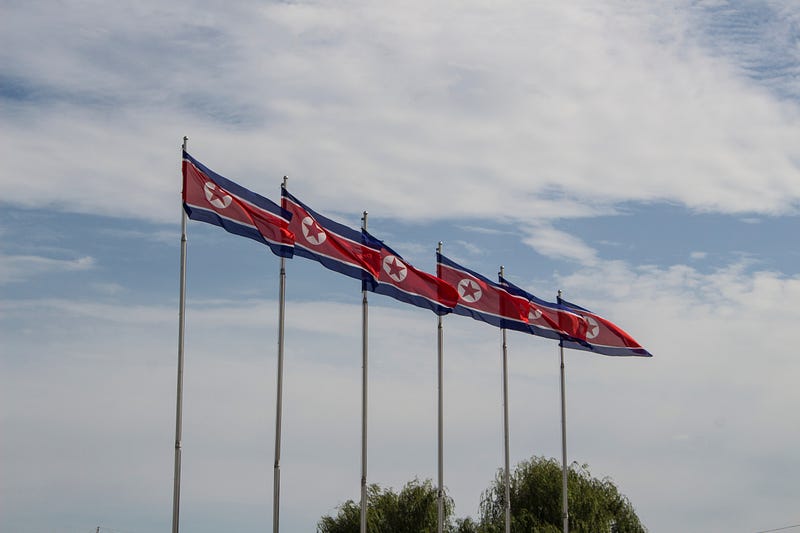
Photo by Micha Brändli on Unsplash


Sinbad.io

According to UK-based crypto compliance analysis firm Elliptic, the funds have made their way to a crypto mixer used by Lazarus Group, a notorious hacker group that focuses on crypto heists which is believed to have direct ties with the North Korean government.

On June 5, Elliptic’s Investigations Team revealed that it had traced the funds from the Atomic Wallet hack to the crypto mixer Sinbad.io. Lazarus had previously used the mixer to launder over $100 million in stolen crypto assets.

While the exact amount sent to the mixer was not specified, Elliptic noted that the stolen funds were being exchanged for Bitcoin before undergoing obfuscation through the mixer. Additionally, Elliptic reported that Sinbad.io is likely a rebranded version of Blender.io, another mixer extensively used to launder funds by the Lazarus Group. Blender.io has been sanctioned by the US Treasury.


Atomic Wallet hack

The hack of several user accounts on Atomic Wallet occurred on June 3, resulting in losses of up to $35 million. News of the issue broke with the following tweet from the project team (which has subsequently been deleted): “We have received reports of wallets being compromised. We are doing all we can to investigate and analyze the situation. As we have more information, we will share it accordingly.”

In a follow-up tweet the next day, the team confirmed that it was investigating the matter with the assistance of a number of “leading security companies.”

However, Atomic Wallet later downplayed the incident, stating that less than 1% of its monthly active users were affected. The project team was castigated by users for trying to present the hack as a minor incident. One user took to Twitter to call out the Atomic Wallet team for “having the nerve to come to the networks and say that only 1% of wallets were affected.”

The Atomic Wallet project is based out of Tallinn, Estonia, having been founded in 2017. It claims to provide a non-custodial decentralized multi-currency crypto wallet. The product supports over fifty coins and two hundred tokens. It also offers atomic swaps between digital assets, while also supporting integrations with instant exchanges such as Changelly, ShapeShift, and others.

Roland Säde, the Chief Marketing Officer of Atomic Wallet, assured users that the team is working tirelessly to recover the stolen funds. He emphasized the need to complete the investigation to develop a concrete plan.

Despite the ongoing efforts, Säde urged victims to track the illicit transfers and report them to popular crypto exchanges. By doing so, it was thought that may hinder the scammers from exchanging the funds.


Crypto hacking menace

Lazarus Group hackers have been the bane of the crypto space in recent years. Elliptic released a report last month that identified Japan as having been the country most adversely affected by the North Korean hackers. It’s understood that the estimated $721 million in stolen crypto from Japan-based entities amounts to nearly nine times the value of North Korea’s exports based on 2021 data.

While Atomic Wallet is directly reporting the incidents, Säde believes that having more individuals monitoring the hackers’ activities will make it more challenging for them to move the funds undetected. Unfortunately, Elliptic’s recent findings suggest that for many victims, it may already be too late to prevent further misuse of their stolen cryptocurrency.


More to Read
View All
Web3 & Enterprise·

Oct 11, 2023

Upbit Launches Campaign for Recovery of Mistakenly Transferred Assets

Upbit Launches Campaign for Recovery of Mistakenly Transferred AssetsUpbit, the cryptocurrency exchange operated by Dunamu, announced on Tuesday (local time) that it is launching a campaign where users can get back the digital assets that they have transferred mistakenly as part of heightened efforts to protect investors and minimize their losses due to such errors.Photo by Luis Villasmil on UnsplashRole of secondary identifiersAmong the virtual assets that Upbit allows users to deposit, some require users to accurately input their unique identifiers — like a Destination Tag (D.tag) or Memo — in order to properly process a deposit. A D.tag or Memo is an additional address used to identify a transaction recipient beyond a wallet address, which is often required when trading altcoins like Ripple (XRP) and Monero (XMR). In the case of XRP, both the exchange address and the D.tag must be entered accurately for deposits to be processed properly.Enhancing investor convenienceHowever, misdirected transfers caused by incorrect or missing secondary deposit addresses occur quite frequently. Many users also remain unaware when their virtual assets have been mistakenly transferred.In response to this issue, Dunamu has organized its latest campaign to make it easier for Upbit users to recover the virtual assets that they mistakenly sent. A user can access the campaign page on the official Upbit website and search for the transaction ID (TXID) of the deposit where the secondary address was either not entered or entered incorrectly. If a matching deposit is found, they can click “Apply for Recovery” to submit a one-on-one inquiry.Previously, users were required to manually enter information such as the name and quantity of the cryptocurrency, as well as the TXID in the one-on-one inquiry. Now, this information is automatically filled in through the TXID search, boosting user convenience.In an effort to encourage campaign participation, Dunamu also said that it will waive all fees for the recovery of mistakenly transferred assets until the end of the year.As of July, the exchange has successfully processed over 99.5% of the total 45,474 recovery requests that it has received over the past five years by leveraging its industry-leading technical expertise.“Upbit will continue its efforts to protect user assets and provide convenient services,” Dunamu said.Global recognitionMeanwhile, Upbit has secured 9th place in the Kaiko Exchange Ranking for the third quarter of 2023, ranking first among Korean exchanges. Kaiko is a crypto market data company with offices in Paris, London, New York, and Singapore.The ranking evaluates exchanges based on the following criteria: governance (30%), security (20%), liquidity (15%), business (15%), technology (10%), and data quality (10%). Upbit earned a score of 76 points.Coming in first overall on the list was Coinbase with 90 points, directly followed by Bitstamp and Kraken with 86 and 82 points, respectively. Among Korean exchanges, Korbit ranked 15th worldwide with 72 points, followed by Bithumb in 17th with 72 points, then Coinone in 27th with 59 points.

news
Policy & Regulation·

1 day ago

China’s digital yuan set for deposit-based role in banks next year

The People’s Bank of China (PBOC) plans to roll out a new structure for its central bank digital currency (CBDC) operations, moving the digital yuan into a deposit-based role within the commercial banking system beginning Jan. 1, 2026. Lu Lei, a deputy governor of the PBOC, announced the update, marking a new direction after nearly a decade of pilot programs. According to a report by FTChinese, the move fits into Beijing’s broader economic planning, as authorities seek to reinforce China’s role in global finance while containing risks tied to loosely regulated digital activity. The deputy governor said China will continue to run the digital yuan under a two-tier system, with the central bank responsible for rules and infrastructure, while commercial banks manage wallets, payments, and compliance. He added that the arrangement is designed to prevent banks from being sidelined and to limit shadow banking risks associated with digital payment platforms outside the regulated system.Photo by Eric Prouzet on UnsplashDigital yuan transactions top $2.3TThe announcement comes as use of the digital yuan, known as the e-CNY, continues to rise. By late November 2025, the system had handled 3.48 billion transactions with a total value of 16.7 trillion yuan ($2.3 trillion). There are about 230 million personal wallets and 18.84 million corporate wallets. Beyond domestic use, the e-CNY is being positioned for international trade. Lu pointed to progress on mBridge, a cross-border payments project involving multiple central banks. The platform has processed 4,047 transactions worth the equivalent of 387.2 billion yuan ($55.3 billion), with the digital yuan accounting for about 95.3% of the settlement value. The deputy governor also sounded a note of caution on private-sector innovation, saying the rapid growth of digital assets and stablecoins could complicate the conduct of monetary policy. He said central banks need to ensure that new payment tools do not undermine macroeconomic stability or allow money to circulate beyond regulated channels. Hong Kong to license crypto dealers, custodiansAs Beijing moves to strengthen its state-backed currency framework, Hong Kong is also tightening oversight of the crypto market. On Dec. 24, the city’s Financial Services and the Treasury Bureau (FSTB) and the Securities and Futures Commission (SFC) released their conclusions on proposed legislation to regulate virtual asset dealing and custodial services. Following the implementation of the Stablecoins Ordinance in August, regulators are now moving to require firms offering crypto dealing or custody services in Hong Kong to obtain licenses and operate under regulatory supervision. They also began seeking feedback on whether to extend oversight to virtual asset advisory and management providers, with the proposed framework modeled on existing securities market rules. In a separate development underscoring the contrast between state-backed and decentralized digital currencies in the region, reports this month pointed to a sharp drop in Bitcoin network activity linked to mainland China. BTC hashrate drop seen amid China mining changesKong Jianping, CEO of Nasdaq-listed Web3 infrastructure firm Nano Labs, said on the social media platform X that the global Bitcoin network’s hashrate fell by about 100 exahashes per second, or roughly 8%, around Dec. 15. He attributed the decline to the shutdown of an estimated 400,000 mining rigs, mainly in Xinjiang. A lower hashrate means less computing power is securing the network, reducing competition among miners that validate transactions. China has maintained a broad ban on crypto trading and mining since 2021. Industry outlet Wu Blockchain said the reasons for the latest shutdowns were unclear. 

news
Web3 & Enterprise·

Sep 04, 2023

Ethereum Co-Founder Highlights User-Friendly Crypto Wallets at Ethcon Korea 2023

Ethereum Co-Founder Highlights User-Friendly Crypto Wallets at Ethcon Korea 2023Ethereum co-founder Vitalik Buterin delivered a keynote speech last Friday at Ethcon Korea 2023 — a hackathon and conference sponsored by Ethereum for the Korean Ethereum community in Seongsu-dong, Seoul — where he emphasized the importance of making crypto wallets user-friendly by striking a balance between user familiarity and decentralization.Photo by Nenad Novaković on UnsplashEnhancing security and convenienceParticipating in the event via video call, Buterin explained Ethereum’s ERC-4337 account abstraction upgrade during his speech, which was livestreamed on the Ethcon Korea YouTube channel. “The goal of account abstraction — a field that many wallets are currently working on developing — can be broadly categorized into two areas: security and convenience,” he said.Deployed on the Ethereum mainnet in March, the ERC-4337 is a standard that makes it possible to transact and create contracts in a single contract account, paving the way for more user-friendly crypto wallet designs. At its core are features such as easy account recovery, improved security, and customized services like auto-pay and bundled transactions. This provides a more convenient alternative to other crypto wallets, which mostly rely on private keys for account access, complicating setup and recovery procedures especially if a user loses their seed phrase.“Wallets must fundamentally be secure in a decentralized way, but there should also be ways to recover passwords as hardware wallets do,” Buterin stated. “However, many projects still rely on methods such as account recovery via email.”Simplifying transactionsAnother change introduced through the update is gas flexibility. Gas is a fundamental fee that users must pay to conduct transactions or execute a contract on Ethereum. Wallets backed by ERC-4337 can pay gas fees with any Ethereum utility tokens and more, including USD coins (USDC).From a convenience standpoint, Vitalik argued, it is very useful for first-time Ethereum users to be able to pay for gas with the USDC they already have. Sponsored transactions, where applications pay for fees, will be a great way to attract new users, especially for non-financial applications.He further elaborated that in order to transition from being user-friendly but centralized to more decentralized, a combination of a faster but precarious centralized approach with a slower but safer decentralized approach is required.He also stressed the importance of utilizing the various options available in modern technology concerning convenience, security, and decentralization, saying that it is essential to utilize these options effectively, continuously improve them, and take advantage of the benefits.Since 2019, Buterin has used Ethcon as a platform to announce Ethereum’s development roadmap and major technical updates.

news
Loading