Top

Hong Kong SFC CEO Prioritizes Investor Protection in Crypto Regulations

Policy & Regulation·May 31, 2023, 4:03 AM

According to a report by Chinanews, Julia Leung, Chief Executive Officer of the Hong Kong Securities and Futures Commission (SFC), participated in a seminar organized by the Hong Kong Academy of Finance (AoF). During the event, she emphasized the importance of investor protection in the formulation of guidelines for operators of virtual asset trading platforms.
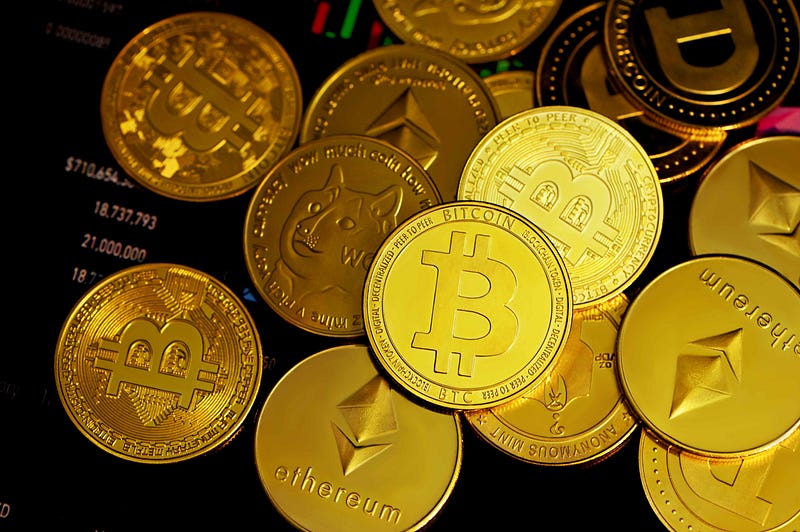
Photo by Kanchanara on Unsplash


Development of crypto in Hong Kong

At the seminar yesterday, Leung discussed the development of virtual assets in the special administrative region of China. She recalled the pushback the SFC received in 2018 when it first proposed regulations for virtual asset trading platforms. Critics argued that the licensing system, demanding applicants to comply with stringent internal control and investor protection standards, might compel fintech companies to relocate their operations to other jurisdictions, such as Singapore.


Market recognition of crypto regulations

Despite initial criticism, the market came to appreciate the importance of these regulatory standards, especially after witnessing the bankruptcy of several overseas cryptocurrency organizations.

The guidelines for operators of virtual asset trading platforms in Hong Kong are set to take effect in June. Leung mentioned that these guidelines match market expectations and place emphasis on protecting investors. They encompass regulations for virtual asset custody, the segregation of client assets, and the avoidance of conflicts of interest. She also expressed satisfaction with the SFC’s role as a leading regulator in the virtual asset space.


Crypto exchange rating

Meanwhile, Chinese blockchain news media Jinse Finance reported today the official establishment of the Hong Kong Virtual Asset Consortium (HKVAC), a private entity that rates virtual assets.

It has also launched a virtual asset index and will introduce a virtual asset exchange rating system. The HKVAC Large Market Cap Cryptocurrency Index comprises the 30 leading cryptocurrencies by market capitalization. The index will be reviewed quarterly on the last day of each quarter (March, June, September, and December). The Virtual Asset Exchange Rating System will assess the credibility of trading platforms and enhance transparency and accountability in the virtual asset trading market.

HKVAC was established by a team of industry experts and professional rating agencies. It brings together key stakeholders in the virtual asset industry, such as big data firms, exchanges, and institutional investors, along with the city’s licensed rating agencies. HKVAC aims to cultivate a secure environment for crypto investments and enhance the public’s understanding of virtual assets.


More to Read
View All
Policy & Regulation·

Nov 07, 2023

Hong Kong regulators consider opening up crypto ETFs to retail

Hong Kong regulators consider opening up crypto ETFs to retailHong Kong regulators are now exploring the possibility of allowing retail investors to participate in spot crypto exchange-traded funds (ETFs).The CEO of Hong Kong’s Securities and Futures Commission (SFC), Julia Leung, was cited by Bloomberg on Sunday as having indicated that provided that the necessary regulatory approvals and checks are in place, the regulator may be open to the notion of retail participation where spot crypto ETFs are concerned. Leung emphasized the regulator’s openness to innovative technology that enhances efficiency as long as it addresses potential new risks.Photo by Markus Winkler on Pixabay‘Happy to give it a try’She stated: “We welcome proposals using innovative technology that boosts efficiency and customer experience. We’re happy to give it a try as long as new risks are addressed. Our approach is consistent regardless of the asset.”While both the United States and Hong Kong currently permit futures-based cryptocurrency exchange-traded funds (ETFs), the adoption of such instruments has been relatively modest in comparison to the broader fund industry.In Hong Kong, there are currently ETF listings for products like Samsung Bitcoin Futures Active, CSOP Bitcoin Futures and CSOP Ether Futures, with a total combined asset value of approximately $65 million. In June, Hong Kong’s largest ETF manager, Hang Seng, suggested that it too was considering a crypto product offering.In accordance with the SFC’s digital asset regulations, individual investors already have the opportunity to trade prominent cryptocurrencies like Bitcoin and Ether on licensed cryptocurrency exchanges since June 1. Presently, BC Technology Group Ltd.’s OSL and HashKey Exchange are the only platforms in Hong Kong with permits for cryptocurrency trading. Additionally, there are expectations that mandatory regulations concerning stablecoins will be introduced over the course of the next year.Prioritizing investor protectionLeung expressed the regulator’s cautious approach, stating:“As the crypto ecosystem evolves step-by-step to the point where we’re comfortable, then we’re happy to open up more access to the wider investing public.”Notably, Hong Kong also recently unveiled its Web3 plans, highlighting its commitment to embracing blockchain and decentralized technologies.Hong Kong introduced a specialized regulatory framework for virtual assets in June which are designed to attract businesses while prioritizing investor protection. That need to protect consumers has been underscored recently by the alleged fraud that has subsequently been uncovered involving HK$1.6 billion ($204 million) at the unlicensed JPEX cryptocurrency exchange in the city.Market reactionThe significance of such a move isn’t lost on crypto market participants. Taking to X, one wrote: “Seismic shift. Hong Kong’s play could reshape the Asian crypto landscape. #Bitcoin ETFs? A strategic move to anchor HK as the digital nexus of Asia.” Another claimed that this “might redefine the crypto landscape and fuel the next bull market.”A report published by the Hong Kong Stock Exchange in April found that crypto ETFs have the potential to play a significant part in the next phase of digital asset innovation in Asia.Leung emphasized the importance of a strong and comprehensive regulatory structure, highlighting the SFC's efforts to enhance transparency in processing license applications for virtual asset exchanges.Moreover, the Hong Kong Monetary Authority (HKMA), the Chinese autonomous territory’s central bank, is actively exploring the possibility of offering guidance to banks regarding the provision of digital asset custodial services. These services are considered vital for nurturing the growth of a digital asset ecosystem and ensuring investor security.

news
Web3 & Enterprise·

Nov 01, 2023

Ozys integrates Orbit Swap into SK Telecom’s T Wallet

Ozys integrates Orbit Swap into SK Telecom’s T WalletSouth Korean blockchain tech company Ozys revealed on Wednesday (local time) that its Orbit Swap service has been incorporated into SK Telecom’s (SKT) T Wallet. This integration allows for the smooth exchange of native tokens within the digital asset wallet service of one of Korea’s major mobile network providers.Photo by Mariia Shalabaieva on UnsplashT Wallet featuresSKT’s T Wallet, accessible on both mobile and web platforms, offers various features. It facilitates the storage and management of digital assets, handles digital content NFTs, supports decentralized applications (dApps) and provides identity verification solutions.Now equipped with Orbit Swap, T Wallet enables users to seamlessly swap native tokens of blockchains like Bitcoin and Ethereum with a single transaction. Additionally, with Orbit Swap’s explorer feature integrated, users can instantly review their transactions, further improving the user experience.Orbit Swap was developed as a result of Orbit Bridge, the cross-chain initiative of Ozys. It also supports various tokens, including USDC, USDT, MATIC, XRP and TON.Result of August partnershipThis integration marks a result of a partnership between the two companies, established last August, aimed at advancing the Web3 ecosystem.Both entities are committed to fast-tracking Web3 adoption by developing user-centric services and establishing an ecosystem that contributes to user protection.Speaking on their collaborative effort, Choi Jin-han, CEO of Ozys, expressed his belief that the Orbit Swap feature would serve as a gateway to a multi-chain ecosystem for T Wallet users.

news
Policy & Regulation·

Oct 28, 2025

Chinese tech groups pause Hong Kong stablecoin plans amid regulatory scrutiny

Several leading Chinese technology firms have reportedly shelved their plans to launch stablecoins in Hong Kong, following regulatory pushback from the People’s Bank of China (PBOC) and the Cyberspace Administration of China (CAC). According to the Financial Times, the authorities have expressed growing concerns over the risks posed by privately issued digital currencies, prompting companies to delay their initiatives.Photo by Jacky Yu on UnsplashBeijing’s focus on control and digital yuanThe companies’ hesitation underscores Beijing’s broader push to preserve control over its monetary system while advancing the rollout of its central bank digital currency (CBDC), the e-CNY. Earlier this month, the PBOC unveiled a new Shanghai-based center to oversee the e-CNY’s international operations, signaling China’s ambition to extend the digital yuan’s reach beyond its domestic market. Over the summer, companies including Ant Group, backed by Alibaba, and e-commerce platform JD.com signaled interest in Hong Kong’s pilot stablecoin initiative or in issuing crypto products such as tokenized deposits. Those plans are now on hold as firms assess policy signals from Beijing and weigh the implications for their businesses. Research efforts reflect China’s cautious approachChina’s cautious stance is also reflected in its research priorities. The National Natural Science Foundation of China (NSFC), a vice-ministerial body under the Ministry of Science and Technology, has begun inviting grant applications for projects focused on stablecoins and cross-border regulatory frameworks. In announcing the initiative, the NSFC cautioned that the unchecked circulation of privately issued stablecoins could erode the effectiveness of the country’s capital controls. Globally, approaches to fiat-pegged digital assets diverge. In the United States, President Donald Trump in July signed the GENIUS Act, the country’s first stablecoin legislation, into law. A White House fact sheet argued that stablecoins could strengthen demand for U.S. Treasuries and reinforce the dollar’s standing as the world’s dominant reserve currency. In Europe, however, regulators remain wary. In a blog post that same month, European Central Bank (ECB) adviser Jürgen Schaaf warned that the widespread use of U.S. dollar-denominated stablecoins in the euro area could pose financial risks, noting that dollar-based tokens already account for the vast majority of global stablecoin market capitalization. Geopolitics adds to market volatilityThe recalibration by Chinese firms comes against a turbulent geopolitical backdrop. Cointelegraph, citing President Donald Trump’s interview with Fox News, reported that Trump is expected to meet Chinese President Xi Jinping in South Korea during the Asia-Pacific Economic Cooperation (APEC) summit, scheduled for Oct. 31 to Nov. 1. The anticipated meeting follows a string of shifting statements from Trump throughout October—ranging from skepticism about meeting Xi, to announcing new 100% tariffs on Chinese imports, and later adopting a more conciliatory tone. The back-and-forth has coincided with heightened volatility across crypto markets. Market turbulence deepened as a wave of liquidations swept through crypto derivatives, erasing nearly $20 billion in positions on Oct. 10, the largest such event on record. Bitcoin plunged to as low as $104,749 on Oct. 17 and has since rebounded to around $114,000 as of Oct. 28. The pullback by Chinese tech groups underscores the fine line regulators and firms must navigate: advancing digital finance innovation while safeguarding monetary stability and control. How that balance is managed across China, the U.S., and Europe will shape the future of stablecoins and define their place in the evolving global financial order. 

news
Loading