Top

SK C&C to Spearhead Establishment of Korea’s First Alternative Trading System

Web3 & Enterprise·August 03, 2023, 3:43 AM

SK C&C, the information communications technology arm of South Korean conglomerate SK Group, is set to launch the country’s first Alternative Trading System (ATS) — a securities trading venue that is more loosely regulated than an exchange — in the second half of next year.

The firm announced on Wednesday that it will commence the multilateral trading system construction project for Nextrade, a corporation dedicated to preparing the ATS.
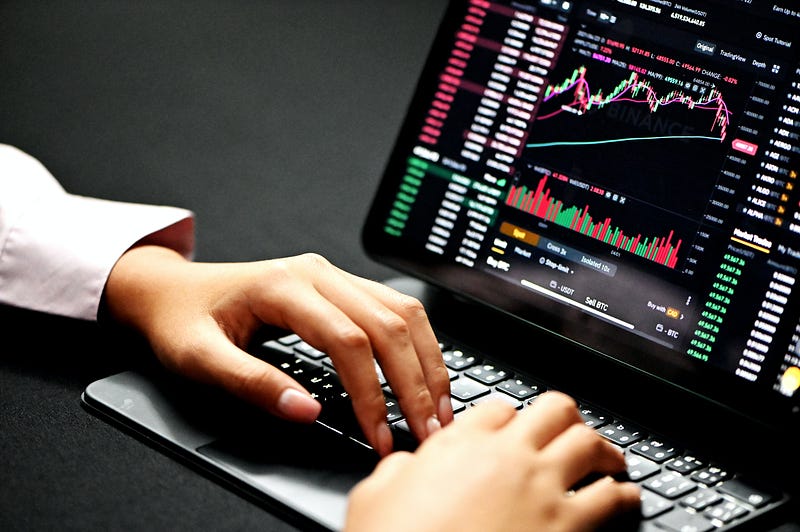
Photo by Kanchanara on Unsplash


Collaborative effort of securities institutions

Nextrade was initiated by seven securities firms, including the Korea Financial Investment Association, and was jointly established by 34 participating institutions, including 19 securities companies, three securities-related institutions, and four tech companies in November of last year.

SK C&C in particular has been working with Nextrade since 2019. When the corporation was still a consultative body of securities firms, the SK subsidiary was in charge of consulting on various matters regarding the establishment of the ATS and functional system requirements.


Establishing a solid foundation

The aforementioned construction project aims to establish a multilateral trading system and an operation and management system to support the trading, brokerage, and agency functions of listed securities and depositary receipts on the ATS, which Nextrade will proceed with upon its official approval in the second half of next year. SK C&C will take on a major role in leading this task.

“Based on our digital IT service capabilities that we have accumulated within the financial sphere, we will establish an efficient and reliable multilateral trading system that is on par with regular exchanges,” said Kim Nam-sik, head of the SK C&C Financial Digital2 Group.

Besides facilitating multilateral trading, SK C&C will develop an information distribution system that processes investment information in connection with the Korea Exchange and the Korea Securities Depository, as well as a trading support system responsible for product information management, trading statistics, and administration.


Trading after hours

The ATS will allow trading past normal trading hours, which are usually from 9 AM to 3:30 PM — an especially attractive selling point for buyers and sellers. This will be made possible by compiling product information based on closing prices after the market closes, which will create an environment that allows for trading after hours.

This service will not only be convenient for office workers but also help them refer to official announcements and the status of overseas markets to make more informed decisions, SK C&C said.

Securities that can be traded after hours will be limited to listed stocks and depository receipts on the Korea Exchange for the time being, but SK C&C is reportedly looking into allowing trading of security tokens, non-security virtual assets, and NFTs.


Ensuring uninterrupted operations

Notably, there will also be a Disaster Recovery Center, which will serve to protect the ATS’ major systems and data assets and ensure business continuity. A data backup system will be set up to reduce backup time and swiftly recover from any failures in case of potential security threats.

Furthermore, the ATS plans to introduce new types of orders to enhance investor benefits in the domestic capital market, setting it apart from the Korea Exchange.


More to Read
View All
Policy & Regulation·

Jun 19, 2023

Korea’s Busan City to Develop Blockchain-Based Carbon Neutrality Platform

Korea’s Busan City to Develop Blockchain-Based Carbon Neutrality PlatformBusan Metropolitan City, known for being home to South Korea’s largest port, announced today that its consortium won the bid for the 2023 new local energy facilitation project offered by the Korea Energy Agency, an organization under the Ministry of Trade, Industry, and Energy (MOTIE). The consortium consists of five entities, including Busan City, tech solution provider Nuri Flex, and gas distributor Busan City Gas. As the winning bidder, Busan City and its collaborators will proceed with the development of a blockchain-based platform that promotes carbon neutrality.Photo by BERK OZDEMIR on PexelsCarbon neutralityThe primary aim of this project is to create a system that leverages surplus renewable energy to achieve carbon neutrality in the city’s port and industrial infrastructure. The initiative includes providing eco-friendly renewable energy to port and industrial facilities, establishing a blockchain-based carbon credit system to support businesses in joining the global corporate renewable energy initiative RE100, and facilitating the trading of surplus electricity. These measures are intended to save energy, enhance power system stability, and create greater value.Boosting green energy proportionThe project is set to take place from June 2023 to December 2024, with an estimated cost of 3 billion KRW ($2.3 million). The national and local governments will each finance 25% of the project, while the private sector will cover the remaining 50%. Upon completion of the project, Busan aims to increase the proportion of renewable energy within the city. Leveraging surplus energy and engaging in carbon credit trading, Busan expects to gain a competitive edge in the carbon-neutral sector.

news
Web3 & Enterprise·

Dec 18, 2023

XPLA joins hands with EDUM to bring Study-to-Earn services to learners

XPLA joins hands with EDUM to bring Study-to-Earn services to learnersSouth Korean gaming corporation Com2uS Group’s layer 1 blockchain XPLA has established its newest partnership with EDUM, a Study-to-Earn (S2E) project operated by Dream Ladders, a blockchain subsidiary of educational and career services provider Jinhak, according to an official announcement on Monday (KST). Together, they plan to bring blockchain to education, helping students benefit from a new, innovative approach to learning and proving that blockchain can be useful in any environment.Photo by JESHOOTS.COM on UnsplashOptimizing the learning experience with Web3EDUM is set to leverage Web3 technology to provide students with access to affordable, high-quality educational services for everyone, no matter their economic background. Users will be able to earn rewards in the form of EDUM or EDUMP tokens when using different functions on the EDUM mobile application. EDUM is the project’s market-based utility token that can be cashed through external exchanges or even swapped with EDUMP, which has a fixed value and can only be used within the EDUM ecosystem. EDUMP tokens can also be used for purchasing NFTs or lectures on the EDUM platform.The project will also incorporate NFT technology as a key mechanism. Learners on EDUM can record their achievements as NFTs through certification performed by a Proof of Attendance Protocol (POAP). The platform offers benefits to instructors as well, whose content such as lectures, exams and textbooks can be protected and compensated by being minted as NFTs.Going beyond gamingBy working with EDUM, XPLA aims to venture into the realm of education, which is outside of its usual gaming focus, helping the platform revolutionize S2E services and creating more real-world use cases for blockchain technology.

news
Web3 & Enterprise·

Sep 07, 2023

Japanese Financial Giant SBI Extends Use of Ripple’s Remittance Tech

Japanese Financial Giant SBI Extends Use of Ripple’s Remittance TechSBI Remit Co., Ltd., a prominent player in the international money transfer sector and a subsidiary of Japanese financial services conglomerate SBI Group, has unveiled a significant expansion of its collaboration with Ripple in Asia.Photo by Kanchanara on UnsplashPhilippines, Vietnam, and IndonesiaThe strategic alliance between the two companies will enable international remittance services utilizing Ripple’s XRP cryptocurrency as a bridge currency, connecting bank accounts in the Philippines, Vietnam, and Indonesia.The partnership, announced via a statement published to SBI’s website on Wednesday, builds upon SBI Remit’s history of utilizing Ripple Payments for its international remittance services, which dates back to 2017. The company has been a pioneer in Japan, leading the way in offering an international remittance service that leverages XRP as a bridge currency between two sovereign currencies.This latest move underscores SBI Remit’s interest in furthering its exploration and use of XRP-based remittances. In 2021, it introduced a service targeting digital wallets in the Philippines, marking a milestone in using XRP for international remittances in Japan.Simplifying international remittancesThe newly introduced scheme aims to simplify the international remittance process significantly. The process involves SBI Remit initiating a customer’s remittance request, followed by SBI VC Trade facilitating real-time XRP transfers in response to the request. This dynamic approach has been made feasible through a strategic partnership with Tranglo Pte. Ltd., a long-standing Ripple partner. It ensures that customers receive their remittances in their respective local sovereign currencies.SBI emphasized the advantages of using XRP as a bridge currency, highlighting its ability to enable fast and cost-effective money transfers. XRP also boasts excellent scalability, allowing users to seamlessly send funds to Ripple’s global partners. SBI believes that this will enhance its competitiveness in the international remittance sector.Targeting important remittance marketsThe decision to target the Philippines, Vietnam, and Indonesia was not arbitrary. These countries have a substantial share of remittances channeled into bank accounts, making them ideal candidates for XRP adoption. SBI Remit anticipates that the introduction of the XRP-based remittance service will further accelerate cryptocurrency adoption in these nations.Yoshitaka Kitao, chairman and CEO of SBI Holdings, expressed the company’s commitment to transforming international remittance services. The press release also conveyed SBI Remit’s dedication to extending its reach beyond the initial three Asian countries. At the time of publication, XRP was trading at $0.5022.The significance of the announcement was not lost on retail investors with an ongoing interest in XRP. Taking to X (formerly Twitter) one wrote:“Everyone who says Ripple does not utilize XRP, and that nobody uses XRP is WRONG.”At Paris Blockchain Week earlier this year, Monica Long, President of Ripple, stated: “The past couple of years have been a real tipping point for institutional DeFi, where even the biggest of banks are embracing this technology as the future, and they have to adapt or die.” That statement is relevant when this latest expansion of the Ripple/SBI partnership is considered.SBI Remit’s expanded partnership with Ripple marks a significant step in the evolution of international remittance services. By harnessing the power of XRP as a bridge currency, SBI Remit aims to revolutionize cross-border transactions while targeting countries with substantial remittance markets.

news
Loading