Top

Study Places Hong Kong as Leader in Crypto Readiness

Policy & Regulation·May 27, 2023, 12:58 AM

Hong Kong, according to a recent study conducted by Forex Suggest, has emerged as the leading jurisdiction worldwide in terms of its readiness for cryptocurrencies. The study evaluated various factors such as the number of blockchain startups per 100,000 people and the density of crypto ATMs in relation to the population.
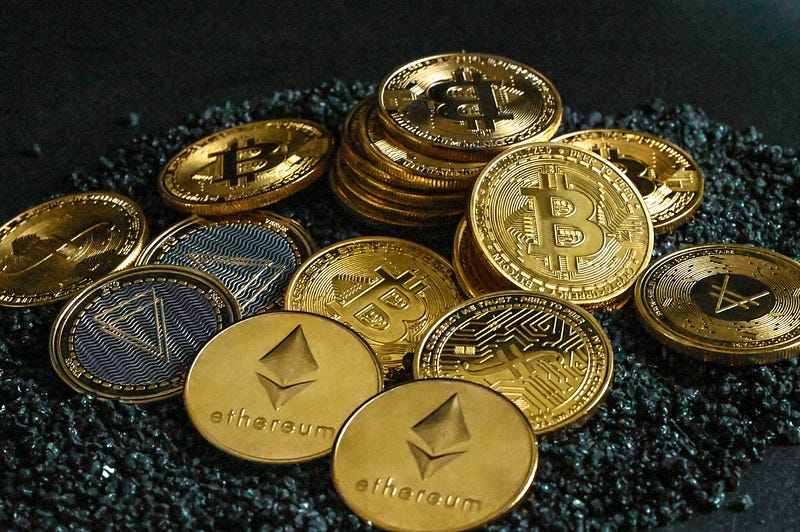
Photo by Traxer on Unsplash


Zero capital gains tax

The attractiveness of Hong Kong for investors in the crypto space stems from its advantageous tax policies. The study noted that Hong Kong does not levy capital gains taxes on cryptocurrency, making it an appealing destination for crypto enthusiasts. The United States and Switzerland secured the second and third positions, respectively, in the rankings of the most crypto-ready countries.

In recent times, Hong Kong has actively embraced investments from digital asset companies and is poised to implement new regulations for the industry. Effective from June 1, the city’s new rules aim to establish Hong Kong as a global hub for digital assets. These regulations permit licensed cryptocurrency trading platforms to offer services to retail investors while incorporating measures to safeguard individual traders.

Global crypto firms are gearing up for that new licensing approach, carving out separate corporate entities in order to meet the regulatory requirements which the Hong Kong regulator, the Securities Futures Commission (SFC), has set. Another Hong Kong regulator, the Hong Kong Monetary Authority (HKMA), is also opening up to embrace digital asset innovation through a pilot project implicating the tokenization of real world assets.

Regarding the number of blockchain startups, Hong Kong boasts three startups per 100,000 individuals, securing the second position globally. Topping the list is Switzerland, with an impressive count of 12.9 blockchain startups per 100,000 residents, amounting to a total of 1,128.

The study also highlighted that countries such as Hong Kong, Switzerland, Panama, Portugal, Germany, Malaysia, and Turkey impose the lowest taxes on cryptocurrencies. These nations exempt individuals from capital gains taxes on profits derived from cryptocurrency trading.


Crypto ATM proliferation

When considering the prevalence of crypto ATMs, Hong Kong ranks third globally, with two ATMs per 100,000 people, totaling 149 ATMs. The United States takes the top spot with nearly 34,000 crypto ATMs, but when normalized to the population, it has 10.1 ATMs per 100,000 individuals.


Regressive measures in US

In contrast to Hong Kong’s favorable environment, regulators in the United States have intensified their efforts to tighten regulations on cryptocurrency exchanges, leading many within the industry to advocate for clearer guidelines. Consequently, several exchanges are exploring jurisdictions that offer more favorable conditions.

Forex Suggest emphasized that the report’s findings were based on extensive data analysis, taking into account factors such as tax regulations, legislation, the presence of blockchain startups, and the level of interest in cryptocurrencies. Each jurisdiction received a normalized score out of 10 for each factor, and the overall rankings were determined by averaging these scores.

Hong Kong’s position as the most crypto-ready jurisdiction in the world showcases its commitment to fostering innovation and becoming a global leader in the digital asset space. With its advantageous tax policies, growing number of blockchain startups, and forthcoming regulations, the autonomous Chinese territory is solidifying its position as an attractive destination for businesses and investors in the cryptocurrency space.


More to Read
View All
Web3 & Enterprise·

Mar 26, 2025

Chainlink partners with Abu Dhabi’s ADGM on tokenization framework development

Chainlink, a prominent decentralized oracle network, has partnered with the Abu Dhabi Global Market (ADGM), a free zone and international financial center located on Al Maryah Island in Abu Dhabi in the United Arab Emirates (UAE), with a view towards further developing tokenization frameworks.Photo by Shubham Dhage on UnsplashCompliant tokenization frameworksAccording to an announcement on the ADGM website, the international financial center signed a memorandum of understanding (MOU) with Chainlink. It claimed that the collaboration marks “a major step in advancing compliant tokenisation frameworks.” Chainlink provides a suite of services. Central to that is the delivery of real-world data feeds into blockchain networks. ADGM believes that through the partnership, projects located within the free zone will be able to access this technology, while the ADGM’s Registration Authority will ensure regulatory compliance. The CEO of the ADGM Registration Authority, Hamad Sayah Al Mazrouei, said that the strategic alliance is a significant step towards ADGM leadership in blockchain innovation. He added: “By collaborating with Chainlink, we are aiming to set a global benchmark that spearheads transparency, security, and trust across the blockchain space.” The collaboration includes plans to host events and workshops aimed at educating the blockchain sector within the UAE. The two parties also aspire to the initiative, sparking greater dialogue on regulatory matters relative to blockchain, artificial intelligence and other emerging technologies. Global collaborationsThis is the latest in a long list of collaborations that Chainlink has entered into, relative to asset tokenization. In October, it partnered with Singapore’s DigiFT, an exchange dedicated to tokenized real-world assets (RWAs). The following month, it completed a pilot program alongside financial messaging service SWIFT and UBS Asset Management under the umbrella of the Monetary Authority of Singapore’s (MAS) Project Guardian. The project concerned itself with the settlement of tokenized funds. Earlier in 2024, Chainlink partnered with U.S. financial market infrastructure firm DTCC on the Smart NAV pilot project. The initiative centered on the creation and issuance of tokenized funds, counting JPMorgan, State Street, BNY Mellon, Invesco and Franklin Templeton among its participants. In the UAE, Chainlink has been added as a member of the Digital Asset Lab of one of the country’s largest banking groups, Emirates NBD. For its part, the ADGM has also been on the front foot with regard to tokenization initiatives. Its Regulatory Authority has established a regulatory framework with regard to asset tokenization, with an emphasis on investor protection. In October of last year, RWA tokenization platform Realize launched the financial center’s first tokenized U.S. treasury bill fund. At the time, the ADGM said that the development highlighted an objective for the region in becoming the global market leader where RWA tokenization is concerned. The ADGM began operations in 2015 with its own legal system. As of the end of 2024, the financial center hosted 134 fund and asset managers. Market maker and Web3 investment firm DWF Labs moved its headquarters from Singapore to Abu Dhabi’s ADGM at the end of last year, citing the goal of wanting to expand tokenized RWA-based projects as one of the reasons for the move.

news
Policy & Regulation·

Sep 01, 2023

Chinese Court Recognizes Virtual Assets as Legal Property

Chinese Court Recognizes Virtual Assets as Legal PropertyAccording to a recent report published by the People’s Courts of the People’s Republic of China, a Chinese court has recognized the legal status of virtual assets, having analyzed their attributes within the framework of Chinese criminal law.The court unequivocally stated that virtual assets are considered legal property under the current legal policy framework and are thus protected by law.The People’s Courts of the People’s Republic of China exercise judicial power independently, free from interference by administrative or public organizations. They have responsibility for adjudicating civil, criminal, and administrative cases.Photo by Christian Lue on UnsplashProperty classificationLocal news source Odaily News reported on the development on Friday, indicating that the report, titled “Identification of the Property Attributes of Virtual Currency and Disposal of Property Involved in the Case,” explicitly recognized the economic attributes of virtual assets, leading to their classification as property.This declaration is particularly significant in light of China’s sweeping ban on decentralized cryptocurrencies. Despite this ban, the report argues that virtual assets held by individuals should enjoy legal protection within the existing policy framework.Furthermore, the report proposed recommendations for addressing crimes involving virtual assets. It emphasized that in cases where money and property are involved, confiscation should be based on the integration of criminal and civil law. The approach taken aims to strike a balance between safeguarding personal property rights while also addressing broader social and public interests.Contentious approach to cryptoWhile China has been making every effort to promote its central bank digital currency (CBDC) and the development of blockchain and metaverse-related technology within the country, its stance on decentralized cryptocurrencies has been contentious at best.Its approach in that respect has been marked by a blanket ban on crypto-related activities such as mining and trading and the prohibition of foreign crypto exchanges from serving customers within mainland China. Nevertheless, Chinese courts have consistently taken a more nuanced view without necessarily contradicting the government’s approach.Differing interpretationsThe divergence between national policy and court rulings first emerged in 2019 when the Hangzhou Internet Court found that Bitcoin is a form of virtual property, and on that basis, it is safeguarded by the law from the point of view of property rights. In May 2022, a Shanghai court affirmed that Bitcoin qualifies as virtual property and, as such, falls under the purview of property rights.Global issueIt’s not just the Chinese courts that are grappling with the issue of clarifying property rights relative to virtual assets. In April of this year, a case in Hong Kong involving defunct crypto exchange Gatecoin resulted in the courts determining that cryptocurrency is property and that on that basis, it’s “capable of being held in trust.”In July a Singaporean court determined that cryptocurrency is capable of being held in trust and on that basis, it should be recognized as property. Earlier this year, the High Court of Justice in London recognized non-fungible tokens (NFTs) as property.The report from the People’s Court reaffirms the legal status of virtual assets as protected property under Chinese law. This development highlights the ongoing divergence between China’s regulatory policy and the judicial interpretation of virtual assets, signaling a potential evolution in the country’s approach to cryptocurrencies.

news
Web3 & Enterprise·

Oct 12, 2023

Shinhan Bank to Issue NFTs at 2023 Global Blockchain Incheon Conference

Shinhan Bank to Issue NFTs at 2023 Global Blockchain Incheon ConferenceShinhan Bank is set to participate in the 2023 Global Blockchain Incheon Conference (GBIC) from October 30 to 31 at Incheon Songdo Convensia, where it plans to operate a promotional booth to present its blockchain initiatives and issue commemorative non-fungible tokens (NFTs).Photo by CHUTTERSNAP on UnsplashUnveiling the prospects of next-generation technologiesGBIC is an international conference hosted by the city of Incheon and organized by Incheon Technopark. It will focus on exploring the present and future landscape of blockchain and Web3 technology while providing a platform for networking among experts from around the world. The event aims to stimulate the business ecosystem within the field and promote cultural exchange.Exclusive perksTo mark the occasion, Shinhan Bank and the city of Incheon are working together to issue NFTs for visitors, which include records of information like confirmation of event entry and participation, coupon usage, and more. The NFTs will also be given away to the first 1,000 customers who arrive at the event site, offering three benefits — free coffee vouchers as well as entry passes to artificial and virtual reality experiences and other on-site events. Recipients will also have the option to hand over the functions and benefits of the NFTs to others.Those who wish to attend GBIC can pre-register on the official conference website.

news
Loading