Top

Cross Trading of LUNA Tokens Uncovered on Three Korean Crypto Exchanges

Policy & Regulation·May 17, 2023, 8:52 AM

According to a report by the Maeil Business Newspaper on Wednesday, it was discovered that cross trading of LUNA tokens took place on three South Korean cryptocurrency exchanges: Bithumb, Coinone, and GoPax.


Three crypto exchanges

An indictment by the Seoul Southern District Prosecutors’ Office against Terraform Labs co-founders Do Kwon and Daniel Shin, along with interviews conducted within the cryptocurrency industry, revealed that Bithumb, Coinone, and GoPax were involved in cross trading LUNA tokens with a combined value of $598 million. Specifically, Bithumb accounted for $224 million, Coinone for $299 billion, and GoPax for $74 billion.

The prosecution has confirmed that cross trading continued until the end of February 2022, a period marked by significant demands for virtual asset legislation from both the market and academia. Despite widespread calls for regulations to curb unfair trading practices, these instances of cross trading went undetected.


Classification of LUNA

Moreover, it is reported that legal punishment for the $598 million worth of cross trading is challenging unless LUNA tokens are officially recognized as securities by the court. Under the Korean Capital Markets Act, only cross trading involving tokens identified as securities can be subject to penalties as a form of market manipulation.

During a plenary session of the National Assembly’s Legislation and Judiciary Committee on Tuesday, Justice Minister Han Dong-hoon made a statement suggesting that LUNA tokens could be considered securities due to their backing by real-world assets. However, he said that this distinction might not apply to other tokens.

On April 25, the Seoul Southern District Prosecutors’ Office indicted Shin and others as accomplices to Kwon, assuming that LUNA tokens were indeed securities. This case now revolves around whether the prosecution can successfully establish the classification of LUNA tokens as securities during the trial, making it the central issue in the case.
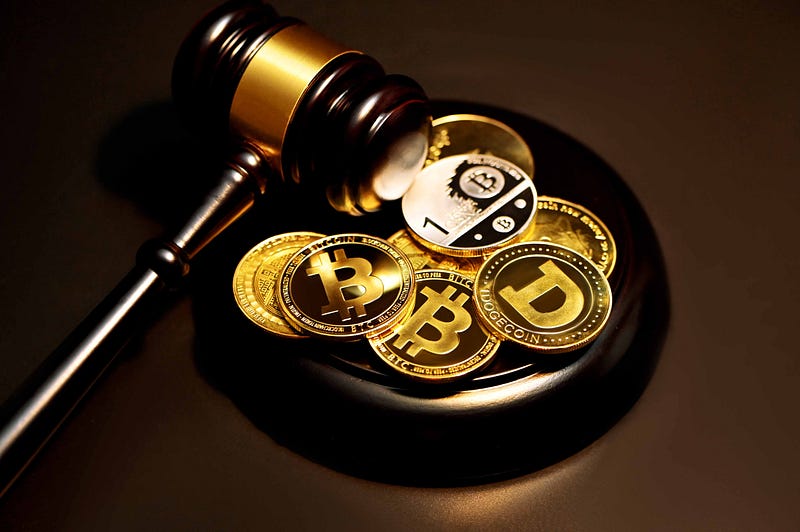
Photo by Kanchanara on Unsplash


Crypto investor protection legislation

Last Thursday, the National Assembly’s National Policy Committee approved a bill known as the “Virtual Assets User Protection Act,” signaling an accelerated legislative process. However, there are arguments suggesting that the definition of cross trading should be further clarified in either the legislation or enforcement decree.

A representative of a law firm specializing in virtual assets stated that the implementation of the User Protection Act would take another year even after its promulgation, making it challenging to retrospectively penalize cross trading practices that had already occurred.

More to Read
View All
Web3 & Enterprise·

Aug 23, 2023

NEOPIN Partners with Lena Network for NFT-Fi Service Development

NEOPIN Partners with Lena Network for NFT-Fi Service DevelopmentNEOPIN, the global CeDeFi platform of South Korean investment holding company Neowiz Holdings, announced on Tuesday that it is teaming up with Lena Network, a Japanese developer of non-fungible token finance (NFT-Fi) services.Photo by Choong Deng Xiang on UnsplashFostering NFT-Fi and DeFi synergyIn this collaboration, the companies plan to promote NFT-Fi usage by onboarding NEOPIN onto Lena’s service framework and by launching NEOPIN as a decentralized finance (DeFi) product based on Lena’s governance token $LENA. They will also strengthen cooperative ventures by channeling NEOPIN and Lena Network’s NFT-Fi products. Both companies’ worldwide partners will also receive collective support as part of this agreement.“This partnership is meaningful in many ways. We have been able to secure an important Web3 partner in Japan, expand our global DeFi products, and grow our NFT-Fi business,” explained Ethan Kim, CEO of NEOPIN.This comes as part of NEOPIN’s bigger efforts to broaden its global user demographic by launching DeFi products associated with global projects, the first of which is the latest collaboration with Lena. This move will create a strong base for the entry of NEOPIN’s Web3 projects into the Japanese market.“We will continue to strengthen our partnerships with outstanding Japanese Web3 projects such as Lena Network, and establish a foundation for our success in the Japanese market,” CEO Kim added.Innovation at Lena NetworkLena Network is operated by professionals who formerly worked at institutions like SBI Holdings and JP Morgan. It plans to officially launch its new service, LENA, in the third quarter of this year, which offers loans in Ethereum or stablecoins against collaterals such as NFTs, tokens, and real-world assets (RWA).Key partners for this service include NFT collections such as Monkey Kingdom — the first Asian NFT collection and one of Solana’s chart-toppers — and Trekki, a collaborative travel-themed collection made by Polygon and Trip.com.“By onboarding NEOPIN, we aim to provide a seamless NFT-Fi adoption and launch DeFi products based on LENA tokens,” said Casper Cheng, CSO of Lena Network. “Following NFT-Fi, Lena Network’s next product will be RWA-Fi. Together with NEOPIN, we will continue to drive innovation in the Web3 space and explore new possibilities for NFT utilization.”The current NFT market capitalization is approximately $4.9 billion as of today, according to insights from the NFT analysis site NFTGo. While these assets have historically been liquidated through trading, NFT-Fi opens up various methods of liquidation, thereby expanding access to ownership of these assets.

news
Web3 & Enterprise·

Oct 04, 2024

Circle moves towards further APAC expansion via MHC Digital partnership

MHC Digital Group, an Australian digital assets management platform, has entered into a partnership with USDC stablecoin issuer Circle Internet Financial, with a view towards increasing the circulation of USDC within Australia and the Asia-Pacific (APAC) region. MHC was founded by well-known venture investor Mark Carnegie, with the company having offices in Sydney and Singapore. The firm will work with Circle to distribute USDC in Australia and within the APAC region. MHC has been marketing its services towards institutional investors and it’s that same client group that the two firms want to target in order to increase USDC circulation. The firm will provide “cost-effective and efficient USDC access” where institutional clients are concerned.Photo by Catarina Sousa on PexelsCrypto ‘a better mousetrap’ In a media release published on behalf of the two companies, Carnegie claimed that while many people still claim that there is no use case for crypto, hundreds of billions move globally at a fraction of the cost experienced via the traditional financial system. “Crypto is simply a better mouse trap for the vast majority of international payments,” he added. Commenting on the development in an interview with the Australian Financial Review, Carnegie stated:“I’m hoping we can show there are hundreds of millions of dollars of forex [foreign exchange] trading fees, where super funds are getting their faces ripped off by Macquarie Bank and the other incumbent banks.” Appealing to pension funds Carnegie wants to get large pension funds on board in using USDC. He pointed to the fact that global banks make $170 billion from corporations and individual investors through the movement of funds over the SWIFT network. He can see that major savings can be made if USDC is used relative to these fees. Despite all this, Carnegie acknowledges that it will be a hard sell to get them on board. As part of these plans, MHC Digital will be launching an over-the-counter (OTC) trading desk, which will be targeted towards hedge funds, crypto enterprises and high-net-worth individuals. APAC opportunity Kash Razzaghi, Circle’s chief business officer (CBO), identified APAC as presenting with an adoption opportunity beyond institutional clients. Razzaghi stated: “With its young, mobile-first and digital wallet-ready population, the Asia Pacific region is ahead of the curve when it comes to digital asset adoption." Carnegie appears to be similarly enthusiastic when it comes to the APAC region. In an interview with CNBC back in January, he suggested that the crypto bull run was “an Asian story this time round.” It’s understood that the two companies are also considering collaborating on the issuance and distribution of an Australian dollar (AUD) denominated stablecoin. This development is the latest in a string of initiatives taken by Circle to bring about USDC adoption in the APAC region. In 2023 the company partnered with SBI Holdings with the objective of enhancing the circulation of USDC within the Japanese market. The very same rationale resulted in it partnering with Tokyo-based crypto trading platform Coincheck in February 2024. The company has also tried to trigger adoption at a retail level, through collaborations with FamilyMart convenience stores in Taiwan and Southeast Asian super app Grab. 

news
Policy & Regulation·

Sep 21, 2023

Overseas Crypto Holdings Declared to Korean Tax Agency Amount to $98B

Overseas Crypto Holdings Declared to Korean Tax Agency Amount to $98BIn a recent press release from the South Korean National Tax Service (NTS), it was revealed that this year, a record 5,419 Koreans declared overseas financial assets amounting to KRW 186.4 trillion. This is a notable jump from the previous year, marking a 38.1% rise in the number of declarants and an impressive 191.3% increase in the declared amount.Photo by Traxer on UnsplashRecord-breaking declarationsThese are the most significant figures reported since the 2011 inception of the overseas financial account reporting system, which requires Korean individuals and entities to disclose their foreign financial holdings, like savings, stocks, collective investment schemes, and derivatives, if their balance exceeds KRW 500 million.The NTS attributed the record-breaking figures to foreign crypto accounts, a new addition to this year’s overseas account declaration.Crypto’s dominanceVirtual assets comprised a staggering 70.2% of the total declared amount, overshadowing all other assets. 1,432 individuals and corporate entities reported crypto holdings amounting to KRW 130.8 trillion (approximately $98 billion).Decline in non-virtual assetsFor non-virtual asset accounts, including deposits, savings, and stocks, the reported figure stood at KRW 55.6 trillion, marking a year-on-year drop of KRW 8.4 trillion, or a 13.1% decline.Call for complianceIn the future, the NTS plans to leverage data shared between countries to rigorously check for potential non-compliance in reporting overseas financial accounts. Those suspected of omissions can expect strict actions, including fines, criminal charges, public name disclosure, and the collection of related taxes.After the reporting deadline, filers may be eligible for a penalty reduction of up to 90%. Importantly, tax agencies worldwide, including the NTS, are gearing up to share information like cryptocurrency transaction details under the Crypto Asset Reporting Framework. In light of this, the NTS strongly encourages those who haven’t yet reported but are obligated to to promptly declare their overseas virtual asset accounts.

news
Loading