Top

BNP Paribas Partners With Chinese in Digital Yuan Push

Policy & Regulation·May 08, 2023, 12:19 AM

The Chinese authorities continue with their sustained efforts to promote use of the digital yuan, on this occasion by hooking up with French international banking group, BNP Paribas.

According to the South China Morning Post (SCMP) on Friday, the partnership will see BNP Paribas collaborating with the Bank of China (BOC) to promote the digital yuan to its corporate clients. The digital yuan or e-CNY is a digital representation of the Chinese sovereign currency, issued by the BOC.
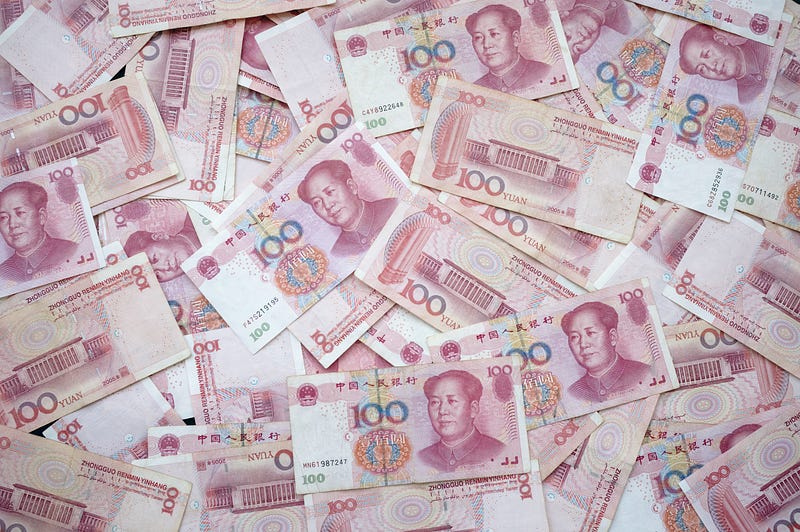
Photo by Eric Prouzet on Unsplash


e-CNY system access

As part of the arrangement, BNP Paribas China will connect into the BOCs system, accessing an e-CNY management system. The BOC has authorized ten banks in China including the four state-owned banks, all of which are domestic lenders, to deal with its digital currency business.

The direct e-CNY system access enables straight-through processing, allowing BNP Paribas to offer digital wallet functionality to its corporate clients relative to the digital yuan. Essentially, the system will allow BNP Paribas China’s corporate clients to link their bank accounts with an accompanying digital wallet. Other functionality that will be enabled as a consequence includes access to smart contract applications through the m-CBDC bridge (central bank digital currency).

BNP Paribas China CEO CG Lai commented on the partnership: “While this collaboration can supplement the Bank’s offline payment collection capabilities and further optimize our clients’ account structure, this also reinforced the Bank’s commitment to the China market.” Lai outlined that the bank intends to enhance customer service capabilities by pursuing digital innovation that, like in this instance, contributes to China’s economic development.

Louise Zhang, Head of BNP Paribas China Transaction Banking claimed that the partnership will “provide innovative, efficient cash management and trade financing services to local and multinational clients.”


CBDC development

There has been a lot of activity in recent years when it comes to the development of CBDCs. The central banks of most nations have carried out some level of preparatory or investigative work relative to a digital currency. However, China has been by far the leader in its development of a CBDC.

The BOC first began research into a digital currency in 2014. The country’s State Council approved the development of the digital yuan in partnership with China’s commercial banks in 2017. Beyond initial development, a testing phase began in 2019 with the project known as the Digital Currency Electronic Payment (DCEP) system emerging as the first version of the digital yuan after a number of years of development.

In 2020, the BOC began more extensive testing of the digital currency in four Chinese cities — Shenzhen, Suzhou, Chengdu and Xiong’an. To promote use of the currency at that time, they offered free digital yuan to residents of those cities to spend, in that way, stepping up efforts to popularize the digital currency.

Last month, the administrators of the Chinese city of Xuzhou announced that it was in the process of publishing a pilot scheme which will set out a means for promoting China’s e-CNY digital currency. Also in April, the eastern city of Changshu clarified that it is gearing up to commence paying state employees in the city in e-CNY. According to an announcement made by the city’s finance bureau the civil servants will start to receive e-CNY as payment in May.


More to Read
View All
Policy & Regulation·

May 23, 2023

Korean Crypto Exchange Alliance Launches Its Official Website

Korean Crypto Exchange Alliance Launches Its Official WebsiteThe Digital Asset eXchange Alliance (DAXA), which comprises South Korea’s five major cryptocurrency exchanges Gopax, Bithumb, Upbit, Korbit, and Coinone, announced the launch of its official website on Tuesday.Photo by Markus Winkler on PexelsWebsite structure and featuresThe website has three primary sections: Introduction, News, and Archives. The Introduction section provides comprehensive information about the exchange, including a greeting from Chairman Lee Sirgoo, who also serves as the CEO of Upbit’s operator Dunamu. It also presents an organizational structure, details of the corporate identity, and links to each individual exchange.The News section provides users with announcements, press releases, and event information. Meanwhile, the Archives section houses educational videos, institutional reports, and a list of important statutes and regulations.Mitigating information disparityDAXA Vice Chairman Kim Jae-jin said the website would offer easy access to information concerning digital assets and the alliance’s self-regulatory measures. She mentioned the group’s commitment to investor protection, focusing on addressing information asymmetry.In addition to the website, DAXA runs a Youtube channel, with its first video uploaded in January of this year.Controversy surrounding the allianceEarlier this year, DAXA faced backlash after it implemented a new clause in its guidelines, which disallowed the re-listing of cryptocurrencies that had been removed from its member exchanges for a period of one year. Critics claimed that DAXA’s guideline was unclear and voiced concerns about the Alliance’s growing influence in the crypto sector. These worries are amplified by the fact that the member exchanges of DAXA command 98% of the crypto trading volume in Korea.

news
Web3 & Enterprise·

Oct 24, 2023

Global Blockchain Incheon Conference to Promote Web3 Exchange and Advancement

Global Blockchain Incheon Conference to Promote Web3 Exchange and AdvancementThe city of Incheon is set to host the Global Blockchain Incheon Conference (GBIC 2023) this year from October 30 to 31 under the theme “The Age of Discovery: Voyage to the New World of Blockchain.” The conference aims to provide a space for the exchange of Web3 technologies that are becoming a part of daily life and facilitating communication between businesses, all in the pursuit of establishing Incheon as a global blockchain hub.Photo by Jiho Choi on UnsplashThe city intends to reveal its master plan to achieve this pursuit, consisting of five major strategy points: citizen participation, sustainable growth, advanced innovation, development of a business-friendly environment, and global technological leadership.Exploring the rich tapestry of GBIC 2023The event will include an opening ceremony, keynote speeches, seminars, and additional activities such as hackathon competitions, photo exhibitions of cutting-edge technologies, and interactive zones. Keynote speakers include Marouen Zelleg, Head of Business Development at Polygon Labs’ Asia-Pacific region; Patrick Yoon, General Manager Korea at Crypto.com; Shun Ishikawa, COO at Astar Foundation; and Christopher Lai, Director of the Hong Kong Trade Development Council’s Korea branch.There will be sessions centered around various themes such as stepping into the future of blockchain, improving safety for the citizens of Incheon, delivering tangible innovation, integrating blockchain into daily life, venturing beyond regulations into new possibilities, disseminating technology, and innovating industrial ecosystems.In particular, the conference will also hold a demo day, where companies can showcase demos for their products and services to attract potential investors.Diverse experiences for visitorsAttendees will have the unique opportunity to see how blockchain technology is integrated into daily life by receiving non-fungible tokens (NFTs) minted with Incheon’s mascots — Deungdaeri, Bumi, Kkomi, and Aini — and participating in blockchain-powered games. Other NFTs, such as those issued by Shinhan Bank with records of information like confirmation of entry and coupon usage, will also be available.GBIC is also holding other online and offline activities for visitors to participate in, such as quizzes, social media events, and souvenir distributions.“We will demonstrate how digital technology is integrated into daily life through blockchain in the Web3 era that we are living in,” said Son Hye-yeong, Head of the city’s Data Industry Division. “We encourage everyone’s interest and participation in the blockchain presentations and forums led by global leaders.”GBIC will take place at Songdo Convensia in Incheon, an international conference complex located in Songdo International Business District.

news
Web3 & Enterprise·

Jul 17, 2025

Binance launches Sharia-compliant staking product

Global crypto exchange platform Binance has launched “Sharia Earn,” a crypto staking product that has been certified as being Sharia-compliant. Sharia-compliant financial products adhere to Islamic law, with sharia law being Islamic canonical law based upon the teachings of the Koran. The product incorporates multi-token staking featuring BNB, Ether (ETH) and Solana (SOL). The product has been built on top of existing infrastructure which Binance had already used to offer “Simple Earn Locked Products” relative to BNB and liquid staking in the case of ETH and SOL. Users of the product can earn staking rewards on crypto assets, while secure in the knowledge that they are investing in compliance with Islamic finance principles.Photo by Kanchanara on Unsplash‘Most meaningful product yet’The new product was announced by the company during a Binance Square Webinar. Binance CEO Richard Teng described it as the firm’s “most meaningful product yet.” He referred to the launch of the product as a defining moment both for Binance and the broader crypto sector. Teng said that “a truly inclusive financial system must respect the values and needs of every community, and that’s the vision behind Sharia Earn.” He added that “Islamic finance’s core tenets—transparency and shared prosperity—are universal,” asserting that these same values are at play in driving Binance. The platform contracted Amanie Advisors, a Dubai-based global Islamic finance advisory service, in order to obtain Sharia-compliant certification for its latest product. Bader Al Kalooti, Binance’s Head of Operations, Marketing & Growth for the Middle East & North Africa (MENA) region, said that “crypto adoption has surged in many Muslim-majority countries, but yield-generating products have remained largely inaccessible due to compliance concerns.” He claimed that the arrival of “Sharia Earn” addresses this issue. While this is Binance’s first Sharia-compliant product, it’s not the first major exchange to enter this market. Last year, Bybit, a Dubai-headquartered global crypto exchange, engaged with ZICO Shariah Advisory Services in order to obtain certification for the trading of Sharia-compliant digital assets. At the time, Bybit claimed to have launched the world’s first crypto Islamic account. Growing Islamic finance sectorIslamic law prohibits interest-based transactions. Crypto staking can be structured in such a way as to avoid interest. Staking is considered to be acceptable as rewards are not fixed. Staking rewards are seen as profit-sharing, with the staker retaining ownership of the asset and being open to the risk of potential losses. Some forecasts suggest that the overarching Islamic finance sector could reach $4 trillion in the years ahead. That represents a market opportunity for crypto platforms to cater to this market by taking the time to acquire Sharia-compliant certification for their crypto products. Binance and Bitget are not the only entities to spot this market opportunity. A new crypto trading platform called BurjX, founded by Canadian entrepreneurs Adam Ferris and Omar Abbas, has been established in the United Arab Emirates (UAE) with a vision of developing Sharia-compliant and regulatory-compliant crypto products.  While no definitive timeline has been established, Abbas told the UAE English language daily newspaper, the Khaleej Times, that his company “will partner with the appropriate Sharia boards, and when we do launch, it’s going to be approved by the appropriate regulators.”

news
Loading