Top

Korean Crypto Exchange Giants Lead Market Expansion With Increased Listings

Web3 & Enterprise·October 31, 2023, 9:27 AM

South Korea’s top three cryptocurrency exchanges Upbit, Bithumb and Coinone have all increased the number of cryptocurrencies they listed for trading this year compared to last year, making them responsible for leading the market’s activity and expansion.
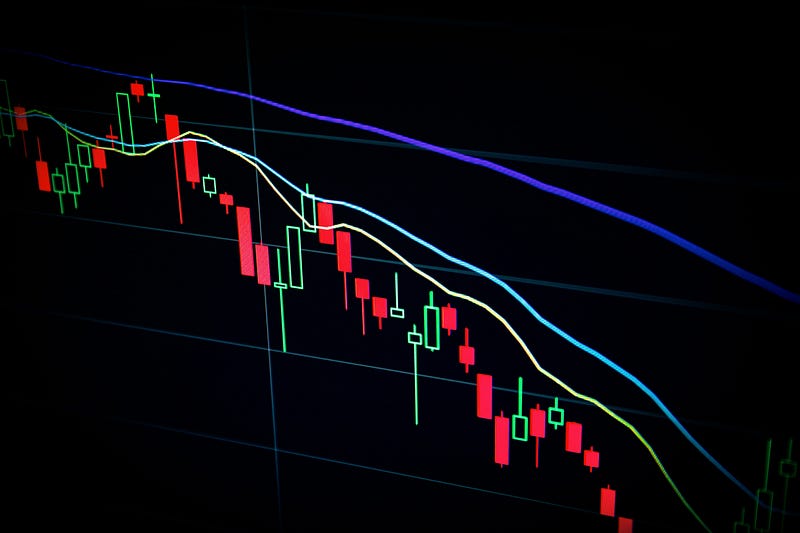
Photo by Maxim Hopman on Unsplash


Dynamic shifts in listing and delisting trends

A recent analysis by local news outlet News1 on the number of cryptocurrencies listed and delisted this year on the country’s major fiat-to-crypto exchanges Upbit, Bithumb, Coinone, Korbit and Gopax — listed in order of market share size — revealed that Upbit and Coinone have increased their number of listings and delistings compared to last year.

The remaining three exchanges, on the other hand, showed differing results. Bithumb increased its number of listings by 47 compared to the number listed last year, while delistings decreased by three, and Gopax listed eight fewer tokens and delisted one more token. Meanwhile, Korbit’s listings decreased by 37 tokens, while delistings decreased by only one.

Among the five exchanges, Bithumb listed the highest number of new cryptocurrencies this year, with 80 new currencies in total added as of Monday (local time). This represents a more than double increase compared to the 33 currencies added last year. It is also 18 more than Coinone’s 62 new currencies and 50 more than Upbit’s 30.


Differing approaches based on situational factors

Gopax and Korbit have taken a more conservative approach compared to Upbit, Bithumb, and Coinone, which have been more aggressive in their listing strategies. In particular, as of Oct. 4, Bithumb has also been offering free transaction fees in an effort to regain its market share. This aggressive approach can be interpreted as an effort to weather the recent crypto winter, although it hasn’t been very successful.

Conversely, the exchange that delisted the most cryptocurrencies this year was Coinone, with 38 taken down as of Monday, marking a significant increase compared to last year when it delisted 26. This can be accredited to the platform’s efforts to improve its reputation and operating system following an incident earlier this year where two former employees were booked for taking bribes in exchange for listing certain cryptocurrencies. Coinone CEO Cha Myung-hun subsequently issued an apology and pledged to take proper measures to prevent such an event from recurring. Since then, the exchange has been actively looking into carrying out delistings tied to issues like the amount of currency in circulation or market price manipulation.

Bithumb and Upbit came in second and third for most delistings this year, with 22 and 18, respectively.

However, Korbit showed the least fluctuation in the number of listings and delistings this year — nine and three, respectively — among the five exchanges. This is a sharp contrast owing to its conservative listing policy. Speculation suggests that the platform might adopt a more aggressive stance if market conditions improve in the second half of the year.

On the other hand, Gopax listed 10 tokens and delisted eight tokens. The exchange has notoriously been dealing with operational difficulties due to regulatory roadblocks despite optimistic outlooks after its acquisition by Binance, one of the world’s most prominent exchanges. Along with the recent appointment of Cho Young-joong as the new CEO of CityLabs, the company that acquired an 8.55% stake in Gopax, the exchange has been working on resolving regulatory issues and improving the state of operations.

More to Read
View All
Web3 & Enterprise·

Apr 11, 2023

NH Bank Establishes Consortium to Build Security Token Ecosystem

NH Bank announced today that Korean banks and fractional investing companies have teamed up to establish a consortium with the aim of building an ecosystem for security tokens. Consortium between banks and fractional investorsThe consortium comprises NH Bank, Suhyup Bank, and Jeonbuk Bank as well as six fractional investing companies, including Seoul Auction Blue, Tessa, and Galaxia Moneytree.The banking sector will contribute to the security token industry by building infrastructure for distributed ledger technology, conducting research on promoting security tokens, and bolstering investor protection. Korean banks’ crypto initiativesNH Bank has been in partnership with domestic Korean crypto exchanges Bithumb and Korbit to provide them with real-name registered bank accounts, demonstrating continued interest in crypto services. Under current law, crypto exchanges in Korea are obliged to hold real-name bank accounts if they want to provide Korean won trading services.This move led by NH Bank shows that traditional banks, which have been more conservative compared to securities companies, are actively striving to secure a position in the security token market.

news
Web3 & Enterprise·

Dec 20, 2023

Miracle Play and HG Ventures to lead global Web3 e-sports gaming industry

Miracle Play and HG Ventures to lead global Web3 e-sports gaming industryWeb3 e-sports tournament platform Miracle Play has forged a partnership with Hangang (HG) Ventures, a venture capital firm committed to accelerating blockchain and Web3 projects, according to an official announcement on Miracle Play’s Medium page on Wednesday (KST). Miracle Play stated that it plans to go global to lead the Web3 e-sports market by leveraging HG Ventures’ global network and vast experience in project acceleration.Photo by ELLA DON on Unsplash“This partnership lays the foundation for us to become a global leader in the Web3 e-sports tournament market. We’re excited to leverage HG Ventures’ experience and global network to conquer the global market together,” said Miracle Play CEO Kim Hyun.Transforming gamingMiracle Play uses smart contract technology to ensure that anyone and everyone can hold various types of gaming tournaments in the form of PC, mobile, console and Web3 games. It is currently in the open beta phase, with a cumulative participation rate of about 30,000 players. Although it is only supported on Polygon as of now, it will eventually be available on a total of nine major networks including Avalanche, XPLA, Solana and more, to facilitate cross-network gaming tournaments that players from all over the world can participate in.The company also recently teamed up with interchain platform HAVAH to build a joint ecosystem.HG Ventures’ endeavorsHG Ventures is one of the largest blockchain VCs in Korea, with a portfolio consisting of multiple Play-to-Earn (P2E), NFT and Game-Fi startups. The company also serves as a bridgehead to help Korean companies go global and overseas companies enter Korea. Notably, the firm recently secured a conditional equity investment worth about KRW 130 billion from Mindfulness Capital Management.“Miracle Play, as a frontrunner in the Web3-based e-sports tournament platform, has immense potential in the global market, grounded in its core values of fairness and transparency. We’re committed to actively supporting their growth and global expansion,” said Sang-Woo Jeong, CEO of HG Ventures.

news
Web3 & Enterprise·

Jun 23, 2023

BitMEX CEO Calls for an End to Internal Market Makers

BitMEX CEO Calls for an End to Internal Market MakersIn a recent interview, Stephan Lutz, the acting CEO and group CFO of 100x Group, the parent company of Seychelles-headquartered global crypto exchange BitMEX, expressed his belief that crypto exchanges should phase out their internal market-making teams.Photo by Joe Roberts on UnsplashProp trading desks unnecessarySpeaking with The Block, Lutz argued that with the growth of institutional liquidity providers and high-frequency traders (HFTs) in the market, proprietary trading desks are becoming unnecessary.Lutz stated: “You have enough HFTs out there and prop shops that can perform that function.” He was referring to the role of liquidity providers in filling gaps in the market. He made these comments in response to the emergence of information earlier this week that raised questions about internal trading practices at Crypto.com, a Singapore-based exchange.BitMEX, once the world’s largest crypto derivatives exchange, also used to employ internal traders who acted as market makers. However, Lutz explained that BitMEX’s internal trading team, named Arrakis Capital, now functions primarily as a “treasury desk.” He sees this transition as a natural evolution for crypto exchanges in a market that has matured and attracted more institutional liquidity providers.Arrakis Capital currently performs limited functions, including converting commission fees earned in Bitcoin into fiat currency for operational purposes, hedging BitMEX’s exposure to tokens held as inventory, and making markets for BitMEX’s token $BMEX. Lutz clarified that Arrakis’s market-making activities are limited because external market makers find the token’s liquidity insufficient.Regarding profitability, Lutz stated that Arrakis earns “very minor returns” of up to $100,000 per month from holding T-Bills, but it incurred losses last year. He noted that Arrakis used to play a more significant market-making role when BitMEX dominated the crypto futures market. However, he assured that the trading desk was always segregated, despite accusations in the past.Fee structuresLutz acknowledged that exchanges with internal trading teams have faced increased scrutiny since the controversies surrounding Alameda Research and FTX. To differentiate between benign internal trading teams and hedge fund-like operations, Lutz highlighted several factors, including the separation of client funds and house funds, access to sensitive data, and the ability to move markets on their own exchange. Fee structures also play a role, with low or no transaction fees potentially signaling a market-making motive rather than serving as a counterparty.Lutz’s perspective suggests that crypto exchanges should rely on external liquidity providers and HFTs rather than maintaining internal market-making teams. He argues that the market has evolved. At this point he feels that these teams are no longer necessary, due to the presence of established players within the digital assets space.As regulatory scrutiny grows, ensuring transparency and avoiding conflicts of interest become crucial for maintaining trust within the crypto exchange ecosystem. The digital assets industry is far from arriving at a mature stage in its development. While many in the industry have found the stance taken by regulators to be unhelpful, the industry itself must also demonstrate its ability to iteratively move towards best practice, without that being a knee-jerk response to regulatory enforcement.

news
Loading