Top

Further Setback for Luno With Loss of Top Exec

Web3 & Enterprise·May 03, 2023, 11:48 PM

Global crypto exchange Luno has been challenged of late, with job cuts, the closure of its presence in Singapore and now the loss of a key executive from the company.

According to a report published by CNBC on Tuesday, the embattled crypto firm is losing Vijay Ayyar, its Vice President of Corporate Development and International. The setback follows an announcement last month by the company to withdraw its presence from the Singaporean market.

Photo by Marten Bjork on Unsplash


Unrelated to Singapore closure

Ayyar made the following comment via WhatsApp message: “I’ll be leaving Luno after 7 years at the company. Given the time I’d spent at Luno, it just seemed like it was time for another challenge.” It’s understood that Ayyar has confirmed that Luno’s move to exit Singapore (where he was based) was not related to his own decision to move on. Instead the top executive has said that he will be joining another company within the crypto and over-arching Web3 space.

Luno management had previously outlined that its decision to exit Singapore formed part of an overall “evaluation of [its] global strategy and presence.” As part of its retreat from that South East Asian market, it withdrew its licensing application from consideration by the local regulator, the Monetary Authority of Singapore (MAS).

At the time of that announcement, the company stated: “ It’s not a decision we’ve taken lightly. It’s always been our mission to put the power of crypto in everyone’s hands. This is still true.”


Organizational changes

The company is clearly going through a period of adjustment from a staffing and resourcing perspective. Last month, Luno announced that its co-founder, Marcus Swanepoel, would be stepping down as CEO. Filling his boots in that role will be Luno’s Chief Operating Officer (COO), James Lanigan.

This organizational upheaval follows a further setback in January, when the company announced a 35% cut in headcount. The decision for those job cuts was taken as a knock on reaction to what had been a very challenging trading environment for Luno and crypto companies generally during a year long crypto bear market in 2022.


A troubled parent company

Luno’s difficulties have been further compounded given that it is a portfolio company of crypto industry conglomerate, Digital Currency Group (DCG). DCG had acquired the company in 2020. DCG also owns digital assets-focused financial services firm Genesis which filed for bankruptcy in January. It owes $575 million to Genesis in a scenario that places DCG itself in default risk.

Genesis and DCG have recently entered into a 30 day mediation process in order to reach a resolution relative to creditors who participated in the Gemini Earn programme associated with the Gemini cryptocurrency business run by Cameron and Tyler Winklevoss.

As yet DCG has not sought to sell off any of its portfolio companies which includes Grayscale, CoinDesk and Foundry. However, it’s understood that Luno has hired investment bank Canaccord Genuity in an effort to garner suitors who would be interested in investing in the company. This may be part of a plan to unburden the troubled DCG parent company.

More to Read
View All
Web3 & Enterprise·

Sep 06, 2023

Korbit Passes Post-Audit for ISMS-P and ISO Certifications

Korbit Passes Post-Audit for ISMS-P and ISO CertificationsSouth Korean crypto exchange Korbit announced on Wednesday that it has successfully passed a post-audit to maintain its Personal Information and Information Security Management System (ISMS-P) certification and four different International Organization for Standardization (ISO) certifications — ISO 27001, ISO 27017, ISO 27018, and ISO27701.“By maintaining our ISMS-P and ISO certifications this year, we were able to reaffirm the stability and trustworthiness of Korbit’s personal information protection capabilities and security management system,” said Oh Se-jin, CEO of Korbit.Photo by FLY:D on UnsplashRigorous criteriaThe ISMS-P is a security management system jointly operated by the Ministry of Science and ICT and the Personal Information Protection Commission, representing the highest level of security management in Korea. It combines 80 requirements for Information Security Management System (ISMS) certification and 22 requirements for Personal Information Management System (PIMS) certification, totaling 102 requirements that must be met. Once obtained, certification is valid for three years, and annual post-audits are required to maintain its validity.Korbit first obtained ISMS-P certification in September of 2021 and has once again passed this year’s post-audit that was conducted last Wednesday.Meeting international standardsIn addition, the exchange had previously passed post-audits for four ISO certifications related to information protection and personal information management systems earlier in June. This includes ISO 27001 for information security management systems, ISO 27017 for information security controls on cloud services, ISO 27018 for protection of personally identifiable information (PII) in public clouds, and ISO 27701 for privacy information management systems.This achievement demonstrates Korbit’s commitment to reliability and security when operating and managing exchange services.“As a crypto exchange, we will continually focus on strict security management to ensure the protection of customer information and assets,” said CEO Oh.

news
Markets·

May 16, 2025

Tokyo's Relic launches fan-driven anime project using NFT and blockchain

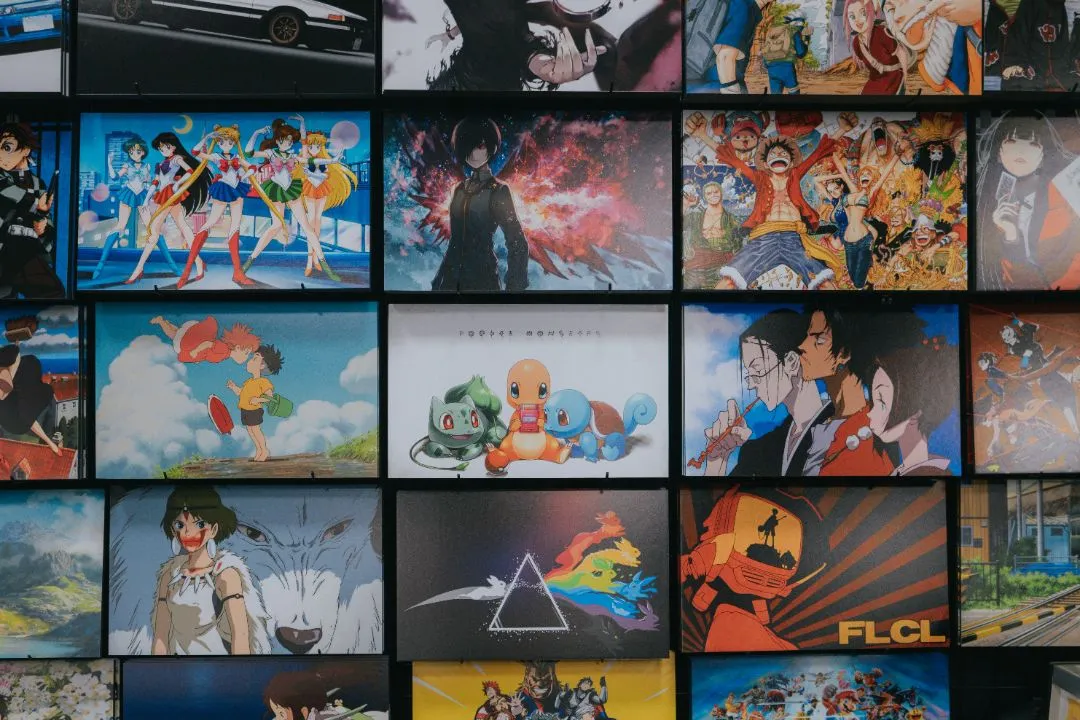
Relic, a Tokyo-based provider of business co-creation services, has launched a fan-driven short anime project using NFT and blockchain technology in collaboration with MetaMe, a metacommunication service developed by mobile carrier NTT Docomo.Photo by Dex Ezekiel on UnsplashFan empowerment through DAO and NFTsAccording to a press release on PR TIMES, the project, set to officially launch on June 19, 2025, aims to be accessible even to newcomers to NFTs or Web3. It will strive to ensure sustainability through transparent fund management and community-driven decision-making. The project introduces a new anime production model called "Anime DAO," starting with a near-future anime set in Neo Tokyo in 2050 that features characters and the world of the popular NFT collection "NEO TOKYO PUNKS." Funding will be raised through crowdfunding and the sale of celluloid art NFTs. Supporters will have the opportunity to vote on production decisions and own iconic scene NFTs once the anime is completed. The finished anime will premiere on MetaMe, followed by exclusive streaming on d-anime Store, while also integrating with the blockchain game GT6551, where fans can use anime characters and vehicles. This cross-media project combines anime, NFTs and e-sports, enhancing both fan engagement and user experience. Growing blockchain adoption in animeThis further demonstrates how the animation industry is embracing blockchain technology. In January, the Animecoin Foundation—whose early key contributors include Los Angeles-based NFT project Azuki—introduced the ANIME token on Ethereum and Arbitrum. Its tokenomics indicate a total supply of 10 billion tokens. The Foundation aims to connect the global anime fan base to blockchain, enabling creators to gain clearer insights into fan engagement and attribution, potentially unlocking new revenue models to support their intellectual property (IP). Although established in March 2024, the Animecoin Foundation traces its origins to Azuki’s mission of building an open anime universe. Azuki focuses on using blockchain technology and community involvement to develop decentralized anime IP and enrich the fan experience.  In a separate development, South Korea’s blockchain gaming platform WEMIX inked a memorandum of understanding (MOU) with Japan’s Toei Animation late last year. Known for producing iconic titles such as Dragon Ball, One Piece and Slam Dunk, Toei Animation brings its storytelling and IP expertise, while WEMIX provides blockchain technology. The partnership aims to create an innovative blockchain-based gaming experience for a global audience.

news
Web3 & Enterprise·

Oct 21, 2023

UAE Emirate Launches Digital Asset Oasis Free Zone

UAE Emirate Launches Digital Asset Oasis Free ZoneRas Al Khaimah (RAK), one of the seven Emirates of the United Arab Emirates (UAE), has launched the RAK Digital Assets Oasis (RAK DAO), a free zone tailored exclusively for digital and virtual asset enterprises.Photo by Mostafa Ashraf Mostafa on UnsplashFrom conception to launchThe Emirate has been working on the RAK DAO project for some time, having enacted a law to establish the free zone in March of this year. In July it emerged that RAK Digital Assets Oasis had partnered with the HBAR Foundation, the project team behind the Hedera public ledger, with HBAR extending funding and resources to fuel the growth of free zone members.Having put in the hard yards to establish the free zone, RAK DAO, under the patronage of RAK Emirate ruler His Highness Sheikh Saud Bin Saqr Al Qasimi, had its launch event on Thursday. The event included a range of industry speakers including Ledger Chairman and CEO Pascal Gauthier, Animoca Brands Co-Founder and Executive Chairman Yat Siu, DFINITY Founder Dominic Williams, and TON Foundation President Steve Yun, among others.During the event, DAO creation and governance platform DeXe DAO Studio announced its partnership with RAK DAO.With an eye towards keeping the RAK Emirate ahead of the technological curve, RAK DAO aims for the digital assets oasis to become the world’s first free zone dedicated solely to digital and virtual asset companies. While RAK DAO is initially expected to focus on non-financial activities, it holds the potential to introduce financial activities at a later stage.Nurturing Web3 innovationThe mandate of RAK DAO is to provide robust support to companies engaged in cutting-edge technologies. This includes but is not limited to ventures in the metaverse, blockchain, utility tokens, virtual asset wallets, non-fungible tokens (NFTs), decentralized autonomous organizations (DAOs), decentralized applications (DApps), and various other Web3-related businesses.Entrepreneurs who establish their presence within the confines of this free zone will be granted the privilege of retaining 100% ownership of their enterprises. Moreover, they will benefit from innovative tax schemes and a regulatory framework that is tailored to the unique demands of the digital asset industry.Progressive approach to Web3The UAE, as a nation, has actively pursued and courted crypto and blockchain firms by cultivating a progressive regulatory environment. Dubai led the charge by introducing a virtual assets law and establishing the Virtual Asset Regulatory Authority.RAK is not the first Emirate to establish a free zone that caters to crypto and Web3 business within the UAE. The Emirate of Abu Dhabi has established the Abu Dhabi Global Market (ADGM) while the Dubai International Financial Centre (DIFC) established its own financial regulator in Dubai, paving the way for attractive free zones for digital asset businesses. The Dubai Virtual Assets Regulatory Authority (VARA) even took its commitment a step further by inaugurating its headquarters in The Sandbox in May 2022.Dubai has issued operational licenses to several crypto firms, including prominent names like Binance, Crypto.com, and Nomura’s Laser Digital and digital asset custodian Komainu. These licenses have further solidified the UAE’s position as a preferred destination for crypto, blockchain, and Web3 enterprises.

news
Loading