Top

Ripple Exec: Clear Regs Helped Japanese Market Withstand Crypto Winter

Policy & Regulation·April 26, 2023, 1:39 AM

Emi Yoshikawa, the Vice President of Strategy & Operations at business-focused crypto solutions provider Ripple, has attributed the Japanese cryptocurrency market’s ability to withstand the recent crypto winter to well-defined regulations.
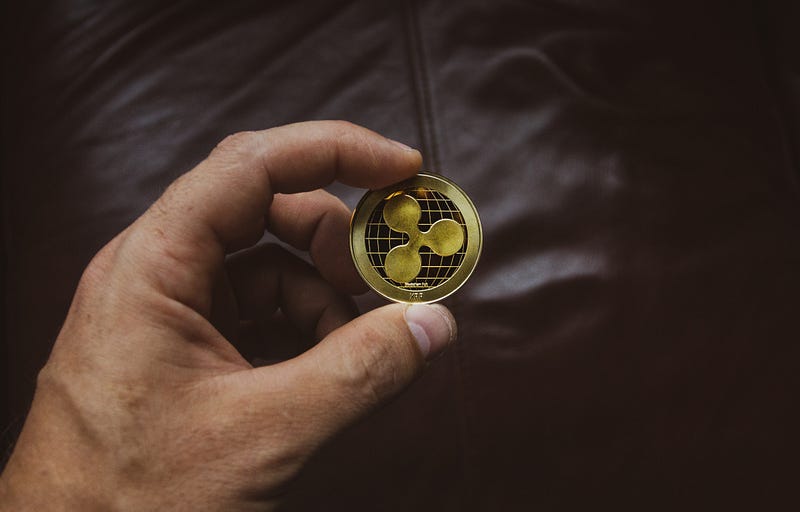
Ripple coin
©Pexels/Worldspectrum


Security breach at Mt.Gox

In a recent interview with Korean blockchain media outlet Digital Asset, Yoshikawa noted that Japan implemented regulations on cryptocurrencies earlier than other countries, in part due to the 2014 security breach at the Tokyo-based Bitcoin exchange Mt.Gox that resulted in investor losses.

The Mt.Gox exploit prompted revisions to the Payment Services Act, which now recognizes cryptocurrencies as a means of payment. Furthermore, the Financial Instruments and Exchange Act was revised in 2020 to give security tokens the same status as stocks. The Japanese government is also exploring the possibility of allowing the domestic circulation of foreign stablecoins.

Although it took several years for companies to enter the market after the regulatory framework was established, the security token market has since expanded, with more businesses now participating.

Yoshikawa credited the Japanese crypto market’s resilience during the recent global crypto winter to clear regulatory guidelines. The recognition of cryptocurrencies as financial instruments enabled the regulation of not only spot trading but also derivatives trading. Japanese exchanges are also required to hold customer funds separately in trust firms, ensuring investor protection. This regulatory environment allowed companies and investors to confidently enter the crypto industry last year.


FTX Japan

FTX Japan’s return of customer assets and resumption of withdrawals in February showcased the effectiveness of these clear regulatory guidelines. Among subsidiaries of the now-defunct crypto exchange FTX, FTX Japan is the only one to have returned customer assets thus far, Yoshikawa emphasized.

While crypto regulations in some areas, such as taxation, remain insufficient, both the Japanese government and entrepreneurs agree that the Web3 industry should develop in a way that benefits the nation’s economy.


Ripple’s projects in Japan

Yoshikawa said that Ripple views the Japanese market as one of its key markets. In 2016, the company formed a joint venture, SBI Ripple Asia, with Japanese financial group SBI Holdings. Through this partnership, Ripple collaborated with several Japanese financial institutions to launch RippleNet and provide liquidity to the payment service.

Japan’s largest remittance technology firm, SBI Remit, has adopted RippleNet and Ripple’s own remittance system On-Demand Liquidity (ODL) to facilitate real-time payments between Japan and Southeast Asian nations. Yoshikawa underlined that Ripple is committed to supporting Southeast Asian workers in Japan who need swift and cost-effective international payments.

More to Read
View All
Web3 & Enterprise·

Aug 03, 2023

KuCoin Halts Bitcoin and Litecoin Mining Pools Amidst Strategic Shift

KuCoin Halts Bitcoin and Litecoin Mining Pools Amidst Strategic ShiftIn an announcement on Tuesday, Seychelles-based cryptocurrency exchange KuCoin revealed its decision to temporarily suspend its Bitcoin and Litecoin mining pools, effective from 16:00:00 on August 15, 2023 (UTC).Photo by Traxer on UnsplashChanging business strategyThis move is attributed to KuCoin’s evolving business strategy, although specific details remain undisclosed. The exchange expressed its regret for any inconvenience caused and extended gratitude for users’ continued support.It appears that the company wants to focus on core business activities and for that reason, it’s terminating its mining pool activity. That said, the discontinuation was described in its statement as being “temporary” although that has been left open-ended with no indication of if or when it would bring the service back into operation.The company is open to the idea of revisiting the facilitation of mining pools in the future. “We will see if it is needed to restart based on the market and users’ demand in the future,” a spokesperson for the company told The Block.To ensure miners’ uninterrupted earnings during the suspension, KuCoin advised users engaged in cryptocurrency mining to transition their Bitcoin (BTC) and Litecoin (LTC) miners to alternative mining pools before the specified suspension date. Additionally, the exchange emphasized the importance of backing up and preserving mining records and related data, recommending users complete these actions before August 27.Presently, the KuCoin Bitcoin mining pool maintains a hash rate of 9.08 exahash per second (EH/s), while the Litecoin pool operates at 3.90 terrahash per second (TH/s). These figures contribute to the broader hash rate landscape, where the entire Bitcoin network boasts a hash rate of 349.19 EH/s, compared to the Litecoin network’s 792.16 TH/s.Workforce reductionIt is clear that the company is in the process of adjusting to current market conditions. Last week, rumors surfaced of a plan to effect a workforce reduction. That prompted KuCoin’s CEO Johnny Lyu to respond, clarifying that the exchange’s operations are running smoothly. Dismissing layoff speculation, Lyu highlighted the exchange’s steady expansion and strong growth as demonstrated by the H1 2023 report. The report showcased an increase in users and new listings, underscoring the platform’s vitality and development.Mandatory KYCIn recent months, KuCoin has also implemented mandatory Know Your Customer (KYC) requirements, obligating users to undergo verification processes. Existing customers who fail to complete KYC procedures will be unable to make deposits. With over 20 million registered accounts, the exchange felt that it needed to improve on its level of regulatory compliance and security measures.It’s highly likely that an action taken by authorities in New York in the United States in March prompted KuCoin’s decision to tighten up on KYC. At that time, the New York Attorney General said that action was being taken against KuCoin due to its failure to register as a securities and commodities broker-dealer.As KuCoin undergoes these changes, the suspension of its mining pools raises questions about the broader implications for its business strategy and the potential impact on miners within its ecosystem. That said, the firm is not alone in making changes, with most crypto exchanges having had to adjust to a business and regulatory environment that has changed considerably since the 2021 crypto bull run.

news
Web3 & Enterprise·

Sep 01, 2023

Woori Bank Joins Forces with Samsung Securities and SK Securities to Pioneer Security Token Market

Woori Bank Joins Forces with Samsung Securities and SK Securities to Pioneer Security Token MarketWoori Bank has recently forged a memorandum of understanding (MOU) with Samsung Securities and SK Securities, aiming to swiftly venture into the security token market in anticipation of the forthcoming institutionalization of security tokens in South Korea, according to local news outlet Dailian.Photo by Anna Evlanova on UnsplashKorea’s regulatory pathway for security tokensIn February, the Financial Services Commission unveiled guidelines for regulating the issuance and distribution of security tokens. This initiative aligns with the South Korean government’s broader goal of driving innovation in digital finance. Following this, the National Assembly conducted a public hearing on the proposed legislation. Additionally, the Financial Supervisory Service organized an informative session discussing the updated application procedure for investment contract securities and the corresponding examination protocols. As a result, the outlines of the regulatory framework are beginning to take on a more defined form.Compliance with regulatory frameworkWoori Bank President Byung-Kyu Cho, Samsung Securities President Chang Seok-hoon, and SK Securities CEO Kim Shin were present at the signing ceremony. During this event, the three financial institutions agreed to embark on their collaborative efforts to explore business models for security tokens in compliance with the regulatory framework. Their aims include constructing the infrastructure for security tokens and validating distributed ledgers, as well as forming Finance 3.0 Partners (F3P), a collaborative consortium dedicated to formulating investor protection measures.Three entities’ individual endeavorsWoori Bank has undertaken extensive preparations to make its foray into the security token market. In an effort to swiftly adapt to the changing legal dynamics surrounding security tokens, the bank has established a dedicated division and is operating a task force responsible for devising strategic approaches, with participation from Woori Financial Group’s affiliates. By partnering closely with the securities firms, Woori aims to leverage its wealth of corporate finance expertise to identify innovative business models.Samsung Securities has successfully concluded its own functional verification of the security token platform. Furthermore, the company has secured the technology necessary to connect blockchain wallets and securities accounts. These efforts will contribute to providing stable services. Samsung is also anticipating the utilization of security tokens as a fresh avenue for financing, collaborating with various enterprises to discover their practical applications. Through these endeavors, the company intends to offer attractive and stable investment products to its clientele.SK Securities stands out as the sole Korean securities firm to have established an account management system for security tokens, with the intention of seeking designation as an innovative financial service by the Financial Services Commission. Initiatives chosen as innovative financial services are granted regulatory exemptions. SK Securities has partnered with a variety of fractional investment firms to spearhead the research and development of security token issuance and distribution systems. It also plans to collaborate with experts in the domains of finance, technology, and content. This joint effort aims to build the infrastructure necessary to create a financial ecosystem that welcomes diverse participants and creates new value.An F3P official highlighted that this tripartite partnership would facilitate the alignment of their members’ security token products with regulatory guidelines. The person also mentioned their commitment to swiftly establishing a top-notch platform and ecosystem that will help position them as market leaders.

news
Web3 & Enterprise·

Jun 30, 2025

Litigation set to fuel Bitcoin accumulation at Genius Group

Artificial intelligence-driven education technology firm, Genius Group, has announced a plan to buy Bitcoin from the proceeds of damages that the company is pursuing through the courts. In a press release published to the Singapore-headquartered company’s website on June 26, it outlined that the firm’s Board of Directors has approved a distribution plan that would see any potential damages received from litigation that Genius Group is currently embroiled in, divided equally for distribution to shareholders and for the purchase of Bitcoin for the company’s Bitcoin treasury.Photo by Kanchanara on UnsplashUp to $1 billion in potential damagesGenius Group CEO, Roger Hamilton, commented on the matter, stating:“We are seeking combined damages of over $1 billion. As both lawsuits are being pursued by the Company to recover damages caused by third parties directly to our shareholders, the Board believes that 100% of any proceeds from the successful outcome of these cases should be directly distributed or reinvested for the benefit of shareholders.” On X, Hamilton outlined that there’s no guarantee with regard to how much the company recovers through litigation. However, he added that if justice prevails and the company is awarded $1 billion in damages, that would equal a $7 dividend per share for shareholders and the addition of 5,000 BTC to the firm’s Bitcoin treasury. Last month, the company provided an update on a lawsuit it has taken under the Racketeer Influenced and Corrupt Organizations (RICO) Act. Initially, $450 million in damages had been pursued but Genius Group amended the lawsuit, raising its claim to $750 million.  The lawsuit is being taken against Peter Ritz and Michael Moe as the controlling officers and directors of LZGI International, and against Michael Carter and John Clayton, in the United States District Court, Southern District of Florida. The company alleges that the defendants attempted to defraud Genius Group.  ‘Bitcoin First’Genius Group announced its “Bitcoin First” approach, and the launch of a Bitcoin treasury in November 2024, getting started with an initial purchase of 110 BTC valued at $10 million at that time. In April 2025, a New York court prohibited the company from selling stocks in order to fund the purchase of Bitcoin. Those court-imposed funding restrictions led to the firm selling off a small proportion of the overall Bitcoin that it was holding.  Prior to that prohibition on the purchase of Bitcoin being imposed, Genius Group had expressed the aspiration to build up its Bitcoin reserve to a value equivalent to $100 million. Wading further into the Bitcoin space, the firm acquired blockchain learning platform, XD Academy, in December 2024. On May 22, Genius Group announced that the U.S. Court of Appeals had overturned the ban imposed on the company. With that, it increased its Bitcoin holdings by 40%. As of June 17, the company held 100 BTC, valued at around $10 million. The firm plans to bring forward another lawsuit “alleging naked short selling and evidence of spoofing against certain parties,” with damages being pursued in the region of $250 million. Commenting on the coming of age of Bitcoin and the pursuit of a Bitcoin treasury strategy back in November 2024, Hamilton stated that “we're living in a unique moment in history - one most public companies will miss.” 

news
Loading
