Top

Busan Hosts Blockchain Conference with Aim to Become Digital Financial Hub

Policy & Regulation·April 26, 2023, 1:37 AM

Busan Metropolitan City hosted a blockchain conference on Monday as part of its aim to establish itself as a leading digital financial hub, according to Korean news agency News1.
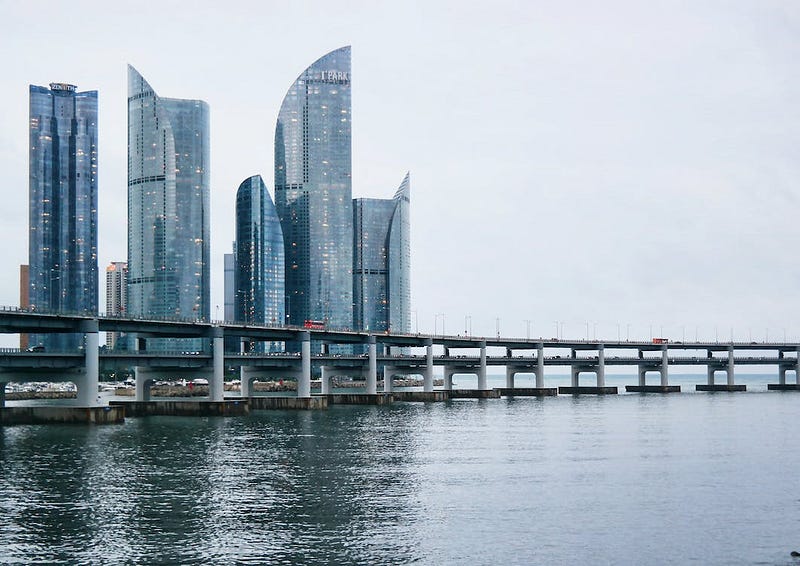
Busan, ocean view
©Pexels/BERK OZDEMIR


Dot-com bubble comparison

During the conference, Kim Sang-min, chairman of the Busan Digital Asset Exchange Establishment Committee, highlighted the distortion in the blockchain landscape caused by unfair trading due to market monopolies and subsequent regulatory challenges. He compared the current situation to the dot-com bubble, stating that despite past issues, Korea has become a technological powerhouse. Kim suggested that while there may be challenges in the crypto exchange industry, excessive regulation should be avoided to promote growth.

Kang Dae-goo, CEO of crypto exchange Borabit, agreed that many industries face initial growing pains, and the crypto industry is no exception. He urged Korea to join the race with financially-advanced countries promoting cryptocurrency in order to thrive in the digital age.


Busan as digital financial center

Experts at the event identified Busan as the city with the greatest potential to become the nation’s premier digital financial center. Kim noted that Busan, which has been designated as a zone with lenient blockchain regulations, houses financial institutions with assets totaling 261 trillion won (~$195 billion) as of 2021. The city also hosts various international events for games and movies, providing ample content to develop virtual asset ecosystems.

Kim proposed the establishment of a digital asset exchange that focuses on investor protection, emphasizing decentralization, fairness, and integration. He called for addressing current monopolistic governance practices and resolving unfair practices within crypto exchanges, such as cryptocurrency listing evaluations.


More efforts urged

Attendees at the conference suggested that the Busan government and regional banks should take the lead in building infrastructure to attract companies. Kang noted that even though Busan has been designated as a blockchain special zone for four years, 48% of the industry remain unaware of this. He encouraged Busan to step up its efforts, citing examples of other municipalities, such as Incheon, which are actively engaging in various blockchain projects.

Kang stressed the importance of public bodies providing infrastructure and support to attract businesses, adding that a business-friendly environment with a proper screening scheme will facilitate self-correction within the blockchain market as problematic companies are gradually filtered out.


More to Read
View All
Web3 & Enterprise·

Sep 23, 2025

First Toyota vehicle in Bolivia purchased with USDT as inflation bites

In a first for Bolivia, Japanese automaker Toyota saw one of its vehicles purchased with the stablecoin USDT, according to a recent X post by digital asset trust company BitGo. The transaction underscores growing cryptocurrency adoption in the Latin American country, which is grappling with soaring inflation and a shortage of U.S. dollars. The transaction was facilitated by a partnership between Toyosa (the official Toyota distributor in Bolivia), BitGo, and Tether, the issuer of the USDT stablecoin. The sale highlights the increasing use of digital assets for commercial and retail payments, as the global stablecoin market cap recently reached an all-time high of $293 billion at the time of publication. Confirming the milestone, Tether CEO Paolo Ardoino stated on the social media platform X that, in addition to Toyota, the USDT stablecoin is now also accepted by distributors of BYD and Yamaha vehicles in Bolivia.Photo by Christina Telep on UnsplashCrypto use surges amid inflation and dollar shortage The development comes as Bolivia faces 25% inflation, the highest in 34 years. With the local economy under pressure, many Bolivians are moving their money into cryptocurrencies in an effort to protect their savings, according to Bloomberg. U.S. dollars have become increasingly scarce. Unofficial exchange rates have jumped to 14 bolivianos per dollar, nearly twice the government's rate. That gap is pushing people toward stablecoins like USDT, which are easier to access and hold their value. The shift is already showing up in payment trends. Digital transactions surged more than fivefold in the first half of 2025, reaching nearly $300 million. Regional adoption and Toyota’s blockchain pushThe rise in crypto use in Bolivia is part of a broader shift across Latin America. According to a recent report from analytics firm Chainalysis, crypto adoption in the region jumped from 53% to 63% in the 12 months ending June 2025. The only region to outpace this growth was Asia-Pacific, which saw a 69% year-over-year increase. El Salvador stands as another prominent example in the region, having adopted Bitcoin (BTC) as legal tender in September 2021 and currently holding over 6,300 BTC in its treasury. Separately, Toyota Motor Corporation has been actively exploring applications for blockchain technology. In March, its subsidiary Toyota Financial Services, in collaboration with Daiwa Securities and MUFG Bank, launched its first security token bonds on Progmat, a platform founded by MUFG with backing from other big banks like Sumitomo Mitsui Banking Corporation (SMBC) and Mizuho. The initiative is aimed at strengthening the Toyota Group’s ties with individual investors and supporting the growth of the digital bond market. 

news
Web3 & Enterprise·

Apr 10, 2023

Alchemy Pay Gearing Up for Expansion into South Korea

Singapore-based payments provider Alchemy Pay has secured $10 million in investment from market maker DWF Labs at a valuation of $400 million, as the company looks to expand its business in South Korea.©Pexels/Ivan Samkov Korean expansionTaking to Twitter, Alchemy Pay stated that it “will continue to enhance [its] global market presence by bringing forward [its] payment solutions and services to the Korean market, providing an easy onboard from fiat to cryptocurrencies for more Korean companies.” It’s understood that the high level of acceptance of digital assets in Korea is attractive to Alchemy as something it can capitalize on.Alchemy’s Ecosystem Lead, Robert McCracken, stated in a Medium blog article that while this investment was pursued relative to a specific and strategic decision to enter the Korean market, the company is otherwise well funded. DWF funding spreeDWF Labs’ investment of $10 million in Alchemy Pay marks its eighth investment or funding round of at least $10 million into Web3 and crypto projects in the past six weeks, with a combined total of $165 million.According to DWF’s managing partner Andrei Grachev, the current bearish market is an opportune time to enter the investment space. Grachev stated to CoinDesk that the company has accumulated enough profits to invest in projects at present.With offices in Singapore, Switzerland, Hong Kong, the United Arab Emirates, South Korea and the British Virgin Islands (BVI), DWF Labs fits the role of a global multi-stage Web3 investment firm. It collaborates and partners with portfolio companies with regard to activities such as market making, token listing and Over The Counter (OTC) trading solutions. $ACH boostAlchemy Pay’s native token, $ACH, has a market capitalization of around $188 million. Buoyed by today’s announcement, the token was trading at $0.03885 at the time of publication. That’s a surge in value in dollar terms of around 16%, although it’s still quite a ways off its all time high of $0.18468, achieved on August 6, 2021, at the height of the last crypto bull run.In a press release published on Monday, Alchemy Pay described itself as “a payment gateway that seamlessly connects crypto and global fiat currencies for businesses, developers, and users.”Founded in 2018, the company has previously collaborated with Visa, Mastercard, Google Pay, and Apple Pay for this purpose. Cryptocurrency and derivatives exchange OKX recently integrated Alchemy Pay into its platform, in order to simplify the process of purchasing cryptocurrency using local currencies for its customers. NFT CheckoutApart from its payment services, Alchemy Pay has also launched its innovative NFT Checkout service. The service allows customers to purchase NFTs using fiat payment options, making it as easy as any other standard online payment method. This function enables users to acquire NFTs with their local domestic currencies, providing a seamless purchasing experience.The platform offers over 300 local alternative payment channels, enabling it to extend its reach beyond traditional credit cards into local mobile wallet options. The footprint of the business now extends across Northern and Latin America, Europe and Southeast Asia.

news
Policy & Regulation·

Nov 07, 2024

Crypto community optimism across Asia following Trump’s election victory

Recognition of Donald Trump’s victory in the U.S. presidential election on Nov. 6 has led to many crypto proponents in Asia foreseeing a positive outcome for crypto within the Asian region, and globally.Photo by Kevin Lanceplaine on UnsplashBright future for cryptoAccording to a report published by the South China Morning Post (SCMP), crypto proponents in China are expectant of a bright future for crypto both on the Chinese mainland and in Hong Kong. The mindset seems to be that a pro-crypto stance in the U.S. will lead to other jurisdictions taking a similar approach. HashKey CEO Livio Weng expressed such a view, stating:“Trump’s pro-crypto stance is expected not only to invigorate the US virtual-asset industry, but also to encourage Hong Kong to further relax its own virtual-asset policies in its quest to become a global Web3 hub.”  Prior to being elected, Trump had promised to fire Gary Gensler, who as Chair of the Securities and Exchange Commission (SEC) has pursued a strategy of regulation by enforcement, a course of action that has been broadly criticized by crypto market participants in the United States. Ripple CEO Brad Garlinghouse wasted no time in calling on Trump to act, and to fire Gensler. Influencing regulatory attitudesThere seems to be a consensus among commentators that the regulatory approach to crypto in the U.S. is going to become crypto-friendly. Crypto analyst Miles Deutscher suggests that “a Trump victory is a WIN for US tech innovation, as it would solidify [the United States’] status as a crypto powerhouse.” Weng believes that “this shift could also positively influence regulatory attitudes toward virtual assets in mainland China.” That view is mirrored in South Korea by KP Jang, head of Xangle Research. Jang asserts that “if Trump implements bold virtual asset policies while improving existing regulations, it is expected to accelerate regulatory reforms in Korea as well.” Sumit Gupta, CEO and co-founder of India’s largest crypto exchange, CoinDCX, outlined on X that Trump’s victory is a pivotal moment for global crypto, adding:”The direct effects of Trump’s policies might not alter India’s regulatory environment right away. However, global sentiment and investor behaviour will be influenced, eventually reaching India.” The CoinDCX CEO believes that should Trump now appoint regulatory leadership that’s crypto-positive, any resultant crypto regulatory framework adopted by the U.S. could become a blueprint for use by other nations. Gupta identified further potential upside insofar as the implementation of positive crypto policies by Trump would lead to a more attractive environment for crypto, “potentially opening up enhanced funding opportunities and partnerships for Indian startups as investors seek global growth.” Bitcoin price surgeAt the time of writing, the Bitcoin unit price is up 0.64% over the course of the past 24 hours, at $74,884. American business news channel CNBC reported that Bitcoin could reach $100,000 before Trump even takes office.  Matthew Hougan, chief investment officer (CIO) at crypto asset fund manager Bitwise, said that Trump’s election victory could herald in a “golden age of crypto,” with a friendlier regulatory environment leading to greater institutional investment and mainstream adoption.

news
Loading