Top

ICP Planning Hong Kong Hub

Web3 & Enterprise·April 21, 2023, 5:47 AM

The development team behind the Internet Computer Protocol (ICP) is planning on creating a Hong Kong-based hub.

In Twitter comments published on Wednesday, Dominic Williams, the Founder of the Dfinity Foundation, the development team responsible for ICP, stated that as a consequence of his recent visit to Hong Kong and participation in the Web3 Festival, the project “plans for an Internet Computer Hub, probably in Cyberport.”
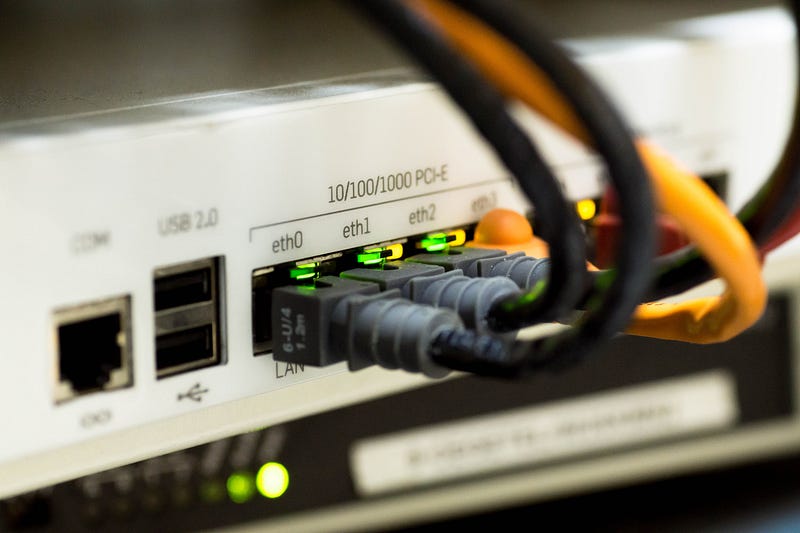
internet cables
©Pexels/Pixabay

ICP is a set of protocols that facilitate independent data centers globally to band together, offering a decentralized alternative to the existing centralized cloud providers. On that distributed basis, it allows users to create websites, apps and various web-based services.

Founded by Williams and the Dfinity Foundation, the project had the backing of venture capital firms Andreessen Horowitz (a16z) and Polychain Capital from an early stage. Cyberport is a 25 hectare multimedia park in Hong Kong’s southern district, consisting of a hotel, four primary office buildings and a retail entertainment complex. It’s home to over 1,900 start-ups and technology companies, making it a creative digital community and technology cluster within Hong Kong.


Giving Silicon Valley a run for its money

Williams had made a keynote address at the Web3 Festival last week. Dfinity expressed the view that enthusiasm for blockchain, Web3 and the ICP project was “off the charts” at the Hong Kong event. It seems that Williams was similarly enthused such that he wants to establish a physical presence for the project in Hong Kong.

Prior to the Web3 Festival event, Williams had also stated that “dynamism in Asia is incredible” . . . “Asia will give Silicon Valley a serious run for its money.” In making a comparison with Silicon Valley, Williams referred to comments he had heard being made by a Taiwanese venture capitalist, suggesting in relation to leading Californian tech companies such as Facebook, “that nobody does any work, it’s like a retirement company.”


ICP Asia Alliance

Another item that Williams noted as a take away from his Hong Kong visit was a recognition by the Dfinity Foundation founder that the formation of an ICP Asia Alliance is a possibility. He stated that “things [are] already happening” to effect this eventuality.

Confirming that work in progress, it appears that Williams met last week with members of TinTin, a Web3 development DAO, as part of his ICP Asia Alliance initiative. It’s understood that as part of the initiative, the ICP Asia Alliance will cooperate with local venture capital firms in Hong Kong, with a view towards promoting and cultivating talent in Asia relative to Web3 and the ICP project.


Building a new internet

As a Swiss non-profit, the Dfinity Foundation launched the ICP blockchain in May 2021. The project has garnered considerable attention from both developers and investors. It also distinguishes itself from many other blockchain projects insofar as it has attracted the involvement of leading tech companies such as Oracle and Samsung.

At the time of publication, $ICP was trading at $6.24, 15% its 2023 high point of $7.34.
More to Read
View All
Web3 & Enterprise·

Jul 30, 2025

JD.com registers ‘JCOIN’ & ‘JOYCOIN’ ahead of Hong Kong’s Stablecoin Ordinance

JD.com, one of China’s largest business-to-consumer (B2C) online retailers, is understood to have registered “JCOIN” and “JOYCOIN” ahead of Hong Kong’s Stablecoins Ordinance going live on Aug. 1. According to a report published by the Hong Kong Economic Times, in its trademark registration application, JD.com described the services associated with the two brand names as implicating the provision of electronic fund transfers and cryptocurrency-related financial transactions achieved via blockchain technology.Photo by tommao wang on UnsplashHKD-pegged stablecoinThe trademark registrations were filed by JD.com's subsidiary company, JD Coinlink Technology. The company was announced as a participant in the Hong Kong Monetary Authority’s (HKMA) stablecoin issuer sandbox last year. Around that timeframe, it also unveiled plans to launch a stablecoin pegged to the Hong Kong dollar (HKD).  That move was followed by British multinational bank Standard Chartered in February, with it announcing the launch of a HKD-pegged stablecoin in Hong Kong alongside local partners. Standard Chartered and its partners have also been participants in Hong Kong’s stablecoin issuer sandbox. Liu Peng, CEO of JD Coinlink Technology, provided an update in May, outlining that its stablecoin was entering phase two of sandbox testing. He stated that he hopes the project “contributes to payment efficiency not only within JD’s ecosystem but also for businesses and individuals worldwide.” On its website, JD Coinlink Technology describes its “JINGDONG Stablecoin” as a stablecoin backed 1:1 by the Hong Kong dollar, with the goal of meeting regulatory compliance and becoming “one of the leading digital currencies for businesses and individuals seeking for efficient, cost-effective, and secure payment solutions.” In a press briefing in Beijing in June, Peng outlined that the company was making preparations to apply for stablecoin issuer licensing in several markets. The JD Coinlink Technology CEO asserted that stablecoins “can reduce payment costs by 90% and complete transactions within 10 seconds.”  Ant Group, a subsidiary of another Chinese e-commerce giant, Alibaba, has also been following a similar track, preparing to apply for stablecoin licensing in both Hong Kong and Singapore. Push for yuan-pegged stablecoinsBoth Ant Group and JD.com have been lobbying the authorities in China for permission to issue a yuan-pegged stablecoin. Mainland China continues to impose a prohibition on crypto trading and mining, although more recently there have been signs that it may be considering accommodating stablecoins. Behind closed doors, it is understood that JD.com has urged officials at the People’s Bank of China to permit the issuance of offshore yuan-pegged stablecoins as a means to promote use of the yuan internationally and to enable more efficient cross-border trade. Hong Kong is perceived by many commentators as a testing ground for the digital assets sector in China. However, regulators in the Chinese autonomous territory have expressed caution around approving fiat-backed stablecoins tied to foreign currencies, noting that such issuances would require prior “discussions with the relevant authorities.” With Hong Kong’s Stablecoins Ordinance going live on Aug. 1, the HKMA published further guidelines for licensed stablecoin issuers on July 29. The regulator disclosed that it intends to publish a public registry of licensed stablecoin issuers for the benefit of the general public.

news
Web3 & Enterprise·

Nov 12, 2024

QCP Trading takes significant step towards full licensing in Singapore

QCP Trading, the trading arm of Singaporean crypto market maker and broker dealer QCP Group, has taken a significant step towards full licensing in Singapore, having been awarded in-principle approval (IPA) for a Major Payment Institution (MPI) license by local regulator, the Monetary Authority of Singapore (MAS). Regulated spot tradingIn a press release published by PR Newswire on behalf of QCP Trading Pte. Ltd. on Nov. 11, the company outlined further details on the receipt of the preliminary license. The company confirmed that the IPA represents an “essential step towards full licensing,” enabling it to prepare to offer regulated spot trading service facilities relative to digital payment tokens. QCP Trading is geared towards facilitating a broad range of crypto spot trading, including the trading of stablecoins and major digital asset tokens. The company offers on/off ramps into and out of cryptocurrency positions via multiple fiat currencies. Photo by Guo Xin Goh on UnsplashOperational expansionDarius Sit, founder of QCP Trading, commented on the development, stating that as the firm continues its pursuit of a full trading license, the focus remains on supporting Singapore’s reputation as a leader in digital asset regulation. Sit added that the company is proud of its “ability to remain agile and responsive to both global and local market conditions,” suggesting that this approach is the key to success in the rapidly evolving crypto sector. QCP Trading intends to continue to build a local team in Singapore and with that it is hiring in order to enable operational expansion. Melvin Deng, the company’s CEO, said that the firm is aiming “to champion robust governance frameworks,” and that its “early recognition of the critical role of regulation has proven to be a strategic foresight." Global expansionThe QCP Group appears to be pursuing a global expansion strategy as back in May, group company QCP Capital received IPA for regulated digital asset trading activities from the Financial Services Regulatory Authority (FSRA), the regulator within the Abu Dhabi Global Markets economic zone in the United Arab Emirates (UAE). In doing so, it became the first Singapore-headquartered crypto broker and market maker to receive preliminary approval within the Middle East region. At that point, QCP had 70 employees, with plans to relocate some of them to Abu Dhabi. In the lead-up to that IPA licensing award in Abu Dhabi, QCP had partnered with Further Ventures as part of its efforts in expanding into the Middle Eastern market. On Nov. 11, QCP Capital put out a warning via its Telegram channel, informing market participants that given the rise in the unit price of Bitcoin in recent days, it is necessary to be mindful of the risk of pullbacks, which will be required in order to account for the use of leverage within the market. In recent weeks, Fly Wing Technologies, a subsidiary of cryptocurrency service provider Matrixport, and the Singaporean subsidiary of American crypto exchange Gemini have received IPA approval with respect to MPI licensing in Singapore. At the beginning of September, crypto exchange OKX received full MPI approval. 

news
Policy & Regulation·

Apr 10, 2023

Korean Banks Look into Safer Crypto Investment Amid Wealth Management Growth

Korean Banks Look into Safer Crypto Investment Amid Wealth Management GrowthDespite growing economic uncertainties, the Korean wealth management market is expected to see growth, triggering fierce competition in the banking industry.©Pexels/Adrien OlichonWealth management growth in APACAlthough the Korean wealth management industry saw a slowdown in its growth last year amid burgeoning economic concerns, the banking industry expects recovery in the future. Management consulting firm Oliver Wyman forecast that the Asia-Pacific wealth management industry will experience a compound annual growth rate of 5.4% until 2026. Against this backdrop, Korean banks are focusing on improving their wealth management capabilities.Crypto-inclusive wealth management trendShim Hyun-jung, a researcher at Woori Finance Research Institute, said that following the global trend, the Korean wealth management industry will need to diversify its target customer groups, adding that banks have to devise phased strategies and deploy them while closely monitoring the domestic crypto market.Previously, several global consulting firms mentioned the following as this year’s asset management trend: Customer segment diversification, growing demand for asset transfer and withdrawal, digital asset management with better human interaction, more investment in environmental, social, and governance (ESG) projects, and advancement in virtual asset security and service technology.

news
Loading