Top

Crypto emerges as topic in Indonesian election campaign

Policy & Regulation·December 20, 2023, 12:25 AM

As Indonesia gears up for its upcoming presidential election, the country’s crypto market has become a focal point for political discourse. Gibran Rakabuming Raka, a vice presidential candidate and the eldest son of President Joko Widodo, recently unveiled his plans to foster expertise in blockchain and crypto within the Southeast Asian nation.

Chosen as the running mate for presidential candidate Prabowo Subianto, the 36-year-old politician aims to elevate tech education in Indonesia, opening avenues for the younger generation, particularly in the realm of digital assets. According to a report by Indonesian online news portal detikNews, while speaking at a political gathering on Dec. 10, Gibran asserted:

“We are preparing blockchain experts, we are preparing cyber security experts, we are preparing crypto experts.”
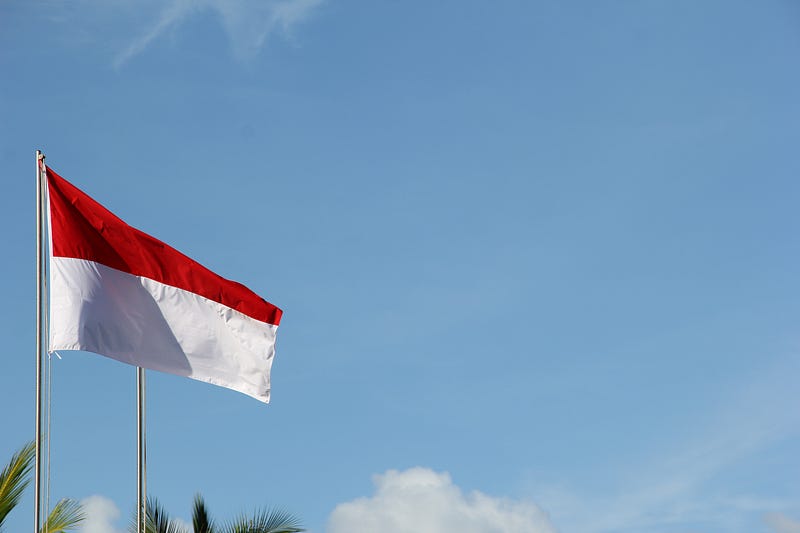
Photo by Nick Agus Arya on Unsplash


Crypto potential

Indonesia has emerged as being ahead of the curve in terms of crypto adoption, ranking seventh on Chainalysis’ 2023 global crypto adoption index. With an estimated 18 million crypto investors, the country boasts a robust industry association that also functions as a self-regulatory body.

Local news media reported in October that the Southeast Asian country has seen a 10.1% year-on-year increase in the number of crypto investors. At the time, Tirta Karma Senjaya, Head of the Commodity Futures Trading Regulatory Agency, said, "Growth in the number of crypto investors in Indonesia continues to increase, but investors are still looking for the right time to buy crypto.”

Private sector entities have also identified the raw potential. In the same month, Web3 consulting firm Tiger Research, in partnership with South Korean crypto data platform Xangle, produced a report which identified significant potential for the development of Indonesia’s Web3 market. There are over 30 crypto exchanges operating in the country, acting as the primary channel through which growth in crypto is propelled in Indonesia.


Capitalizing on crypto interest

The government, under President Widodo, has actively sought to capitalize on this crypto enthusiasm, going as far as establishing a local “stock market” dedicated to crypto assets.

Gibran’s proactive stance on crypto education aligns with his broader vision of positioning Indonesia at the forefront of the global digital revolution. The country’s rapidly growing tech landscape and crypto adoption make it an opportune space for fostering expertise in these cutting-edge technologies.

As the presidential election approaches, Gibran’s commitment to cultivating a pool of crypto experts underscores the potential influence of the crypto industry in shaping Indonesia’s economic future.


An international topic

Crypto is increasingly becoming an important topic in elections globally. In the United States, many of the presidential candidates, particularly within the Republican Party, have publicly expressed their interest in crypto and blockchain. Yesterday, Ripple CEO Brad Garlinghouse took to the X social media platform on the subject, stating:

”Team @Ripple is putting a stake in the ground, leading the charge with other industry leaders to support pro-innovation and pro-crypto candidates in the 2024 US election cycle. The US cannot afford to continue taking a back seat on the global stage.“

With Indonesia’s election frontrunners, Prabowo and Gibran, expressing interest in the sector, it remains to be seen how this focus on crypto will resonate in the upcoming political debate on Feb. 4.


More to Read
View All
Policy & Regulation·

Jun 14, 2023

North Korean Hackers Take Off With $100M Atomic Wallet Honeypot

North Korean Hackers Take Off With $100M Atomic Wallet HoneypotHaving reported last week on a $35 million hack of Atomic Wallet users’ funds, an update on the matter reveals that the situation is much worse than originally thought, with losses now exceeding $100 million.Photo by Kenny Eliason on Unsplash5,500 wallets compromisedThe attack has sent shockwaves throughout the crypto community, raising concerns about the security of decentralized wallets. Atomic Wallet, an Estonia-based project known for its non-custodial approach where users take full responsibility for storing their assets securely, has been hit hard by this unforeseen breach.Elliptic, a crypto compliance analysis company, published an update on the situation on Tuesday. According to that blog article, it estimates that approximately 5,500 crypto wallets have been compromised, meaning that losses have risen to more than $100 million, highlighting the severity of the attack.Despite the significant impact on users, Atomic Wallet has yet to provide an explanation regarding the root cause of these substantial losses. Users have taken to social media in frustration, demanding clarification from the company. Surprisingly, the company’s last direct update on Twitter dates back to June 7, leaving users feeling even more anxious.User frustrationOne user, Ezra Carlson, expressed frustration, questioning why Atomic Wallet didn’t warn users when they were aware of the ongoing hack. Carlson tweeted: “@AtomicWallet why won’t AM give me a straight answer about why they didn’t warn me, knowing full well that they were being hacked, that it was not safe to use AM last week before I made a transfer to my wallet that was then hacked.”Another user, “Real Deal Crypto,” criticized Atomic Wallet’s lack of updates, stating: “Your last update was five days ago — SERIOUSLY?!?!”Although Atomic Wallet acknowledged reports of compromised wallets on June 3, downplaying the impact by claiming that less than 1% of users were affected, the staggering sum of losses indicates a significant breach. Its last communication on the matter came on June 11 when, in responding to a user, the firm said that it continued to investigate and to await Twitter updates on the matter.Hack tied to North Korea’s Lazarus GroupElliptic has connected this heist to the notorious Lazarus Group, a cyber-criminal organization with ties to the North Korean regime, responsible for stealing over $2 billion in crypto assets through various thefts. This attribution marks the first time a significant crypto heist has been openly linked to the Lazarus Group since their $100 million exploit of Horizon Bridge in June 2022.In response to the heist, Elliptic has been collaborating with international investigators and exchanges, mobilizing resources to recover the stolen assets. Their efforts have reportedly led to the freezing of over $1 million worth of funds. However, the thief has adapted its behavior in response to the freezing of assets, turning to the Russia-based Garantex exchange to launder the stolen assets, as noted by Elliptic.This recent attack adds to a series of notable breaches in the crypto industry. Jimbos Protocol experienced an exploit resulting in a loss of $7.5 million, and Tornado Cash faced a malicious proposal that seized control of its governance in May. According to a report by Chainalysis, crypto hackers made off with an estimated $3.8 billion in 2022, with North Korea being responsible for a significant portion of the attacks.

news
Policy & Regulation·

Apr 21, 2023

Crypto Features in India-UK Markets Dialogue

Crypto Features in India-UK Markets DialogueAccording to a press release published by HM Treasury, the 2nd India-UK Financial Markets Dialogue meeting held on Wednesday featured six key themes with crypto featuring among them.©Pexels/SkitterphotoThe event brought officials from both nations together in the first in-person financial dialogue since 2017. While the meeting considered banking, insurance and reinsurance, capital markets, asset management and sustainable finance, it also allotted time to discuss payments and crypto-assets.CBDC knowledge sharingBoth sets of officials discussed the scope for augmenting knowledge on Central Bank Digital Currencies (CBDC) by way of mutual learning. The officials agreed on the importance of robust global approaches relative to the emergence and development of crypto-assets internationally. The joint statement issued following the meeting revealed that progress relative to the G20 roadmap for enhancing cross-border payments was a matter which was discussed. It’s an item that could have major implications for the use of cryptocurrency in cross border transactions.Global collaborationThe meeting marks another move towards greater global collaboration on policy and regulation relative to digital payment systems and crypto assets. Earlier this month, India’s Finance Minister Nirmala Sitharaman said that the introduction of any new regulations on digital assets needs to be coordinated on a global basis. “The G20 and its members agree that it’s not going to be possible to have an independent, standalone country dealing with crypto assets”, Sitharaman stated at a news conference following a meeting of central bank governors and G20 finance ministers.There’s a growing recognition among politicians, government and central bank officials that decentralized money doesn’t end at a territory’s borders due to its inherently decentralized properties.Taking steps to regulate cryptoWhile on the one hand strategizing as to how digital assets can be best controlled on a global level, India is also taking its own individual steps towards national regulatory action. Recently, it expanded its Prevention of Money Laundering Act (PMLA) to include consideration of digital assets. The newly amended PMLA will now deal with the exchange of digital assets for fiat money and vice versa. It also considers safekeeping, transfer and administration relative to cryptocurrency. Furthermore, its broadened scope deals with financial services offered related to virtual or digital assets.Rajagopal Menon, the VP of India’s leading cryptocurrency exchange WazirX, has said that “regulations levied by India have been baby steps toward institutional participation in the crypto exchange.” While market participants in the digital assets space are apprehensive about the regulatory measures that governments and state regulators choose to adopt, so long as the objective isn’t to regulate the innovation out of existence, such developments can have a profoundly positive effect on the digital assets market.There’s no doubt that in line with Menon’s point relative to the Indian context, the same scenario can play out in all digital markets given the application of the right regulatory approach. Institutional investment for the most part has eluded crypto despite many already heralding its arrival in recent years. Institutions move slowly and the only way in which they will be comfortable in working with digital assets is with complete regulatory clarity having been set out.So while some in crypto may be concerned at the mention of global regulatory coordination in respect of digital assets, so long as it doesn’t go too far, greater work towards improved regulatory clarity in the digital assets market can be a catalyst for further adoption and growth in India, the UK and further afield.

news
Web3 & Enterprise·

Nov 18, 2023

XREX secures MPI license from Singapore regulator

XREX secures MPI license from Singapore regulatorTaipei-based cryptocurrency exchange XREX has received in-principle approval from the Monetary Authority of Singapore (MAS) for a Major Payment Institution (MPI) license.Photo by Mark König on UnsplashBitCheck payment tool offeringThe approval marks a crucial step for the fledgling exchange business, enabling it to offer digital payment token products and services in Singapore. Once it’s upgraded to a full license, XREX will be able to expand its BitCheck payment tool, currently facilitating transactions involving fiat currencies, stablecoins and various cryptocurrencies.This regulatory milestone places XREX among the approved exchanges, stablecoin issuers, neobanks and payment service providers in Singapore. Since the introduction of the licensing regime in January 2020, the MAS has received over 580 applications for payment services licenses, with fewer than 20 Digital Payment Token (DPT) licenses and in-principle approvals granted to date. XREX now joins the ranks of established entities like Coinbase, DBS Vickers, Circle, Paxos, Ripple and Revolut in receiving approval from the MAS.Taking to X on Friday, the company acknowledged the license award while outlining that the license would mean that it can now start to offer an e-money issuance service, cross-border money transfers, account issuance services, digital payment token services, as well as merchant acquisition and domestic money transfer services.Serving home and overseas marketsWayne Huang, Co-Founder and Group CEO of XREX, emphasized that XREX Singapore will serve as the primary provider of products across the Asia Pacific (APAC) region. Simultaneously, XREX Taiwan will continue to play a pivotal role in product design, engineering, research and threat analysis functions for the company. Positioning itself as the Asia Pacific headquarters for the group, XREX Singapore aims to target emerging markets in the region where access to USD liquidity may present challenges.Christopher Chye, CEO of XREX Singapore, expressed the significance of the approval, noting the thorough scrutiny by Singapore’s regulatory authorities. Chye stated:“Singapore wants to attract responsible actors, and the reality is that doing so necessitates a fine-tooth comb. This is great for Singapore and great for our industry as a whole. XREX is looking forward to introducing cheaper, safer, and faster domestic and cross-border payments for Singapore and emerging market businesses.”It was no secret that the company had been working towards acquiring a license in Singapore for some time. In December 2022, its Singapore team tweeted out such a claim, adding that an MPI license from MAS “is one of the most coveted and well-regarded licenses worldwide.”Highlighting Singapore’s progressive and robust regulatory framework, Nick Chang, XREX Group and XREX Singapore Head of Compliance, said:“Singapore boasts a progressive and robust regulatory framework, offering our users the clarity and confidence they need to access digital assets and use stablecoins.”XREX has also made in-roads into the European market. In May of last year, the company opened an office in Lithuania, while becoming a crypto asset service provider within the Baltic state. Earlier this year the company strengthened its compliance process by integrating transaction monitoring and investigative tools from blockchain analysis firm Chainalysis.

news
Loading